
Dr. Althea’s Quote
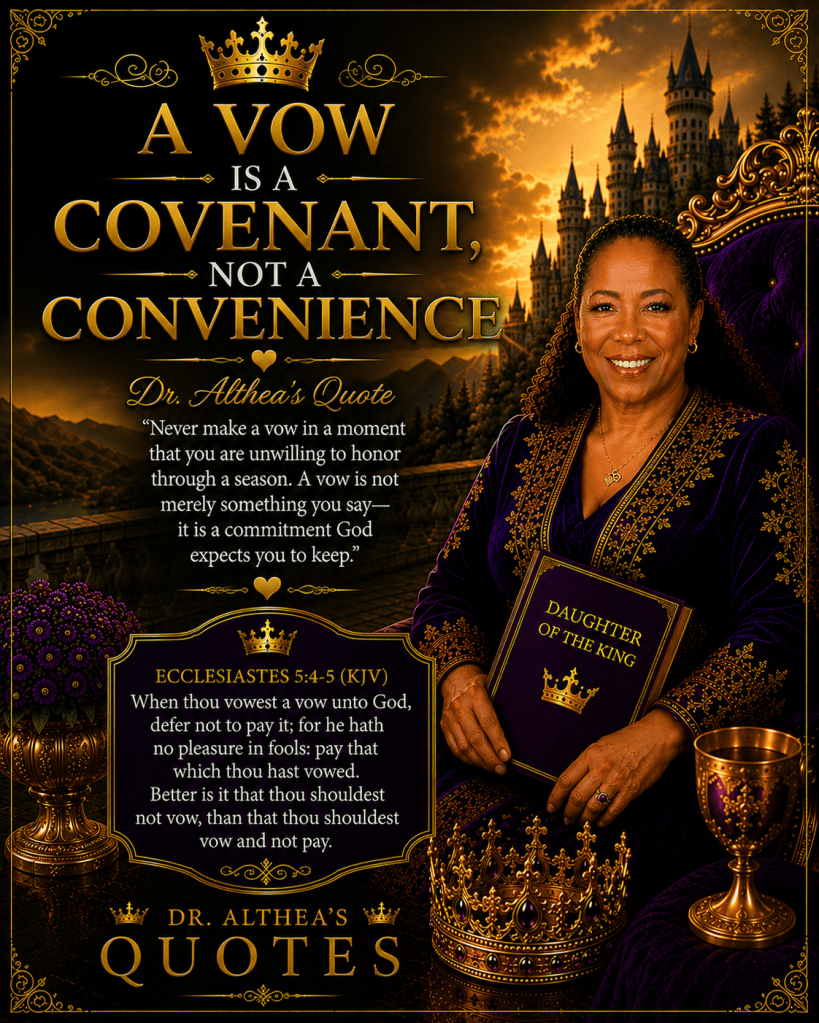
“Never make a vow in a moment that you are unwilling to honor through a season. A vow is not merely something you say—it is a commitment God expects you to keep.”
Ecclesiastes 5:4–5 (KJV)
“When thou vowest a vow unto God, defer not to pay it; for he hath no pleasure in fools: pay that which thou hast vowed. Better is it that thou shouldest not vow, than that thou shouldest vow and not pay.”
A vow is more than a promise spoken during an emotional moment. Biblically, a vow carries weight because it represents a deliberate commitment made before God. We live in a culture where words can be spoken quickly and forgotten just as quickly, but Scripture teaches us that God takes our words seriously. What we promise in His presence should never be treated casually.
Sometimes people make vows when they are desperate. They tell God what they will do if He opens a door, provides the finances, restores the relationship, heals the situation, delivers them from trouble, or answers a particular prayer. Yet after the breakthrough comes, the vow that seemed so important during the crisis can suddenly become inconvenient.
God remembers what desperation sometimes forgets.
Ecclesiastes 5:4–5 gives us a sobering instruction. If we make a vow unto God, we should not delay in fulfilling it. This teaches us that Kingdom integrity is demonstrated not only by what we say but by whether our actions remain consistent with what we have said.
A vow will often be tested after the emotion surrounding it has disappeared. It is easy to promise faithfulness when everything feels spiritually powerful. The greater test comes when obedience becomes uncomfortable, sacrifice becomes expensive, circumstances change, and fulfilling your commitment requires discipline.
This principle reaches beyond vows made directly to God. Our words should carry integrity in our marriages, ministries, relationships, businesses, leadership responsibilities, and personal commitments. Jesus taught in Matthew 5:37 (KJV), “But let your communication be, Yea, yea; Nay, nay.” A person of Kingdom character should become known as someone whose words can be trusted.
There are also moments when keeping your word will cost you something. Psalm 15 describes the character of the person who walks uprightly before God and says, “He that sweareth to his own hurt, and changeth not” (Psalm 15:4 KJV). This speaks powerfully about integrity. True commitment is revealed when keeping your word becomes more difficult than breaking it.
Before making a vow, therefore, pray. Consider the responsibility attached to your words. Do not promise because you are pressured, emotional, afraid, excited, or attempting to impress someone. Ask yourself whether you are prepared to remain faithful when the atmosphere changes.
If you have made a vow unto God, do not treat it lightly. Return to the place of commitment and ask the Lord for the grace, strength, wisdom, and discipline necessary to honor what you have promised. God is not asking you to perform for Him; He desires faithfulness from you.
Your words reveal something about your character. When your promises and your actions agree, integrity is established. When your commitment remains after convenience disappears, maturity is demonstrated.
Prayer
Father, I thank You because I know You hear me. Let Your will be done. Teach me to honor the words that come from my mouth and never to make commitments carelessly. Give me wisdom before I make a vow and integrity after I have made one. Where I have promised You something, give me the strength and discipline to fulfill it. Let my yes be yes, and let my life demonstrate faithfulness, responsibility, and obedience before You. May my words and actions agree so that my life will bring honor to Your name. In Jesus’ name, Amen.
Declaration
I will not speak carelessly concerning sacred commitments. I will seek God before making a vow, and I will walk in integrity concerning the commitments I have made. My words will reflect my character, my actions will confirm my words, and my life will demonstrate faithfulness before God.
Dr. Althea’s Challenging Thought
“Before you make a vow, consider its cost. After you make a vow, remember its weight. Your circumstances may change, but integrity remembers what your mouth promised.”

