
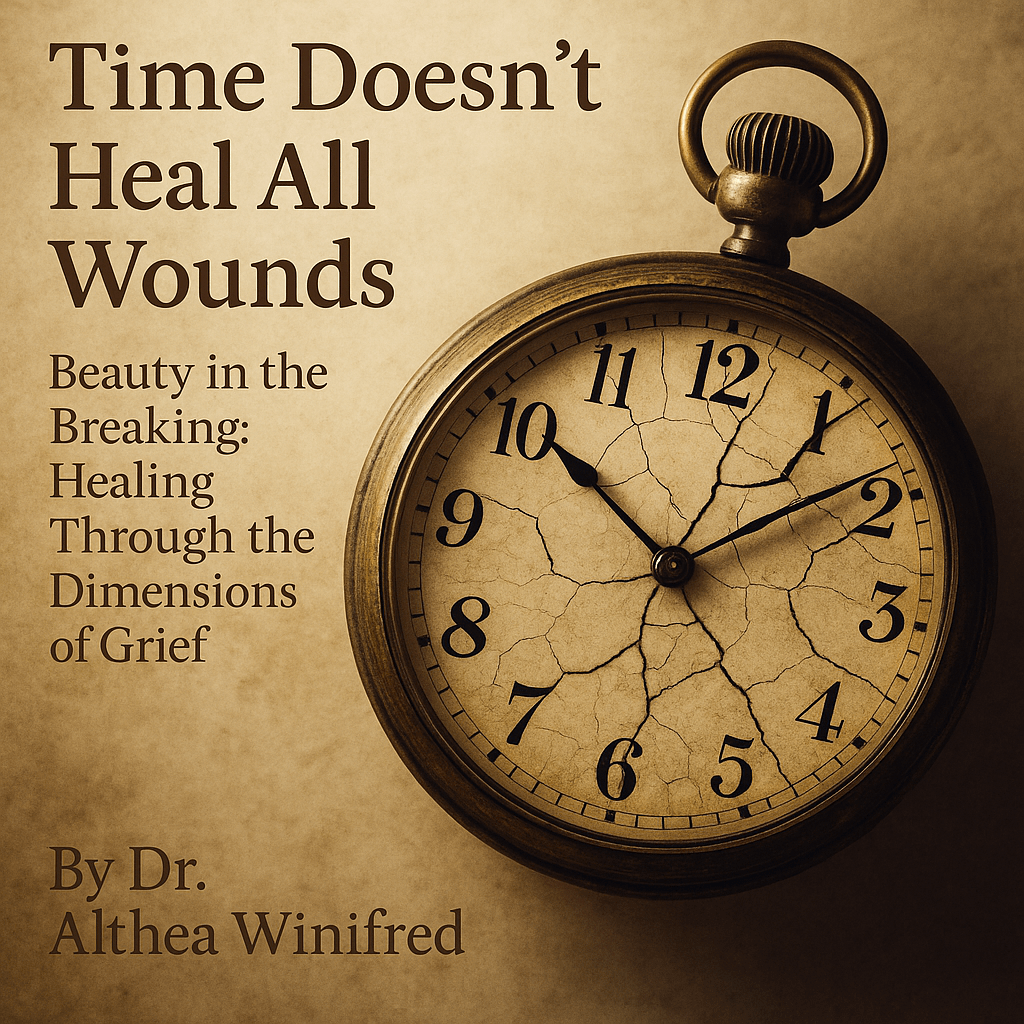
They say, “Time heals all wounds.” It’s one of those phrases tossed like a life raft to the drowning, a balm offered to the grieving. But what happens when time doesn’t? When the hours turn into days, the days to years, and the sting still lingers?
Grief has no expiration date.
Grief is not linear, nor is it logical. It is layered, complex, and deeply personal. For many, the pain of loss doesn’t fade with time—it only reshapes itself. The wound may scab over, but some days it splits wide open with a memory, a scent, a sound, a silence. There are mornings when you wake up and the ache is just as sharp as the day you said goodbye.
Time may help some people find new rhythms, but for others, it becomes a silent reminder of everything that changed and everyone who is no longer here to share it.
The misconception that time equals healing often leads to unnecessary guilt or shame. If you’re still grieving, people might say, “It’s been long enough.” But who decides what “long enough” looks like for the brokenhearted? There is no timeline for healing when it comes to something as sacred as loss.
The Pressure to “Be Better by Now”
Society places quiet expectations on those who mourn. After the funeral is over, the calls dwindle, the texts grow silent, and the world moves on. But you remain, holding the weight of absence. Time has passed, yet the memories remain fresh, sometimes even sharper as new life milestones occur—birthdays, anniversaries, graduations—each one a reminder of who is missing.
You may feel pressured to smile again, to “get back to normal,” to laugh out loud without feeling guilty. But here’s the truth: healing doesn’t require forgetting. And time doesn’t erase love.
Grief lives in the cracks of time, and pretending those cracks don’t exist doesn’t make them disappear.
Time Can Soften, But It Doesn’t Always Mend
Over time, some find ways to carry their grief differently. They adapt, not because they are healed, but because they have learned how to breathe with a bruised heart. They learn to live with a hole that will never fully close.
Others may struggle in silence, confused by the fact that time hasn’t brought peace. This can lead to questioning one’s strength or faith, but beloved, it is not a weakness to still feel. It is a sign that love ran deep.
Healing is not about forgetting or moving on. It is about carrying the memory forward, allowing space for joy and sorrow to coexist. It’s about accepting that some wounds will always be part of you—and learning how to live with them, not despite them.
A New Understanding of Time
Instead of waiting for time to heal you, let it teach you. Let time reveal how strong you’ve become. Let it show you the tenderness of your heart, the depth of your love, and the resilience it takes to wake up each day with a scarred but beating heart.
You don’t owe anyone a deadline for your healing.
You don’t have to apologize for still grieving.
You are not broken because time hasn’t “fixed” you.
Time doesn’t heal all wounds. But time can sit with you in your sorrow. It can offer you room to remember, to weep, to rebuild, to reflect, and to reimagine life with the presence of absence.
Let the journey be yours. Let the healing be real, not rushed. Let your grief have a voice. And let time be your witness, not your cure.
Selah Moment with Dr. Althea Winifred
 Next Level