
Grief often arrives with the feeling that something inside you has been shattered. The loss may feel so heavy that it seems impossible to imagine moving forward. In the early moments, strength may feel far away, almost nonexistent.
But grief has a surprising way of revealing strength that was always present—even if you never realized it.
When loss first occurs, survival becomes the focus. Each day may feel like an emotional mountain. Getting through the morning, the afternoon, and the evening may require more effort than it once did. Simple tasks may feel overwhelming, and moments of silence may feel louder than ever before.
Yet even in those difficult moments, something remarkable is happening.
You are still standing.
Strength after loss does not always look dramatic. It often appears quietly, in the smallest acts of courage. It appears when you wake up and face another day. It appears when you allow yourself to feel rather than suppress the pain. It appears when you choose to keep going, even when your heart feels fragile.
This kind of strength is not about pretending everything is fine.
It is about enduring honestly.
Many people believe strength means not crying, not struggling, or not feeling deeply affected by what has happened. But true strength often looks very different. True strength allows space for tears. It allows space for reflection. It allows the heart to process what it has experienced.
Grief reveals that vulnerability and strength can exist at the same time.
When you face grief directly, you begin to discover emotional resilience you may not have recognized before. You learn that you can survive moments you once thought would break you completely. You learn that your heart, though wounded, is capable of healing.
This realization changes how you see yourself.
Before loss, you may have measured strength through achievements, accomplishments, or external recognition. After loss, strength begins to take on a deeper meaning.
Strength becomes the ability to keep loving, even after loss.
Strength becomes the courage to face memories rather than avoiding them.
Strength becomes the willingness to grow through pain instead of becoming hardened by it.
Grief also deepens your understanding of others. Once you have walked through loss, you begin to recognize the hidden struggles that others may carry. You become more compassionate, more patient, and more aware that many people are navigating their own quiet battles.
Pain expands empathy.
What once felt like weakness can become a powerful source of understanding. The compassion you develop through grief allows you to support others in ways that only experience can teach.
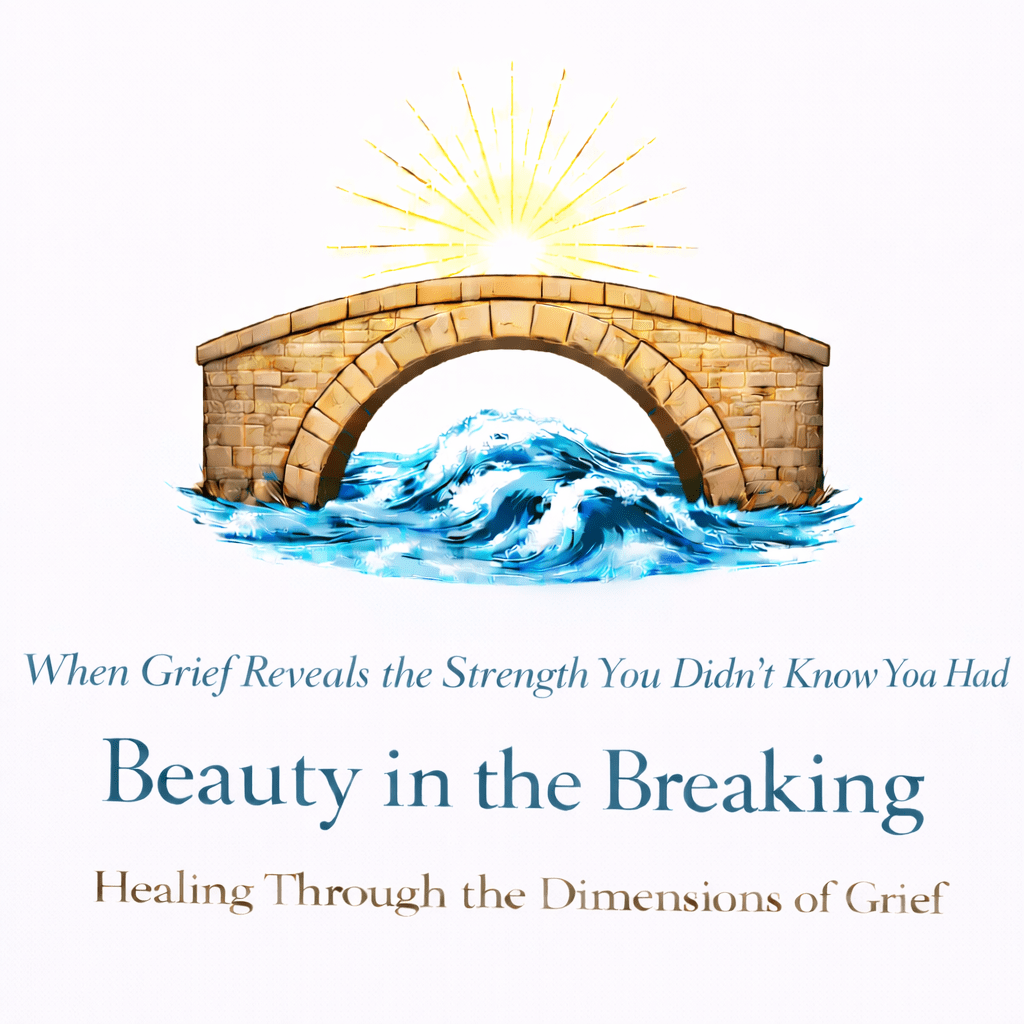
The bridge in the Beauty in the Breaking imagery reminds us of this inner transformation. Beneath the bridge, the waters may be turbulent, unpredictable, and powerful. Yet the bridge stands firm above them.
Strength is not the absence of the waves.
Strength is the ability to remain standing even when the waters move beneath you.
Over time, you begin to see that grief did not only break parts of your life—it also revealed parts of you that were stronger than you imagined. The resilience you developed through loss becomes part of your story.
It becomes a quiet testimony that healing is possible.
You may still carry moments of sadness, and memories may still stir emotion. But alongside those feelings grows a deeper awareness of your ability to endure, to adapt, and to continue living with meaning.
Grief reveals that strength is not something you had to search for.
It was already within you.
Loss simply uncovered it.
Selah Moment with Dr. Althea Winifred.

