
Loss has a way of shaking the emotional foundation of a person’s life. What once felt stable can suddenly feel fragile. The routines that once felt normal may no longer carry the same meaning. Even emotions themselves can begin to feel unfamiliar.
Grief introduces a new emotional landscape.
In the early days of loss, emotions often feel overwhelming. Sadness may come in waves that feel impossible to control. Anger may appear unexpectedly. Confusion may cloud the mind. At times there may even be moments of numbness, where feelings seem distant or muted.
These responses are not signs of weakness.
They are the heart’s way of processing something deeply significant.
One of the lesser-discussed realities of grief is that emotional strength does not appear immediately. In fact, grief often exposes areas where we feel emotionally vulnerable. It reminds us that strength is not the absence of pain—it is the ability to continue moving through it.
Emotional strength after loss develops gradually.
It grows quietly, often unnoticed at first. It forms in small decisions: choosing to get out of bed when the day feels heavy, choosing to attend a gathering even when your heart feels fragile, choosing to face memories rather than avoiding them.
Each small step becomes part of rebuilding emotional resilience.
Grief teaches patience with yourself.
There may be days when you feel strong and hopeful, and others when sadness returns unexpectedly. Emotional strength does not mean you will no longer feel grief. Instead, it means you learn how to hold your emotions without being overwhelmed by them.
You begin to recognize your feelings rather than fear them.
You learn that sadness can exist without destroying you. You learn that memories can bring both tears and gratitude. You learn that healing is not a straight path but a journey filled with moments of growth.
One of the most powerful aspects of emotional strength is self-compassion.
After loss, many people unknowingly place unrealistic expectations on themselves. They believe they should recover quickly or remain composed for the sake of others. They may feel guilty when grief resurfaces after months or years.
But healing does not operate on a schedule.
Emotional strength grows when you allow yourself the grace to feel honestly. When you permit yourself to rest. When you recognize that your emotions are not problems to solve but experiences to move through.
Over time, grief begins to reshape your inner life.
You may discover that your empathy deepens. You may become more sensitive to the struggles of others. Situations that once felt frustrating may now be approached with patience and understanding.
Pain often produces compassion.
This transformation does not erase the loss. Instead, it integrates the experience into who you are becoming. The love that once existed does not disappear—it continues shaping the way you live, care, and connect with others.
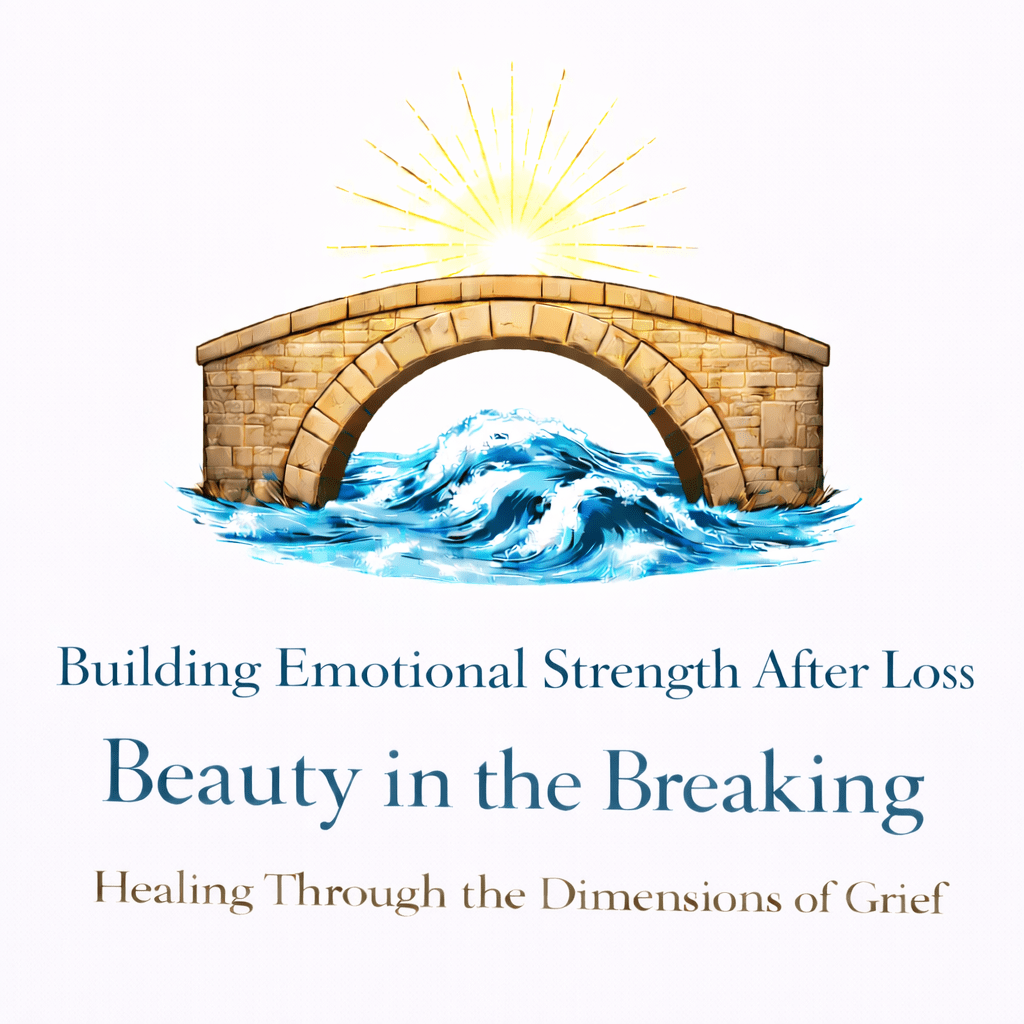
The imagery of the bridge in Beauty in the Breaking reminds us of this emotional journey. A bridge does not remove the waters beneath it. The waves still move, sometimes gently and sometimes fiercely.
But the bridge provides a way across.
Emotional strength becomes that bridge.
It allows you to carry memories without being consumed by them. It allows you to continue loving without fear that loss will define the rest of your life. It allows you to walk forward while still honoring what was.
Healing does not require forgetting.
It requires learning how to live with the story that grief has written into your life.
In time, the same heart that once felt shattered begins to feel steady again. Not because the pain has vanished, but because strength has quietly grown around it.
And that strength becomes a testimony of survival, resilience, and enduring love.
Selah Moment with Dr. Althea Winifred.

