Project Management and Public Relations Etiquette

By Dr. Althea Winifred

Project Management Etiquette

Introduction: The Interwoven Threads of Leadership

In today’s interconnected world, the disciplines of project management and public relations are no longer distant cousins in organizational life—they are interwoven threads of leadership, strategy, and execution. Project management ensures that the vision is transformed into reality with order, precision, and accountability. Public relations ensures that the journey toward that reality is perceived with credibility, grace, and respect. When fused together with proper etiquette, they produce not only results but also reputational excellence.

As someone who has spent years navigating the complexities of leadership across ministries, businesses, and international platforms, I have witnessed a common truth: a project may succeed in technical delivery, but without the relational and communicative finesse of public relations, it risks being diminished in the eyes of stakeholders. Conversely, strong public relations without the backbone of disciplined project execution will collapse under scrutiny. Both must walk hand in hand.

The Essence of Project Management

At its core, project management is the disciplined art of turning ideas into outcomes. It is a structured process guided by scope, timelines, resources, and deliverables. However, it is more than just Gantt charts and checklists—it is stewardship. The project manager serves as the steward of vision, ensuring that what was promised is accomplished with integrity and efficiency.

Effective project management involves:

– Clear Initiation: Every project must begin with a clear purpose, defined objectives, and an understanding of its value proposition. A leader must ask, Why does this project matter?

– Planning with Foresight: A well-drafted plan anticipates risks, defines responsibilities, and builds contingencies. Projects do not fail for lack of ambition but for lack of preparation.

– Execution with Accountability: A plan is only as strong as its implementation. Effective managers monitor progress, delegate wisely, and communicate consistently.

– Closure and Reflection: A completed project is not the end but a moment for reflection. Documenting lessons learned ensures future success and creates a culture of continuous improvement.

What distinguishes great project managers is their ability to combine technical expertise with people-centered leadership. Projects are executed by people, not machines. Respect, encouragement, and clear communication are the fuel that propels tasks into completed milestones.

Public Relations: The Etiquette of Perception

Public relations is not simply about publicity or media—it is the art of shaping perception. It encompasses how organizations and leaders communicate, build relationships, and sustain trust. Where project management governs what gets done, public relations determines how it is received.

Public relations etiquette, at its finest, embodies four guiding principles:

– Respectful Communication – Words shape worlds. Every press release, email, or statement should reflect courtesy, professionalism, and cultural awareness.

– Transparency – Trust is built on honesty. Overpromising and under-delivering is the fastest way to lose credibility. Clear, timely, and truthful updates protect reputation.

– Consistency – Reputation is not built overnight. It grows through steady alignment between words and actions. Mixed messages fracture trust.

– Relationship-Centeredness – Public relations is not about manipulation; it is about mutual respect. Stakeholders should feel valued, not used.

In an age where information travels instantly, etiquette in communication is not optional. One ill-considered comment can undo years of work. Therefore, leaders must master not just the facts of a project but the manner in which those facts are shared.

Where Project Management and Public Relations Meet

The overlap between these two disciplines is more critical than ever. A project without public understanding is like a seed planted in hidden soil—it may grow, but it will not inspire. Likewise, a public relations campaign without the anchor of actual results is a façade destined to crumble.

Consider the following points of intersection:

– Stakeholder Engagement – Every project impacts people—clients, partners, employees, or the community. Project managers must align with public relations professionals to craft engagement strategies that honor stakeholder concerns while championing project goals.

– Crisis Management – Projects rarely unfold without challenges. Whether it is a budget shortfall, a delayed timeline, or an unexpected obstacle, public relations etiquette helps frame the narrative while project management provides the corrective action. Together, they protect credibility.

– Milestone Celebrations – Completion of project phases should be communicated with gratitude and acknowledgment. Public relations etiquette ensures that recognition is given appropriately, while project management ensures the milestone was achieved with accuracy.

– Reputation of Delivery – Over time, an organization is judged by whether it keeps its word. Successful delivery and respectful communication build a brand synonymous with trustworthiness.

The Etiquette Every Project Manager Must Practice

Project management is not just a technical discipline; it is also relational. Here are essential etiquette practices for project managers who wish to excel in both delivery and diplomacy:

– Honor Time – Meetings must begin and end as scheduled. Respecting time communicates respect for people.

– Acknowledge Contributions – A project’s success is rarely the work of one individual. Publicly recognizing the contributions of others fosters loyalty and morale.

– Respond Promptly – Delayed communication breeds frustration and mistrust. Timely responses are marks of professionalism.

– Keep Confidentiality – Not every detail is meant for public ears. Wise managers guard sensitive information with discretion.

– Remain Approachable – Leaders who are unapproachable create barriers. A project thrives when team members feel safe to ask, clarify, or contribute.

Etiquette is not superficial—it is the invisible oil that keeps the machinery of collaboration running smoothly.

The Etiquette Every Public Relations Professional Must Practice

Similarly, public relations professionals are custodians of perception. Their etiquette defines how organizations are seen by the world. Core practices include:

– Use Positive Framing – Even in challenges, words should uplift and inspire confidence. Problems should be presented alongside solutions.

– Be Culturally Sensitive – Messages that work in one region may offend in another. Etiquette demands awareness of cultural nuances.

– Maintain Professional Tone – Formal communication should remain free from slang, exaggeration, or unverified claims.

– Prioritize Listening – Public relations is a two-way street. Listening to the public is as vital as speaking to them.

– Guard Integrity – Ethical lapses destroy reputation faster than any external crisis. Integrity must govern every statement and strategy.

Public relations etiquette is essentially a ministry of respect—respect for people, for truth, and for the dignity of dialogue.

Case Study: A Lesson from Global Leadership

During international symposiums, I have seen projects with great potential falter—not because they lacked resources, but because leaders overlooked the etiquette of communication. A delayed response to stakeholders, a poorly worded statement, or a failure to acknowledge cultural norms resulted in strained partnerships. On the other hand, I have also seen modest projects excel on global platforms because they were executed with clarity, consistency, and relational wisdom.

One principle emerges: etiquette magnifies excellence. When project management delivers results and public relations frames those results respectfully, the impact is multiplied beyond the project itself—it becomes a testimony of leadership.

Biblical Foundations of Etiquette in Leadership

As a Biblical educator, I cannot separate leadership practices from Kingdom principles. Scripture affirms the importance of order, respect, and integrity in every endeavor.

“Let all things be done decently and in order.” (1 Corinthians 14:40 KJV) — This is the essence of project management: order, structure, and clarity. “A good name is rather to be chosen than great riches.” (Proverbs 22:1 KJV) — This is the essence of public relations: reputation is more valuable than wealth. “Be swift to hear, slow to speak, slow to wrath.” (James 1:19 KJV) — This is etiquette in communication: listen well, speak wisely, act graciously.

These principles remind us that etiquette is not about pretension—it is about reflecting godly character in leadership.

The Future: A Call to Integrated Excellence

Looking forward, organizations that thrive will be those that blend disciplined project management with refined public relations etiquette. The world is too interconnected, and information flows too freely, for leaders to treat them as separate silos. Excellence demands integration.

Leaders must therefore train not only in project methodologies but also in the soft skills of etiquette, empathy, and cultural awareness. Teams must learn that every action and every word is a reflection of the whole organization. And above all, we must lead with integrity, knowing that our projects and our reputations are both sacred trusts.

Conclusion: Leading with Excellence and Grace

Project management ensures that we deliver. Public relations etiquette ensures that our delivery is honored, respected, and celebrated. Together, they create a symphony of excellence that leaves behind not just completed tasks but a legacy of credibility.

In a world that often celebrates speed over substance, I challenge leaders to slow down enough to practice etiquette. Respect is never wasted. Dignity is never outdated. Integrity is never optional.

When we execute projects with order and communicate with grace, we honor both the work and the people it serves. And in doing so, we leave behind more than finished projects—we leave behind a reputation that speaks for generations.
Day 4 – Prophetic Strength

Scripture: “The LORD is my strength and song, and he is become my salvation.” (Exodus 15:2 KJV)

Prayer:

Father, I thank You because I know You hear me. Let Your will be done. I receive fresh strength today to mount up with wings as eagles. Every spirit of heaviness, weariness, and discouragement is broken from my life. I prophesy that my inner man is empowered, my faith is fortified, and my body is renewed with divine vitality. The joy of the Lord shall be my strength, and I will not faint in the day of adversity. Every challenge before me is met with supernatural stamina. I shall not quit, I shall not break down, but I shall break through by the power of the Holy Ghost. Today, I sing songs of victory, for the Lord is my strength and salvation. In Jesus’ name, Amen.

Day 3 – Prophetic Breakthrough

Scripture: “And in the morning then ye shall see the glory of the LORD.” (Exodus 16:7 KJV)

Prayer:

Father, I thank You because I know You hear me. Let Your will be done. I decree that today is the day of breakthrough.

Every barrier erected against my advancement is shattered. I prophesy open heavens and supernatural release in every stubborn situation of my life. Where there was resistance, let there now be ease.

Where there was delay, let there now be acceleration. I declare that breakthroughs shall manifest in my health, my finances, my family, and my ministry. Just as the Israelites saw Your glory in the wilderness,

I shall see Your glory in my life today. Lord, let miracles be my daily portion, and let testimonies flow from my lips as proof that You are still the God of wonders.

In Jesus’ name, Amen.

Day 2 – Prophetic Favor

Scripture: “For thou, LORD, wilt bless the righteous; with favour wilt thou compass him as with a shield.” (Psalm 5:12 KJV)

Prayer:

Father, I thank You because I know You hear me. Let Your will be done. I declare that this day is marked by divine favor. Heaven’s endorsement is upon me, and the earth must respond to it. Men and women in positions of authority shall remember me for good. Hidden treasures and opportunities shall find me without delay.

I prophesy that every closed door swings open, and every denied request is reversed by favor. Let my name echo in boardrooms, courts, and places where decisions are made for my upliftment.

I am shielded from disgrace, clothed with honor, and distinguished by divine favor. Today, I walk boldly knowing that favor shall fight for me and establish me in places I could not reach on my own.

In Jesus’ name, Amen.

Unspoken Goodbyes – When Closure Never Came

Some losses are loud. Others are silent. Not every departure gives you the dignity of a final word. Not every death, separation, or life interruption comes with a moment to say goodbye. Some grief lives in the echo of what was never said. The unanswered questions. The last conversation that never happened. The prayer for reconciliation that remained unmet. This is the agony of unspoken goodbyes—and yet God meets us even there.

This week, we sit with the sorrow of unresolved endings and allow the Spirit of Truth and Comfort to tend to the places still waiting for closure.

The Pain of an Open Ending

Sometimes people leave before peace is made.

Sometimes tragedy robs you of a farewell.

Sometimes the relationship never found resolution—just silence.

You may find yourself wrestling with:

What you wish you had said What you hoped they would say What you never got to ask The feeling that something is still unfinished

The ache is real. The absence is loud.

But take heart—God hears even what was never spoken aloud.

Psalm 139:4 reminds us, “For there is not a word in my tongue, but, lo, O Lord, thou knowest it altogether.”

He knows what was locked inside you. And He knows what they never said.

Jesus Understands the Unanswered

On the cross, Jesus was surrounded by silence.

Some of His disciples fled.

One betrayed Him.

Another denied Him.

In the final moments, not all was made right. Not every heart was present. Not every relationship was resolved.

And yet He still cried, “Father, forgive them…” (Luke 23:34 KJV)

Even with pain unspoken and people absent, He released His sorrow to God.

This is your invitation: to hand over the unfinished parts to the One who completes what we cannot.

Closure Is Not Always a Conversation—Sometimes It’s a Surrender

You may never get the apology.

You may never hear the reason.

You may never speak the goodbye.

But you can still heal.

Isaiah 61:1 says, “He hath sent me to bind up the brokenhearted…”

God does not require perfect endings to offer complete healing.

You can write a letter you’ll never send.

You can weep over words you wish were said.

You can pour it all out before the Lord—and find peace where there was none.

Selah Moment: Peace Without the Final Page

Pause and ask:

What goodbye have I never been able to say? What words are still trapped inside me? Am I waiting for someone else to give me peace?

Let God be the witness to your pain.

Let Him be the listener to your heart’s unheard story.

He is the God of closure—even without conversations.

Scripture Meditation This Week:

“He healeth the broken in heart, and bindeth up their wounds.” (Psalm 147:3 KJV)

“Thou tellest my wanderings: put thou my tears into thy bottle: are they not in thy book?” (Psalm 56:8 KJV)

“And the peace of God, which passeth all understanding, shall keep your hearts and minds through Christ Jesus.” (Philippians 4:7 KJV)

Prayer for the Unspoken Goodbye:

Father, I thank You because I know You hear me. Let Your will be done.

You know what I never got to say.

You know the goodbye I longed for but never received.

I bring You every word still buried in my chest.

I surrender the pain of silence, the ache of unfinished chapters.

Speak peace over my unrest.

Wrap Your arms around the conversation that never happened.

Let me find release in Your presence, even without closure in the natural.

Heal the part of me that still waits to be heard.

In Jesus’ Name. Amen.

Closing Reflection:

Your story is not incomplete just because the goodbye never came.

God’s love finishes what life leaves undone.

He writes the final word.

And His word is always peace.

Selah Moment with Dr. Althea Winifred

Day 1 – Prophetic Alignment

Scripture: “In all thy ways acknowledge him, and he shall direct thy paths.” (Proverbs 3:6 KJV)

Your Prophetic Prayer

Prayer:

Father, I thank You because I know You hear me. Let Your will be done. Today, I decree that my spirit, soul, and body align fully with Your divine will. Every distraction sent to move me out of place is silenced. I will not lean to my own understanding, nor walk in paths of confusion. Instead, my footsteps are divinely ordered, and I walk in the blueprint written in heaven concerning me. Every delay, detour, and deception of the enemy is overturned by Your power. My destiny is aligned with prophetic accuracy, and I shall arrive at my God-ordained place on time and in season. Lord, lead me in peace, guide me in wisdom, and establish me in purpose. My life today shall bear fruit that glorifies Your name. In Jesus’ name, Amen.

Father, I thank You because I know You hear me. Let Your will be done.

Today, I decree and declare that my life is aligned with Your divine purpose. I step into this day clothed with strength, wisdom, and favor from on high. I silence every voice of defeat, fear, and limitation, and I awaken the voice of victory, faith, and divine acceleration.

I command every crooked path to be made straight and every rough place to be made smooth. No weapon formed against me shall prosper, and every tongue that rises against me in judgment is condemned. I walk boldly knowing that greater is He that is in me than he that is in the world.

Father, I prophesy over my life today: doors of opportunity shall open, divine helpers shall appear, resources shall locate me, and peace shall guard my heart. I am not a victim of circumstance, but a victor in Christ. My hands are anointed to build, my mind is anointed to create, and my mouth is anointed to speak life and breakthrough.

I declare that today shall be a day of impact. I will not just exist—I will influence, uplift, and advance the Kingdom. Every place the sole of my foot shall tread is given unto me for dominion. The works of my hands shall prosper, and my life shall testify of the goodness of the Lord.

I prophesy over every delay in my life: be turned into acceleration. I prophesy over every closed door: be opened in the name of Jesus. I prophesy over every dry place: spring forth with rivers of living water.

Father, thank You for angels on assignment, fighting for me, covering me, and bringing me into places of rest and glory. I end this prayer in confidence, knowing that today is marked with heaven’s approval, heaven’s power, and heaven’s peace.

In Jesus’ mighty name, Amen.

The Body Remembers – Grief’s Physical Toll

Grief is not confined to the mind or spirit—it leaves fingerprints on the body. Long after the funeral ends and the cards stop coming, the body still carries the echoes of sorrow. A heaviness in the chest. A tightening in the throat. A sudden fatigue. A restless night. These are not imagined. These are grief’s silent companions.

This week, we explore how grief lives not only in what we feel emotionally but in how we carry ourselves physically. Because healing must address the whole person—spirit, soul, and body.

The Body Keeps Score

When Jesus stood outside Lazarus’ tomb, John 11:35 simply records, “Jesus wept.” But He didn’t just cry—He groaned, He was troubled, He sighed deeply. His entire being responded. This shows us that even the Son of God expressed grief through His body.

God created us as embodied beings. The effects of loss—whether through death, divorce, estrangement, or disappointment—don’t just wound our hearts; they leave their imprint on our nervous systems, our immune responses, our muscles, and our breath.

What Grief Does to the Body

Grief can:

Weaken your immune system Disrupt your sleep Cause chest pain, headaches, or stomach issues Tighten your muscles Trigger panic or fatigue Alter your breathing patterns

David cried out in Psalm 38:8, “I am feeble and sore broken: I have roared by reason of the disquietness of my heart.”

Even in Scripture, grief was known to break people down physically—not just emotionally.

When the soul breaks, the body bends.

You’re Not Weak—You’re Wounded

One of grief’s cruelest lies is that you should be stronger. But grief does not make you weak. It makes you real.

What you’re feeling isn’t laziness. It’s loss.

What you’re carrying isn’t failure. It’s sorrow.

The racing heart, the trembling hands, the exhaustion that won’t lift—these are not signs of defeat. They’re signals that your body is still trying to process what your spirit has lost.

Jesus Knows What It Feels Like

In the Garden of Gethsemane, Jesus felt grief so intense that He said, “My soul is exceeding sorrowful, even unto death.” (Matthew 26:38 KJV)

Luke’s Gospel tells us He was in such agony that “his sweat was as it were great drops of blood falling down to the ground.” (Luke 22:44 KJV)

This rare medical condition—hematidrosis—occurs under extreme emotional distress. That’s how far grief reached into His body.

Jesus didn’t just bear our sins—He bore our sorrows. (Isaiah 53:4)

And He understands grief’s impact on your entire being.

Selah Moment: Tend to the Temple

Pause and ask:

Where in my body do I feel grief the most? Have I judged myself for being tired or unable to function? What is my body trying to tell me about my grief?

You are the temple of the Holy Spirit. Your body deserves compassion—not condemnation.

Tending to your body is not neglecting your faith—it’s honoring God’s creation.

Take the nap. Go for the walk. Eat nourishing food. Cry. Breathe. Rest.

Your healing depends on all of you being cared for.

Scripture Meditation This Week:

“He healeth the broken in heart, and bindeth up their wounds.” (Psalm 147:3 KJV)

“Know ye not that your body is the temple of the Holy Ghost…?” (1 Corinthians 6:19 KJV)

“Beloved, I wish above all things that thou mayest prosper and be in health, even as thy soul prospereth.” (3 John 1:2 KJV)

Prayer for the Grieving Body:

Father, I thank You because I know You hear me. Let Your will be done.

Today, I acknowledge that my grief lives in my body.

The pain, the fatigue, the tightness, the ache—it all speaks.

You know the language of my sorrow, even when I don’t.

Heal me completely—body, soul, and spirit.

Let Your peace touch what pain has gripped.

Let Your breath steady mine.

Let Your rest replace my weariness.

Teach me to listen to my body with grace, and treat it with the kindness You modeled.

In Jesus’ Name. Amen.

Closing Reflection:

Grief doesn’t just change your thoughts—it changes your posture, your breath, your pace.

Be gentle with the vessel God gave you.

The same body that aches with sorrow will one day move again in strength and joy.

Selah Moment with Dr. Althea Winifred

When Grief Turns Into Guilt – Releasing What Wasn’t Yours to Carry

Grief often arrives uninvited, but guilt sometimes sneaks in beside it, cloaked in questions, regrets, and self-blame. “If only I had done more.” “Why didn’t I call sooner?” “Did I miss the signs?” While grief mourns the loss, guilt tortures the soul with accusations about the past. And yet, much of the guilt that accompanies grief was never meant to be ours.

This week, we gently untangle the false responsibility grief often weaves, and allow the truth of God’s Word to release us from what we were never meant to carry.

The Guilt That Grief Brings

In moments of reflection, the mind replays scenes like a courtroom drama.

What we said. What we didn’t say.

Where we were. Where we weren’t.

Grief tells us someone is missing.

Guilt tells us we’re the reason why.

But guilt is not always evidence of failure. Often, it’s the echo of love mixed with helplessness.

We wanted to fix it. Change it. Save it.

But we couldn’t—and that powerlessness haunts us.

God Is Greater Than Our Hearts

1 John 3:20 reminds us, “For if our heart condemn us, God is greater than our heart, and knoweth all things.”

Your heart may accuse you, but God sees your intentions, your limitations, and your humanity.

Guilt says you should have known more.

Grace says you did what you could.

Guilt says you failed.

Grace says it wasn’t your burden to bear.

Regret Is Not the Same as Responsibility

It’s natural to look back and wish things were different.

But regret is not always an indication of wrongdoing—it’s often just the sign of a tender, loving heart.

We grieve because we love.

We feel guilty because we care.

But if guilt lingers, it can cloud the love we’re meant to remember and block the healing we’re meant to receive.

Jesus Took the Guilt So You Don’t Have To

At the cross, Jesus not only bore our sin—He bore our sorrow.

Isaiah 53:4 declares, “Surely he hath borne our griefs, and carried our sorrows…”

That includes your guilt.

He carried what you could not fix.

He bore what you could not prevent.

You are not the savior. He is.

You are not the restorer. He is.

Let Him be what you were never meant to be.

Selah Moment: Lay It Down

Ask yourself:

What guilt am I still holding from my grief? What am I blaming myself for that I cannot change? Have I accepted God’s grace over my humanity?

You are not called to live in guilt.

You are called to walk in grace, healing, and truth.

Let go of the weight.

You are forgiven. You are loved. You are still worthy of peace.

Scripture Meditation This Week:

“As far as the east is from the west, so far hath he removed our transgressions from us.” (Psalm 103:12 KJV)

“Come now, and let us reason together, saith the LORD: though your sins be as scarlet, they shall be as white as snow…” (Isaiah 1:18 KJV)

“For if our heart condemn us, God is greater than our heart…” (1 John 3:20 KJV)

Prayer to Release Guilt in Grief:

Father, I thank You because I know You hear me. Let Your will be done.

I bring before You the weight of my guilt.

The things I think I should’ve done.

The words I wish I had said.

The moments I replay in my mind.

You know my heart. You see my sorrow. You understand the regrets that I cannot change.

Today, I release it all to You.

Heal my mind. Silence the accuser.

Let Your grace wash over my grief, and let peace replace guilt.

Thank You for carrying what I no longer can.

In Jesus’ Name. Amen.

Closing Reflection:

Guilt does not honor the memory of the one you loved.

Peace does.

Freedom does.

Joy does.

Let the grief do its work—but don’t let guilt steal the healing God longs to give you.

Selah Moment with Dr. Althea Winifred

“Beware of Distractions: Staying Focused on the Author and Finisher”

“Looking unto Jesus the author and finisher of our faith; who for the joy that was set before him endured the cross, despising the shame, and is set down at the right hand of the throne of God.” Hebrews 12:2 (KJV)

Introduction

Distraction is one of the enemy’s most subtle and effective weapons. If Satan cannot destroy you, he will try to divert you. If he cannot make you turn away from God completely, he will attempt to fill your vision with so many side-issues, cares, and noises that your eyes drift from Jesus.

In the KJV, “looking” in Hebrews 12:2 carries the meaning of fixing your gaze away from all else. It is a deliberate, intentional choice to focus on Christ despite competing voices, flashing lights, and urgent pulls on your time.

We live in an age of distraction—phones buzzing, news cycling, opportunities knocking, fears rising. But the truth is, distraction is not new; it has always been one of the greatest threats to divine destiny.

Point 1 — Distraction Is a Detour from Your Destiny

“Martha, Martha, thou art careful and troubled about many things: But one thing is needful…” (Luke 10:41–42 KJV)

Martha was not doing anything sinful—she was serving Jesus. But her service had become a distraction from intimacy with Him. She had allowed the urgent to override the important.

Distraction does not always come in the form of obvious sin. Sometimes it’s ministry, work, relationships, or even good projects that pull your attention from the Lord’s feet.

Application:
• The enemy is not just trying to tempt you into sin; he is trying to occupy your hands and mind so you never hear God’s specific instructions for your season.
• A busy Christian can be an unfruitful Christian if their busyness replaces stillness before God.

Point 2 — Distraction Dilutes Your Spiritual Authority

“No man that warreth entangleth himself with the affairs of this life; that he may please him who hath chosen him to be a soldier.” (2 Timothy 2:4 KJV)

A distracted soldier is a defeated soldier. When you are entangled with unnecessary battles, personal offenses, and temporary pursuits, you lose the sharpness of your spiritual weaponry.

Samson’s distraction with Delilah weakened his consecration until he lost his strength. Peter’s distraction by the wind and waves caused him to sink while walking on water (Matthew 14:30).

Application:
• Spiritual authority requires spiritual focus.
• What you feed your attention to, you give your authority to. If your attention is scattered, your authority is scattered.

Point 3 — Distraction Distorts Your Perception of God’s Promises

“And the cares of this world, and the deceitfulness of riches, and the lusts of other things entering in, choke the word, and it becometh unfruitful.” (Mark 4:19 KJV)

The seed of God’s Word is powerful, but distraction acts like thorns that choke it. You cannot reap the harvest of the Word if your heart is overcrowded with competing voices and priorities.

When Israel spied out the Promised Land, the majority saw giants, not grapes. Why? Because they were distracted by obstacles instead of focused on the God who promised.

Application:
• A distracted believer sees problems bigger than promises.
• If the enemy can magnify the obstacle in your sight, he can minimize your faith in your spirit.

How to Overcome Distraction
1. Guard Your Gaze — “Mine eyes are ever toward the LORD; for he shall pluck my feet out of the net.” (Psalm 25:15 KJV)
Decide daily what gets your attention. Everything that looks urgent is not essential.

2. Prioritize His Presence — “In thy presence is fulness of joy; at thy right hand there are pleasures for evermore.” (Psalm 16:11 KJV)
If the devil can keep you from the secret place, he can keep you from power.

3. Strengthen Your Spirit with the Word — “Thy word have I hid in mine heart, that I might not sin against thee.” (Psalm 119:11 KJV)
The stronger your spirit, the harder it is to be pulled away.

4. Travel Light — “Lay aside every weight, and the sin which doth so easily beset us…” (Hebrews 12:1 KJV)
Weights aren’t always sin—they can be distractions, unhealthy attachments, or unnecessary commitments.

Conclusion

Distraction is not a small issue—it is a destiny issue. You cannot run this race looking to the left and right; your eyes must be looking unto Jesus.

In this season, the Spirit of God is calling His people to laser-like focus. Heaven’s assignments require Heaven’s attention.

Closing Prayer

“Father, in the Name of Jesus, we repent for allowing distractions to pull our hearts away from You. We choose today to fix our eyes on the Author and Finisher of our faith. Deliver us from the snares of busyness, the noise of the world, and the entanglements of the enemy.

Strengthen us to lay aside every weight and run with patience the race set before us. Help us to hear Your voice clearly and obey Your instructions without delay. We declare our eyes are single, our hearts are steadfast, and our hands are ready for the work of the Kingdom. In Jesus’ Name, Amen.”

Dr. Althea Winifred’s Sermon Notes – Sunday, August 10, 2025

“God Spoke” – Holding On When Everything Looks Contrary

When God speaks, His Word carries eternal weight, undeniable authority, and irrevocable power. His voice is not mere suggestion—it is divine decree. From the foundation of the world, God spoke, and it was so (Genesis 1). Light appeared. Waters were separated. Life took form. All by the spoken Word of God.

Yet for many of us, there comes a time when what God spoke does not look like what we see.

He promised healing, but the symptoms worsened.

He declared financial increase, but the bills piled higher.

He revealed a calling, but doors seem shut tight.

He spoke restoration, but relationships look more broken than ever.

It is in these moments—when everything in the natural contradicts what was spoken in the spiritual—that the true test of faith arises. But remember this: just because things look contrary does not mean God’s Word has failed.

1. God Spoke—That Settles It

The heavens and earth were framed by the Word of God (Hebrews 11:3). When God speaks, it’s not just a statement—it’s a divine construction. Just as blueprints precede a building, God’s Word often comes long before the manifestation.

God said to Abraham, “A father of many nations have I made thee” (Romans 4:17 KJV), but Abraham saw no child for decades. Sarah’s womb was barren. Their age was advanced. Everything looked contrary. But God had spoken. And because He cannot lie (Titus 1:2), what He spoke had to come to pass. Abraham believed against hope—and that is the call for us.

2. The Contradiction Is a Crucible

When things go opposite to what was spoken, do not panic. The contradiction is often the crucible where faith is refined. Joseph dreamed of rulership, but first, he was thrown in a pit, sold as a slave, and imprisoned. Every season screamed contradiction. But God had spoken—and that was enough.

Delay is not denial. Conflict is not cancellation.

When things seem contrary, ask: “Did God speak?”

If the answer is yes, then your only assignment is to believe and wait.

3. The Enemy Targets the Spoken Word

Satan doesn’t waste his time on empty promises. He targets what God spoke. When Jesus was baptized, God said, “This is My beloved Son.” Immediately after, the enemy tempted Jesus in the wilderness with, “If thou be the Son of God…” (Matthew 4:3 KJV).

The contradiction tested the identity spoken over Jesus. Likewise, the enemy’s goal is to make you question the validity of what God declared over your life. But when you stand in faith, you become immovable—not because of your strength, but because God spoke.

4. God Is Watching Over His Word

“Then said the LORD unto me, Thou hast well seen: for I will hasten my word to perform it.”

—Jeremiah 1:12 KJV

God does not speak and forget. He watches over His Word like a skilled gardener watches over the seed. He waters it, tends it, and ensures it grows—even when it’s buried. The silence between “God spoke” and “it came to pass” is not abandonment. It’s preparation.

5. What to Do When It Looks Contrary

Remember What He Said. Write it down. Rehearse it aloud. Keep His Word before your eyes and in your heart. War With the Word. Paul told Timothy to war a good warfare by the prophecies which went before on thee (1 Timothy 1:18 KJV). Wait With Expectation. Faith is not just believing—it’s expecting. Expect the Word to perform, even in contradiction. Speak What God Said. Don’t repeat what you see. Repeat what He said. Life and death are in the power of your tongue (Proverbs 18:21 KJV).

Final Word

When God spoke, He factored in every delay, every attack, every storm, every tear, and every contradiction. He spoke with full knowledge of what was to come—and He still said what He said. So stand firm, because heaven and earth shall pass away, but His Word shall not pass away (Matthew 24:35 KJV).

God spoke—so don’t bend to what looks contrary.

If He said it, He will do it.

If He promised, He will perform.

Let every circumstance be a lie and let God be true (Romans 3:4 KJV).

Even now, things are shifting—because God spoke.

Selah Moment with Dr. Althea Winifred

Grief and Time – When Healing Feels Too Slow

There is a pain that lingers beyond the funeral, beyond the cards and calls, beyond what others expect. It is the grief that walks with you through ordinary days, long after the world has moved on. Time keeps ticking, but your heart feels frozen. People ask, “Are you better yet?” And you wonder, “Why does this still hurt so much?”

This week, we acknowledge the sacred tension between grief and time. Healing does not always follow a schedule, and God is not in a hurry to rush what He intends to restore deeply.

Time Doesn’t Heal—God Does

There’s a common phrase: “Time heals all wounds.”

But truthfully, time alone is not the healer—God is.

Left unattended, time can harden pain rather than soften it.

But when time is spent in God’s presence, when each moment is entrusted to the hands of the Healer, time becomes a vessel for transformation.

Psalm 90:4 reminds us, “For a thousand years in thy sight are but as yesterday when it is past…”

God exists outside of our timelines. He is not rushing you. He is walking with you.

The Pressure to Move On

The world operates in urgency.

There is an expectation to bounce back, smile again, function as usual.

But grief is not a deadline—it is a process.

Even Jesus, after the death of Lazarus, did not rush into resurrection. He wept. He waited. He entered the pain before reversing it.

If the Son of God could linger in sorrow, you are allowed to do the same.

Ecclesiastes 3:4 says, “A time to weep, and a time to laugh; a time to mourn, and a time to dance.”

This means your mourning has a place, and your tears are not a delay—they are a divine rhythm.

Grief Moves at the Pace of Love

The depth of your grief reveals the depth of your love.

You are not weak because you’re still hurting—you are human, and more importantly, you are beloved.

Healing is not linear.

You may have good days followed by waves of sorrow.

You may feel strong one moment and undone the next.

That’s not regression—that’s reality.

Grief is not something to “get over.” It is something to walk through—with grace.

When Time Feels Like an Enemy

Sometimes, grief makes time feel cruel.

Holidays come and the loved one is still gone.

Anniversaries pass, and memories stab with new sharpness.

The days move forward, but your soul wants to stay where it last felt whole.

But Isaiah 60:22 says, “I the LORD will hasten it in his time.”

This is the assurance: When the time is right—not rushed—God will bring healing, comfort, and clarity.

His timing is not delayed—it is deliberate.

Selah Moment: Trusting Time to God

Pause and ask:

Am I putting pressure on myself to heal too fast? Who have I compared my grief journey to? Can I trust God with the pace of my pain?

You are not falling behind.

You are being gently led by the One who knows every step, every tear, and every sacred pause.

Scripture Meditation This Week:

“But, beloved, be not ignorant of this one thing, that one day is with the Lord as a thousand years…” (2 Peter 3:8 KJV)

“He hath made every thing beautiful in his time…” (Ecclesiastes 3:11 KJV)

“Rest in the LORD, and wait patiently for him…” (Psalm 37:7 KJV)

Prayer for the Grieving Heart in Time:

Father, I thank You because I know You hear me. Let Your will be done.

You see how long I’ve been hurting.

You know the moments when I question why I’m not better yet.

Today I release my timeline to You.

I trust You not only with my healing—but with the when of my healing.

Teach me patience in the process.

Help me not to rush what You are using to restore.

Wrap me in Your peace when I feel behind, and show me that I am right where I need to be—in Your care.

In Jesus’ Name. Amen.

Closing Reflection:

Time is not your enemy—it is the space where God is faithfully working.

You don’t have to hurry.

You don’t have to perform healing.

You only have to stay close to the One who redeems every moment.

Let time unfold. Let your soul breathe.

And let grace meet you in every delay.

Selah Moment with Dr. Althea Winifred

Endure the Hate—Because His Name Is Worth It

There is a cost to carrying the name of Jesus. The world that once rejected Him will reject you too. The message of righteousness, holiness, and truth is not always met with applause—it is often met with resistance, ridicule, and rejection. But you are not alone.

Jesus forewarned us in Matthew 10:22, “And ye shall be hated of all men for my name’s sake: but he that endureth to the end shall be saved.” This is not a curse—it is a confirmation. It confirms that you are marked by Heaven, that you are walking in alignment with the Savior, and that your faith has not been diluted by compromise.

Being hated for His name’s sake is not an indictment against your character—it is a badge of honor in the kingdom of God. The persecution you face is not punishment; it is preparation. It’s a proving ground for the faithful, the bold, and the unshakable.

Endure. Keep pressing. Keep proclaiming. Keep loving. Keep standing. The world may hate you, but Heaven celebrates you. And at the end of this journey, there is a promise—salvation, not just from hell, but into eternal reward, eternal honor, and eternal peace.

When you feel weary, remember: Jesus endured the cross because of the joy set before Him (Hebrews 12:2). So shall you endure, because the same joy—eternity with Him—is set before you.

You were chosen for this. And He will strengthen you for this.

Selah Moment with Prophetess Dr. Althea Winifred

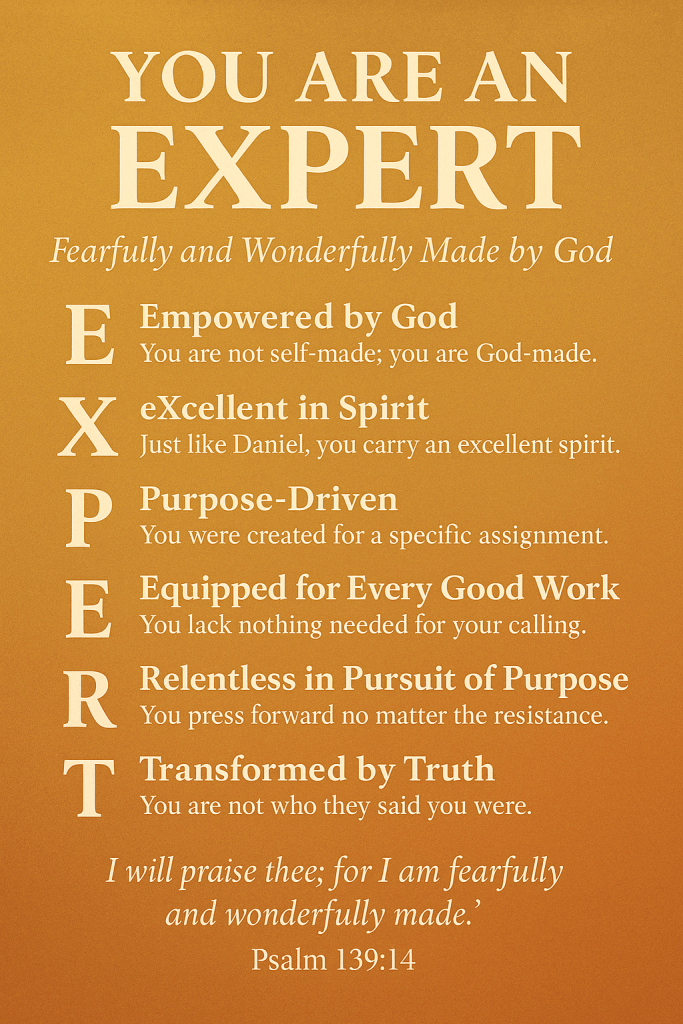
You Are an EXPERT that is Fearfully and Wonderfully Made by God

You are an Expert for the month of August and Beyond!

There’s a word the world throws around—expert—as if it’s reserved for the elite, the degreed, or the endorsed by man. But I want to remind you of a higher truth: You are already an expert because you were fearfully and wonderfully made by God. Your Creator, the Master Designer, handcrafted you with excellence, skill, intention, and divine purpose.

You don’t need the world’s applause to confirm your assignment. God’s fingerprint is on your every fiber, and that is your certification of expertise.


EXPERT: A Kingdom Identity

Let’s redefine the word EXPERT according to God’s divine design for your life:

E – Empowered by God
You are not self-made; you are God-made. The Holy Spirit empowers you with wisdom, courage, and authority. Your competence does not come from men but from God.
“Not that we are sufficient of ourselves to think any thing as of ourselves; but our sufficiency is of God;” – 2 Corinthians 3:5 KJV

X – eXcellent in Spirit
Just like Daniel, you carry an excellent spirit. Excellence is not perfection, but a posture of honoring God with your gifts. Your standard is set by Heaven.
“Then this Daniel was preferred above the presidents and princes, because an excellent spirit was in him…” – Daniel 6:3 KJV

P – Purpose-Driven
You were created for a specific assignment. Your experiences, scars, testimonies, and skills are not random—they were divinely orchestrated for your impact.
“The LORD will perfect that which concerneth me…” – Psalm 138:8 KJV

E – Equipped for Every Good Work
God doesn’t call the equipped—He equips the called. You lack nothing needed for your calling. You have divine resources in your spirit, waiting to be activated.
“That the man of God may be perfect, throughly furnished unto all good works.” – 2 Timothy 3:17 KJV

R – Relentless in Pursuit of Purpose
You press forward no matter the resistance. You don’t quit when it gets hard—you press. You are tenacious, driven by divine destiny, and unshaken by delay or denial.
“I press toward the mark for the prize of the high calling of God in Christ Jesus.” – Philippians 3:14 KJV

T – Transformed by Truth
You don’t operate from insecurity or comparison. You are renewed daily by the Word. You are not who they said you were—you are who God says you are.
“And be not conformed to this world: but be ye transformed by the renewing of your mind…” – Romans 12:2 KJV

You Are Fearfully and Wonderfully Made

Let this resonate in your spirit:
“I will praise thee; for I am fearfully and wonderfully made: marvelous are thy works; and that my soul knoweth right well.” – Psalm 139:14 KJV

God didn’t make you average. You are His masterpiece. You were made to master something. There is an area of life—whether it’s teaching, creating, leading, healing, building, parenting, counseling, managing, or ministering—where your anointing flows freely and your presence shifts atmospheres. That’s your expert zone.

You don’t need to compare, compete, or copy. You are the only “you” this world will ever get. Your fingerprint proves your uniqueness. You have something the world needs, and it was deposited in you by the hands of God.

How to Walk Boldly as God’s Expert:

Own your uniqueness – Celebrate your differences. God didn’t make a mistake with you.

Acknowledge your source – Stay connected to God, the well of your wisdom.

Invest in your development – Study, sharpen, and grow, knowing you are stewarding a gift.

Serve others – Experts don’t hoard knowledge; they multiply it by serving.

Stay humble and teachable – Being an expert doesn’t mean you know everything—it means you’re faithful with what you’ve been given.

Final Words of Empowerment

Today, I commission you to rise with confidence—not in your degrees, titles, or approval of man—but in the truth of God’s Word. You are His expert, strategically placed on earth to express His glory through your gifts.

God has already declared you more than enough. Walk in it. Speak like it. Build like it. Pray like it. Lead like it. Create like it. You are fearfully and wonderfully made to be His EXPERT.

This is not just encouragement—it’s a divine call to action.

You are no accident.
You are anointed.
You are relentless.
And you, beloved, are an EXPERT by design.

Selah Moment with Dr. Althea Winifred

Disenfranchised Grief – When No One Understands Your Pain”

Not all grief is met with casseroles, sympathy cards, and visible support. Some grief hides behind silence, misunderstanding, or dismissal. It’s the pain people don’t talk about—the kind that society doesn’t acknowledge, that the Church sometimes overlooks, and that even close friends may not recognize.

This is disenfranchised grief—when your loss doesn’t “qualify” for comfort in the eyes of others, but it wounds you all the same.

This week, we bring those unseen sorrows into the light. Because even if people don’t understand your pain, God does.

What Is Disenfranchised Grief?

It is the grief no one gives you permission to have.

It is the sorrow that others minimize.

It is the ache that feels out of place.

Examples include:

The loss of a friendship that simply faded The grief of infertility or miscarriage The death of a relationship due to betrayal or emotional separation Grieving someone still living but distant (e.g., addiction, estrangement, dementia) Loss of a dream, identity, or sense of purpose Private trauma that has never been validated

These losses don’t always receive sympathy—but they still leave scars.

Biblical Grief Was Not Always Public

In John 11, when Lazarus died, Martha ran to meet Jesus—but Mary sat still in the house. (John 11:20 KJV)

Not every griever is public. Not every grief is seen.

But when Jesus arrived, He didn’t ignore Mary. He asked for her. He went to her. And He wept—not because He needed to, but because her pain mattered.

Jesus never overlooks private pain. He seeks it. He honors it. He heals it.

When People Don’t Understand, God Still Sees

Hagar, cast out and forgotten, wept in the wilderness.

But the angel of the Lord found her and gave her this truth:

“Thou God seest me…” (Genesis 16:13 KJV)

When you feel invisible in your grief—remember this:

You are never invisible to God.

The One who knit your soul is intimately acquainted with your sorrow, even when the world is not.

Psalm 56:8 reminds us, “Put thou my tears into thy bottle: are they not in thy book?”

God records what others ignore.

You Don’t Need Public Permission to Grieve

Let this truth settle deeply:

You do not need others to validate your grief in order for it to be real.

You don’t need a death certificate to mourn a loss.

You don’t need a support group to grieve with God.

You don’t need explanation to feel pain.

Grief is the soul’s honest reaction to any kind of loss.

And your soul has the right to grieve, even if others don’t understand why.

Selah Moment: Making Room for the Unseen

Pause and reflect:

What loss have I been grieving silently? Where have I felt invalidated or ignored in my pain? What do I need to acknowledge before God, even if no one else sees?

You don’t need to shout your sorrow to make it real.

Whisper it in prayer.

Weep it in worship.

Let it be heard in Heaven.

Scripture Meditation This Week:

“The LORD is nigh unto them that are of a broken heart…” (Psalm 34:18 KJV)

“Thou God seest me.” (Genesis 16:13 KJV)

“He healeth the broken in heart, and bindeth up their wounds.” (Psalm 147:3 KJV)

Prayer for the Unseen and Unspoken:

Father, I thank You because I know You hear me. Let Your will be done.

You see the grief that others overlook.

You understand the losses I haven’t spoken.

You know the weight I carry in silence.

Today, I bring You my unacknowledged sorrow.

Validate what others have dismissed.

Heal the places I thought I had to hide.

Remind me that I am fully seen, fully known, and fully loved—even in my quiet pain.

In Jesus’ Name. Amen.

Closing Reflection:

Some griefs never make it to the altar or funeral.

But they are still holy. Still real. Still in need of healing.

If it matters to your heart, it matters to God.

Grieve freely. Heal deeply.

And let the unseen become the sacred.

Selah Moment with Dr. Althea Winifred

“Faith That Works: A Call to Accountability”

Scripture Text: James 2:18 KJV

“Yea, a man may say, Thou hast faith, and I have works: shew me thy faith without thy works, and I will shew thee my faith by my works.”

Introduction:

Beloved, today we stand at a critical crossroad in the walk of every believer — the junction where profession meets practice, where declaration meets demonstration, where belief becomes behavior. 

The epistle of James challenges us to move beyond lip service and to embody a living, breathing, and working faith. 

The Apostle doesn’t denounce faith; rather, he calls for a complete faith—a faith that can be seen, felt, and followed.

James 2:18 reads:

“Yea, a man may say, Thou hast faith, and I have works: shew me thy faith without thy works, and I will shew thee my faith by my works.”

This verse is not merely a comparison; it is a call to accountability.

I. Faith Can Be Spoken, but True Faith Must Be Shown

There are many who say they have faith, but James confronts the insufficiency of a said faith that lacks the substance of action.

• Faith without action is invisible.

You cannot see a man’s heart, but you can see his hands.

• James is essentially saying, “If your faith is real, then let me see it in how you live, how you love, and how you labor for the Lord.”

Matthew 5:16 KJV echoes this truth:

“Let your light so shine before men, that they may see your good works, and glorify your Father which is in heaven.”

🡺 True faith has fruit.

🡺 True belief produces behavior.

🡺 If you say you trust God, then let your trust be seen in your walk, your works, and your willingness to obey Him.

II. Faith Without Works Is Dead, But Faith That Works Is Alive

James doesn’t separate faith and works — he integrates them. He is not promoting salvation by works but revealing that saving faith is never alone.

James 2:17 KJV says,

“Even so faith, if it hath not works, is dead, being alone.”

Dead faith is dormant, inactive, and unresponsive. But living faith is productive, vibrant, and alive.

• Abraham believed God, and that faith was made perfect when he obeyed and offered up Isaac (James 2:21-22).

• Rahab believed in the God of Israel, and that belief moved her to hide the spies (James 2:25).

🡺 Their faith had legs. Their belief had boldness. Their trust had traction.

III. Works Are Not the Root of Salvation, but They Are the Fruit of Salvation

Ephesians 2:8-10 KJV makes it plain:

“For by grace are ye saved through faith; and that not of yourselves: it is the gift of God: 9. Not of works, lest any man should boast. 10. For we are his workmanship, created in Christ Jesus unto good works, which God hath before ordained that we should walk in them.”

We are not saved by works, but we are saved for works. The grace that saves us also enables us to do the will of God.

🡺 We don’t work to be saved—we work because we are saved.

🡺 Works are not a requirement for salvation, but they are the evidence of salvation.

IV. Your Faith Should Be a Living Witness to Others

The world is watching. What do they see?

• Can they see your love through your actions?

• Can they see your trust in God through how you respond to trials?

• Can they see your commitment through your service and sacrifice?

Your deeds preach louder than your words.

Your obedience is a testimony that your faith is real.

Jesus said in John 13:35 KJV:

“By this shall all men know that ye are my disciples, if ye have love one to another.”

Love is a work of faith.

V. Conclusion: What Is Your Faith Showing Today?

If someone followed you for a week, without hearing a word from your lips, would they be able to tell that you are a believer? Would they see humility, kindness, perseverance, service, generosity, prayer, and holiness?

James challenges the Church:

“Shew me thy faith without thy works, and I will shew thee my faith by my works.”

Let your faith do the talking. Let your faith walk the walk. Let your faith build the Kingdom.

Call to Action:

• Examine your faith.

• Ask yourself: Is it just confession, or is it active obedience?

• Commit today to walk in visible faith—not to impress men, but to glorify God.

Closing Prayer:

Father, I thank You because I know You hear me. Let Your will be done.

Lord, ignite in us a faith that is not only declared with our mouths but demonstrated with our lives.

Let our hands serve, our hearts love, and our lives reflect the trust we have in You. May our works testify of Your grace in us, and may our obedience be a light in the darkness.

Strengthen us to live out what we believe, that the world may know we are Yours. In Jesus’ Name, Amen.

Selah Sermon by Prophetess Dr. Althea Winifred

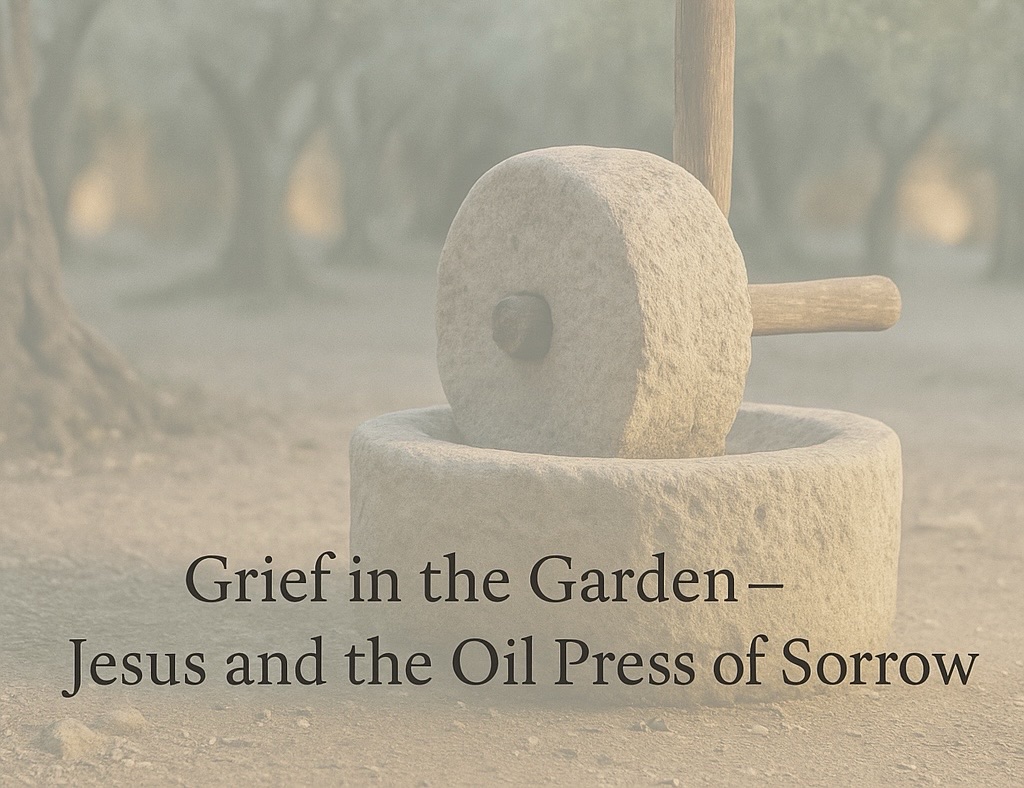
Grief in the Garden – Jesus and the Oil Press of Sorrow

There is a place in Scripture where sorrow, surrender, and sacred purpose converge—it is the Garden of Gethsemane.

The name Gethsemane means “oil press.” It is the place where olives are crushed to release what is hidden within.

It is also the place where Jesus, the Son of God, grieved in full humanity.

As we walk through the dimensions of grief, we must stop in Gethsemane—not just as observers, but as those who can say, “I’ve been there.”

The garden reminds us that even Jesus wept, wrestled, and was wounded by grief—and through it, something divine was released.

The Weight of Sorrow

“And he began to be sorrowful and very heavy.” (Matthew 26:37 KJV)

The grief Jesus experienced in the garden was so intense, the Bible says He fell on His face.

It was not just physical agony He foresaw—it was the crushing weight of separation, suffering, betrayal, and death.

His sorrow was real. His anguish was felt. His pain was honest.

This is the Savior who understands our sorrow intimately—not from a distance, but from a garden floor.

The Cry of the Will

Jesus prayed: “O my Father, if it be possible, let this cup pass from me: nevertheless not as I will, but as thou wilt.” (Matthew 26:39 KJV)

Grief often pulls us into this same place—the battle between what we desire and what God allows.

We want the pain to pass. We want the outcome to change.

Yet healing comes when we yield our grief—not in silence, but in surrender.

Jesus didn’t hide His grief. He brought it before the Father. And in doing so, He showed us how to mourn with faith.

The Pressing Releases the Oil

In Gethsemane, the oil press crushed the olive to produce something fragrant and purposeful.

Likewise, grief can feel like a crushing—but in God’s hands, it becomes a releasing.

What’s pressed out of us in sorrow is not weakness—it’s anointing.

What’s birthed through tears is not waste—it’s power.

Isaiah 53:10 says, “It pleased the LORD to bruise him…”

Not because pain pleases God, but because redemption was on the other side of that pressing.

There is oil in your grief.

There is purpose in your pressing.

There is life in what felt like death.

You Are Not Alone in the Garden

Jesus did not grieve in isolation—He invited His disciples to watch and pray.

Even though they failed to stay awake, His request reveals a truth:

We were not meant to grieve alone.

Even the Son of God longed for companionship in His hour of sorrow.

When grief presses you, invite others to stay awake with you in prayer.

And more importantly—know that Jesus, the Man of Sorrows, is always awake, always watching, and always interceding.

Selah Moment: Grief That Produces Glory

This week, reflect on your personal Gethsemane:

Where are you feeling pressed right now? What “cup” are you begging to pass? Can you find the oil in this place of sorrow?

Grief may bruise you—but God will bless you through it.

He is producing something eternal in the place that feels like the end.

Scripture Meditation This Week:

“And being in an agony he prayed more earnestly: and his sweat was as it were great drops of blood falling down to the ground.” (Luke 22:44 KJV)

“He was despised and rejected of men; a man of sorrows, and acquainted with grief…” (Isaiah 53:3 KJV)

“Nevertheless not my will, but thine, be done.” (Luke 22:42 KJV)

Prayer for the Pressed:

Father, I thank You because I know You hear me. Let Your will be done.

This grief feels like Gethsemane—heavy, lonely, and crushing.

But I trust You in the press.

Like Jesus, I surrender—not just my pain, but my will.

Let this sorrow release something sacred.

Let the oil of purpose flow through this grief.

Give me strength to endure the weight and faith to believe there is glory beyond it.

In Jesus’ Name. Amen.

Closing Reflection:

Grief is a garden. A place of crushing—but also a place of communion.

You are not abandoned in your sorrow.

You are being prepared—for resurrection, for purpose, and for power.

Let your tears fall. Let your will yield.

And let God press the oil of heaven from your pain.

Selah Moment with Dr. Althea Winifred

Align Me, Lord, with Your Will for My Life

Father, I come before You with a surrendered heart, crying out from the depths of my soul—Align me, Lord, with Your will for my life. Not my will, not my way, and not my timing, but Yours. There is no safer place to be than in the center of Your perfect will. Your Word declares, “The steps of a good man are ordered by the Lord: and he delighteth in his way” (Psalm 37:23, KJV). I desire to walk in the path You have ordained, even if it means letting go of everything familiar, comfortable, and predictable.

To be aligned with Your will is to yield my plans, my ambitions, and my desires at the altar of obedience. It is to say, like Jesus in Gethsemane, “Nevertheless not my will, but thine, be done” (Luke 22:42, KJV). The alignment I seek is not partial nor occasional—it is total, intentional, and daily. It requires trust in Your divine wisdom, even when the way is hidden, and the path is paved with uncertainty. I recognize that to be in alignment with You is to live with conviction, with purpose, and with Kingdom vision.

Father, remove every distraction, dismantle every idol, and silence every voice that seeks to pull me away from Your design. Let every delay be used for preparation, every detour for pruning, and every disappointment as divine redirection. I choose to walk by faith and not by sight, knowing that Your will is not just acceptable—it is good and perfect (Romans 12:2, KJV). I reject the counterfeit paths of culture, convenience, and carnality. I embrace the cross. I embrace correction. I embrace communion with You.

Lord, I don’t just want to do Your will—I want to become it. Let my heart beat in rhythm with Heaven. Let my desires be shaped by what pleases You. Teach me to wait when You say wait, to move when You say move, and to speak only what You have ordained. Keep me from striving in the flesh for what can only be birthed in the Spirit. Align my relationships, my assignments, and my thoughts with Your plan.

I understand that alignment may cost me—but it will never rob me. It may call for sacrifice, but never without reward. It may separate me from man’s applause, but it draws me closer to Your presence. When I am aligned with You, I can confidently declare, “Thou wilt shew me the path of life: in thy presence is fulness of joy; at thy right hand there are pleasures for evermore” (Psalm 16:11, KJV).

Align me, Lord, until I walk in holy synchronization with Your heartbeat. Align me until my life echoes Your glory. Align me until every step fulfills destiny. May my life be the evidence of a soul that didn’t chase success, but chose surrender. For in Your will, I will find my true self, my highest call, and my eternal joy.

Selah Moment with Dr. Althea Winifred

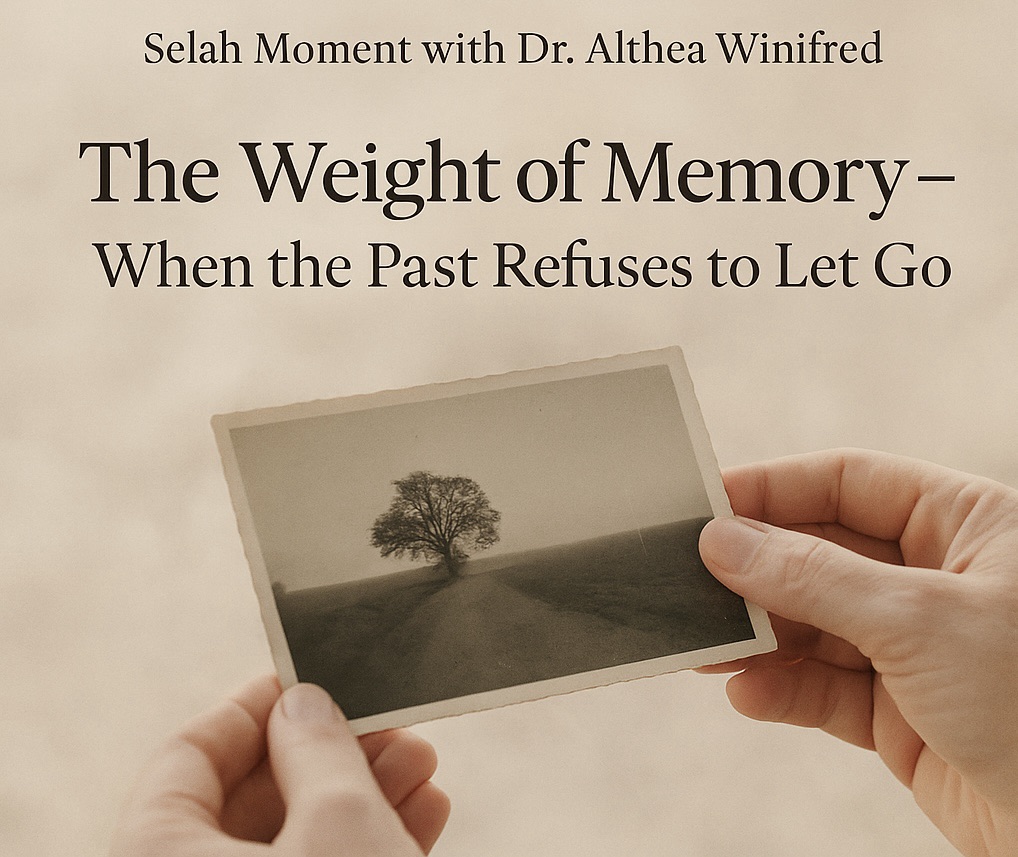
The Weight of Memory – When the Past Refuses to Let Go

Memory can be a precious gift—or a persistent burden.

When grief touches our lives, memories often rise with sharp clarity. The sound of a voice, the scent of a favorite meal, the flash of a photo—suddenly, the past is not just remembered, it is relived.

While memory can comfort us, it can also keep us tethered to the pain. Sometimes, what hurts most is not what we lost, but what we remember most vividly. In this eleventh week, we explore the weight of memory, and how God walks with us through the tension between honoring the past and embracing healing.

Memories That Linger Loudly

Grief activates the mind like few other experiences. It awakens memories—some tender, some traumatic. And often, those memories don’t wait for an invitation. They arrive unexpectedly, bringing tears, guilt, laughter, or regret.

The weight of memory might sound like:

“I can still hear their laugh.” “I keep replaying our last conversation.” “I wish I had one more moment.” “Why didn’t I say more? Do more? Be more?”

These thoughts are not wrong—they are human.

But they can become heavy if we don’t learn how to carry them with grace, not guilt.

The Bible Remembers, Too

The Word of God is full of memory.

The Israelites were constantly instructed to remember—not just for nostalgia, but for perspective.

In Deuteronomy 8:2, we read:

“And thou shalt remember all the way which the LORD thy God led thee…”

Psalm 77:11 says, “I will remember the works of the LORD: surely I will remember thy wonders of old.”

Memory is a tool when submitted to the Spirit—it becomes a reminder of God’s faithfulness, not just of our sorrow.

Even Jesus, on the eve of His crucifixion, gave us communion—a ritual of remembrance.

Not to keep us stuck in pain, but to keep us anchored in promise.

When Memory Hurts More Than It Helps

There are times when memory feels like torment.

When it wakes you up at night.

When it replays moments of regret.

When it won’t let you move forward.

This is where we must ask the Holy Spirit to sanctify our memories—to help us remember with hope, not just with heaviness.

2 Corinthians 10:5 instructs us to “bring into captivity every thought to the obedience of Christ.”

This includes the memories that seem to haunt us.

Not by erasing them, but by reframing them in the truth of God’s Word.

How to Carry Memory Well in Grief

Honor the Past, Don’t Idolize It Memories are sacred, but the past is not our savior—Jesus is. Let your memories serve healing, not hinder it. Speak the Memories Aloud Share them with a trusted friend. Write them in a journal. Turn them into legacy. Pain unspoken becomes poison. But memory voiced becomes ministry. Give Memory to God in Prayer Say, “Lord, I remember this moment, and it still aches. But I surrender it to You. Heal what still hurts. Use what remains.”

Selah Moment: What Are You Still Carrying?

Pause and reflect:

What memory feels too heavy to carry alone? What moments do you revisit that still bring tears or torment? What is God asking you to release—not to forget, but to be freed?

Memories will always be part of the journey, but they do not have to define your direction.

Scripture Meditation This Week:

“This I recall to my mind, therefore have I hope. It is of the LORD’S mercies that we are not consumed…” (Lamentations 3:21–22 KJV)

“Casting all your care upon him; for he careth for you.” (1 Peter 5:7 KJV)

“I will remember the works of the LORD…” (Psalm 77:11 KJV)

Prayer for Memory and Healing:

Father, I thank You because I know You hear me. Let Your will be done.

Today I bring You my memories—the sweet ones that make me smile, and the painful ones that bring tears.

You know what still lingers in my heart.

You see the parts of the past I can’t seem to release.

Heal me in the remembering.

Sanctify my memory.

Use every moment, even the broken ones, to bring glory to Your name and wholeness to my soul.

Let my memories become a river of grace, not a weight of sorrow.

In Jesus’ Name. Amen.

Closing Reflection:

You don’t have to erase the past to move forward.

You only need to place it in the hands of the One who sees the full picture.

Your memory may revisit what was, but your faith must hold to what is still to come.

There is mercy in the memory when God holds it with you.

Selah Moment with Dr. Althea Winifred

The Spirit of Hatred – A Silent Destroyer of Humanity

The spirit of hatred is one of the most destructive forces at work in the world today. It is invisible to the natural eye, yet it infects the heart, mind, and actions of individuals, families, communities, and nations. It operates like a toxin—silently spreading, deeply embedding itself, and manifesting in words, behaviors, decisions, and systems. It doesn’t discriminate by age, race, gender, or social status. It seeks a willing host, and once received, it begins to kill, steal, and destroy from within.

Hatred is not simply a feeling; it is a spirit that originates from darkness. According to the Word of God, “Whosoever hateth his brother is a murderer: and ye know that no murderer hath eternal life abiding in him” (1 John 3:15, KJV). This shows us that hatred is not passive—it is active, and its intent is violent. Even when not expressed physically, it murders the potential for unity, trust, compassion, and love.

The spirit of hatred thrives in environments of bitterness, offense, envy, rejection, and trauma. It feeds off unresolved pain and unrepented pride. It whispers lies that make others seem like enemies, even when they are not. It turns misunderstandings into lifelong grudges and differences into divisions. The longer it stays unaddressed, the more it grows—eventually normalizing cruelty, hostility, and vengeance.

This spirit is cunning. It hides behind culture, politics, religion, and even justice. It distorts truth to justify evil and cloaks itself in self-righteousness to avoid repentance. People under its influence often do not realize they are being manipulated. They say and do things in hatred while believing they are standing for what is right.

But hatred is a counterfeit. It mimics conviction but lacks compassion. It pretends to be strength but is truly weakness masked in fear. God is not the author of hatred. “He that loveth not knoweth not God; for God is love” (1 John 4:8, KJV). Where hatred reigns, the love of God has been pushed out.

The only cure for the spirit of hatred is deliverance through truth, repentance, and love. We must first recognize its presence. Denial only strengthens it. Then, we must repent for where we have allowed hatred to live in our hearts, whether toward others, ourselves, or even God. Finally, we must replace hatred with the Spirit of Christ, who is the embodiment of love, mercy, and truth.

As Ephesians 4:31–32 (KJV) says, “Let all bitterness, and wrath, and anger, and clamour, and evil speaking, be put away from you, with all malice: And be ye kind one to another, tenderhearted, forgiving one another, even as God for Christ’s sake hath forgiven you.”

The spirit of hatred may be ancient, but it is not eternal. It can be cast down. It can be silenced. But this will not happen until individuals and communities begin to confront it boldly with spiritual discernment, biblical truth, and courageous love.

It’s time to recognize that hatred is not an emotion we manage—it is a spirit we must evict. Let the healing begin where hatred once reigned. Let love lead. Let Christ be Lord.

Selah Moment with Dr. Althea Winifred

Facts about the Word of God:

Romans‬ ‭9‬:‭28‬ ‭KJV‬‬ “For he will finish the work, and cut it short in righteousness: because a short work will the Lord make upon the earth.”

It is happening on the 9th of July.

The scripture is Romans 9 verse 28. 9+2+8=19

Facts about the date:

  • 190th of the year
  • July 9
  • Wednesday
  • 28th Week

Facts about Numbers:

  • 7 means Spiritual Completeness
  • ⁠9 means Divine Completeness from the Father and Fruit of the Spirit plus it is the last single digit before changing to double digits.
  • 19 means Faith.
  • 28 means Eternal life.

Selah Moment with Dr. Althea Winifred

Facts about Romans 9:28 (KJV) — “For he will finish the work, and cut it short in righteousness: because a short work will the Lord make upon the earth.”

There comes a moment in your walk with God when the long road begins to quicken. The slow seasons begin to shift. The delay breaks under the weight of divine urgency. In this Selah moment, pause with me and hear what the Spirit is saying through this powerful verse.

He will finish the work. What God starts, He is fully committed to complete. You may feel stuck in the middle, but the Author of your faith is also the Finisher (Hebrews 12:2). God doesn’t abandon the process midway. Every promise, every prophecy, every purpose has a finish line in His plan. Even if you see rubble, He sees results. What He began in you—He will bring to completion.

He will cut it short in righteousness. God is not just working; He is working righteously. His timing is not haphazard. When He moves quickly, it is not rushed—it is righteous. This means it is perfect, holy, and aligned with His justice and mercy. He is trimming the process not out of pressure, but out of prophetic timing. When it seems like things happen suddenly, remember—they have always been happening in His righteous realm.

Because a short work. There is an urgency in the Spirit. The Lord is doing a quick work that does not bypass process but intensifies purpose. What used to take years will be done in months. What required long battles will now be settled swiftly. This is not about human effort—it is about divine acceleration. God is not on your clock; He is on His Kingdom calendar.

Will the Lord make upon the earth. This is not just about you—it is about the earth. God is orchestrating something global, eternal, and holy. His work upon the earth is visible, tangible, and prophetic. He is bringing His Word to pass in nations, in systems, in families, and in individuals. You are part of His greater narrative. Lift up your eyes—He is not only working in your life, but through your life, for the earth’s redemption.

Selah. Pause here and let this settle in your spirit: The Lord is finishing, cutting short, accelerating, and manifesting—not by might, nor by power, but by His Spirit. Prepare your heart to receive the fulfillment. The long wait is about to become a quick work. Watch Him move.

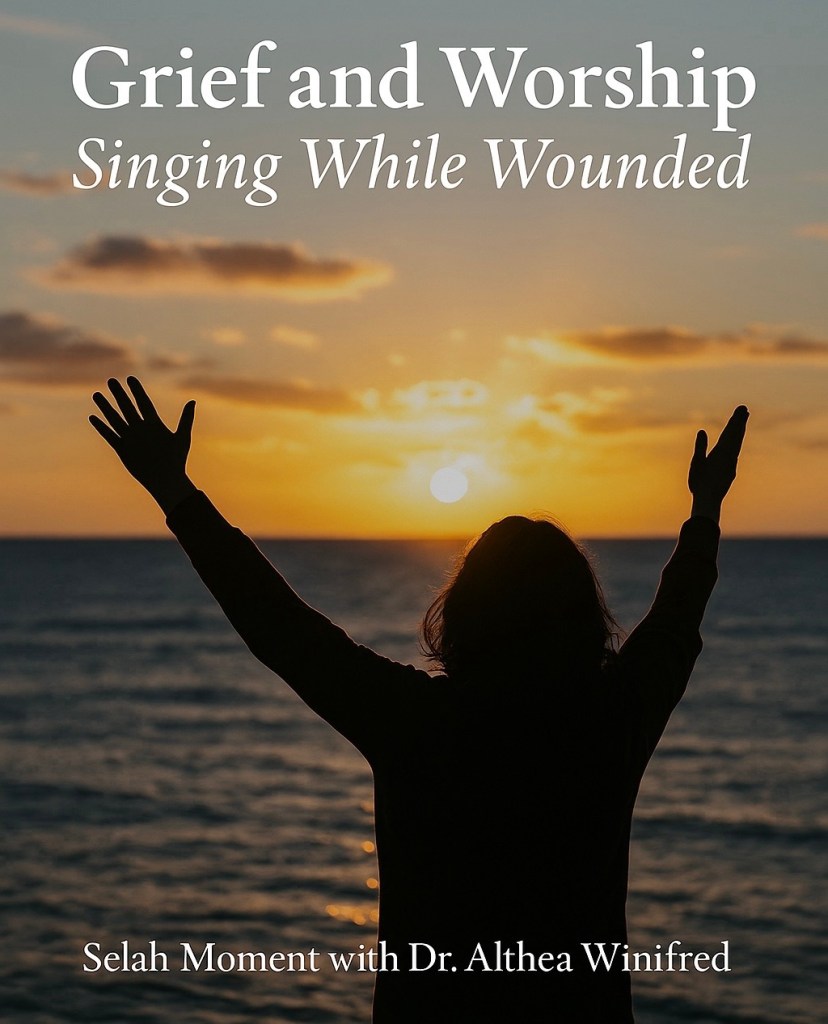
Grief and Worship – Singing While Wounded

One of the most powerful, paradoxical acts a grieving heart can offer is worship.

To worship in joy is beautiful.

But to worship in sorrow—that is holy.

Worship in grief is not a performance. It’s not a declaration that everything is okay. It’s an offering of brokenness. It’s singing when your soul feels silent. It’s lifting your hands while your heart is heavy. It’s praising God not because of how you feel, but because of who He is—unchanging, sovereign, faithful.

This week, we explore the sacred intersection of grief and worship—where lament becomes liturgy, tears become testimonies, and mourning becomes melody.

Biblical Grief Was Never Silent

The Bible does not separate worship from grief. In fact, many of the Psalms—the songs of God’s people—were written in valleys of sorrow.

David cried, “Why art thou cast down, O my soul? and why art thou disquieted within me? hope thou in God…” (Psalm 42:5 KJV)

Habakkuk declared, “Although the fig tree shall not blossom… yet I will rejoice in the LORD…” (Habakkuk 3:17–18 KJV)

Job, in his moment of unspeakable loss, “arose… and worshipped” (Job 1:20 KJV)

These were not sanitized, pretty moments.

They were moments of surrender—raw, real, and reverent.

Worship Is Not Denial—It Is Declaration

Worship does not ignore grief. It confronts it with truth.

It declares:

I hurt, but God is still healer. I’m broken, but He is still worthy. I’m questioning, but He is still holy. I feel abandoned, but I know He is present.

Worship in grief isn’t pretending. It’s positioning your heart in the presence of the One who understands deepest pain.

Worship in the Midst of Loss

Sometimes, worship is a whisper.

Sometimes, it’s a song through tears.

Sometimes, it’s silence with lifted hands.

But every time, it’s warfare.

When you worship while grieving, you are pushing back the darkness.

You are telling your soul: “This will not bury me. I will bless the Lord.”

Psalm 34:1 says, “I will bless the LORD at all times: his praise shall continually be in my mouth.”

Even in sorrow. Especially in sorrow. That’s the “all times.”

Your Worship Becomes Your Weapon

Grief often makes you feel powerless. But worship reminds you that your spirit still has authority.

Your voice may shake, but your praise is solid.

Your circumstances may change, but your God never does.

Acts 16 tells us Paul and Silas sang praises in prison.

Their chains didn’t fall when they wept.

Their breakthrough came when they worshipped.

There is power in praising through pain.

Not because the pain disappears—but because your spirit rises above it.

Selah Moment: Worship Through the Wound

Pause this week and ask:

What song has been silenced by my sorrow? What truths do I need to sing even if I don’t feel them yet? What would it look like to worship from this wounded place?

Don’t wait for perfect peace to praise.

Praise can be your path to peace.

Scripture Meditation This Week:

“Offer the sacrifices of righteousness, and put your trust in the LORD.” (Psalm 4:5 KJV)

“And at midnight Paul and Silas prayed, and sang praises unto God…” (Acts 16:25 KJV)

“The LORD is my strength and my shield; my heart trusted in him, and I am helped: therefore my heart greatly rejoiceth; and with my song will I praise him.” (Psalm 28:7 KJV)

Prayer of Worship in Grief:

Father, I thank You because I know You hear me. Let Your will be done.

I come to You, not with easy words, but with a weary heart.

Still, I choose to worship You. Not because everything is right, but because You are still righteous.

You are still God. You are still good.

Even in my grief, You are worthy.

Let my worship rise from the ashes. Let it be a sweet sound in Your ears.

And as I lift You, lift me.

Give me beauty for ashes, strength for mourning, and joy for heaviness.

In Jesus’ Name. Amen.

Closing Reflection:

You don’t have to wait until the pain is gone to lift your voice.

Worship while you’re wounded.

Praise in the pause.

And sing until your sorrow turns into surrender.

Selah Moment with Dr. Althea Winifred

A Hard Truth – Bermudians Hate Bermudians

I begin this letter with humility and sincerity. If these words offend, I offer my heartfelt apology. This is not an attack—it is a call to wake up, reflect, and act.

There is a growing ache in the soul of Bermuda. A wound that is not being caused by foreign hands or strangers arriving on our shores. The truth is stark, raw, and devastating: Bermudians are killing Bermudians.

No one is flying into Bermuda, boating in, or swimming from afar to commit violence on our island. These are not acts of outsiders. These are our own sons and daughters—born here, raised here, educated in our schools, worshipped in our churches, celebrated our holidays, attended our family barbecues, swam in the same turquoise waters, and walked the same roads of this beautiful island we all call home.

What we are facing is not a race issue. It is not a problem to be laid solely at the feet of the government, the education system, parents, police, or political parties. What we are facing is a hatred problem, and it is festering in the hearts of our people.

Hatred is a spiritual poison. It is passed quietly through unresolved pain, inherited bitterness, economic disparity, betrayal, jealousy, and unhealed trauma. And yet, as a society, we are not confronting it. We are treating symptoms while ignoring the disease.

Hatred must be addressed in our homes, in our churches, in our schools, in our conversations, and in our spirits. We cannot just police it—we must heal it. We cannot just mourn it—we must prevent it. We cannot keep blaming—it is time to start transforming.

Bermuda, we are better than this. We are one people, one island, one family. If we do not face this truth and deal with the hatred among us, we risk losing everything that makes us a nation worth loving.

Let this be the beginning of real dialogue. Let this be the cry that wakes us up.

Selah Moment, Dr. Althea Winifred

A concerned voice for peace, healing, and truth in Bermuda

Next blog called The Spirit of Hatred – A Silent Destroyer of Humanity publishing on July 12, 2025 at 5:55 p.m.

live_THE_BRIDE_AWAKENED_–_“Awakened_to_Her_Identity”_20250630_210325

https://www.podbean.com/media/share/pb-quhga-18f1735
The Bride Awakened is a weekly 30-minute podcast hosted by Dr. Althea Winifred, calling the Bride of Christ to awaken from slumber, adorn herself in righteousness, and await the Bridegroom’s return.

With prophetic insight and biblical teaching, each episode equips listeners to live prepared, powerful, and passionate for Jesus—Awakened, Adorned, and Awaiting His Return.

“Delayed Healing – When Grief Lingers Longer Than Expected”

There is a quiet pressure many grievers feel but rarely voice:

“I should be further along than this.”

People mean well when they ask, “Are you doing better now?”

They hope time has closed the wound.

But what happens when time has passed—weeks, months, even years—and the ache is still there?

This week, we address the unspoken burden of delayed healing—when grief doesn’t move on schedule, and the journey takes longer than others expect or than we planned.

Delayed healing is not denial. It’s not dysfunction. It’s not a lack of faith.

It’s a signal that grief is still doing sacred work beneath the surface.

There Is No Deadline for Healing

Culture imposes time limits. God does not.

Jesus never told Martha and Mary, “It’s been four days. You should be over this.”

Instead, He wept with them (John 11:35). He entered their pain before He performed the miracle. He was not in a hurry.

Healing is not linear. It is layered. It comes in waves.

And sometimes the deeper the love, the longer the grief.

Psalm 30:5 says, “Weeping may endure for a night, but joy cometh in the morning.”

Yet for many, that “night” feels like a long season.

But just as dawn comes gradually, so does emotional light.

When the Pain Resurfaces

You may find yourself unexpectedly triggered:

A date on the calendar A smell, song, or voice A new milestone your loved one will never reach Seeing others move on while you still feel stuck

These experiences don’t mean you’ve gone backwards.

They mean the wound is being revisited—not to reopen it, but to reveal where God still wants to minister.

God never rushes the heart.

In Isaiah 42:3, He says, “A bruised reed shall he not break, and the smoking flax shall he not quench…”

He is gentle with your healing.

Grief Does Not Expire

There is no expiration date on sorrow.

Some pain stays tender. Some memories stay vivid. Some losses remain defining.

But God can be glorified even in delayed healing.

He can use what lingers to produce deeper compassion, intercession, and trust.

2 Corinthians 1:4 reminds us that God “comforteth us in all our tribulation, that we may be able to comfort them which are in any trouble…”

Your extended healing may be someone else’s lifeline.

Give Yourself Permission to Heal in Layers

You are not broken for still grieving.

You are not faithless for still feeling.

You are human. And God honors your humanity.

Instead of judging the pace of your healing, ask:

What is God teaching me in this layer? Where do I still need comfort, not correction? Who can I invite into my slow but sacred process?

Selah Moment: Healing Without a Clock

Pause this week and reflect:

Where have I imposed a deadline on myself? Have I compared my healing to someone else’s? What would it look like to surrender my timeline to God?

Healing delayed is not healing denied.

It is healing on divine terms.

Trust Him to complete the work—no matter how long it takes.

Scripture Meditation This Week:

“He hath made every thing beautiful in his time…” (Ecclesiastes 3:11 KJV)

“The LORD is nigh unto them that are of a broken heart…” (Psalm 34:18 KJV)

“Being confident of this very thing, that he which hath begun a good work in you will perform it…” (Philippians 1:6 KJV)

Prayer for the Delayed but Deeply Loved:

Father, I thank You because I know You hear me. Let Your will be done.

I come to You honestly—I am still healing.

Not on man’s timeline. Not even on mine.

But You, O Lord, are patient. You are present. You are faithful.

Help me not to rush what You are doing slowly but surely.

Quiet the voices that tell me I should be further along.

Anchor me in the truth that You are with me, even here.

Heal every layer in Your time and in Your way.

In Jesus’ Name. Amen.

Closing Reflection:

Healing is not a race.

It’s a relationship—with the One who sees the heart and walks every step beside you.

Take off the pressure. Remove the deadline.

Let healing arrive when Heaven appoints.

Even in delay, He is still Deliverer.

Selah Moment with Dr. Althea Winifred

Sorrow, Shame, and Survival – Unpacking Hidden Layers of Grief

Selah Moment with Dr. Althea Winifred

Grief is never one-dimensional. It is layered. Complicated. Deep.

Beneath the sorrow we readily acknowledge lies another level that often goes unspoken—shame. The shame of how we feel. The shame of what we didn’t say. The shame of what we couldn’t fix. The shame of surviving while others did not. The shame of not “getting over it” fast enough.

This week we expose what many hide: the hidden layers of grief. Because it’s not just the loss that weighs us down—it’s the internal judgment we carry with it.

God never intended us to grieve in hiding. He calls us to bring every layer—sorrow, shame, and survival—into His healing presence.

Sorrow That Speaks

Sorrow is sacred. It’s a language the soul uses when there are no words.

In Scripture, sorrow is not condemned—it’s acknowledged.

Jeremiah, known as the weeping prophet, declared, “Oh that my head were waters, and mine eyes a fountain of tears…” (Jeremiah 9:1 KJV).

Jesus Himself said, “My soul is exceeding sorrowful, even unto death…” (Matthew 26:38 KJV).

Sorrow isn’t a sign of weak faith—it’s a sign of deep love.

When grief is honest, it doesn’t hide its sorrow.

It allows it to speak. To be heard. To be comforted.

Shame That Silences

While sorrow mourns the loss, shame often mourns ourselves.

We carry thoughts like:

“I should have been stronger.” “I should’ve seen it coming.” “I should be over this by now.” “Why did God leave me behind?”

These thoughts, left unchecked, become chains.

Shame makes us isolate. It convinces us our grief is too heavy, too disruptive, too embarrassing to reveal. It robs us of the freedom to grieve honestly.

But God’s grace speaks louder than shame.

Romans 8:1 declares, “There is therefore now no condemnation to them which are in Christ Jesus…”

God is not disappointed in your sorrow. He is not measuring your healing. He is covering you in mercy.

Survival Isn’t a Sin

Some grievers carry the quiet guilt of survival.

Why am I still here when they’re gone?

Why did God preserve me?

Why didn’t I do more?

This is known as survivor’s guilt, and it is real.

But survival is not a punishment—it is an opportunity.

If God allowed you to remain, it is because purpose still breathes in you.

You are not a mistake. You are a miracle in motion.

Isaiah 46:4 says, “…even to your old age I am he; and even to hoar hairs will I carry you: I have made, and I will bear…”

Your life still matters.

Your breath is still sacred.

And God’s hand is still upon you—even in the ache of survival.

Bringing It All to the Cross

Sorrow. Shame. Survival.

Bring them to the cross.

Jesus bore all three.

He was a man of sorrows (Isaiah 53:3), stripped and shamed (Hebrews 12:2), and yet He survived death to give life.

Because He overcame every layer, we can grieve without hiding.

Selah Moment: Unpacking the Hidden Layers

This week, take time to unpack.

Ask yourself honestly:

What am I ashamed of in my grief? What guilt am I carrying about surviving? What sorrow have I suppressed because I felt it was too much?

Bring those thoughts before the Lord—not to be judged, but to be healed.

Scripture Meditation This Week:

“He healeth the broken in heart, and bindeth up their wounds.” (Psalm 147:3 KJV)

“Surely he hath borne our griefs, and carried our sorrows…” (Isaiah 53:4 KJV)

“For I will restore health unto thee, and I will heal thee of thy wounds, saith the LORD.” (Jeremiah 30:17 KJV)

Prayer for Hidden Grief:

Father, I thank You because I know You hear me. Let Your will be done.

I bring You not only my sorrow, but also my shame.

The thoughts I haven’t told anyone. The guilt I carry in silence. The fears I hide from myself.

I trust that You see it all and love me still.

Help me release shame and embrace Your grace.

Remind me that survival is not failure—it is favor.

Heal the hidden places, and restore my heart.

Let Your truth drown out the voice of guilt, and let Your mercy cover the layers I’ve tried to bury.

In Jesus’ Name. Amen.

Closing Reflection:

Grief has layers, but grace reaches deeper.

Let sorrow speak. Let shame be silenced. Let survival become surrender.

And know this—God doesn’t just heal the surface.

He heals the whole soul.

Selah Moment with Dr. Althea Winifred

When God Is Silent – Finding Faith in the Absence of Answers

There is a particular pain in grief that goes beyond the loss itself—it’s the silence that follows. The quiet after the funeral. The echo after the prayer. The unanswered questions. The stillness in your spirit when you’re desperately longing to hear from God but Heaven seems still.

This week, we explore one of the hardest truths in the journey of grief: God is sometimes silent—but He is never absent.

In the silence, He is speaking something deeper than words. He is present in ways we cannot always perceive. And though we may not feel Him, we are never forsaken.

The Agony of Divine Silence

Have you ever cried out and heard nothing in return?

Have you searched the Scriptures and found no clarity?

Have you sat in your prayer closet, heart open, only to feel more alone than when you started?

You are not alone in that experience.

Job cried out in grief and confusion:

“Behold, I go forward, but he is not there; and backward, but I cannot perceive him: On the left hand, where he doth work, but I cannot behold him…” (Job 23:8–9 KJV)

David, the man after God’s own heart, lamented:

“O my God, I cry in the daytime, but thou hearest not; and in the night season, and am not silent.” (Psalm 22:2 KJV)

Even Jesus, in the Garden and on the Cross, experienced that divine stillness:

“My God, my God, why hast thou forsaken me?” (Matthew 27:46 KJV)

Silence Does Not Mean Abandonment

Just because you don’t feel God doesn’t mean He is far.

Just because He’s not answering the way you want doesn’t mean He is not working.

In fact, some of the most transformative moments in the Bible came after long seasons of silence.

Between the Old and New Testaments—400 years passed. No prophets. No fresh Word. Just silence.

And then… Jesus.

Sometimes God’s silence is not His absence. It is His preparation.

He is positioning things. Healing deeply. Teaching trust. Refining faith.

Faith That Listens Differently

Silence can teach you to hear in new ways.

It sharpens your discernment. It deepens your dependence. It quiets the noise of self and amplifies the whisper of His sovereignty.

Grief makes us long for answers, but God gives us presence.

And that presence may not be loud—but it is powerful.

Elijah learned this in 1 Kings 19. After fire, wind, and earthquake—all loud, visible displays—God came in a still small voice (1 Kings 19:12 KJV).

The voice was there. The whisper was enough.

When You Can’t Hear God—Hold What You Know

If your faith feels shaken by the silence, remember this:

God does not change based on your feelings.

He is the same yesterday, today, and forever (Hebrews 13:8 KJV).

Even in silence, His Word remains true.

Even in stillness, His promises are active.

Even in sorrow, His heart toward you is constant.

Selah Moment: Faith in the Silence

Pause this week to reflect:

Where is God asking you to trust even when you don’t hear?

What do you know about His character that you can cling to in the quiet?

Have you mistaken silence for abandonment?

Let the silence become sacred.

Let it stretch your spirit rather than shatter it.

Let it teach you how to walk by faith—not by feelings.

Scripture Meditation This Week:

“I waited patiently for the LORD; and he inclined unto me, and heard my cry.” (Psalm 40:1 KJV)

“It is good that a man should both hope and quietly wait for the salvation of the LORD.” (Lamentations 3:26 KJV)

“The LORD is good unto them that wait for him, to the soul that seeketh him.” (Lamentations 3:25 KJV)

Prayer for Silent Seasons:

Father, I thank You because I know You hear me. Let Your will be done.

Though You seem silent, I believe You are near.

Though I don’t feel answers, I trust Your presence.

Though I don’t understand, I surrender.

Help me not to run from the silence but to rest in it.

Let this stillness deepen my faith, anchor my soul, and awaken my spirit to Your gentle whisper.

Teach me to hear differently. Teach me to wait without wavering.

I trust that You are working, even when I can’t perceive it.

In Jesus’ Name. Amen.

Closing Reflection:

You don’t have to interpret the silence.

You just have to hold His hand in it.

He is still God. Still good. Still speaking—though not always in words.

Faith is not proven in the shout—it is anchored in the silence.

Selah Moment with Dr. Althea Winifred

Grief and the Mind – When Thoughts Refuse to Settle

Grief is not just an ache in the heart; it’s also a storm in the mind.

It’s the sleepless nights replaying what you could have said.

It’s the silent moments haunted by “what if?” and “why now?”

It’s the mental fog that makes the simplest task feel overwhelming.

It’s the tug-of-war between trying to move forward and longing to go back.

In this fifth dimension of grief, we must confront how grief disrupts our thoughts—our focus, memory, concentration, and even our spiritual confidence. You may feel like you’re losing your mind, but you’re not. You are grieving, and your mind is doing its best to survive.

The Mental Impact of Grief Is Real

Grief can impair cognitive function. This is not weakness—it is response.

The brain, while processing loss, can enter a state of shock or protective pause. What’s happening is that your mind is trying to keep you from breaking entirely by fragmenting the experience into pieces it can slowly process.

Many people describe:

Racing or intrusive thoughts Inability to focus Repeated mental rehearsals of the loss Forgetfulness Emotional numbness or over-sensitivity

But here’s the truth: God designed the mind with the capacity to heal.

Though the fog is thick now, clarity will return. It may not be instant, but healing will come.

Biblical Reflections on a Troubled Mind

David writes in Psalm 94:19, “In the multitude of my thoughts within me thy comforts delight my soul.”

Even the psalmist had a mind filled with racing, conflicting thoughts. But in the midst of it, he found something stronger—the comfort of God.

Isaiah 26:3 reminds us, “Thou wilt keep him in perfect peace, whose mind is stayed on thee: because he trusteth in thee.”

God is not asking for perfection in grief—He is offering peace. Not a peace that comes from figuring everything out, but peace that surpasses understanding (Philippians 4:7). A peace that holds you even when your thoughts cannot.

Renewing the Mind While Grieving

Romans 12:2 tells us to “be transformed by the renewing of your mind.”

Grief may cloud the mind, but the Word of God clears it.

Worship recalibrates it. Prayer soothes it. Stillness resets it.

This doesn’t mean your thoughts will stop spiraling overnight, but it does mean you can begin a process of mental renewal by:

Breathing deeply and intentionally (inhale grace, exhale guilt) Reciting Scripture aloud or internally during mental unrest Replacing lies with truth (e.g., “I’ll never be whole again” becomes “He restoreth my soul” – Psalm 23:3) Writing out what’s circling in your mind—grief needs an outlet Inviting the Holy Spirit into the chaos of your thoughts

Your Mind Is Not Failing—It Is Healing

Just as wounds take time to close, the mind needs space to recover.

Give yourself permission to forget things. To pause conversations. To not be okay mentally every day. Grief does not follow the rules of schedules or social expectations. It moves in waves, and sometimes the waves hit your mind first.

But the One who formed your mind can also renew it.

You don’t have to have perfect thoughts for God to work.

You just have to surrender them—bit by bit, moment by moment.

Selah Moment: Guarding Your Mental Garden

This week, I encourage you to sit with your thoughts—not to judge them, but to observe them.

Where is your mind drifting?

What thoughts repeat most often?

What do you need to surrender?

What truth do you need to plant in place of those thoughts?

Your mind is a garden. And even in grief, God is still the Master Gardener.

Scripture Meditation This Week:

“And be renewed in the spirit of your mind.” (Ephesians 4:23 KJV)

“Thou wilt keep him in perfect peace, whose mind is stayed on thee…” (Isaiah 26:3 KJV)

“Casting down imaginations, and every high thing that exalteth itself against the knowledge of God…” (2 Corinthians 10:5 KJV)

Prayer for the Mind in Grief:

Father, I thank You because I know You hear me. Let Your will be done.

My thoughts have been heavy, restless, and scattered.

Some days I cannot concentrate. Other days I cannot stop overthinking.

But You are the God of my mind. You formed it, and You can quiet it.

Speak peace over my mental storms. Let Your Word renew my mind.

Help me to rest in You when I cannot rest in reason.

Fill my thoughts with Your truth and anchor me in the knowledge of Your unfailing love.

In Jesus’ Name. Amen.

Closing Reflection:

You are not going crazy.

You are going through grief.

Let the Word be your compass.

Let worship be your covering.

Let God walk with you through the shadows of your thoughts—until peace floods in again.

Selah Moment with Dr. Althea Winifred

Spiritual Identity and Grief – Who Am I Without Them?

One of the most painful questions grief raises is not simply “Why did this happen?”—but “Who am I now?”

Loss disrupts identity.

It fractures roles, routines, and relationships. When someone we love dies or something we’ve built dissolves, it can feel like part of us died too. The titles we held, the joy we shared, the dreams we shaped with others—when they’re gone, we are often left standing in a painful silence, asking, “Who am I without them?”

This is the dimension of grief that touches spiritual identity. It’s deeper than emotion and greater than memory. It strikes at the core of how we see ourselves in relationship to others, to our purpose, and even to God.

Identity in the Shadow of Loss

After loss, many begin to say things like:

“I don’t know who I am without my spouse.”

“My children are grown and gone—what’s my role now?”

“I lost my ministry, my business, my health… I feel lost.”

“I feel invisible.”

“I feel disconnected from myself.”

These are not just emotional statements—they are identity statements.

Grief doesn’t just take someone from you; it often takes a part of how you identified yourself in that connection.

But here’s the truth: God does not allow grief to erase who you are.

He uses it to reveal who He’s always known you to be.

Biblical Portraits of Identity in Grief

In the Bible, identity and grief are woven together.

Naomi, in Ruth 1:20, declares: “Call me not Naomi, call me Mara: for the Almighty hath dealt very bitterly with me.” Naomi’s name meant “pleasant,” but after the loss of her husband and sons, she saw herself as “Mara”—bitter. Her sorrow shifted her sense of self.

But God didn’t rename her.

Even in grief, God saw Naomi—not Mara.

Likewise, Job lost everything, yet God never stopped referring to him as “my servant Job” (Job 42:7 KJV).

The losses were real. The sorrow was deep. But their identity was secure in God’s eyes.

Grief may challenge how you see yourself—but it will never change how God sees you.

You Are Not Just Who You Were with Them

Your spiritual identity is not dependent on people—it is rooted in Christ.

Before you were someone’s spouse, child, sibling, leader, or friend—you were His.

“Before I formed thee in the belly I knew thee…” (Jeremiah 1:5 KJV)

“Ye are a chosen generation, a royal priesthood…” (1 Peter 2:9 KJV)

“For ye are all the children of God by faith in Christ Jesus.” (Galatians 3:26 KJV)

When the people or positions attached to our earthly identity are removed, what remains is the unchanging truth that we are God’s beloved.

Grief invites us to rediscover ourselves—not in the reflection of others—but in the light of God’s enduring love.

The Process of Rediscovery

Grief will often create a “pause” in your identity—not to destroy you, but to reintroduce you to yourself.

This may look like:

Sitting with uncomfortable questions Revisiting passions buried beneath past responsibilities Redefining purpose for a new season Embracing new roles without guilt Allowing God to speak new vision over your life

You are not betraying the past by growing beyond it.

You are not dishonoring your loved one by living again.

You are not forgetting—you are becoming.

Selah Moment: Who Am I Becoming?

This week, pause to reflect on the identity shifts grief has caused.

What titles have you lost?

What new questions have emerged?

What parts of yourself are resurfacing in this new season?

Grief may have altered your view, but God’s vision of you remains intact.

Ask Him to reveal who you are now—not just who you were then.

You are not forgotten. You are being refined.

Scripture Meditation This Week:

“Ye are the light of the world. A city that is set on an hill cannot be hid.” (Matthew 5:14 KJV)

“For we are his workmanship, created in Christ Jesus unto good works…” (Ephesians 2:10 KJV)

“I will give thee a new name, which the mouth of the Lord shall name.” (Isaiah 62:2 KJV)

Prayer for Identity in Grief:

Father, I thank You because I know You hear me. Let Your will be done.

In this place of grief and uncertainty, I bring You every broken identity, every lost role, and every silent question.

Show me who I am—not just who I was.

Heal the parts of me that were tied to people or seasons now gone.

Teach me to see myself through Your eternal eyes.

Let this journey of grief become a journey of rediscovery.

And let me walk boldly in the newness You are calling me to embrace.

In Jesus’ Name. Amen.

Closing Reflection:

Grief may shift the mirror, but it cannot change the Master’s design.

Let Him show you that you are still called, still chosen, still seen.

You are not who you lost.

You are not where you used to be.

You are God’s beloved—becoming again.

Selah Moment with Dr. Althea Winifred

New Release Announcement: “Oil for the Bride of Christ”

Now available from Next Level Preparations — “Oil for the Bride of Christ” by Dr. Althea Winifred.

This powerful and prophetic book unveils the divine significance of spiritual oil in the life of the Bride of Christ. Discover how the Holy Spirit—represented as Overflowing Anointing, Indwelling Presence, and Living Power—prepares, purifies, and empowers the Bride for the return of the Bridegroom.

Whether you are a leader, intercessor, or believer longing to go deeper, this book will stir your spirit and awaken your readiness.

Order now at: https://books.by/next-level-preparations#oil-for-the-bride-of-christ

Written by Dr. Althea Winifred – equipping the Bride, preparing the way.

God Meets You in the Ashes – The Biblical Response to Mourning

Grief has a way of reducing us to ashes—stripped of routine, shattered by loss, and left in silence with nothing but the fragments of what was. It is a place that feels both holy and harrowing. And yet, throughout Scripture, the ashes of mourning are not the end. They are the place where God meets us most intimately.

This week, we step into a sacred truth: God does not avoid our ashes—He sits in them with us. He doesn’t look away from our mourning. He ministers to it. In the ancient world, ashes were a public symbol of grief, repentance, and devastation. They marked the outward reality of inward anguish. In God’s world, however, ashes are not just remnants—they are ingredients. Ingredients for beauty, purpose, and divine exchange.

Ashes in the Bible: Symbols of Surrender and Encounter

The Bible is layered with moments where ashes appear—not as punishment, but as preparation.

Job, after losing everything, “sat down among the ashes” (Job 2:8 KJV). In his despair, he found God not through immediate answers, but through divine presence.

Mordecai, in the book of Esther, put on sackcloth and ashes as a cry for deliverance—not just for himself but for his people.

Tamar, after being violated, put ashes on her head to signify her deep distress.

And in Daniel 9:3, Daniel turns to the Lord “with fasting, and sackcloth, and ashes.”

Ashes have always been a way of saying: “Lord, I have nothing left. But here I am.” And God has always responded: *“Now I can begin.”

The Mourner’s Exchange: From Ashes to Beauty

In Isaiah 61:3, the Lord promises something revolutionary:

“To appoint unto them that mourn in Zion, to give unto them beauty for ashes…”

This is not symbolic fluff. This is divine exchange.

Ashes are not useless. They are a sign that something has burned—yes—but also that something new can rise. God doesn’t discard the ashes. He trades them. For joy. For purpose. For beauty.

Grief is often where that divine transaction begins. Not when you’re strong, composed, or triumphant—but when you’re tired, empty, and honest.

Why God Meets Us in the Ashes

Because ashes don’t lie.

They represent the truth of our pain. The residue of what once was.

And God always shows up in truth. He doesn’t ask us to sweep away the sorrow, to put on false smiles, or to move on quickly. He meets us in the ashes because that is where the oil begins to flow.

The same Isaiah 61 passage continues with the promise that He will give:

“…the oil of joy for mourning, the garment of praise for the spirit of heaviness…” (Isaiah 61:3 KJV)

But before the oil and before the praise—there are ashes.

Let us not despise them. Let us not rush past them. Let us bring them to the altar of a compassionate God.

Ashes and the Altar

In the Old Testament, the ashes of burnt offerings were often gathered and handled with reverence. The ashes weren’t discarded carelessly—they were holy. They represented what had been given over to God, fully consumed, totally surrendered.

Your grief, when laid before the Lord, becomes sacred.

Your mourning, when lifted as worship, becomes incense.

Your brokenness, when placed in His hands, becomes a testimony.

You don’t need to wait until you’re whole to come to the altar.

Bring the ashes. He is not afraid of them.

Selah Moment: Bring Your Ashes Before the Lord

Take time this week to reflect on what has been reduced to ashes in your life.

Name the losses. Feel the weight of them. But then—bring them to the altar.

What part of your life feels burned out?

What sorrow still leaves traces in your heart?

What memory still stings when you revisit it?

Sit with God in that place. Let Him speak. Let Him trade. Let Him begin the divine exchange.

Scripture Meditation This Week:

“To appoint unto them that mourn in Zion, to give unto them beauty for ashes, the oil of joy for mourning, the garment of praise for the spirit of heaviness…” (Isaiah 61:3 KJV)

“The LORD is nigh unto them that are of a broken heart; and saveth such as be of a contrite spirit.” (Psalm 34:18 KJV)

“He hath made every thing beautiful in his time…” (Ecclesiastes 3:11 KJV)

Prayer from the Ashes:

Father, I thank You because I know You hear me. Let Your will be done.

Today, I bring You the ashes of my sorrow, the remnants of my pain, and the weight of my mourning.

I lay before You every loss, every wound, every moment I thought I could not survive.

You are the God who sees me in the ashes and calls me beautiful.

You are not afraid of my grief. You enter it. You anoint it. You transform it.

Make the exchange, Lord. Trade these ashes for beauty. Trade this heaviness for praise.

And let the oil of joy begin to flow again. In Jesus’ Name. Amen.

Closing Reflection:

There is no shame in sitting among the ashes—only an invitation.

An invitation to encounter God in the raw, the broken, and the undone.

He is not waiting on the other side of your healing.

He is here, now—in the fire’s aftermath—with oil in one hand and beauty in the other.

Bring Him your ashes.

There is glory in the surrender.

Selah Moment with Dr. Althea Winifred

Navigating the First Wave – When Grief Interrupts Everything

Grief has no schedule. It does not ask for permission. It does not wait for the right time. It interrupts. It invades. It descends like a wave—sudden, intense, and overwhelming.

The first wave of grief can feel like drowning. Your footing is gone. Your breath is short. Everything you thought was steady now feels uncertain. The pain comes not just from what you lost, but from the life you must now re-learn without it. Whether it is the loss of a loved one, a relationship, a dream, a job, or even a version of yourself—grief crashes in, and everything changes.

But in the middle of the wave, there is a lifeline. There is a hand reaching through the waters of sorrow—the hand of God.

The Shock of the First Wave

When grief first strikes, it can feel surreal. The world keeps moving, but you are frozen. People greet you, but you can barely respond. You look the same, but inside you are in pieces.

This is the disorientation phase of grief. It’s when you forget where you put your keys, or lose track of time. You’re not lazy. You’re not weak. You’re grieving. You are carrying something heavy, and invisible burdens are still burdens.

Jesus understood this shock. When He heard of John the Baptist’s death, the Bible says: “He departed thence by ship into a desert place apart…” (Matthew 14:13 KJV). Even Jesus took space to process sorrow.

Let that comfort you: you are allowed to pause.

Grief Interrupts the Mind, the Body, and the Spirit

Grief is not just emotional—it is holistic.

Mentally, you may feel foggy, forgetful, or numb.

Physically, your body may ache, sleep may escape you, and your appetite may shift.

Spiritually, you may question everything you once believed.

This is not rebellion. This is wrestling. And wrestling with God is not the same as rejecting Him.

Job wrestled. David wept. Elijah collapsed under the weight of despair. Yet all were still deeply loved by God.

God is not intimidated by your interruption. He is present in your in-between. He is near in your not-yet. He is working, even when you feel broken.

The Power of Pausing with Purpose

In our fast-paced world, we are conditioned to keep going. But grief teaches us to pause—intentionally.

The Hebrew word Selah means to pause, to reflect, to lift up. In this second week, I invite you to take a Selah moment not as a delay, but as divine permission.

Don’t rush to explain your grief. Don’t try to fix it with shallow sayings or spiritual clichés. Just pause. Reflect. Let God speak in the stillness. Let Him carry what you cannot.

Interrupted—but Not Forsaken

One of the greatest fears in grief is being left behind—by time, by people, or by God. But Scripture reassures us:

“When thou passest through the waters, I will be with thee; and through the rivers, they shall not overflow thee…” (Isaiah 43:2 KJV)

You may be interrupted, but you are not forsaken. The waters may rise, but they will not consume you. Grief may interrupt, but it will not define your ending. You are passing through.

This is a season—not your sentence.

Three Anchors in the First Wave

1. God’s Presence is Constant

Even when you can’t feel Him, He is near. “The Lord is nigh unto them that are of a broken heart…” (Psalm 34:18 KJV)

2. His Word is a Compass

You may feel directionless, but His Word is your map. Let Scriptures be your light in the fog.

3. Your Tears Have Value

You are not falling apart. You are falling into the arms of a God who understands. He is catching every tear, “putting them into His bottle” (Psalm 56:8 KJV).

Selah Moment: Reflect, Rest, Reassure

This week, take time to recognize the interruption. Don’t deny it. Don’t dismiss it. Let your heart be honest.

Ask yourself:

What has grief interrupted in my life?

Where do I feel most lost?

Where do I need to feel God’s nearness right now?

Allow space for silence. Let tears be prayers. Let the presence of God wrap you like a weighted blanket for the soul. He is not rushing you forward. He is sitting with you now.

Scripture Meditation This Week:

“Be still, and know that I am God…” (Psalm 46:10 KJV)

“Weeping may endure for a night, but joy cometh in the morning.” (Psalm 30:5 KJV)

“He giveth power to the faint; and to them that have no might he increaseth strength.” (Isaiah 40:29 KJV)

Prayer for the Interrupted Heart:

Father, I thank You because I know You hear me. Let Your will be done.

Today I acknowledge the interruption. My life, my thoughts, my emotions—everything feels paused. I invite You into the stillness. Into the confusion. Into the disorientation.

You are the God who walks on waves, and I trust that You are walking with me now.

When I can’t speak, interpret my tears. When I can’t move, sit with me. When I don’t understand, remind me that You are still in control.

I surrender this wave of grief into Your hands, and I ask You to anchor me in Your peace. In Jesus’ Name. Amen.

Closing Reflection:

This week, don’t focus on doing—focus on being.

Be still. Be honest. Be present. And most of all, be open to healing that doesn’t happen all at once.

Healing is not a race. Grief is not weakness.

Let God interrupt the interruption with grace, with love, and with gentle strength.

Selah Moment with Dr. Althea Winifred

Beauty in the Breaking: Healing Through the Dimensions of Grief

What Is Grief? Understanding Loss Beyond Death

Grief is often associated only with funerals, caskets, and cemeteries. But in truth, grief is far more expansive, complex, and subtle. It’s not just about death—it’s about loss. Loss of a loved one, yes, but also loss of identity, dreams, direction, relationships, seasons, or even hope. Grief is the echo of what once was—and the ache of adjusting to what now is. It’s the silent cry of a soul navigating the unknown path between “what was” and “what will never be again.”

Grief, in its truest form, is love’s residue. It is the evidence that we have invested, attached, hoped, dreamed, and lived. It is proof of the heart’s capacity to love deeply and therefore to hurt deeply. That pain, though uninvited, is sacred. It is the soil in which God does some of His most profound work.

The Definition Beneath the Definition

While psychology may define grief as a response to loss, as a Christian educator, I must go deeper. Grief is not just an emotional state—it is a spiritual intersection. It’s where our faith is tested, our emotions are exposed, and our theology is either embraced or examined. It is where we feel what Job felt when he said, “The LORD gave, and the LORD hath taken away; blessed be the name of the LORD” (Job 1:21 KJV).

There’s a reason the Bible says in Ecclesiastes 3:4, “A time to weep, and a time to laugh; a time to mourn, and a time to dance.” Grief is not a disruption of life; it is a part of life. A time appointed. A season permitted. A valley we are meant to walk through—not skip, not suppress, not deny.

Grief Is Not a Sign of Weakness

The world tells us to “stay strong,” “move on,” and “get over it.” But that’s not what God tells us. In fact, the shortest verse in the Bible says, “Jesus wept” (John 11:35 KJV). The Son of God Himself allowed space for sorrow. He did not rush past the pain of Mary and Martha. He did not perform a miracle without first feeling the weight of grief. He stood at the tomb of His friend Lazarus and wept, even though He knew resurrection was moments away.

Grief, then, is not a lack of faith—it’s an expression of love. Jesus’ tears validate ours. His example sanctifies the grieving process. And His resurrection gives our grief purpose.

Grief Beyond the Grave

Let’s be honest: sometimes we are grieving things no one else sees. A marriage that didn’t survive. A child that walked away from the faith. A career that crumbled. A friendship that dissolved without explanation. A version of yourself that got lost in the demands of others. A door that never opened. These too are losses. And because they often go unnamed, the grief around them becomes disenfranchised—silent, unseen, and misunderstood.

But not by God.

God sees the silent sorrows. He hears the prayers you can’t put into words. He reads the tears that no one else understands. “Thou tellest my wanderings: put thou my tears into thy bottle: are they not in thy book?” (Psalm 56:8 KJV).

There is no such thing as a small grief to a big God. He collects each tear, not as waste, but as worship. Grief, when surrendered to God, becomes a river of intercession, a well of empathy, and a birthing ground for greater compassion.

The First Step Is Recognition

Week 1 of this journey begins here: with acknowledgment.

You must recognize that you are grieving. Whether it’s a death, a disappointment, or a delay—you are experiencing loss. Don’t spiritualize it away. Don’t suppress it in the name of strength. Don’t numb it with busyness, denial, or false optimism. Feel it. Name it. Bring it into the presence of the One who knows grief intimately.

Isaiah 53:3 declares of Jesus: “He is despised and rejected of men; a man of sorrows, and acquainted with grief.”

Jesus is not unfamiliar with your pain. He is not distant from your sorrow. He walked the road of rejection, betrayal, isolation, and physical agony—not just to save you, but to understand you.

The Purpose in the Pain

Let me be clear: God does not delight in your sorrow. He is not the author of death, confusion, or devastation. But He is the Redeemer of it. That is what makes His grace so manifold, so layered, so redemptive. He does not waste grief. If it’s in your life, He will use it.

Grief will teach you what joy never could. It slows you down. It sharpens your priorities. It deepens your hunger for God. It exposes what you really believe. It forces you to seek answers that no surface faith can satisfy.

But most of all, grief reveals God.

It is in the pain that we find His presence more personal. In the ache, we hear His whispers more clearly. In the loss, we discover that what we truly need is not always restoration of what was, but revelation of who He is.

Selah Moment: Breathe, Acknowledge, Surrender

Take a moment to pause — a true Selah.

Breathe in the truth that you are seen.

Acknowledge the grief that has lingered in the corners of your soul.

Surrender the sorrow to the God who doesn’t waste pain.

He is not asking you to move on. He’s asking you to move through — with Him.

The first step toward healing is not denial; it’s honesty. This week, be honest. With God. With yourself. With a trusted voice. Let the tears flow if they must. Let the silence speak if it must. God is in both.

Scripture Meditation This Week:

“Blessed are they that mourn: for they shall be comforted.” (Matthew 5:4 KJV)

“He healeth the broken in heart, and bindeth up their wounds.” (Psalm 147:3 KJV)

“To appoint unto them that mourn in Zion, to give unto them beauty for ashes…” (Isaiah 61:3 KJV)

Prayer of Release:

Father, I thank You because I know You hear me. Let Your will be done.

Today, I bring before You my hidden sorrows and silent griefs.

I acknowledge the places in me that ache with loss, and I surrender them into Your healing hands.

Teach me not to rush through this valley, but to walk it with You.

Show me Your nearness in the nights when I feel alone, and remind me that You are the Man of Sorrows, acquainted with every pain I feel.

Turn my mourning into movement, my ashes into beauty, and my sorrow into testimony.

This week, I say yes to the process of healing. In Jesus’ Name. Amen.

Closing Reflection:

This week, let your heart be open. Journal your thoughts. Sit in silence. Cry if you need to. And most of all, listen — for grief often speaks in whispers. God is in the stillness, and He is nearer than you know.

You are not alone. You are not broken beyond repair.

This is not the end — this is the beginning of healing.

Selah.

With grace and truth,

Dr. Althea Winifred

Announcement…

Starting Monday, May 12, 2025 Dr. Althea Winifred will be starting my weekly blog called “Beauty in the Breaking – Healing Through the Dimensions of Grief”

Grief is not a destination—it is a journey through broken places, silent valleys, and unseen scars. It is the heart’s response to loss in all its forms: death, disappointment, divorce, delays, and dreams unfulfilled. Yet in the breaking, there is beauty. There is revelation. There is divine restoration. And there is God—ever present, ever near, and ever faithful.

”Beauty in the Breaking – Healing Through the Dimensions of Grief“ is a sacred space where faith meets sorrow, and Scripture meets the soul. Each weekly post offers more than words—it offers a Selah moment, a time to pause, reflect, and invite God into the depths of your pain. This journey is not just about surviving grief—it is about healing wholly through truth, presence, and process.

Through the lens of biblical wisdom, psychological insight, and lived experience, I will walk with you through the layered dimensions of grief—emotional, spiritual, mental, physical, relational, and beyond. Every post will include a reflection, scriptural meditation from the King James Version, a powerful prayer, and a personal word of encouragement. Whether you’re grieving a person, a purpose, or a part of yourself, this space is for you.

You are not alone.

You are not broken beyond repair.

There is beauty in the breaking—and healing in every holy pause.

Let’s journey together.

Selah.

In grace and truth,

Dr. Althea Winifred

“In Everything” – The Posture of a Grateful Heart

Scripture Foundation – “Rejoice evermore. Pray without ceasing. In every thing give thanks: for this is the will of God in Christ Jesus concerning you.” 1 Thessalonians 5:16-18 (KJV)

Life has a way of testing what we truly believe. It’s one thing to say, “God is good,” when everything is going our way—when bills are paid, relationships are smooth, and our health is intact. But what about when doors are shut? When tears are our food day and night? When silence from Heaven seems louder than the chaos around us? What do we do then?

Paul’s words to the Thessalonian church are not suggestions. They are commands spoken from a place of spiritual maturity and divine revelation. “Rejoice evermore.” “Pray without ceasing.” “In every thing give thanks.” These are not situational responses—they are spiritual postures. They reflect the will of God for every believer in Christ Jesus, not only when life makes sense, but especially when it does not.

Let’s reflect on that phrase: “In everything.”

It doesn’t say for everything. There’s a difference. We’re not asked to give thanks for sickness, betrayal, or tragedy. But we are commanded to give thanks in it. That means that even in loss, there is something to thank God for—His presence, His sustaining grace, His faithfulness in our brokenness, and His promise that all things will work together for good.

Giving thanks in everything doesn’t ignore the pain—it acknowledges the sovereignty of God above it. It doesn’t require understanding—it requires trust. It doesn’t always come with a feeling of joy—it often begins as an act of obedience that leads to supernatural peace.

Thanksgiving in everything is how we defy the enemy’s plans to make us bitter. It is how we guard our hearts from discouragement. It is how we remind our soul that God is still on the throne, even when our world is shaking.

Maybe right now, you’re walking through a season of questions, sorrow, or uncertainty. Maybe you’re wondering, “What is God’s will for my life?” Start here. Rejoice evermore. Pray without ceasing. In everything, give thanks. This is not the end—it’s the will of God concerning you. And if it’s His will, it means He’s in it with you.

Gratitude shifts atmospheres. It changes our view from the temporary to the eternal. It lifts our eyes from what we lack to the One who lacks nothing. It turns brokenness into offering and ashes into worship.

So today, pause and breathe in these words: “In everything give thanks.” Not because it’s easy, but because it’s holy. Not because it’s convenient, but because it’s commanded. And because on the other side of thanksgiving is a door that leads to peace, purpose, and promise.

Selah Moment:

What are you facing right now that makes it hard to be thankful? Speak it out. Then offer it to God with a heart that says, “I trust You—in everything.”

Selah Moment with Prophetess Dr. Althea Winifred

“When Silence Freezes the Soul – Breaking Forward in Passion and Purpose”

There are moments in life when the deepest battles are not external but internal—moments when guilt echoes louder than truth, and past decisions seem to chain your future. The weight of silent shame, buried memories, and Satan’s accusations can immobilize you. Your voice—once bold in passion and calling—now trembles in the silence of fear, uncertainty, and regret. This silence is not mere quietness; it is a freezing of identity, a numbing of your God-given fire.

The enemy of your soul is strategic. He weaponizes your past, magnifies your missteps, and manipulates your mind to believe that your voice has lost its value. He whispers, “You’re disqualified. You’ve failed. Who are you to speak?” And if you accept that lie, silence becomes your agreement, and stagnation your stronghold. But even in that state, the Spirit of the Lord is present—hovering over the chaos, waiting to breathe upon you afresh.

Dr. Althea Winifred declares with holy conviction, “Hope is not linear—it bends, it breaks, yet it endures.” This is the nature of divine hope: it is not weakened by detours, nor is it destroyed by darkness. It bends under pressure, it breaks through the pain, and still, it holds the weight of your calling. Hope endures—even when you don’t feel worthy of it.

To break forward, you must reject the narrative of the accuser and embrace the truth of your Redeemer. You are not frozen; you are being awakened. The voice of guilt is not your guide—the voice of God is. He says, “Fear thou not; for I am with thee: be not dismayed; for I am thy God…” (Isaiah 41:10, KJV). He does not call the perfect. He calls the willing. And He qualifies them with grace.

Speak, even if your voice shakes. Move, even if your steps are slow. Cry out, even if your heart is trembling. Because each motion forward is an act of war against the freeze of fear. Every word you release in Jesus’ name breaks the silence that once held you captive.

Prayer Declaration

Father, I thank You because I know You hear me. Let Your will be done. Lord, help me to go forth in Jesus’ name—in my passion, in my calling, in my divine assignment. Silence every accusing voice, break every invisible chain, and rekindle my confidence in You. Where guilt sought to muzzle me, let Your mercy empower me. I choose faith over fear, purpose over pause, and truth over torment. I am not what I did—I am who You say I am. And I will go forth—boldly, freely, and joyfully—in Jesus’ name. Amen.

Selah Moment with Dr. Althea Winifred

RESTORE: A Divine Declaration of Reclamation

“And I will restore to you the years that the locust hath eaten, the cankerworm, and the caterpillar, and the palmerworm, my great army which I sent among you.” – Joel 2:25 (KJV)

This divine promise from the book of Joel is more than a comforting verse—it is a prophetic declaration of God’s restorative power and mercy. The word restore in this passage does not merely imply replacement; it speaks of divine recompense, a supernatural reparation for time lost, pain endured, and seasons that seemed unfruitful. When God says, “I will restore,” He is asserting His sovereignty over time, circumstances, and consequences.

The years eaten by the locusts represent seasons of devastation, cycles of sorrow, and years of disappointment. The cankerworm, caterpillar, and palmerworm symbolize successive stages of destruction—prolonged losses that left the people empty, hopeless, and barren. Yet God steps into the aftermath of desolation with a promise not just to give back things, but to redeem the very years consumed by loss.

Restoration in this context is comprehensive. It includes spiritual renewal, emotional healing, relational repair, financial recovery, and the rebuilding of reputation and purpose. It is not partial or fragmented, but full—rooted in the righteousness and justice of God. The Lord is not only able to bring you back to where you were, but to move you forward into what you never imagined possible.

The restoration promised here also reveals God’s redemptive grace. Even when the devastation came as a result of divine judgment, God’s heart was always leaning toward mercy. The verse reflects His compassion toward a repentant people who return to Him with fasting, weeping, and mourning (Joel 2:12–13). It reminds us that no matter how long the season of loss has lasted, when we align with God’s will and word, restoration becomes inevitable.

This is a promise to the faithful, the broken, and the repentant. The God who governs the harvest is the same God who governs the seasons of restoration. Trust Him to restore not just what was lost—but to renew, revive, and resurrect every dry place in your life with overflow.

Selah Moment with Dr. Althea Winifred

Embracing Divine Challenges: Triumphing Amidst Weariness

Introduction:

Life’s journey is a relentless series of tests and trials, where we often find ourselves grappling with weariness and difficulty. In these moments of exhaustion, it is natural to question why we are confronted with such challenges.

However, it is essential to remember that the divine force, God, is aware of our fatigue and places us in situations only when we are capable of handling, conquering, and emerging victorious.

This blog seeks to remind us of the empowering truth that lies in God’s divine plan for our lives – a plan that not only acknowledges our struggles but assures us of our ability to overcome them with strength, courage, and unwavering faith.

I. Recognizing Divine Understanding:

God’s wisdom extends far beyond our comprehension. He knows the depths of our hearts and minds, understanding our strengths and weaknesses better than we do ourselves.

When we feel overwhelmed by life’s burdens, we must find solace in the knowledge that God, in His omniscience, would never burden us with challenges we cannot bear. He sees the potential for growth and resilience within us, and thus, orchestrates situations that will nurture these qualities.

II. Reframing Challenges as Opportunities:

Every challenge, though daunting, carries the seeds of opportunity for personal development and spiritual growth. These trying circumstances become the catalysts that push us to explore untapped reservoirs of strength and courage.

It is during these times of weariness that we learn to summon hidden wellsprings of determination and tap into the boundless energy of faith.

III. Building Endurance and Character:

Just as a blacksmith tempers a blade with fire and pressure, the challenges placed before us by God serve to refine and strengthen our character.

Embracing these trials with a positive attitude allows us to develop resilience, patience, and perseverance. Through the crucible of hardship, we become better equipped to navigate life’s obstacles and support others who may face similar challenges.

IV. Embracing Divine Support:

Though we may feel weary at times, we are never alone in our journey. God’s presence is an unwavering source of comfort and guidance.

Turning to Him in prayer, we discover the wellspring of divine grace that empowers us to transcend exhaustion and self-doubt. When we seek solace in God’s love, we find the inner strength to rise above our circumstances and shine as beacons of hope and inspiration.

V. Celebrating Victories:

With God as our guide, victories become more than mere achievements; they become testimonies of His love and faithfulness. Each triumph over adversity is a testament to the power of our faith and the divine support we receive.

When we emerge victorious from challenging situations, we exemplify the inherent strength God has bestowed upon us, inspiring others to endure their struggles with renewed hope and confidence.

Conclusion:

God’s recognition of our weariness is a profound acknowledgment of our humanity. Placing us in situations where we can handle, win, and be victorious reveals His unwavering belief in our capabilities.

Embracing this empowering truth grants us the courage to confront life’s challenges head-on, knowing that within us lies an indomitable spirit strengthened by the divine.

As we journey through the ebb and flow of life, let us embrace each trial as an opportunity for growth, trusting in God’s wisdom, support, and love to lead us to triumph.

Remember, you are capable, resilient, and destined for greatness – with God’s guidance, you can conquer all that lies ahead.

Selah Moment

Traffic Lights – Red, Amber and Green where are you?

There are so many traffic lights in our lives stopping us, giving us caution and telling us to proceed.

No matter what traffic is happening – God has set up some amber lights when it says “consider your ways”. Haggai 1:5-7 KJV “Now therefore thus saith the Lord of hosts; Consider your ways. Ye have sown much, and bring in little; ye eat, but ye have not enough; ye drink, but ye are not filled with drink; ye clothe you, but there is none warm; and he that earneth wages earneth wages to put it into a bag with holes. Thus saith the Lord of hosts; Consider your ways.”

The word “stop” appears 28 times in the King James Version of the Bible. Your faith is cannot be stopped according to Hebrews 11:32-34 KJV like others “And what shall I more say? for the time would fail me to tell of Gedeon, and of Barak, and of Samson, and of Jephthae; of David also, and Samuel, and of the prophets: Who through faith subdued kingdoms, wrought righteousness, obtained promises, stopped the mouths of lions. Quenched the violence of fire, escaped the edge of the sword, out of weakness were made strong, waxed valiant in fight, turned to flight the armies of the aliens.”

Go head and ask, seek and knock because it will be open to you. “Ask, and it shall be given you; seek, and ye shall find; knock, and it shall be opened unto you: For every one that asketh receiveth; and he that seeketh findeth; and to him that knocketh it shall be opened.” Matthew 7:7-8 KJV

Know where you are at before proceeding – Know your Traffic Lights – Red, Amber and Green where are you?

Selah Moment with Dr. Althea Winifred

Closing Prayer:

Father, we come before You with reverence and awe, our hearts humbled by the weight of the Cross and the glory of redemption. Thank You for the voice of our Savior who, even in agony, spoke life, mercy, and victory. Thank You for every Word that fell from the lips of Your Son—each one rich in love, soaked in blood, and sealed in eternity.

Lord Jesus, we behold Your Cross with fresh understanding. From Your plea for forgiveness to Your cry of surrender, we are reminded that You bore our pain, carried our sin, and opened the door to eternal life. You were forsaken that we might be adopted. You thirsted that we might drink freely. You finished the work that we could never begin. You commended Your Spirit to the Father so that we, too, might learn how to live and die in trust.

Let these seven Words become a foundation for our faith, a compass for our journey, and a song in our spirit. May we forgive like You forgave, serve like You served, suffer with grace, and finish our race with boldness and obedience. Teach us to love the way You loved, to speak with heavenly wisdom even when wounded, and to trust the Father’s hands with everything we are.

Holy Spirit, seal this word in our hearts. Let it transform how we walk, how we worship, how we witness, and how we wait for Your return. Strengthen us to carry our own crosses with endurance, to echo the victory of “It is finished” in every trial, and to commend every part of our lives into the Father’s hands.

We give You glory, honor, and praise. Thank You for the Cross. Thank You for the Blood. Thank You for the Lamb. In Jesus’ holy and powerful name we pray,

Amen.

Selah Moment with Prophetess Dr. Althea Winifred

The Seventh Word: “Father, into thy hands I commend my spirit.” – Luke 23:46 (KJV)

The final utterance of Jesus from the Cross is the culminating declaration of a life fully surrendered to the will of the Father. As darkness blanketed the earth and the veil in the temple tore in two, the Son of God lifted up His voice one final time, not in defeat, but in divine release: “Father, into thy hands I commend my spirit.” With these words, Jesus concluded His earthly assignment. He handed over His life not to man, not to death, and not to fate—but to the Father who had sent Him.

This seventh Word is more than a closing benediction; it is the fulfillment of perfect trust, complete obedience, and divine sonship. In this phrase, we see the final movement in the redemptive symphony. What began in agony now ends in assurance. What was marked by suffering now concludes in surrender. Jesus, the Lamb of God, lays down His life willingly, resting His spirit in the hands of His Father.

Let us begin by revisiting the words themselves. “Father” —this is the return to intimacy. In the fourth Word, Jesus had cried, “My God, my God, why hast thou forsaken me?” There, in the weight of divine abandonment, He experienced the fullness of separation brought on by sin. But now, having borne the curse, having fulfilled the prophecies, having declared “It is finished,” He once again calls God “Father.” The relationship, never truly broken, is now fully reconciled. The language of distance has been replaced with the language of closeness.

Jesus began His ministry with the words “Suffer it to be so now: for thus it becometh us to fulfil all righteousness” (Matthew 3:15, KJV). And now, at the conclusion, He once again fulfills righteousness by entrusting His spirit to the only One who could receive it. This seventh Word is not a cry of pain—it is a statement of completion, control, and confidence.

“Into thy hands…” The hands of God represent protection, power, and providence. Throughout the Scriptures, the hand of the Lord symbolizes strength and security. In Psalm 31:5, David prayed, “Into thine hand I commit my spirit: thou hast redeemed me, O Lord God of truth” (KJV). Jesus, quoting this very verse, places His eternal being into the hands that fashioned the heavens, guided the patriarchs, delivered Israel, and sustained Him throughout His earthly journey.

Hands that shaped the universe now receive the surrendered spirit of the Savior. The hands that upheld Moses, fought for Joshua, and covered David, now cradle the spirit of the Redeemer. This was not resignation to death—it was a handing over to divine authority. Jesus did not die because His body failed; He gave up His spirit. He had already declared in John 10:18, “No man taketh it from me, but I lay it down of myself.” The Cross was not an execution—it was a willing offering.

“I commend my spirit…” To commend means to entrust, to deposit, to place in safekeeping. Jesus entrusts His spirit to the Father as a final act of obedience. He had trusted the Father’s plan in Gethsemane. He had obeyed the Father’s will throughout His ministry. Now He concludes that journey by placing His very life into the Father’s hands. This is the ultimate model of surrender. Not only did He walk in obedience—He died in trust.

This Word confirms the full humanity and full divinity of Christ. As a man, He breathes His last. As God, He does so willingly, authoritatively, and prophetically. His death is not the collapse of a life but the coronation of a King. He who began by saying “Lo, I come to do thy will, O God” (Hebrews 10:7, KJV), now ends by saying “Into thy hands I commend my spirit.” This is the journey of the obedient Son—the perfect pattern of submission to the Father’s will from beginning to end.

This seventh Word also affirms the hope we have in death. Because Jesus entrusted His spirit to the Father, we too can face death without fear. For those who are in Christ, death is not a curse—it is a transition. Paul would later declare, “To be absent from the body is to be present with the Lord” (2 Corinthians 5:8, KJV). The believer, like Jesus, can commend their spirit into the hands of a faithful God. The final breath is not the end—it is the release into eternal fellowship with the Father.

“Father, into thy hands I commend my spirit” is also a call to live with eternity in view. Jesus did not wait until the last moment to live a life of surrender—He lived every moment that way. His entire journey was marked by faithfulness, focus, and faith. This final Word is the exclamation mark on a life yielded fully to divine purpose. We are reminded that how we live determines how we die. If we walk with God in life, we can rest in God in death.

There is also a prophetic and priestly dimension to this Word. Jesus is not just speaking as a man—He is speaking as our High Priest, finishing the work of atonement. Just as the Old Testament priest would complete the sacrificial ceremony, Jesus now closes His own offering with a declaration of completion and commitment. The Lamb is slain. The blood is shed. The offering is acceptable. The priest declares the transaction complete and places it into the hands of the Father.

This seventh Word also challenges the Church to live with the same posture of surrender. We must ask ourselves: Have we truly commended our lives into the Father’s hands? Not just in words, but in will, in decision-making, in destiny? Jesus shows us that total trust in God leads to total peace—even in death. To commend one’s spirit is to surrender one’s will. It is to say, “Lord, not my way, not my understanding, not my timing—but Your hands, Your way, Your will.”

This Word becomes a model prayer for every believer, not only in death but in daily life. “Father, into thy hands I commend my marriage. Into thy hands I commend my children. Into thy hands I commend my future. Into thy hands I commend my ministry.” This is the posture of faith. This is the place of peace. When we release control and place everything into God’s hands, we position ourselves for supernatural rest.

The moment after Jesus uttered this final Word, the Scripture declares, “he gave up the ghost” (Luke 23:46, KJV). He yielded. He released. He breathed His last with full authority. No other death in history was like this. Most men are taken by death. Jesus gave Himself to it. He laid down His life so that we might take ours up again in Him. And through this Word, He teaches us not only how to die—but how to live.

The seventh Word is both a benediction and a beginning. It marks the end of the suffering, the end of the sacrifice, but also the beginning of the unfolding miracle of resurrection. It is not a period, but a comma. Jesus may have commended His spirit, but His story was not over. The third day was coming. The stone would roll away. The empty tomb would declare what the Cross had confirmed: the Son of God lives.

And so we receive this final Word, not as a farewell, but as a faith statement. In the hands of the Father, our spirit is safe. In the will of the Father, our destiny is sure. In the presence of the Father, we find our eternal rest. May we echo this Word in our own journey. May we live in such a way that, at the end of our days, we too can say: “Father, into thy hands I commend my spirit.”

Selah Moment with Prophetess Dr. Althea Winifred

The Sixth Word: “It is finished.” – John 19:30 (KJV)

As the final breath of Jesus Christ drew near, the heavens leaned in to hear His triumphant cry: “It is finished.” With this declaration, the Lamb of God, suspended between earth and heaven, nailed to a Roman cross, announced not defeat, not exhaustion, not surrender—but completion. “It is finished” is not the gasp of a victim; it is the proclamation of a Victor. This sixth word, though brief in syllables, is boundless in meaning. It is the crescendo of Calvary, the declaration that the redemptive work had been fully accomplished.

In the original Greek, this phrase is rendered as “Tetelestai.” This single word was commonly used in several contexts. A servant would say it to a master upon the completion of a task; an artist might say it when a work of art was completed; a merchant would stamp it on a bill to indicate that a debt had been fully paid. And a priest might declare it when a spotless lamb had been examined and found worthy for sacrifice. Jesus, the Servant, the Artist, the Merchant, and the High Priest, declared “It is finished” not with resignation, but with revelation.

Let us begin with the setting. Jesus has spoken five words already. He has forgiven His enemies, welcomed a repentant thief into paradise, cared for His mother, cried out in divine abandonment, and declared His thirst. And now, after enduring the fullness of pain, both physical and spiritual, He lifts up His voice and declares, “It is finished.” This was not a whisper—it was a loud voice (Matthew 27:50, KJV). Even in death, Jesus did not lose His authority. He did not die as a broken man, but as a Sovereign King finishing His assignment.

“It is finished.” What was finished? Not merely His life, but His mission. The eternal purpose for which He had come—the redemption of mankind—had been fully achieved. Jesus had completed the task given to Him by the Father. From the virgin womb to the virgin tomb, from the cradle to the Cross, from Bethlehem to Golgotha, every prophecy had been fulfilled. Every type and shadow of the Old Testament had now found its substance in Him. The Passover Lamb had been slain. The blood had been applied. The curse had been broken.

First, “It is finished” means that the plan of redemption was complete. From the foundation of the world, the Lamb had been slain in the mind of God (Revelation 13:8, KJV). The fall of man in Genesis necessitated a plan to reconcile humanity back to God. The sacrificial system of the Old Testament was temporary and symbolic, pointing toward a perfect sacrifice. Jesus was that sacrifice. He did not die as a martyr—He died as a substitute. The veil of the temple would soon be torn, signifying that the way into the holiest place was now open. No more sacrifices. No more priestly rituals. Jesus fulfilled the law and satisfied divine justice.

Second, “It is finished” declares that the price of sin had been paid in full. The wages of sin is death (Romans 6:23, KJV). But Jesus, who knew no sin, became sin for us, that we might become the righteousness of God in Him (2 Corinthians 5:21, KJV). His blood was not a partial payment—it was the full ransom. Tetelestai! Paid in full. Nothing more needs to be added to the Cross. No religious works. No striving. No rituals. Salvation is by grace through faith in Jesus Christ alone. His death settled the debt permanently.

Third, “It is finished” signifies that Satan’s authority had been broken. From the Garden of Eden, the serpent had wielded the weapon of sin and death over humanity. But Jesus came to destroy the works of the devil (1 John 3:8, KJV). At the Cross, Jesus disarmed principalities and powers, triumphing over them (Colossians 2:15, KJV). What appeared to be defeat was actually divine strategy. Through death, He destroyed him who had the power of death—that is, the devil (Hebrews 2:14, KJV). Hell was not celebrating—the gates were shaking. The enemy had bruised His heel, but Jesus was crushing his head.

Fourth, “It is finished” declares that the prophetic Scriptures had been fulfilled. From Genesis to Malachi, the Old Testament pointed to the Messiah. More than 300 prophecies spoke of His birth, life, suffering, death, and resurrection. From the seed of the woman (Genesis 3:15) to the suffering servant of Isaiah 53, to the pierced hands and feet of Psalm 22—every word was now fulfilled. Jesus lived in obedience to Scripture and died in fulfillment of it. Not one jot or tittle passed away unfulfilled. He was the Word made flesh—and that Word was now completed.

Fifth, “It is finished” means that access to God had been restored. The veil in the temple—four inches thick and 60 feet high—was torn from top to bottom the moment Jesus gave up the ghost (Matthew 27:51, KJV). This was not an act of man—it was the hand of God. The veil represented separation, a barrier between sinful man and holy God. Only the high priest could enter the Holy of Holies once a year. But now, through Jesus, we have boldness to enter into the holiest by His blood (Hebrews 10:19, KJV). The veil of separation is gone. Relationship is restored. We are no longer outsiders—we are sons and daughters.

“It is finished” also means that our shame, guilt, and condemnation were cancelled. Every sin, every stain, every failure was nailed to the Cross. “Blotting out the handwriting of ordinances that was against us… and took it out of the way, nailing it to his cross” (Colossians 2:14, KJV). The accuser has lost his case. The courtroom of heaven is silent. The gavel has struck: “It is finished.” We do not fight for victory—we fight from victory. Jesus has settled the verdict. The blood speaks better things than that of Abel (Hebrews 12:24, KJV). Where Abel’s blood cried for vengeance, Jesus’ blood cries for mercy.

And finally, “It is finished” becomes our life message. We are called to live in the finished work of Christ. We do not need to earn salvation—we receive it. We do not live under law—we live under grace. We do not wrestle for approval—we stand in acceptance. Because Jesus finished His work, we can now begin ours—from a place of rest, not striving. We are seated with Him in heavenly places (Ephesians 2:6, KJV). The work of redemption is done, but the work of evangelism continues. We preach the Cross because it is the power of God unto salvation (Romans 1:16, KJV).

This Word also reminds us that every assignment has an end. Jesus didn’t say, “I am finished.” He said, “It is finished.” His life was not taken—it was given. He did not quit—He completed. This is the calling for every believer: finish well. Complete your assignment. Run your race. Fight the good fight. Hear Him say, “Well done.” Jesus is our model of finishing strong. He began with the Word in His mouth and ended with victory in His voice.

As believers, we must declare “It is finished” over every area of our lives. Over sin: It is finished. Over fear: It is finished. Over generational curses, torment, and oppression: It is finished. The Cross is not a symbol of shame—it is the banner of victory. We carry this Word in our hearts, proclaiming that the work is done, the battle is won, and the King reigns forever.

Selah Moment with Prophetess Dr. Althea Winifred

The Fifth Word: “I thirst.” – John 19:28 (KJV)

As the journey of redemption drew closer to its crescendo, Jesus—hanging upon the Cross, battered and bruised—uttered a brief but deeply profound phrase: “I thirst.” Of all the seven last words, this is the shortest in expression yet one of the most revealing in its theological, prophetic, and human dimensions. With these two words, the Savior gives voice to His physical suffering, fulfills Messianic prophecy, identifies with the brokenness of humanity, and invites us into a revelation of divine desire.

Let us first understand the context. Jesus had already endured relentless suffering. From the Garden of Gethsemane to the judgment hall of Pilate, from the brutal scourging to the mocking, the carrying of the Cross, and the excruciating crucifixion itself—His body had been pushed to the brink. Hours passed as He hung suspended between heaven and earth. Blood loss, exposure, dehydration, and the burning heat of the day all took their toll on His physical frame. And then, He spoke: “I thirst.”

This cry was not only the groan of a suffering man but the proclamation of a suffering Savior. Jesus, who turned water into wine, who walked on water, who called Himself the Living Water, now expresses thirst. He who told the woman at the well, “Whosoever drinketh of the water that I shall give him shall never thirst” (John 4:14, KJV), now experiences thirst Himself. Why? Because He was pouring Himself out. Because He was laying aside the refreshment of heaven to endure the full heat of divine wrath. Because in that moment, He was identifying completely with fallen humanity.

It is essential to grasp that this Word reveals Jesus’ full humanity. While He is fully God, He is also fully man. And in that moment, His suffering was not illusion—it was real. This wasn’t symbolic pain or metaphorical death. He was truly parched. Truly dehydrated. Truly suffering. The Word made flesh did not exempt Himself from the realities of flesh. He hungered. He thirsted. He bled. He wept. The writer of Hebrews reminds us: “For we have not an high priest which cannot be touched with the feeling of our infirmities…” (Hebrews 4:15, KJV).

“I thirst” declares that Jesus did not redeem us from a distance but through participation. He entered our suffering. He experienced pain. He bore the full curse. In Genesis, man sinned by eating. On the Cross, Jesus redeems by thirsting. Every part of the curse is being reversed through His obedience and endurance. In Eden, desire led to death. At Calvary, desire expressed through thirst leads to life.

But there is more. This Word fulfills Scripture. John explicitly states: “After this, Jesus knowing that all things were now accomplished, that the scripture might be fulfilled, saith, I thirst” (John 19:28, KJV). Which Scripture? Psalm 69:21 says, “They gave me also gall for my meat; and in my thirst they gave me vinegar to drink.” (KJV). The Roman soldiers, hearing His cry, lifted a sponge soaked in sour wine to His lips. In doing so, they unknowingly fulfilled a centuries-old prophecy. Every detail of Christ’s crucifixion had been foreordained, and this moment was no exception.

The sour wine was not offered to relieve His pain but to mock His need. Yet in receiving it, Jesus demonstrated that even in suffering, He was in control. He was not a victim of circumstance but a victor fulfilling covenant. Every Word He spoke was intentional, and every action bore eternal weight. His thirst was not merely physical—it was prophetic. It signaled the nearness of completion. As the next Word will declare, “It is finished.”

Yet, there is another layer. “I thirst” is a reflection of divine longing. In Psalm 42:2, David cries, “My soul thirsteth for God, for the living God…” (KJV). On the Cross, Jesus reveals not only physical thirst but spiritual thirst. He was longing for the fulfillment of His Father’s will. He was yearning for reconciliation with His creation. He was desiring the joy that was set before Him—that through His suffering, many would be made righteous (Hebrews 12:2; Romans 5:19, KJV).

This cry also points us back to the depths of Psalm 22, which Jesus invoked in the Fourth Word. Verse 15 says, “My strength is dried up like a potsherd; and my tongue cleaveth to my jaws; and thou hast brought me into the dust of death” (KJV). This vivid imagery of parched suffering finds its fulfillment in the thirst of Christ. His mouth is dry. His lips are cracked. His body is drained. He is dying not just from crucifixion but from the burden of bearing sin. He is the Lamb who thirsts because He has given all.

And yet, the cry “I thirst” does not come from defeat. It comes from a place of determination. He speaks it “knowing that all things were now accomplished.” Jesus is not succumbing—He is declaring. He is signaling that every prophetic requirement is met. He is about to seal the work. “I thirst” is not a whisper of weakness but a trumpet of triumph in disguise. He endured until every Word, every promise, every requirement was fulfilled.

This Word invites deep reflection on our own spiritual condition. Do we thirst? Jesus said, “Blessed are they which do hunger and thirst after righteousness: for they shall be filled” (Matthew 5:6, KJV). In the age of spiritual apathy, “I thirst” confronts us with divine passion. Do we thirst for souls to be saved? Do we thirst for intimacy with the Father? Do we thirst for holiness and revival? Jesus’ thirst on the Cross is a call to examine what we truly desire.

Furthermore, this Word challenges us in our moments of suffering. When we are emptied, when life leaves us dry, can we still cry out? Jesus did not withhold His voice even when parched. His thirst did not silence Him—it propelled Him. We too must learn to thirst out loud, to bring our needs before God, to acknowledge our weakness, and still trust in His will. “As the hart panteth after the water brooks, so panteth my soul after thee, O God” (Psalm 42:1, KJV).

“I thirst” also carries sacramental meaning. The One who thirsted is the One who instituted the Last Supper. He had taken the cup with His disciples and said, “This is my blood of the new testament, which is shed for many…” (Mark 14:24, KJV). Now, on the Cross, He thirsts as that blood is poured out. The wine He drank before the Cross becomes the sour wine on the Cross, signifying the bitterness He bore for our redemption.

After His resurrection, Jesus would offer Living Water once again. Revelation 21:6 declares, “I will give unto him that is athirst of the fountain of the water of life freely” (KJV). And again in Revelation 22:17, “Let him that is athirst come.” The One who thirsted now quenches. The One who was dried up now overflows. The Cross becomes the fountain from which grace flows eternally.

Lastly, this Word reveals the beauty of a Savior who did not stop short. He did not pass out before completing the work. He remained conscious. He remained focused. He remained fully surrendered. “I thirst” reminds us that He drank the cup of wrath to the dregs, so that we might drink the cup of salvation. He did not avoid the suffering—He embraced it. And through it, He quenched the thirst of every seeking soul.

Selah Moment with Prophetess Dr. Althea Winifred

The Fourth Word: “My God, my God, why hast thou forsaken me?” – Matthew 27:46; Mark 15:34 (KJV)

At the heart of Calvary, when the sky darkened at noon and silence fell upon creation, Jesus cried out the most haunting and heart-wrenching of all His sayings: “My God, my God, why hast thou forsaken me?” This fourth Word, spoken at the height of His suffering, reveals not just physical agony but the spiritual weight of separation, the mystery of divine abandonment, and the fulfillment of prophetic scripture.

This Word resounds with holy tension. It is both deeply personal and prophetically profound. It is the only time in all the recorded sayings of Jesus that He does not address God as “Father.” Instead, He uses the phrase “My God,” not once, but twice—an expression of deep anguish and earnest appeal. In this cry, we hear the echo of Psalm 22:1, written by David centuries before, now prophetically fulfilled on the Cross. Jesus, the Word made flesh, is quoting the Word to express the very depth of His suffering.

Let us examine the setting. At this point, Jesus has been on the Cross for approximately six hours. The first three hours were filled with the cruel mockery of the crowd, the pain of the nails, and the weight of physical torture. But now, at the sixth hour (noon), something changes. The Gospel writers tell us that “there was darkness over all the land unto the ninth hour” (Matthew 27:45, KJV). This darkness was not due to an eclipse. It was a supernatural manifestation—a divine sign that something far deeper than death was taking place. Heaven had turned its face. Earth had grown still. Creation groaned. The Light of the world was being enveloped in darkness, not just physically but spiritually.

It is in this thick darkness that Jesus cries out—not silently, but with a loud voice. This was not a whisper of despair but a proclamation of prophetic depth. “My God, my God, why hast thou forsaken me?” This is not a loss of faith—it is faith in crisis. Jesus still acknowledges God as His own. He says, “My God.” He does not doubt God’s existence or power. But He expresses the full force of abandonment. In this moment, Jesus, the sinless Son, bears the sin of the world and feels the full effect of what sin does—it separates.

Isaiah 59:2 declares, “But your iniquities have separated between you and your God, and your sins have hid his face from you…” (KJV). Jesus, though pure and holy, has become the substitute for sinful man. As 2 Corinthians 5:21 affirms, “For he hath made him to be sin for us, who knew no sin…” (KJV). On the Cross, Jesus is not just bearing sin—He becomes sin. And as sin personified, He experiences what humanity should have—the abandonment of God. Not because God stopped loving Him, but because the justice of God demanded the full weight of wrath to be poured out.

This is the cup Jesus wrestled with in Gethsemane. When He prayed, “O my Father, if it be possible, let this cup pass from me…” (Matthew 26:39, KJV), it was not the fear of physical pain. It was the anticipation of divine separation. For all eternity, the Son had lived in perfect fellowship with the Father. There had never been a breach, never a distance. But now, on the Cross, He experiences what we deserved—separation, silence, and sorrow.

And yet, this cry is not hopeless. It is holy. It reveals the mystery of substitution. He was forsaken so we might be forgiven. He was abandoned so we might be adopted. He experienced divine silence so we might receive eternal assurance. Jesus did not cry this out because He had lost faith, but because He was fulfilling the cry of all humanity. In that moment, He became the voice of every broken heart, every outcast, every weary soul who has ever asked, “Where is God?”

This Fourth Word reminds us that Jesus does not just sympathize with our pain—He enters into it. Hebrews 4:15 says, “For we have not an high priest which cannot be touched with the feeling of our infirmities…” (KJV). Jesus took on the full experience of human suffering—physically, emotionally, and spiritually. This Word from the Cross gives permission to those who have ever felt alone in their faith. It validates the experience of divine silence, yet it reminds us that even in silence, God is still sovereign.

The cry “why hast thou forsaken me?” is not an accusation, but a lament. It mirrors the psalms of David, the weeping of Job, the questioning of the prophets. It is the cry of the righteous sufferer. And in this, Jesus becomes our example in suffering. He teaches us how to bring our pain to God. He shows us that honest lament is not unbelief—it is faith that refuses to let go. Like Jacob wrestling the angel, Jesus cries out in pain, yet still clings to God with the words “My God.”

This Word also reveals the gravity of sin. We often speak of grace, mercy, and forgiveness—and rightly so. But this Word reminds us that grace is not cheap. Sin is not light. The cost of our redemption was not just blood—it was abandonment. The Lamb of God was slain, and in that moment, He bore the full consequence of sin’s curse. This was not just about nails and thorns—it was about separation from the Father. Jesus did not just die for us; He was forsaken for us.

This Word calls the Church to never take sin lightly again. If the spotless Son of God had to be forsaken for sin to be dealt with, then sin must be deadly. But it also means salvation must be glorious. Because He was forsaken, we are never alone. Because He was rejected, we are accepted. Because He was abandoned, we are embraced.

This Fourth Word marks the climax of the crucifixion. It is the depth before the height. It is the valley before the victory. It is the hour of darkness before the dawn of resurrection. But it had to happen. Without the forsaking, there would be no forgiveness. Without the separation, there would be no salvation.

Psalm 22, which begins with this cry, ends in triumph. What begins as “My God, my God, why hast thou forsaken me?” ends with declarations of deliverance, victory, and praise: “They shall come, and shall declare his righteousness unto a people that shall be born, that he hath done this” (Psalm 22:31, KJV). Jesus was not only quoting the first line—He was fulfilling the entire psalm. The Cross was not the end—it was the pathway to glory.

Even in His forsaken moment, Jesus was preaching. He was proclaiming the faithfulness of God in the midst of suffering. He was pointing to the prophetic Word that would not fail. The people around Him may not have understood. They mocked Him, thinking He was calling for Elijah. But heaven understood. The veil would soon be rent. The tomb would soon be opened. The silence would soon be broken. But first, there had to be a cry.

“My God, my God, why hast thou forsaken me?” This is the cry that secures our confidence. This is the wound that wins our healing. This is the silence that breaks our shame. Because of this Word, we can say with assurance: “I will never leave thee, nor forsake thee” (Hebrews 13:5, KJV). He was forsaken so we would never be.

Selah Moment with Prophetess Dr. Althea Winifred

The Third Word: “Woman, behold thy son! … Behold thy mother!” – John 19:26–27 (KJV)

In the midst of excruciating agony, with the weight of humanity’s sin upon His shoulders and the shadow of death drawing near, Jesus once again opened His mouth—not for relief, but for relationship. This third utterance from the Cross stands as a testament to the tenderness of the Savior, the honor of family, and the establishment of spiritual responsibility. As He turned His eyes upon His grieving mother and His beloved disciple, He spoke: “Woman, behold thy son! Then saith he to the disciple, Behold thy mother!”

These are not random words. They are a sacred exchange, carrying the weight of love, care, fulfillment of divine order, and a prophetic picture of the Church’s relational structure. At the Cross, Jesus not only dealt with eternal judgment—He addressed earthly needs. This Word reveals that while salvation was being accomplished on a cosmic level, Jesus still saw individuals, particularly His mother. He ministered to both the masses and the one. This was not only an act of provision; it was an act of prophetic placement.

Let us first consider the setting. Jesus is in the final hours of His earthly ministry. He has been falsely tried, unjustly sentenced, and cruelly crucified. Every breath is an act of suffering. Yet even in pain, He is not self-absorbed. He lifts His gaze and sees Mary, His mother—the one who bore Him in her womb, raised Him through infancy, followed Him through His ministry, and now stands heartbroken at His feet. He also sees John, the disciple whom He loved, standing beside her. Most of the disciples have fled in fear, but John remained, a portrait of faithfulness in crisis.

To Mary, He says, “Woman, behold thy son.” To John, He says, “Behold thy mother.” This was not simply about biological connection—it was about covenantal transition. Jesus was entrusting Mary into the care of John, and John into the presence of Mary. In doing so, He ensured that His mother would not be left without covering or care. As the eldest son, He fulfilled His familial duty even unto death, demonstrating that true ministry never neglects responsibility.

Let us reflect on His choice of words. “Woman.” To the modern ear, this might seem impersonal, even disrespectful, but in the Hebrew and Greek cultural context, it was a term of honor. Jesus had addressed His mother the same way at the wedding in Cana when He performed His first miracle (John 2:4, KJV). It denotes respect and a gentle formality. Yet in this moment, it also signifies a shift. Jesus was no longer operating as Mary’s earthly son, but as the divine Savior. He was repositioning their relationship from natural to spiritual. He would no longer be her son in the flesh—He would become her Redeemer.

“Behold thy son.” These words do more than delegate responsibility. They declare a new relational order. Jesus was building a bridge between sorrow and support. He was placing John in the role of son—not as a replacement of Himself, but as a continuation of covenant. In a world where widows were vulnerable and unprotected, Jesus ensured that Mary would be cared for, not by a stranger, but by someone beloved. His attention to detail reminds us that no pain is beneath His notice. Even as He redeemed the world, He remembered the woman who raised Him.

To John, He said, “Behold thy mother.” In this, He calls John to a new dimension of maturity. The one who once leaned on Jesus’ bosom (John 13:23, KJV) must now rise to a place of responsibility. Jesus was not merely transferring care; He was transferring trust. He chose John not because of seniority, but because of spiritual proximity. John had remained faithful to the foot of the Cross, and now he would carry that faithfulness into the care of the woman who first believed in Christ’s birth.

This Word is deeply relational, and it unveils the value Jesus places on human connection. Even as He died for the salvation of souls, He was establishing the framework for how those souls are to live together. Family is not only formed by blood but by belief. At the Cross, a new family was born—not of flesh, but of faith. This is the beginning of the spiritual household of God, where believers become brothers and sisters, mothers and sons, under the Lordship of Christ.

This Word speaks volumes to the Church today. As the Body of Christ, we are called to behold one another. “Behold thy mother” is a call to honor the generation before us. “Behold thy son” is a call to disciple the generation after us. The Cross does not allow for isolation—it commands connection. Jesus did not die to save individuals into solitude but into spiritual family. “Now therefore ye are no more strangers and foreigners, but fellowcitizens with the saints, and of the household of God” (Ephesians 2:19, KJV).

Moreover, this Word reveals that ministry is not limited to the pulpit or the crowd. Real ministry looks like caring for people, honoring parents, and making sure no one is left behind. Jesus was not so consumed with heavenly glory that He forgot earthly duty. He was not so divine that He neglected His human obligations. This Word teaches us that faith and family are not separate—they are sacredly intertwined.

We must also see the prophetic dimension of this exchange. Mary, the mother of Jesus, represents the womb of promise and obedience. She said “yes” to God when the angel announced the virgin birth (Luke 1:38, KJV). She carried the Word made flesh. Now, at the Cross, she watches that same Word be poured out in blood. Her journey is a type of the Church’s journey—called to carry Christ, walk through suffering, and remain faithful through seasons of loss.

John, the beloved disciple, represents the remnant—those who stay near to Jesus when others run. He represents intimacy, loyalty, and the ability to receive revelation. It is no coincidence that this same John would later receive the Revelation of Jesus Christ on the Isle of Patmos. Those who stay at the foot of the Cross are entrusted with the mysteries of the Kingdom.

Jesus connects Mary and John, not just for comfort, but to model how the Body of Christ is to function. Older generations are to be honored, protected, and valued. Younger generations are to rise in responsibility, receive spiritual inheritance, and walk in the footsteps of Christ. The Church must not be a place where people are abandoned—it must be a family where no one stands alone. This Word challenges us to ask: Who are we caring for? Who are we entrusting? Who are we beholding?

This Word also speaks to the power of divine attention. While suffering unimaginable pain, Jesus was attentive. He saw people. He addressed need. He operated in love. Many of us, when going through hardship, withdraw. We become self-focused. But Jesus, even on the Cross, was others-minded. He gave us the model of selfless love, showing us how to prioritize people even in our own pain.

This third Word is not only a demonstration of compassion—it is a call to action. The Church must behold one another, care for one another, and embrace divine assignments. Spiritual family must be forged, not just by proximity, but by the prompting of the Spirit. Who is the “Mary” God is asking you to care for? Who is the “John” He is calling you to trust?

And we must never forget—this Word was spoken from the Cross. Not from comfort. Not from ease. But from agony. Jesus taught us that love bears all things, believes all things, hopes all things, endures all things (1 Corinthians 13:7, KJV). Even on the Cross, love fulfilled its assignment.

From that hour, John took Mary into his own home (John 19:27, KJV). He didn’t delay. He didn’t delegate. He responded. And because of that, a legacy of care and covenant was established. Let us do likewise.

Selah Moment with Prophetess Dr. Althea Winifred

The Second Word: “Verily I say unto thee, To day shalt thou be with me in paradise.” – Luke 23:43 (KJV)

As Jesus hung suspended between heaven and earth, bloodied and bruised, flanked by two thieves—He revealed once again the redemptive nature of His mission with this second utterance from the Cross. While many surrounded Him in mockery, shame, and scorn, one dying man—an unlikely witness—recognized divinity through agony. And in that sacred exchange, Jesus spoke one of the most tender, personal promises of the Gospel: “Verily I say unto thee, To day shalt thou be with me in paradise.”

This Word is a declaration of assurance. It is a holy confirmation from the suffering Savior to a soul at the edge of eternity. Though crucifixion was reserved for the worst of offenders, and though both thieves had joined initially in mocking Jesus (Matthew 27:44, KJV), one had a change of heart. As he hung there, he witnessed the Lamb suffer in silence, heard Him pray for His persecutors, and saw something that turned his ridicule into repentance. With a broken and contrite spirit, he turned to Jesus and cried out—not with entitlement, but humility: “Lord, remember me when thou comest into thy kingdom” (Luke 23:42, KJV).

This request was not a plea for escape from death but a reach for eternal life. It was not about avoiding punishment but about accessing mercy. The thief didn’t ask to be spared the cross—he asked to be included in the kingdom. And Jesus, responding not with delay, hesitation, or uncertainty, gave a divine decree: “Verily”—truly, assuredly, with all authority—“I say unto thee, To day shalt thou be with me in paradise.” This Word contains the very core of the Gospel: repentance, faith, salvation, and the immediacy of grace.

Let us first consider the context. Jesus was suffering the greatest injustice known to man. The physical torture of crucifixion was only part of His agony. He was bearing the sins of the world, enduring spiritual separation, and fulfilling the prophecy of Isaiah 53. He was surrounded by mockers, scoffers, and executioners. Yet in the midst of this scene, a holy interruption occurred—a moment of salvation birthed from a dying man’s faith. No altar call. No choir. No robe. No offering. Just naked repentance and raw belief. And it was enough.

“Verily I say unto thee…” Jesus prefaces His promise with divine emphasis. This “Verily” is not a suggestion—it is a signature. It affirms His role as the Amen of God—the Faithful and True Witness (Revelation 3:14, KJV). Jesus, even while dying, had full authority to grant access to eternity. He spoke not from weakness but from sovereign strength. His words carried the weight of heaven. He didn’t need to check with angels or consult with heaven’s gates. He is the Door (John 10:9, KJV), and when He speaks, eternity listens.

“To day…” This declaration defies human logic and religious tradition. Many systems insist on lengthy processes for redemption. Some claim a series of rituals must be performed, that forgiveness must be earned, or that only certain persons are worthy. But Jesus, with this one word—“to day”—shatters all such barriers. Redemption is immediate. Forgiveness is instant. Eternity can begin in a moment of true repentance. There is no probationary period in the kingdom. There is no delay in divine acceptance when one’s heart turns in truth.

This also comforts us with the reality that no matter how late the hour, it is never too late for grace. The thief had no time left to serve in ministry, pay tithes, or perform deeds of righteousness. Yet he received the promise of paradise. This is not a license to delay salvation, but a testimony that grace reaches even in the final moments. God is not bound by our timeline—He is bound by His love. “To day” is the immediacy of mercy. It is the now of God’s grace.

“Thou shalt be with me…” This is the greatest treasure of salvation—not just deliverance from judgment, but union with Jesus. The heart of the Gospel is not just about heaven as a destination—it is about Jesus as our portion. “With me” is the promise of relationship restored. The fall in Eden had separated man from the presence of God, but the Cross would restore that fellowship. Jesus did not merely promise the thief a place—He promised His presence.

The phrase “with me” speaks of intimacy, access, and acceptance. This was a thief, a criminal, a condemned man—and Jesus did not keep him at a distance. He welcomed him into eternal communion. This shows us that salvation is not only about getting to heaven—it is about getting back to God. Relationship is the reward. Fellowship is the fruit. “In thy presence is fulness of joy; at thy right hand there are pleasures for evermore” (Psalm 16:11, KJV).

“In paradise…” The word “paradise” here comes from the Greek paradeisos, which refers to a garden or park—a place of delight and rest. It is the same word used in the Septuagint to describe the Garden of Eden. Jesus was promising a return to the fellowship Adam once knew. Paradise is not merely geography—it is glory. It is the abode of the righteous. It is rest from pain, freedom from sin, and the presence of God without separation.

This second Word echoes the complete reversal of what happened in Genesis. In Eden, a thief was cast out for sin. On Calvary, a thief was welcomed in by grace. In Eden, man hid from God in shame. On Calvary, man turned to God in faith. In Eden, paradise was lost. On Calvary, paradise was promised.

Let us also consider the faith of the thief. He believed in Jesus while everyone else doubted. The religious leaders mocked Him. The crowd jeered. The soldiers gambled for His garments. The disciples had fled. But this dying man saw royalty beneath the thorns. He called Jesus “Lord” when His own people rejected Him. He believed in a kingdom when all he could see was a crucified King. That kind of faith moves heaven.

The thief had no title, no righteousness, no legacy—but he had faith. And faith is the currency of the kingdom. “For by grace are ye saved through faith; and that not of yourselves: it is the gift of God” (Ephesians 2:8, KJV). He believed that Jesus had a kingdom beyond the cross. He believed in life beyond the grave. He believed in mercy beyond merit. And that belief opened the door to paradise.

This Word also teaches us about evangelism, intercession, and how we speak to those who are perishing. Even at death’s door, Jesus was still saving souls. He was still making disciples. He was still opening hearts. How much more should we be reaching out to those on the margins? The thief was society’s outcast—Jesus made him heaven’s guest. We must never assume someone is beyond hope. The final moments of their life could become their first moments of eternity.

And what of the other thief? He represents those who see the Cross, hear the Word, experience the same moment of mercy—but reject it. His heart remained hardened. He wanted deliverance without repentance. He asked for rescue but not relationship. And in his silence, we see the sobering truth that not everyone will receive the invitation. The grace of God must be received by faith. One thief is a picture of salvation; the other, of separation. The Cross remains in the middle.

The Second Word of Jesus is personal. It tells us that salvation is not generic—it is specific. Jesus didn’t speak this Word to the crowd, but to one man. This shows us that though He died for the world, He saves individually. “To day shalt thou be with me.” He sees you. He knows you. He calls you by name. Salvation is not a vague hope—it is a divine promise offered to the heart that believes.

This Word is also a model for us to declare over the lost. We can proclaim: “To day” is the day of salvation (2 Corinthians 6:2, KJV). We must not delay in offering the Gospel. Time is short. Souls hang in the balance. Eternity is just a breath away. But for those who believe, even a thief at death’s edge can become a son of paradise.

In this Word, Jesus offered pardon, presence, and paradise. He offered Himself. And that is the message we carry to a broken world—Jesus saves. Not tomorrow. Not someday. But today. Right now. Wherever you are. However broken you may feel. Whatever your past may hold. Jesus still speaks from the Cross. He still says, “To day shalt thou be with me in paradise.”

Selah Moment with Prophetess Dr. Althea Winifred

The First Word: “Father, forgive them; for they know not what they do.” – Luke 23:34 (KJV)

At the crucifixion—the darkest hour of human history—heaven spoke through the voice of the suffering Savior. Blood dripping, flesh torn, and breath short, Jesus opened His mouth not in complaint or accusation but in intercession. The first utterance from the Cross was not a cry of agony, a plea for justice, or a demand for vengeance. Instead, it was a prayer: “Father, forgive them; for they know not what they do.” These words hold divine depth and eternal significance. They reveal the heart of Christ and His mission, the fulfillment of prophecy, the power of mercy, and the model for Kingdom love.

Jesus had been betrayed, abandoned, falsely accused, mocked, spit on, scourged, and nailed to a cross. Every act against Him was brutal and unjust. Yet, instead of calling for heaven’s wrath to fall upon His executioners, He called upon heaven’s mercy to cover their ignorance. “Forgive them” was not simply a request for Roman soldiers. It was a plea for all of us. The “them” was inclusive—spanning the crowds that cried “Crucify Him,” the leaders who falsely accused Him, the disciples who fled Him, the soldiers who pierced Him, and the generations yet to be born who would sin against His holiness. That includes me. That includes you.

This is the very reason He came—to stand in the gap, to be the mediator between God and man, and to offer the sacrifice that would once and for all take away the sins of the world. “Behold the Lamb of God,” John the Baptist declared, “which taketh away the sin of the world” (John 1:29, KJV). The Cross is not a place of defeat, but a divine courtroom where the greatest intercession in history was made—not by the accused, but by the innocent Judge Himself.

When Jesus said “Father,” it was an intimate word—one that reminded us that the relationship between the Son and the Father was not broken, even though He was bearing the sin of the world. He prayed to the Father not as a distant deity, but as the ever-present Source of love and justice. This Father was not blind to sin, but He was bound by covenant love to redeem sinners. Jesus knew that forgiveness could only come from the Father, and so He placed His trust in the One who alone had the authority to pardon.

“Forgive them.” What a powerful phrase. The word “forgive” in the Greek is aphiemi, which means to let go, to send away, to cancel a debt. Jesus was asking the Father to release humanity from the judgment they deserved. He was praying for divine leniency in the face of their violent ignorance. This forgiveness was not cheap. It was not overlooking sin—it was absorbing it. He who knew no sin became sin for us (2 Corinthians 5:21, KJV), and as He bore our transgressions, He released the power of redemption. Jesus was interceding as both Priest and Sacrifice.

“For they know not what they do.” Ignorance does not equal innocence, but it opens the door to mercy. The people did not fully grasp the weight of their actions. The soldiers were following orders. The crowd was incited by leaders. The Pharisees thought they were protecting their traditions. Yet ignorance does not nullify sin—it highlights the desperate need for grace. Jesus, in His compassion, saw through their actions to their need. He understood that the blindness of sin required more than rebuke; it required redemption. The mercy of God is often extended even when we do not know how much we need it.

In this First Word from the Cross, we also see the fulfillment of Isaiah’s prophecy: “He made intercession for the transgressors” (Isaiah 53:12, KJV). At the moment when He should have been pleading for Himself, Jesus was pleading for others. His wounds spoke forgiveness. His blood became a river of grace. His prayer is echoed in the lives of His followers—Stephen, while being stoned, cried out, “Lord, lay not this sin to their charge” (Acts 7:60, KJV). The early church learned to live and love like Jesus because of this foundational Word.

This first word also sets the tone for Christian living. If the Savior, while suffering unjustly, could forgive those who crucified Him, how can we withhold forgiveness from those who offend us? To be conformed to the image of Christ is to carry this spirit of intercession and forgiveness in our daily lives. We are not called to carry offense; we are called to release it. We are not empowered to retaliate; we are graced to restore. “And be ye kind one to another, tenderhearted, forgiving one another, even as God for Christ’s sake hath forgiven you” (Ephesians 4:32, KJV).

This Word on forgiveness is not merely emotional—it is theological. It is the foundation upon which the Gospel stands. Without forgiveness, there is no salvation. Without the shedding of blood, there is no remission of sins (Hebrews 9:22, KJV). And yet Jesus not only shed His blood—He spoke words that opened the way for that blood to be applied. He did not just die for us—He prayed for us.

As the blood dripped from the Cross, heaven’s mercy flowed like a river. His prayer pierced through time and touched the heart of the Father. The veil would soon be torn. The barrier between God and man would be broken. The gates of mercy would swing wide. Jesus was not only showing us what love looks like—He was purchasing our access to eternal life.

This Word from the Cross also shows us the divine pattern of intercession. Intercession is not just prayer—it is prayer birthed from identification. Jesus was not distant from humanity. He had walked in our dust, been tempted in all points like we are, yet without sin (Hebrews 4:15, KJV). He identified with our weakness. On the Cross, He stood in our place and spoke to the Father on our behalf. As believers, we are called to stand in the gap for others—those who persecute, reject, and even harm us.

The first Word from the Cross is the first portal to redemption. It is the opening statement of the greatest sermon ever preached—through pain, in blood, with compassion. This Word reminds us that the Cross was not the end of hope, but the birthplace of it. Forgiveness is not the absence of justice—it is the application of mercy that triumphs over judgment (James 2:13, KJV).

What would our lives look like if we lived from this Word? If we led with intercession, responded with mercy, and trusted the Father to handle our wounds? If Jesus could forgive while being crucified, surely we can forgive while living.

And so, the first Word is not merely historical—it is transformational. It invites us to the heart of the Gospel and the heart of God. It tells us that no matter what we’ve done, forgiveness is possible. It reveals that even in our ignorance, His mercy reaches. And it models a love so powerful that it rewrites our story and repositions our future.

“Father, forgive them…” is not just what He said. It’s what He still says. It echoes through eternity, from Calvary to every broken heart that cries out for grace. May we live from this Word, forgive like this Word, and proclaim this Word—until the whole world knows the power of the Cross.

Selah Moment with Prophetess Dr. Althea Winifred

The 7 Last Words of Jesus Christ on the Cross

“Father, forgive them; for they know not what they do.” – Luke 23:34 (KJV)

“Verily I say unto thee, To day shalt thou be with me in paradise.” – Luke 23:43 (KJV)

“Woman, behold thy son! … Behold thy mother!” – John 19:26–27 (KJV)

“My God, my God, why hast thou forsaken me?” – Matthew 27:46 & Mark 15:34 (KJV)

“I thirst.” – John 19:28 (KJV)

“It is finished.” – John 19:30 (KJV)

“Father, into thy hands I commend my spirit.” – Luke 23:46 (KJV)

Introduction: The Final Sayings of a Sovereign Savior

The final moments of Jesus Christ on the Cross are among the most sacred and soul-piercing in all of Scripture. Suspended between heaven and earth, crowned with thorns, nailed by Roman cruelty, and mocked by the very ones He came to redeem, Jesus did not die in silence. Rather, He spoke. He spoke not just as a man in pain, but as the eternal Son fulfilling the prophetic plan of redemption. His last words were not random expressions of agony—they were deliberate declarations, each one infused with power, prophecy, and purpose.

The seven last sayings of Jesus on the Cross, also known as the Seven Last Words, form a complete theological and spiritual portrait of the redemptive work of Christ. These utterances are both final and foundational. They mark the end of His earthly suffering and the beginning of our eternal hope. In them, we hear the voice of a Savior who forgives, promises, provides, laments, thirsts, triumphs, and surrenders. These are not the utterances of defeat, but the proclamations of destiny. They are the nails and thorns of love spoken through the breath of divine obedience.

Each Word reveals a dimension of Christ’s character, His mission, and His relationship to both the Father and humanity. The First Word—“Father, forgive them”—speaks of divine mercy extended to undeserving mankind. The Second—“To day shalt thou be with me in paradise”—is a promise of immediate grace to the repentant. The Third—“Behold thy son… behold thy mother”—illustrates the establishment of spiritual family and divine responsibility. The Fourth—“My God, my God, why hast thou forsaken me?”—unveils the mystery of separation and the cost of sin. The Fifth—“I thirst”—declares the fullness of His human suffering and the fulfillment of prophecy. The Sixth—“It is finished”—proclaims the completion of the redemptive work. And the Seventh—“Father, into thy hands I commend my spirit”—reveals perfect surrender, ultimate trust, and triumphant rest.

These Words were spoken in suffering, but they were saturated with glory. They were uttered in weakness, yet they carried the power to shift eternity. They are not just history to be studied—they are holy truths to be lived. Every Word invites the believer into deeper communion, greater understanding, and more profound gratitude. They echo from the Cross into every heart that longs to understand the depth of Christ’s love and the breadth of His sacrifice.

This teaching series seeks to explore each of these final Words in fullness—unpacking their biblical context, prophetic significance, theological depth, and practical application. Each Word is a wellspring of revelation. They are not merely seven separate statements, but a cohesive message of redemption. Together, they form a divine declaration that the work has been completed, the veil has been torn, and the path to the Father has been opened through the suffering of the Son.

As you journey through this sacred series, may your heart be pierced by the love of Christ, your spirit awakened by the power of the Cross, and your life transformed by the voice of the Savior. These Words were spoken to echo through eternity—and now, they speak to you.

Selah Moment with Prophetess Dr. Althea Winifred

Your Faith Quest

Faith is the foundation of a believer’s journey with God. It is the essence of our relationship with Him, the evidence of our trust in His promises, and the assurance of things not seen. Hebrews 11 serves as the ultimate testament to the power of faith, highlighting the lives of those who walked with God in unwavering belief.

The entire chapter echoes the necessity of faith and how it shapes our lives, decisions, and destinies. Within this passage, five attributes emerge that define the essence of faith in our walk with God: Now You, Through You, By You, Without You, and In You. Each of these represents a different dimension of faith, revealing how it operates in the believer’s life.

Now You represents the immediacy and present reality of faith. Hebrews 11:1 declares, “Now faith is the substance of things hoped for, the evidence of things not seen.” Faith is not something to be postponed or relegated to the future; it is active in the now. It demands that we trust God at this moment, regardless of our circumstances. It is through Now You that Abraham obeyed God immediately when called to leave his homeland. It is through Now You that Noah began building the ark before he ever saw a drop of rain.

Faith operates in the present, shaping our decisions and aligning us with divine purpose. A believer cannot afford to delay faith, for faith is not based on sight but on trust in God’s spoken word. When faith is immediate, it demonstrates confidence in God’s sovereignty and the assurance that He is working even when nothing seems to be changing. The now of faith sets the stage for miracles and divine intervention.

Without You highlights the impossibility of pleasing God without faith. Hebrews 11:6 states, “But without faith it is impossible to please him: for he that cometh to God must believe that he is, and that he is a rewarder of them that diligently seek him.” This verse establishes faith as a non-negotiable in the believer’s life. It is not optional, nor is it something that can be substituted with works, intellect, or religious rituals.

Without faith, our relationship with God remains stagnant and ineffective. It was faith that distinguished Abel’s offering from Cain’s, faith that secured Enoch’s translation, and faith that gave Sarah strength to conceive in old age. The absence of faith renders spiritual endeavors futile. When faith is absent, fear and doubt take its place, blocking access to divine rewards. A life without faith is a life disconnected from divine possibilities.

By You signifies the actions taken in faith. Hebrews 11:9 states, “By faith he sojourned in the land of promise, as in a strange country, dwelling in tabernacles with Isaac and Jacob, the heirs with him of the same promise.” The phrase By You underscores the believer’s journey—how faith propels movement and obedience. Abraham did not merely believe God; he acted upon what was spoken. The heroes of faith in Hebrews 11 did not stand idle; they moved, built, conquered, and endured. Faith requires action because it is the evidence of trust.

By faith, Moses forsook Egypt. By faith, the walls of Jericho fell. By faith, Rahab hid the spies. Faith that is not acted upon remains dormant and ineffective. It is not enough to believe in God’s promises; one must step out and walk in them. The believer’s journey is marked by faith-driven steps, trusting God even when the destination is unclear.

Through You reveals the means by which faith brings transformation. Hebrews 11:11 states, “Through faith also Sara herself received strength to conceive seed, and was delivered of a child when she was past age, because she judged him faithful who had promised.” This characteristic of faith emphasizes endurance and divine enablement. It is through faith that impossibilities become realities. Sarah, despite her barrenness, conceived because she trusted God’s faithfulness.

Joseph, through faith, endured imprisonment, betrayal, and trials, yet rose to a position of power and purpose. It is through faith that believers withstand hardship, persecution, and adversity, emerging victorious. Faith is the channel through which God manifests His power in the lives of those who trust Him. It sustains, empowers, and strengthens. Through faith, mountains move, chains break, and the supernatural invades the natural.

In You speaks to the internalization of faith as a way of life. Hebrews 11:13 states, “These all died in faith, not having received the promises, but having seen them afar off, and were persuaded of them, and embraced them, and confessed that they were strangers and pilgrims on the earth.”

This attribute of faith highlights the deep-seated conviction that remains unshaken despite unfulfilled promises. The patriarchs did not merely have faith; they lived in faith. It was ingrained in their identity. They walked, spoke, and breathed faith, knowing that their ultimate hope was not in earthly possessions but in the eternal promises of God.

A faith that is in you transcends circumstances, disappointments, and delays. It sees beyond the present and embraces the unseen. The believer who possesses this faith remains steadfast, knowing that what God has spoken will come to pass, even if it is not in their lifetime.

The five attributes of faith—Now You, Without You, By You, Through You, and In You—form the foundation of a believer’s faith journey. Faith is not passive; it is active, immediate, and transformative. It is impossible to please God without it, for faith is the currency of heaven.

Those who walk in faith do not merely hope for God’s promises; they act upon them. Faith is the bridge between the natural and the supernatural, the seen and the unseen, the present and the eternal. As Hebrews 11 illustrates, faith is not about the absence of trials but about the endurance through them. The heroes of faith faced obstacles, persecution, and delays, yet they held on, believing in the faithfulness of God.

Faith is a quest, a journey that requires trust in God’s word despite what the eyes see or the mind comprehends. It is through faith that believers step into the unknown, embrace the impossible, and walk in divine purpose.

Faith does not demand understanding; it demands obedience. It is the unwavering confidence that God’s promises will be fulfilled in His perfect timing. Just as those in Hebrews 11 walked their faith journey, so too must every believer embark on their own faith quest, fully persuaded that God is able to do what He has spoken.

Faith is the essence of the believer’s walk with God, the unwavering trust in His sovereignty and promises. Hebrews 11 presents a divine chronicle of those who lived by faith, illustrating its power and necessity. Faith is more than belief; it is an active force that shapes our decisions, sustains us through trials, and aligns us with God’s will. The five attributes of faith—Now You, Without You, By You, Through You, and In You—serve as markers in the believer’s journey, revealing the multifaceted nature of faith and its operation in our lives.

Now You signifies the present reality of faith. Faith is not reserved for a distant future; it is active in the now. Hebrews 11:1 declares, “Now faith is the substance of things hoped for, the evidence of things not seen.” Faith demands immediate action, trusting in what is unseen as if it were already manifested. This is the faith that propelled Noah to build the ark when there was no sign of rain,

Abraham to leave his homeland without knowing his destination, and Moses to forsake Egypt before seeing God’s deliverance. Faith that is delayed is faith that doubts. God calls His people to act in the present, trusting that what He has spoken will come to pass. It is through Now You that miracles are birthed, doors are opened, and the impossible becomes reality. Faith in the now activates divine movement. It is not passive; it is a force that initiates transformation.

Without You establishes the absolute necessity of faith. Hebrews 11:6 states, “But without faith it is impossible to please him: for he that cometh to God must believe that he is, and that he is a rewarder of them that diligently seek him.” This is the unshakable truth—without faith, the believer cannot please God. Faith is the foundation of our relationship with Him. It is not about merely acknowledging God’s existence but believing in His ability to do what He has promised.

The lack of faith severs the connection between the believer and divine manifestation. It was faith that distinguished Abel’s offering, Enoch’s translation, and Noah’s deliverance. Without faith, prayers are empty words, worship is void of power, and obedience becomes mere ritual. Faith is the key that unlocks divine reward, the conduit through which God’s promises flow into the lives of His people. The absence of faith results in spiritual stagnation, rendering the believer ineffective in the Kingdom of God.

By You emphasizes the necessity of faith-driven action. Hebrews 11:9 states, “By faith he sojourned in the land of promise, as in a strange country, dwelling in tabernacles with Isaac and Jacob, the heirs with him of the same promise.”

Faith is not passive belief; it requires movement. By faith, Abraham journeyed to a land he did not know. By faith, Moses forsook Pharaoh’s house. By faith, the Israelites passed through the Red Sea. Faith demands obedience, even when the path is unclear. It is through By You that the believer steps out in faith, not waiting for all conditions to be favorable. Faith does not wait for certainty; it moves forward in trust. This is the faith that propelled Peter to step out of the boat and walk on water. It is the faith that led the woman with the issue of blood to press through the crowd to touch the hem of Jesus’ garment. Faith is not merely believing God can do something; it is acting upon that belief. Without action, faith remains theoretical, never manifesting its full potential.

Through You highlights the transformative power of faith. Hebrews 11:11 states, “Through faith also Sara herself received strength to conceive seed, and was delivered of a child when she was past age, because she judged him faithful who had promised.” Faith is not just about believing; it is about endurance, about holding onto God’s promises even when everything seems contrary. Sarah, past the age of childbearing, conceived because she believed in the faithfulness of God. Joseph, through faith, endured betrayal, slavery, and imprisonment, yet emerged as a ruler. Through faith, the Israelites saw the walls of Jericho fall.

Faith is the channel through which God brings forth the miraculous. It does not prevent trials but sustains the believer through them. It is through faith that Daniel stood in the lions’ den without fear, that Shadrach, Meshach, and Abednego faced the fiery furnace and emerged unscathed. Faith does not eliminate challenges; it empowers believers to overcome them.

In You represents the internalization of faith as a way of life. Hebrews 11:13 states, “These all died in faith, not having received the promises, but having seen them afar off, and were persuaded of them, and embraced them, and confessed that they were strangers and pilgrims on the earth.” This aspect of faith goes beyond momentary belief; it is an identity, a lifestyle. Those mentioned in Hebrews 11 did not just exercise faith occasionally—they lived in faith.

They did not see the full manifestation of God’s promises in their lifetime, yet they remained steadfast. Faith in you is faith that is unshaken by time, trials, or delays. It is faith that looks beyond the natural and embraces the eternal. This is the faith that allows the believer to endure persecution, to stand firm in the face of opposition, and to continue the journey even when the promise seems distant. It is the faith of martyrs, of those who refuse to compromise, of those who hold onto God’s word regardless of circumstances. This is the faith that speaks beyond generations, the faith that leaves a legacy.

The five attributes of faith—Now You, Without You, By You, Through You, and In You—are interwoven into the fabric of the believer’s walk with God. Faith is not a singular event but a continuous journey. It operates in the present, for faith must be immediate. It is the foundation of pleasing God, for without it, nothing of spiritual significance can be accomplished. Faith demands action, requiring the believer to step out in trust, even when the destination is unknown. It is through faith that transformation occurs, that the impossible becomes possible, and that believers are sustained through trials. Ultimately, faith must reside within the believer as a permanent, unwavering conviction, shaping identity and purpose.

Faith is the essence of spiritual life. It is the currency of heaven, the bridge between the seen and the unseen, the vehicle through which God’s will is manifested on earth. Hebrews 11 is not just a historical record; it is a divine blueprint for every believer. It calls us to live by faith, to walk by faith, and to remain steadfast in faith. As we embark on our faith quest, we must hold onto these five attributes, allowing them to guide our journey. Faith is not about understanding every detail; it is about trusting the One who holds all things in His hands. It is not about waiting for perfect conditions; it is about moving forward in obedience.

The faith that pleases God is the faith that believes, acts, endures, transforms, and remains. Just as those in Hebrews 11 walked by faith, so must we. The journey of faith is not without challenges, but it is filled with divine encounters, supernatural breakthroughs, and the fulfillment of God’s promises. Faith is the key to living a life that is pleasing to God, a life that moves beyond limitations and steps into the realm of the miraculous.

Let faith be the force that drives you. Let it be the anchor that holds you. Let it be the vision that leads you. The quest of faith is one that never ends, for faith continues beyond this life, securing for the believer a place in the eternal kingdom. As you walk in faith, remember that faith is not just about what God does for you—it is about who you become through Him.

Thank You Note

To all my Co-laborers in Christ,

Grace and peace be multiplied unto you in the name of our Lord and Savior Jesus Christ.

I want to personally extend my deepest gratitude to each of you who faithfully walked with us through this sacred 40-day journey of “A Season of Reflection, Repentance, Renewal, and Restoration.” Your commitment to seek the face of God, examine your hearts, and press into His presence during this Lenten season has not gone unnoticed.

Together, we journeyed through valleys of honest reflection, ascended the heights of heartfelt repentance, embraced the refreshing winds of spiritual renewal, and stood firmly on the promises of divine restoration. As we arrived at the day of reinstatement, we rejoiced not only in our individual growth, but in the corporate power of unity, transformation, and divine purpose.

I pray that every word spoken, every scripture meditated upon, and every prayer lifted has drawn you closer to the heart of the Father. May this season leave an eternal imprint on your spirit—awakening fresh faith, igniting divine purpose, and positioning you to walk boldly in the authority and destiny God has ordained for your life.

Thank you for your dedication, your prayers, and your pursuit of deeper intimacy with the Lord. I am honored to have journeyed alongside you during this holy season.

Remain steadfast. Remain faithful. And remember: the God who began this good work in you will perform it until the day of Jesus Christ.

With heartfelt love and gratitude,

Prophetess Dr. Althea Winifred

Author | Intercessor | His Kingdom Servant

April 13 – Day 40: Reinstated for Kingdom Purpose

Scripture: 1 Peter 5:10 (KJV)

“But the God of all grace, who hath called us unto his eternal glory by Christ Jesus, after that ye have suffered a while, make you perfect, stablish, strengthen, settle you.”

Empowering Devotion:

This final day of the Lenten journey brings us to the glorious truth of reinstatement. After a season of reflection, repentance, renewal, and restoration, God positions you—reinstates you—for Kingdom purpose. He doesn’t merely revive you for your own benefit; He establishes you as a vessel of glory, equipped and empowered for divine assignment.

Peter reminds us that after we’ve endured for a while—after we’ve humbled ourselves, repented, been renewed in spirit and mind—God steps in to perfect, strengthen, and settle us. This is not just emotional relief; it’s divine positioning. You are reinstated with power, with identity, and with purpose.

Reinstatement means being reestablished in the place of divine authority and service. Just as Peter was restored after his denial of Christ, you too are reinstated to walk boldly in your calling. Your past has been washed. Your spirit has been renewed. Now, God says, “Stand in your place.”

Today, rejoice in your reinstatement. You are not returning to who you were, but stepping into who you were always destined to be. The season of preparation has passed. Now it is time to arise, walk in boldness, and fulfill your divine purpose.

Inspiring Prayer:

Father, I thank You because I know You hear me. Let Your will be done as I accept my divine reinstatement. Thank You for perfecting me through the fire, for strengthening me in the waiting, and for settling me in Your truth.

I stand today as one who is called, chosen, and appointed for Kingdom purpose. I embrace my assignment with joy, courage, and full dependence on You. Let everything I do reflect Your glory and fulfill Your will.

Thank You, Father, for bringing me through this Lenten journey. I am renewed, restored, and now reinstated to walk in Your power. In Jesus’ name, Amen.

Selah Moment with Prophetess Dr. Althea Winifred

April 12 – Day 39: Restored Intimacy with the Father

Scripture: James 4:8 (KJV)

“Draw nigh to God, and he will draw nigh to you. Cleanse your hands, ye sinners; and purify your hearts, ye double minded.”

Empowering Devotion:

The highest purpose of restoration is not merely to return what was lost—but to bring us closer to the heart of the Father. Intimacy with God is our ultimate reward. The veil that once separated us has been torn, and we now have full access to His presence through Christ.

James 4:8 gives a clear invitation and promise: Draw near to God, and He will draw near to you. This is the heart of restoration—closeness with God, deeper communion, and personal relationship marked by love, trust, and surrender.

Sin, distractions, and weariness may have created distance. But through repentance, renewal, and restoration, the way back to closeness has been made. God is not withholding Himself from you—He is inviting you closer. Every act of worship, every whispered prayer, every moment of silence before Him draws you deeper into His heart.

Today, pursue intimacy over performance. Don’t just seek His hand—seek His face. In His presence is fullness of joy, divine direction, and perfect peace. You are restored to dwell with Him, not visit occasionally. Let today be a return to the secret place.

Inspiring Prayer:

Father, I thank You because I know You hear me. Let Your will be done as I draw near to You with all my heart. Restore the intimacy I once had with You—and take me deeper still.

Cleanse my hands and purify my heart. Remove every distraction, every idol, and every barrier that has stood in the way. I long for Your presence more than anything. Teach me to abide, to rest, and to dwell under the shadow of Your wings.

Thank You for restoring fellowship with You. Let my life be marked by intimacy and divine communion. In Jesus’ name, Amen.

Selah Moment with Prophetess Dr. Althea Winifred

April 11 – Day 38: Restored Authority Through Christ

Scripture: Luke 10:19 (KJV)

“Behold, I give unto you power to tread on serpents and scorpions, and over all the power of the enemy: and nothing shall by any means hurt you.”

Empowering Devotion:

When God restores, He doesn’t only heal or revive—He reinstates authority. The authority that Adam lost in the Garden has been restored through Christ Jesus. As sons and daughters of the Kingdom, we do not walk in defeat—we walk in dominion.

Jesus declared that He has given us power over all the power of the enemy. This means restoration includes the right to walk boldly in spiritual authority. You are not at the mercy of the enemy’s plans. You are not helpless against the attacks of life. In Christ, you have been equipped to stand, speak, bind, and overcome.

If you’ve been feeling powerless—pressured by warfare, confusion, or fear—remember who you are. You are seated in heavenly places with Christ (Ephesians 2:6), clothed in righteousness, and armed with the authority of heaven.

Today, walk in your restored authority. Take your rightful position in the Spirit. Declare God’s Word boldly, pray with power, and stand in victory. You are not a victim. You are more than a conqueror.

Inspiring Prayer:

Father, I thank You because I know You hear me. Let Your will be done as I rise in the authority You have given me through Christ. I take my place as a child of the Kingdom, fully restored, fully empowered.

I cancel every lie of the enemy that says I am weak, defeated, or powerless. I declare that I walk in dominion, in boldness, and in spiritual strength. Thank You for giving me power over all the power of the enemy.

I stand clothed in Your righteousness and covered by Your blood. Today, I walk in victory. In Jesus’ name, Amen.

Selah Moment with Prophetess Dr. Althea Winifred

April 10 – Day 37: Restored Fruitfulness After Barrenness

Scripture: Isaiah 54:1 (KJV)

“Sing, O barren, thou that didst not bear; break forth into singing, and cry aloud, thou that didst not travail with child: for more are the children of the desolate than the children of the married wife, saith the Lord.”

Empowering Devotion:

God is the Restorer of fruitfulness. Seasons of barrenness—where it seemed like nothing was growing, producing, or progressing—are not permanent. In fact, they are often the ground upon which God plants the seeds of miraculous increase.

In Isaiah 54, the barren woman is told to sing and rejoice—not because of what she sees, but because of what God has spoken. The promise is that where there was once emptiness, overflow is coming. Restoration doesn’t just replace what was lost; it multiplies beyond natural expectation.

Have you been in a dry place—creatively, spiritually, financially, or emotionally? God says: “Break forth into singing.” Rejoice in advance, for fruitfulness is on the horizon. Your wilderness season is coming to an end. Your prayers are not in vain. Your faithfulness has not gone unnoticed.

Today, dare to believe that God can cause life to spring forth from what looked desolate. He is restoring the barren ground. You will bear fruit in this season—not by your might, but by His Spirit.

Inspiring Prayer:

Father, I thank You because I know You hear me. Let Your will be done as You restore fruitfulness in every area of my life.

I praise You in faith, even in areas where I’ve seen barrenness. I declare that the dry ground shall yield increase, and the desolate places shall bring forth abundance. Restore my joy, my purpose, and my spiritual productivity.

Let my life overflow with the evidence of Your hand. Thank You for turning barrenness into blessing. In Jesus’ name, Amen.

Selah Moment with Prophetess Dr. Althea Winifred

April 9 – Day 36: Restored Strength to Stand Again

Scripture: Micah 7:8 (KJV)

“Rejoice not against me, O mine enemy: when I fall, I shall arise; when I sit in darkness, the Lord shall be a light unto me.”

Empowering Devotion:

Restoration is not only about regaining what was lost—it’s about rising from where you’ve fallen. Micah’s declaration is bold and full of faith. He acknowledges the fall but proclaims with confidence, “I shall arise.” That is the sound of restoration—when the broken get back up by the power of God.

Falling is a part of the journey. Whether through sin, discouragement, or the weight of life, we all have moments where we stumble. But the God of restoration never leaves us in the dust. He lifts us, strengthens us, and empowers us to stand again—stronger, wiser, and more determined than before.

Have you been knocked down? Are you sitting in a dark place, unsure how to move forward? God says, “Arise.” You are not defeated. The same power that raised Christ from the dead is working in you. Restoration gives you strength to stand, faith to believe again, and courage to move forward with purpose.

Today, reject shame. Silence every lie of defeat. Stand up in the strength of the Lord, for your fall was never meant to be your finish.

Inspiring Prayer:

Father, I thank You because I know You hear me. Let Your will be done as You restore my strength to stand again. Though I may have fallen, I rise today by Your power and grace.

Lift me from every low place. Shine Your light upon every shadowed corner of my heart. Let me walk forward in renewed strength, unwavering faith, and divine confidence.

Thank You for never leaving me in the fall. Thank You for restoring me to stand in victory. In Jesus’ name, Amen.

Selah Moment with Prophetess Dr. Althea Winifred

April 8 – Day 35: Restored Vision for the Future

Scripture: Habakkuk 2:2-3 (KJV)

“And the Lord answered me, and said, Write the vision, and make it plain upon tables, that he may run that readeth it.

For the vision is yet for an appointed time, but at the end it shall speak, and not lie: though it tarry, wait for it; because it will surely come, it will not tarry.”

Empowering Devotion:

When life has been marked by setbacks and disappointments, it’s easy to stop dreaming, to stop planning, or to lose sight of your God-given vision. But restoration includes the renewal of vision—a divine reawakening of what God has placed within you for the future.

Habakkuk was instructed to write the vision because vision gives clarity, direction, and endurance. Even when the manifestation is delayed, the vision keeps you focused and faithful. God restores vision to those who have lost it—to those who once dreamed boldly but now live in survival mode.

What vision has been buried by fear, failure, or fatigue? What God-given dreams have you set aside? Today, the Lord calls you to pick them back up. Write again. Plan again. Believe again. The delay is not denial. The vision is for an appointed time, and in that time, it will speak and not lie.

As God restores your vision, He will also give you the strength, wisdom, and divine alignment to walk it out. It’s time to dream with God again.

Inspiring Prayer:

Father, I thank You because I know You hear me. Let Your will be done as You restore my vision and awaken divine purpose within me again.

Forgive me for allowing fear and discouragement to cloud what You have shown me. Today, I choose to believe in Your plans. I receive renewed vision—fresh direction, inspired goals, and the boldness to pursue what You’ve placed in my spirit.

Let Your appointed time be fulfilled, and let me run with the vision You’ve written upon my heart. In Jesus’ name, Amen.

Selah Moment with Prophetess Dr. Althea Winifred

April 7 – Day 34: Restored Relationships by Grace

Scripture: Colossians 3:13 (KJV)

“Forbearing one another, and forgiving one another, if any man have a quarrel against any: even as Christ forgave you, so also do ye.”

Empowering Devotion:

One of the most tender aspects of restoration is the healing of broken relationships. God not only desires to restore our relationship with Him but also with others. Lent invites us into a deeper practice of grace—extending forgiveness, seeking reconciliation, and walking in love.

Holding onto offense, bitterness, or unresolved conflict hinders spiritual growth and disturbs our peace. Yet, when we choose to forgive—just as Christ forgave us—we open the door for restoration to flow. Forgiveness is not always easy, but it is necessary. It is not a denial of the pain, but a declaration that we will not let the pain define us.

Are there relationships in your life that need to be mended? Are there apologies you need to give or forgiveness you need to release? Restoration begins with humility, prayer, and a heart yielded to God’s grace.

Today, ask the Lord to help you restore what has been broken. Let the love of Christ flow through you to heal, to unite, and to rebuild. Relationships restored by grace glorify the God who first reconciled us to Himself.

Inspiring Prayer:

Father, I thank You because I know You hear me. Let Your will be done in every relationship connected to my life. Heal what is broken, mend what has been torn, and bring restoration through the power of Your love.

Give me the grace to forgive those who have wronged me, and the humility to ask for forgiveness where I have caused pain. Help me to walk in peace, unity, and love.

Thank You for restoring my heart and teaching me how to love like You love. I commit every relationship into Your hands. In Jesus’ name, Amen.

Selah Moment with Prophetess Dr. Althea Winifred

April 6 – Day 33: Restored Identity in Christ

Scripture: Galatians 2:20 (KJV)

“I am crucified with Christ: nevertheless I live; yet not I, but Christ liveth in me: and the life which I now live in the flesh I live by the faith of the Son of God, who loved me, and gave himself for me.”

Empowering Devotion:

Restoration not only renews our strength and peace—it reestablishes our identity. In Christ, we are not defined by our past, our pain, or our failures. We are defined by His life living in us. Paul declared that his old life was crucified, and now he lives by the faith of the Son of God. This is the restored identity we are called to walk in—fully alive in Christ.

The enemy works relentlessly to distort your view of yourself. He reminds you of who you were, not who you are in Christ. But today, receive this truth: you are chosen, redeemed, and accepted in the Beloved. You are not your mistakes, your trauma, or your shortcomings. You are a new creature (2 Corinthians 5:17).

Lent is a divine season to be realigned with your true identity. Let go of false labels. Silence the voices that contradict God’s Word over your life. Embrace the truth that Christ now lives in you, and your worth is established in Him.

Today, declare that your identity is fully restored. You are a child of God, clothed in righteousness, empowered by grace, and called for purpose. Live from that place of divine identity.

Inspiring Prayer:

Father, I thank You because I know You hear me. Let Your will be done as I embrace my true identity in Christ. Thank You for crucifying my old self and raising me to new life with Jesus.

I reject every false label, every lie of the enemy, and every word that does not align with Your truth. I receive the identity You have given me: redeemed, chosen, beloved, and empowered by grace.

Live through me, Lord. Let my life reflect who I truly am in You. In Jesus’ name, Amen.

Selah Moment with Prophetess Dr. Althea Winifred

April 5 – Day 32: Restored Peace in the Midst of Chaos

Scripture: Isaiah 26:3 (KJV)

“Thou wilt keep him in perfect peace, whose mind is stayed on thee: because he trusteth in thee.”

Empowering Devotion:

One of the most powerful aspects of restoration is the return of peace. Life has a way of unsettling us—trials, disappointments, grief, and uncertainty can leave our souls in disarray. But the promise of God is this: when our minds are fixed on Him, He will keep us in perfect peace.

This peace is not found in external conditions but in internal confidence—a trust anchored in the presence and promises of God. The word “perfect” here implies completeness, wholeness, and unshakable stability. It is the peace that Jesus offered His disciples: “My peace I give unto you” (John 14:27).

If you’ve been walking through a storm—mentally, emotionally, or spiritually—know that God desires to restore your peace. Let go of anxious thoughts, and refocus your heart on Him. As you stay your mind on the Lord through worship, prayer, and His Word, His peace will guard your heart.

Today, receive His peace. Let it rule in your heart and silence every voice of fear and confusion. The chaos may not cease, but you will be still within it—because the Prince of Peace is with you.

Inspiring Prayer:

Father, I thank You because I know You hear me. Let Your will be done as I receive Your peace today. I fix my mind on You, and I trust that You will guard my heart in perfect peace.

Forgive me for allowing worry and fear to take root. Restore calm to every storm in my soul. Let Your peace reign over every anxious thought and bring stillness to every area of chaos in my life.

You are my refuge, my strength, and my peace. I rest in You today. In Jesus’ name, Amen.

Selah Moment with Prophetess Dr. Althea Winifred

April 4 – Day 31: Restored to Right Standing with God

Scripture: 2 Corinthians 5:18 (KJV)

“And all things are of God, who hath reconciled us to himself by Jesus Christ, and hath given to us the ministry of reconciliation.”

Empowering Devotion:

The heart of restoration is reconciliation—being brought back into right standing with God. Through Jesus Christ, we are not only forgiven but fully restored to our place as sons and daughters, heirs of the Kingdom. The Cross did not merely cover our sins—it reconnected us to the Father, restoring what was lost in the Garden.

Many walk through life carrying the weight of guilt and unworthiness, believing their failures have permanently separated them from God. But the Word reminds us that Christ’s sacrifice was complete. We are reconciled—made whole, made right, and brought near by the blood of Jesus. Restoration is our portion.

God’s restoration means we no longer live as outcasts, but as beloved children with full access to His presence, His promises, and His power. You are not your past. You are not defined by what was broken. You have been restored, and now you walk in the righteousness of Christ.

Today, embrace your restored position. Walk boldly, knowing you are loved, accepted, and chosen. The ministry of reconciliation is now yours—to walk in restoration and to share that message with others.

Inspiring Prayer:

Father, I thank You because I know You hear me. Let Your will be done as I embrace my restored place in You. Thank You for reconciling me through Jesus Christ and restoring me to right standing before Your throne.

I release guilt, shame, and every lie that says I am unworthy. I stand today in the righteousness of Christ, fully forgiven and fully loved. Teach me to live as a reflection of Your restoration and share this ministry of reconciliation with others.

Thank You for the blood that restores, renews, and redeems. I walk boldly in my restored identity. In Jesus’ name, Amen.

Selah Moment with Prophetess Dr. Althea Winifred

April 3 – Day 30: God Restores the Years

Scripture: Joel 2:25 (KJV)

“And I will restore to you the years that the locust hath eaten, the cankerworm, and the caterpiller, and the palmerworm, my great army which I sent among you.”

Empowering Devotion:

Restoration is the divine promise of God to redeem what was lost, stolen, or destroyed. The Lord specializes in restoring time, opportunities, relationships, health, and dreams that seemed beyond recovery. Joel 2:25 is a reminder that no season of loss is beyond the reach of God’s hand.

The enemy seeks to convince us that what was lost can never be regained. But God declares, “I will restore the years.” Only the Sovereign God can reach back into seasons of pain and disappointment and turn them into testimonies of His glory. Restoration is not merely returning things to how they were—it is God making them better than they were before.

Whatever you feel has been wasted—time, resources, or moments—God has the power to restore. He sees every tear and knows every sacrifice. He is a faithful restorer. This Lenten season, release your past seasons of loss into His hands and prepare your heart for divine restoration.

Today, declare that nothing is beyond God’s ability to restore. The years the enemy thought he stole are being returned with increase, favor, and blessing. Trust Him to restore your life in ways greater than you imagined.

Inspiring Prayer:

Father, I thank You because I know You hear me. Let Your will be done as I stand on Your promise of restoration. Thank You, Lord, that You are the Restorer of everything I thought was lost.

I release every season of loss, delay, and disappointment into Your hands. Breathe new life into every dry place, and restore what the enemy tried to destroy. I trust You to recover the years, the dreams, and the moments that seemed wasted.

Thank You for being a faithful God. I receive restoration, renewal, and divine increase. In Jesus’ name, Amen.

Selah Moment with Prophetess Dr. Althea Winifred

April 2 – Day 29: Renewed Confidence in God’s Promises

Scripture: Numbers 23:19 (KJV)

“God is not a man, that he should lie; neither the son of man, that he should repent: hath he said, and shall he not do it? or hath he spoken, and shall he not make it good?”

Empowering Devotion:

As we journey through renewal, God reminds us that His promises are sure and steadfast. Unlike man, God cannot lie nor fail to perform what He has spoken. Every word He has declared over your life is backed by His unchanging nature and divine integrity.

Seasons of delay, disappointment, or difficulty can cause us to question what God has promised. But the Word of the Lord stands forever. If He said it, He will do it. If He spoke it, He will make it good. Renewal means shifting our confidence from what we see and feel to what God has spoken.

What promises has God made to you? What prophetic words or dreams have you placed on the shelf because of time or fear? Today, God calls you to renew your confidence in Him. Return to His Word, rehearse His promises, and declare by faith that everything He has said will come to pass.

Let your heart be strengthened in knowing that God’s character guarantees His Word. You can trust Him fully, for He is faithful to perform what He has promised.

Inspiring Prayer:

Father, I thank You because I know You hear me. Let Your will be done as I renew my confidence in every promise You have spoken over my life. I repent for doubting or wavering in my faith. Today, I choose to believe again.

Remind me, Lord, that You are not a man that You should lie. Your Word is true, and Your promises are sure. Strengthen my heart as I wait for the manifestation of every promise.

Thank You for being a covenant-keeping God. I stand on Your Word, trusting that You will finish what You started. In Jesus’ name, Amen.

Selah Moment with Prophetess Dr. Althea Winifred

April 1 – Day 28: Renewed Commitment to God’s Will

Scripture: Luke 22:42 (KJV)

“Saying, Father, if thou be willing, remove this cup from me: nevertheless not my will, but thine, be done.”

Empowering Devotion:

Renewal brings us back to a place of surrender—a place where we lay down our own plans, desires, and ambitions to embrace the perfect will of God. Even Jesus, facing the weight of the Cross, prayed a prayer of surrender: “Nevertheless, not my will, but thine, be done.”

There are moments in every believer’s journey where we must renew our commitment to follow God fully, even when the path is difficult or unclear. True surrender is not passive; it is an active choice to trust God’s plan over our own understanding.

Today, God is calling you to renew your yes. To declare again that His will is greater, His way is perfect, and His plan is better than anything you could design for yourself. There is peace, power, and purpose in surrendering to His divine will.

What have you been holding onto? What are you afraid to release? As you reflect, remember that every time you surrender, God brings greater glory, blessing, and fulfillment. Renew your commitment today—let your heart echo the words of Christ: “Nevertheless, not my will, but thine, be done.”

Inspiring Prayer:

Father, I thank You because I know You hear me. Let Your will be done in my life as I renew my commitment to You. I surrender every desire, every plan, and every burden into Your hands.

Teach me to trust You completely, even when I do not understand. Help me to walk in obedience and faith, knowing that Your will for my life is perfect. Strengthen me to follow You fully, without fear or hesitation.

Thank You for loving me enough to lead me on the path of purpose. Today, I declare—nevertheless, not my will, but Thine be done. In Jesus’ name, Amen.

Selah Moment with Prophetess Dr. Althea Winifred

March 31 – Day 27: Renewed Purpose for the Journey

Scripture: Jeremiah 29:11 (KJV)

“For I know the thoughts that I think toward you, saith the Lord, thoughts of peace, and not of evil, to give you an expected end.”

Empowering Devotion:

One of the greatest gifts of renewal is the restoration of purpose. Life’s challenges, failures, and detours can often cloud our vision and make us question why we are here. Yet, God has never changed His mind about the plans He has for you. His thoughts toward you are good, filled with peace, hope, and a divine future.

Jeremiah 29:11 is a powerful reminder that no matter where you find yourself today, your life still carries divine purpose. Seasons of renewal call us back to that truth. It is not too late, and you are not too far gone. God is able to reignite the vision, restore the dream, and reposition you for the journey ahead.

Take this moment to reflect on what God has placed in your heart. What dreams or assignments have been delayed or forgotten? Today, ask the Lord to renew your sense of purpose. Trust that He who began a good work in you will complete it.

You were created for impact, influence, and divine assignment. Renewal is your portion, and purpose is your destination. Walk forward knowing God’s plan for you is still intact.

Inspiring Prayer:

Father, I thank You because I know You hear me. Let Your will be done as You renew my purpose today. Remind me of the plans You have for me—plans filled with hope, peace, and divine destiny.

Forgive me for the times I doubted or grew weary. Breathe new life into every dream and vision You placed within me. Order my steps according to Your will and reignite the fire to pursue my purpose with boldness.

I trust that what You started in me, You will finish. I walk forward renewed, with fresh vision and confidence in Your plan. In Jesus’ name, Amen.

Selah Moment with Prophetess Dr. Althea Winifred

March 30 – Day 26: Renewed Joy in His Presence

Scripture: Psalm 16:11 (KJV)

“Thou wilt shew me the path of life: in thy presence is fulness of joy; at thy right hand there are pleasures for evermore.”

Empowering Devotion:

Joy is not found in circumstances or material things—it is found in the presence of the Lord. During this season of Lent, God calls us back to the place where joy is restored—not temporary happiness, but a deep, abiding joy that strengthens and sustains us.

The world tries to offer fleeting pleasures, but they cannot satisfy the soul. True joy flows from intimacy with God. When we enter His presence through worship, prayer, and meditation on His Word, we are reminded of His goodness, His faithfulness, and His unchanging love. There, our hearts are lifted, our spirits renewed, and our joy restored.

Many have allowed life’s burdens to rob them of their joy. But God desires that His people walk in joy daily—because joy is our strength (Nehemiah 8:10). If your joy has diminished, today is your invitation to return to His presence. Spend time sitting before Him, not asking for anything, but simply resting in who He is.

In His presence, heaviness lifts, peace flows, and joy is renewed. No matter what you face, remember—your joy is found in Him.

Inspiring Prayer:

Father, I thank You because I know You hear me. Let Your will be done as I come into Your presence today. Restore my joy, Lord. Remind me that in You, I have everything I need.

Forgive me for the times I sought joy in temporary things. Draw me closer to You, where my heart finds peace, strength, and unshakable joy. Fill me again with the joy of my salvation.

Let Your presence surround me, lifting every burden and renewing my spirit. I receive Your joy today, and I will walk in it. In Jesus’ name, Amen.

Selah Moment with Prophetess Dr. Althea Winifred

March 29 – Day 25: Renewed Faith to Believe Again

Scripture: Hebrews 11:6 (KJV)

“But without faith it is impossible to please him: for he that cometh to God must believe that he is, and that he is a rewarder of them that diligently seek him.”

Empowering Devotion:

Faith is the foundation of our relationship with God. It is not based on what we see, but on what we believe about who God is. Without faith, it is impossible to please Him because faith declares that He is real, He is present, and He is able.

Seasons of hardship can weaken our faith. Delayed answers, disappointments, and life’s trials often leave us questioning God’s promises. Yet, Lent is a time to renew our faith—to believe again, to trust again, and to walk confidently, knowing that God is both willing and able to perform His Word.

Hebrews 11:6 reminds us that God rewards those who diligently seek Him. He is not deaf to our cries, nor blind to our needs. Our faith is never in vain. As you reflect today, ask God to renew your faith. Dare to believe again—for healing, for provision, for restoration, and for the fulfillment of every promise He has spoken over your life.

Faith pleases God. It moves His hand and opens the door for divine intervention. Renew your faith today, and trust that the same God who spoke the world into existence is working on your behalf.

Inspiring Prayer:

Father, I thank You because I know You hear me. Let Your will be done as You renew my faith today. Strengthen my belief in You, Lord, and help me to trust even when I cannot see the way.

Forgive me for the moments I doubted or feared. Today, I choose to believe again—to stand firm on Your promises, knowing You are faithful to perform what You have spoken. Increase my faith, Lord, and let it rise above every challenge.

I declare that my faith is alive and active, pleasing to You. I trust You, I seek You, and I wait with expectation. In Jesus’ name, Amen.

Selah Moment with Prophetess Dr. Althea Winifred

March 28 – Day 24: Renewed Hope in Christ

Scripture: Romans 15:13 (KJV)

“Now the God of hope fill you with all joy and peace in believing, that ye may abound in hope, through the power of the Holy Ghost.”

Empowering Devotion:

Hope is the anchor of the soul, keeping us steady through life’s storms. As we walk through seasons of repentance and renewal, God desires to restore our hope—a confident expectation that what He promised will come to pass.

The world offers temporary hope that fades with circumstances, but hope in Christ is eternal. It is rooted not in what we see, but in who He is—faithful, unchanging, and sovereign. The Apostle Paul reminds us that hope comes from God and is strengthened through the power of the Holy Ghost. When our faith wavers and our hearts grow weary, the Spirit of God revives our hope, filling us with joy and peace.

Have you lost hope in any area of your life? Does the weight of delays, disappointments, or unanswered prayers seem heavy? Today, allow the God of hope to renew your spirit. Reignite your belief in His promises, trusting that He is working all things together for your good.

Hope is not wishful thinking; it is divine assurance. Lift your head, fix your eyes on Christ, and allow your hope to abound through the power of His Spirit.

Inspiring Prayer:

Father, I thank You because I know You hear me. Let Your will be done as You fill me with renewed hope today. Restore every area of my life where hope has been lost or weakened.

Holy Spirit, breathe new life into my soul. Replace discouragement with joyful expectation and fill my heart with Your peace. I choose to believe again, to hope again, and to trust in Your promises.

Thank You for being the God of hope. I stand in faith, knowing that Your plans for me are good and filled with purpose. In Jesus’ name, Amen.

Selah Moment with Prophetess Dr. Althea Winifred

March 27 – Day 23: Renewed by the Word of God

Scripture: Psalm 119:105 (KJV)

“Thy word is a lamp unto my feet, and a light unto my path.”

Empowering Devotion:

The Word of God is the source of true renewal. It brings clarity where there is confusion, strength where there is weakness, and direction where there is uncertainty. As believers, we cannot walk in renewal without a steady diet of God’s Word illuminating our path.

Life’s journey is filled with obstacles, distractions, and dark places that seek to lead us astray. But the Word of God is our constant guide. It reveals the heart of the Father, corrects our missteps, and breathes new life into weary souls. Every time we open the Scriptures, we encounter His voice—His promises reminding us who we are and what He has destined us to become.

The enemy seeks to drain us by filling our minds with negativity, fear, and lies. Yet, the Word of God restores us, refreshing our souls and renewing our minds. It reminds us that we are more than conquerors, that we are loved, chosen, and called for a purpose.

Today, make the Word your source of daily renewal. Feast on its promises, meditate on its truths, and allow it to light your way. There is power, strength, and renewal waiting for you in the Word.

Inspiring Prayer:

Father, I thank You because I know You hear me. Let Your will be done as I sit at Your feet and feast upon Your Word. Let every verse I read bring light, life, and renewal to my spirit.

Help me to hide Your Word in my heart, that I may walk in obedience and victory. When I grow weary, let Your promises strengthen me. When I face uncertainty, let Your Word guide me. Let it be my constant source of wisdom and strength.

Thank You, Lord, that Your Word is alive and powerful, renewing me daily. In Jesus’ name, Amen.

Selah Moment with Prophetess Dr. Althea Winifred

March 26 – Day 22: Renewed Strength for the Journey

Scripture: Isaiah 40:31 (KJV)

“But they that wait upon the Lord shall renew their strength; they shall mount up with wings as eagles; they shall run, and not be weary; and they shall walk, and not faint.”

Empowering Devotion:

There are seasons in life where the journey feels long, and the weight of waiting seems unbearable. Yet, it is in those very moments of waiting on the Lord that divine strength is renewed. God never intended for us to walk this journey in our own strength—His power is made perfect in our weakness.

Isaiah reminds us that waiting on the Lord is not wasted time. It is a divine exchange—our weakness for His strength, our weariness for His power. Like eagles that soar high above the storms, God lifts us beyond our challenges when we learn to trust and lean into Him.

Renewal comes when we rest in the certainty of who God is. He knows every step of your journey, every trial you face, and every tear you’ve shed. He promises that as you wait on Him, you will not faint or fall. Instead, you will rise—stronger, wiser, and fully equipped for what lies ahead.

Today, release the urge to rush the process. Embrace the waiting season, knowing it is preparing you for greater. Let God renew your strength as you trust Him fully.

Inspiring Prayer:

Father, I thank You because I know You hear me. Let Your will be done as I wait upon You today. Strengthen me, Lord, in every area where I feel weak, tired, or overwhelmed.

Help me to trust the process, knowing that You are working even in the waiting. Teach me to rest in You, to mount up with wings as an eagle, and to walk forward in confidence and faith. Renew my strength daily, Lord, and remind me that You are my source and my sustainer.

I surrender my journey to You. Let me not grow weary, but be strengthened by Your Spirit. In Jesus’ name, Amen.

Selah Moment with Prophetess Dr. Althea Winifred

March 25 – Day 21: Renewing the Mind Daily

Scripture: Ephesians 4:23-24 (KJV)

“And be renewed in the spirit of your mind; And that ye put on the new man, which after God is created in righteousness and true holiness.”

Empowering Devotion:

Renewal begins in the mind. The thoughts we entertain shape our attitudes, decisions, and ultimately our spiritual walk. Paul’s exhortation to the Ephesians is clear—renewing the mind is a daily act of surrender, putting off the old man and embracing the new identity we have in Christ.

Far too often, we try to walk in newness of life while clinging to old thought patterns—fear, doubt, guilt, and self-condemnation. But to live fully renewed, we must allow the Holy Spirit to transform the way we think. God’s Word becomes the standard by which we measure every thought, casting down anything that contradicts His truth.

This Lenten season is a divine opportunity to intentionally renew your mind daily. Are your thoughts aligning with God’s promises? Are you embracing your identity as His chosen, righteous, and holy vessel? Renewal requires a conscious decision to think higher, to see yourself as God sees you, and to embrace His plan over your life.

Today, declare that you will walk in the newness of mind and spirit. Allow God’s Word to shape your thoughts and empower you to live victoriously.

Inspiring Prayer:

Father, I thank You because I know You hear me. Let Your will be done as I submit my mind to You. Renew my thoughts, Lord, and remove every pattern of thinking that hinders my walk with You.

Help me to see myself through Your eyes—righteous, chosen, and beloved. Fill my mind with Your Word, and let Your truth be the foundation of my thoughts. I reject every lie of the enemy and embrace the new man You created me to be.

Thank You for daily renewal, for strength, and for the power to walk in holiness. I receive the mind of Christ today. In Jesus’ name, Amen.

Selah Moment with Prophetess Dr. Althea Winifred

March 24 – Day 20: Renewed by the Spirit of the Lord

Scripture: Titus 3:5 (KJV)

“Not by works of righteousness which we have done, but according to his mercy he saved us, by the washing of regeneration, and renewing of the Holy Ghost.”

Empowering Devotion:

Renewal is the divine work of the Holy Spirit within us. It is not earned through our deeds or efforts, but it is a gracious gift from God. The Spirit washes away the residue of sin, breathes new life into our souls, and positions us for a deeper relationship with the Father.

Many live burdened by the thought that they must be “good enough” to receive God’s favor. Yet, the Word reminds us that it is not by our works but by His mercy that we are saved and renewed. The Holy Spirit regenerates us—making us new creations in Christ. Every day offers us the opportunity to be refreshed by the Spirit, to release old mindsets, and to embrace the new life God offers.

As we enter this season of renewal, open your heart to the work of the Holy Ghost. Ask Him to renew your mind, strengthen your faith, and refresh your spirit. Let go of striving, and rest in the power of His grace. Renewal is God’s promise to those who yield to Him—it is His divine reset, restoring us to walk in power and purpose.

Inspiring Prayer:

Father, I thank You because I know You hear me. Let Your will be done as I submit to the renewing work of Your Spirit. Wash me, Lord, in Your mercy and grace. Breathe new life into my soul and refresh my spirit.

I release all weariness, guilt, and self-reliance. Fill me with Your Holy Ghost and renew my mind, my strength, and my faith. Teach me to rest in the finished work of Christ and to embrace the newness You have prepared for me.

Thank You for Your divine renewal. I walk forward refreshed, empowered, and confident in You. In Jesus’ name, Amen.

Selah Moment with Prophetess Dr. Althea Winifred

March 23 – Day 19: Repentance Leads to Restoration

Scripture: Hosea 6:1 (KJV)

“Come, and let us return unto the Lord: for he hath torn, and he will heal us; he hath smitten, and he will bind us up.”

Empowering Devotion:

There is a divine promise in repentance—when we return to God, He heals and restores us. No matter how far we have drifted, God’s love draws us back. He is not a God who condemns us when we fall; instead, He desires to repair what is broken and make us whole again.

The prophet Hosea captures this beautifully: though life’s choices or consequences may have wounded us, God’s mercy is greater. He will not leave us in a place of brokenness. When we humble ourselves and return to Him, He binds up our wounds and restores our souls. This is the heart of the Father—always ready to forgive, always ready to heal.

Repentance is the doorway to restoration. What areas in your life need God’s healing touch today? Are there broken places that need to be bound up? Do not remain distant. Run to Him. He is waiting to restore you, renew you, and breathe life back into every weary place.

Today, receive the restoration that repentance brings. God is faithful to finish the work He started in you.

Inspiring Prayer:

Father, I thank You because I know You hear me. Let Your will be done as I return to You with my whole heart. Heal every broken area of my life. Bind up my wounds, restore my soul, and breathe new life into me.

Thank You for not turning away from me, but for drawing me back with Your everlasting love. I surrender every hurt, every failure, and every weakness to You. Restore my joy, renew my strength, and revive my spirit.

I trust You to complete the work You have begun in me. I declare that restoration is my portion, and healing flows from Your throne. In Jesus’ name, Amen.

Selah Moment with Prophetess Dr. Althea Winifred

March 22 – Day 18: A Repentant Heart Brings Revival

Scripture: Psalm 85:6 (KJV)

“Wilt thou not revive us again: that thy people may rejoice in thee?”

Empowering Devotion:

Revival begins with repentance. Throughout history, every great move of God has been preceded by a season of repentance and turning back to Him. When we humble ourselves, confess our sins, and seek His face, He responds by pouring out His Spirit in a fresh and powerful way.

Many desire revival in their lives, families, churches, and communities, but true revival cannot come without sincere repentance. God does not bless a hardened heart; He moves where there is brokenness, humility, and a deep hunger for His presence. When we cry out to Him with a repentant heart, He not only forgives but revives us—refreshing our spirits, renewing our passion, and restoring our joy.

Do you long for revival in your walk with God? Do you desire to see His power move in your life? Begin by asking Him to search your heart, remove any spiritual hindrances, and fill you afresh. The Lord is ready to revive you, to breathe new life into your soul, and to reignite the fire of His presence within you.

Inspiring Prayer:

Father, I thank You because I know You hear me. Let Your will be done as I seek You with a repentant heart. Revive me, Lord! Let my spirit be refreshed and my passion for You be reignited.

I humble myself before You, surrendering everything that has kept me from experiencing the fullness of Your presence. Cleanse me, purify me, and restore the joy of my salvation. Fill me anew with Your Holy Spirit, that I may walk in power and purpose.

Let revival begin in me, Lord. Stir my heart, awaken my soul, and let my life be a testimony of Your transforming grace. In Jesus’ name, Amen.

Selah Moment with Prophetess Dr. Althea Winifred

March 21 – Day 17: Cleansed and Made New

Scripture: 1 John 1:9 (KJV)

“If we confess our sins, he is faithful and just to forgive us our sins, and to cleanse us from all unrighteousness.”

Empowering Devotion:

God’s forgiveness is not partial—He completely cleanses us when we confess our sins. He does not merely overlook our past; He washes it away, making us new in Him. Many struggle with guilt even after repentance, believing they must still carry the weight of their past mistakes. However, the Word of God declares that when we confess, He forgives and purifies us entirely.

Cleansing is not just about being freed from sin’s penalty—it is about being transformed. When God cleanses us, He restores our hearts, renews our minds, and redirects our steps. We no longer have to walk in shame or condemnation. Instead, we can move forward in the confidence that we have been made whole by His grace.

If you have repented, do not allow the enemy to remind you of past failures. You have been washed, purified, and set free. Walk boldly in the newness of life that Christ has given you. He has removed your sins as far as the east is from the west, and His love has made you completely new.

Inspiring Prayer:

Father, I thank You because I know You hear me. Let Your will be done as I receive the fullness of Your cleansing power. Thank You for forgiving me, for washing me, and for making me new.

Help me to walk in the confidence of Your grace, knowing that I am no longer bound by my past. Let my life reflect the transformation that only You can bring. Strengthen me to resist sin, and guide me in the path of righteousness.

Thank You for Your faithfulness, Lord. I stand in the joy of knowing I am completely forgiven and restored. In Jesus’ name, Amen.

Selah Moment with Prophetess Dr. Althea Winifred

March 20 – Day 16: God’s Mercy is New Every Morning

Scripture: Lamentations 3:22-23 (KJV)

“It is of the Lord’s mercies that we are not consumed, because his compassions fail not. They are new every morning: great is thy faithfulness.”

Empowering Devotion:

God’s mercy is not limited—it is renewed every morning. No matter how many times we have fallen, His compassion remains steadfast. His faithfulness does not waver, and His grace extends beyond our failures.

Many struggle with feelings of unworthiness, believing they have exhausted God’s forgiveness. But His Word reassures us that His mercy never runs dry. Every day is a fresh opportunity to walk in righteousness, free from guilt and shame. True repentance brings restoration, and God’s mercy ensures that we are never beyond His redemption.

As you continue this Lenten journey, embrace the power of God’s mercy. Do not allow past mistakes to define you. Instead, receive His compassion and let His faithfulness renew your spirit. Each morning is a divine invitation to start anew, to grow deeper in faith, and to walk confidently in His grace.

Let today be a day of gratitude for God’s unfailing mercy. Rejoice that His love for you is constant, and His compassion never ceases. No matter what yesterday held, today is filled with new mercies and fresh grace.

Inspiring Prayer:

Father, I thank You because I know You hear me. Let Your will be done as I rest in the assurance of Your mercy. Thank You for Your compassion that never fails and for the fresh grace You give each day.

Help me to walk in the confidence of Your love, knowing that I am not defined by my past but by Your faithfulness. Cleanse me, renew me, and strengthen me to live according to Your will. I release every burden of guilt and receive the joy of Your salvation.

Thank You, Lord, for Your mercy that is new every morning. I embrace this new day with faith, knowing that You are with me. In Jesus’ name, Amen.

Selah Moment with Prophetess Dr. Althea Winifred

March 19 – Day 15: The Joy of Repentance

Scripture: Psalm 32:1-2 (KJV)

“Blessed is he whose transgression is forgiven, whose sin is covered. Blessed is the man unto whom the Lord imputeth not iniquity, and in whose spirit there is no guile.”

Empowering Devotion:

Repentance is not meant to leave us feeling condemned—it is meant to bring joy and freedom. David, after experiencing the weight of sin, rejoiced in the blessing of being forgiven. He understood that true happiness comes when our sins are washed away, and our hearts are made clean before God.

Many people associate repentance with guilt and sorrow, but godly repentance leads to restoration and joy. When we sincerely turn to God, He does not hold our sins against us. Instead, He removes our transgressions as far as the east is from the west (Psalm 103:12).

If you have repented, do not allow the enemy to burden you with past failures. God has forgiven you, and He desires for you to walk in the joy of your salvation. The burden of sin has been lifted, and you are free!

Today, embrace the joy that comes from being restored. Lift up a song of praise, rejoice in God’s mercy, and walk confidently in His grace. Repentance is not about looking back—it’s about moving forward in the fullness of His love and forgiveness.

Inspiring Prayer:

Father, I thank You because I know You hear me. Let Your will be done as I walk in the joy of repentance. Thank You for the precious gift of forgiveness. I rejoice that my sins are covered by Your mercy, and I am made new in You.

Help me not to dwell on past mistakes, but to embrace the freedom You have given me. Let my heart be filled with gratitude and my lips with praise. I declare that I am forgiven, restored, and set free.

Thank You for Your unfailing love. I rejoice in the joy of my salvation, knowing that You have given me a fresh start. In Jesus’ name, Amen.

Selah Moment with Prophetess Dr. Althea Winifred

March 18 – Day 14: Confessing and Forsaking Sin

Scripture: Proverbs 28:13 (KJV)

“He that covereth his sins shall not prosper: but whoso confesseth and forsaketh them shall have mercy.”

Empowering Devotion:

Repentance is a twofold process—confessing our sins and forsaking them. Many people acknowledge their wrongdoings before God but struggle to let go of sinful behaviors. However, Scripture is clear: covering up sin hinders spiritual growth, but true confession and repentance lead to God’s mercy and restoration.

When we confess our sins, we align ourselves with God’s truth and acknowledge our need for His grace. But confession alone is not enough—we must also forsake sin, turning completely away from it. This means breaking cycles of compromise, rejecting temptation, and allowing the Holy Spirit to guide us into righteousness.

Sin thrives in secrecy, but freedom comes through confession. Do not allow guilt or shame to keep you in bondage. Bring your struggles before the Lord, and He will extend His mercy. His desire is not to condemn you but to cleanse and restore you.

Today, make the decision not only to confess your sins but to forsake them. Ask God for the strength to walk in obedience. When you do, you will experience the fullness of His mercy and the freedom that comes from living a life surrendered to Him.

Inspiring Prayer:

Father, I thank You because I know You hear me. Let Your will be done as I come before You with a repentant heart. I confess my sins, Lord, and I ask for Your mercy. Cleanse me from all unrighteousness and help me to forsake anything that is not of You.

Give me the strength to turn away from temptation and to walk in the path of righteousness. Let Your Holy Spirit guide me, convict me, and empower me to live a life that honors You. I refuse to hide my sins—I lay them at Your feet and receive Your forgiveness.

Thank You for Your unfailing love and grace. I choose to walk in the freedom that comes from true repentance. In Jesus’ name, Amen.

Selah Moment with Prophetess Dr. Althea Winifred

March 17 – Day 13: Turning Away from Sin

Scripture: 2 Chronicles 7:14 (KJV)

“If my people, which are called by my name, shall humble themselves, and pray, and seek my face, and turn from their wicked ways; then will I hear from heaven, and will forgive their sin, and will heal their land.”

Empowering Devotion:

Repentance is not just about confessing sin—it is about turning away from it. Many times, we ask God for forgiveness but continue walking in the same patterns. True repentance requires change, a deliberate decision to forsake anything that separates us from God.

In 2 Chronicles 7:14, God lays out a clear process for restoration: humility, prayer, seeking His face, and turning from sin. This is not a mere suggestion; it is a divine call to action. When we humble ourselves and turn from sinful ways, God responds with forgiveness and healing.

What areas of your life require a complete turning away? Are there habits, relationships, or mindsets that God is calling you to leave behind? Do not delay in making the change. Repentance is not just about feeling sorry—it is about making a commitment to walk in righteousness.

As you reflect today, ask the Holy Spirit to give you the strength and conviction to truly turn away from anything that is not aligned with God’s will. When you do, His grace will empower you to walk in holiness, and His healing will be released over your life.

Inspiring Prayer:

Father, I thank You because I know You hear me. Let Your will be done as I turn away from anything that displeases You. Give me the strength to forsake sin and the courage to walk in righteousness.

Forgive me for any areas where I have compromised. Cleanse me, Lord, and create in me a pure heart. Help me to seek You with sincerity and to choose obedience over convenience. I desire to live a life that honors You in every way.

Thank You for Your mercy, grace, and the promise of healing when I turn to You. I surrender completely, trusting that You are leading me on the path of righteousness. In Jesus’ name, Amen.

Selah Moment with Prophetess Dr. Althea Winifred

March 16 – Day 12: A Broken and Contrite Heart

Scripture:

Psalm 51:17 (KJV) “The sacrifices of God are a broken spirit: a broken and a contrite heart, O God, thou wilt not despise.”

Empowering Devotion:

True repentance begins with a heart that is broken before God—not in despair, but in humility and surrender. King David, after his grievous sin, recognized that what God truly desired was not empty rituals or outward sacrifices, but a heart that was genuinely repentant. A contrite heart acknowledges sin, turns from it, and seeks God’s mercy with sincerity.

Often, pride and self-justification keep us from fully repenting. We may acknowledge our faults but still hold onto excuses or resist the complete surrender that repentance requires. However, God does not reject a heart that is truly broken before Him. Instead, He draws near, offering restoration and renewal.

Today, take a moment to examine your heart. Is there anything you need to surrender? Have you been trying to justify mistakes instead of truly repenting? Bring everything before the Lord in honesty and humility. He is faithful to forgive, cleanse, and restore. A broken and contrite heart is an offering that pleases Him and positions us for a deeper relationship with Him.

Inspiring Prayer:

Father, I thank You because I know You hear me. Let Your will be done as I bring my heart before You in humility. Forgive me for the times I have held onto sin, pride, or excuses. Soften my heart, Lord, and make me sensitive to Your conviction.

Create in me a clean heart and renew a right spirit within me. Let my repentance be sincere, not just in words but in action. I surrender everything to You and ask that You shape me into the vessel You desire me to be.

Thank You for Your mercy and unfailing love. I trust in Your forgiveness and grace. In Jesus’ name, Amen.

Selah Moment with Prophetess Dr. Althea Winifred

March 15 – Day 11: The Gift of Repentance

Scripture:

Acts 3:19 (KJV) “Repent ye therefore, and be converted, that your sins may be blotted out, when the times of refreshing shall come from the presence of the Lord.”

Empowering Devotion:

Repentance is not a burden but a gift from God—an opportunity to turn away from sin and experience His refreshing presence. It is more than just saying, “I’m sorry.” True repentance requires a sincere change of heart, a shift in direction, and a deep desire to live according to God’s will.

Many view repentance as a one-time act, but it is a continual posture of the heart. Daily, we must examine our lives, confess our shortcomings, and realign ourselves with God’s purpose. When we humble ourselves before Him, He graciously forgives and restores us. The enemy seeks to condemn us, but God’s desire is to cleanse us and draw us closer to Him.

As we enter this season of repentance, let us embrace the freedom it brings. Have you been carrying guilt, shame, or unresolved sin? Lay it before the Lord. His arms are open, ready to renew and restore you. When we repent, we position ourselves for a deeper outpouring of His presence and power.

Inspiring Prayer:

Father, I thank You because I know You hear me. Let Your will be done as I come before You in repentance. Search my heart and reveal anything that is not pleasing to You. Forgive me for my sins, both known and unknown, and cleanse me from all unrighteousness.

I turn away from anything that separates me from You. Help me to walk in holiness and truth. Let this be a time of spiritual renewal, where I experience the refreshing that comes from Your presence. Thank You for Your mercy and grace that never fail.

I surrender my heart to You completely. Transform me, Lord, and lead me in the way everlasting. In Jesus’ name, Amen.

Selah Moment with Prophetess Dr. Althea Winifred

March 14 – Day 10: Trusting God’s Timing

Scripture:

Ecclesiastes 3:1 (KJV) “To every thing there is a season, and a time to every purpose under the heaven.”

Empowering Devotion:

Waiting on God’s timing can be challenging, especially when we desire answers, breakthroughs, or change. Yet, Scripture reminds us that everything in life happens according to God’s divine schedule. He is never late, nor does He rush—He moves with perfect wisdom and purpose.

Impatience often leads us to doubt or take matters into our own hands, but trusting God requires surrendering our own timelines and expectations. The process of waiting refines us, strengthens our faith, and prepares us for the blessings to come. Even when we do not understand why certain prayers seem delayed, we must remember that God sees the full picture. His plans for us are good, and His timing is always perfect.

As we reflect today, let us release our anxiety about the future and rest in God’s sovereignty. Have you been frustrated with delays? Have you questioned God’s timing in your life? Surrender those concerns to Him. Trust that He is working behind the scenes, aligning everything for His perfect will. In His time, all things will come together for His glory and our good.

Inspiring Prayer:

Father, I thank You because I know You hear me. Let Your will be done as I learn to trust Your perfect timing. Help me to surrender my impatience, my worries, and my need for control. Teach me to wait with faith, knowing that You are always on time.

Forgive me for the moments I have doubted Your plan. Strengthen my trust in You, that I may rest in the assurance that all things are working together for my good. Let this season of reflection deepen my faith, as I learn to walk in patience and peace.

I place my times and seasons in Your hands, Lord. Lead me according to Your divine schedule, and let my heart remain steadfast in You. In Jesus’ name, Amen.

Selah Moment with Prophetess Dr. Althea Winifred

March 13 – Day 9: Walking in Humility

Scripture:

James 4:10 (KJV)

“Humble yourselves in the sight of the Lord, and he shall lift you up.”

Empowering Devotion:

Humility is a virtue that draws us closer to God. It is the recognition that we are fully dependent on Him, acknowledging that all we have and all we are come from His grace. In a world that often glorifies pride and self-sufficiency, God calls us to a different path—the path of surrender, meekness, and humility.

Pride can be a silent hindrance in our spiritual walk. It keeps us from acknowledging our weaknesses, seeking help, or fully surrendering to God’s will. Yet, Scripture reminds us that when we humble ourselves before the Lord, He will lift us up. True humility is not about thinking less of ourselves, but about thinking of God more—placing Him at the center of our lives, decisions, and desires.

Lent is a time to examine whether pride has taken root in our hearts. Are we relying on our own strength instead of trusting God? Are we seeking recognition rather than serving with a heart of humility? As we reflect today, let us ask God to cultivate in us a spirit of humility, that we may walk in His grace and favor.

Inspiring Prayer:

Father, I thank You because I know You hear me. Let Your will be done in my life as I walk in humility before You. Strip away any pride, self-sufficiency, or arrogance that hinders my relationship with You. Teach me to depend on You completely, acknowledging that all I have comes from You.

Help me to serve others with a humble heart, to love without seeking recognition, and to submit fully to Your perfect will. May my life reflect the humility of Christ, who laid down His glory to fulfill Your purpose.

I surrender my heart to You, Lord. Lift me up according to Your will, and let my life bring You glory. In Jesus’ name, Amen.

Selah Moment Prophetess Dr. Althea Winifred

March 12 – Day 8: A Heart of Gratitude

Scripture:

1 Thessalonians 5:18 (KJV)

“In every thing give thanks: for this is the will of God in Christ Jesus concerning you.”

Empowering Devotion:

Gratitude is a powerful spiritual practice that shifts our focus from what we lack to the abundant blessings God has already provided. Often, we get so caught up in seeking answers, solutions, and breakthroughs that we forget to thank God for what He has already done. Yet, Scripture commands us to give thanks in everything—not just in the good times, but in every circumstance.

A grateful heart is a heart of faith. When we thank God, even in difficult situations, we acknowledge His sovereignty and trust in His plan. Gratitude changes our perspective. Instead of complaining about what we don’t have, we rejoice in what God has graciously given us. Instead of dwelling on disappointments, we praise Him for His unfailing love.

During this Lenten season, take time to reflect on the blessings in your life. Have you thanked God for the breath in your lungs, the strength in your body, and the grace that sustains you daily? A heart of gratitude opens the door for deeper intimacy with God. When we give thanks, we cultivate joy, peace, and a renewed awareness of His presence.

Let today be a day of thanksgiving. No matter what you are facing, lift your voice in gratitude. When you develop a heart of thankfulness, you will find yourself walking in greater joy and contentment.

Inspiring Prayer:

Father, I thank You because I know You hear me. Let Your will be done as I cultivate a heart of gratitude. Teach me to give thanks in all things, not just when life is easy, but even in challenges.

Forgive me for the times I have focused on what I lack rather than on the abundance of Your blessings. Open my eyes to see Your goodness, to recognize Your hand in my life, and to appreciate the gifts You have given me.

Let gratitude overflow from my heart, bringing joy, peace, and renewed faith. I choose to give You praise today and always. In Jesus’ name, Amen.

Selah Moment with Prophetess Dr. Althea Winifred

March 6 – Day 2: The Call to Reflection

Scripture:

Lamentations 3:40 (KJV) “Let us search and try our ways, and turn again to the Lord.”

Empowering Devotion:

Reflection is the first step in drawing closer to God. It requires us to pause and examine our hearts, our actions, and our spiritual walk. Too often, we become consumed with the busyness of life and fail to take inventory of our souls. Yet, God calls us to search our ways, to assess where we have strayed, and to turn back to Him with sincerity.

True reflection is not about guilt or condemnation, but about realigning ourselves with God’s purpose. It is an opportunity to identify areas where we need His grace and to acknowledge where we have fallen short. This process requires honesty, humility, and a willingness to change.

During this season, take time to meditate on God’s Word and allow His Spirit to speak to you. Are there habits, thoughts, or attitudes that are not in alignment with His will? Have you neglected time in His presence? Have you placed other things before Him? The call to reflection is not about self-criticism, but about opening ourselves to His transforming power.

Let today be a time of deep soul-searching. As we reflect, may we be led closer to the heart of God, recognizing His love and grace that call us back into deeper fellowship with Him.

Inspiring Prayer:

Father, I thank You because I know You hear me. Let Your will be done as I take time to reflect on my walk with You. Search my heart, Lord, and reveal any areas that need Your correction. Show me where I have drifted from Your presence, and help me to realign my heart with Your will.

Give me the courage to be honest with myself, to acknowledge where I have fallen short, and to surrender completely to You. Let this season of reflection draw me deeper into Your presence, that I may grow in faith, wisdom, and obedience.

I open my heart to Your refining work, trusting that You are shaping me for Your glory. In Jesus’ name, Amen.

Selah Moment with Prophetess Dr. Althea Winifred

March 5 – Day 1: Preparing One’s Heart

Scripture:

Psalm 139:23-24 (KJV) – “Search me, O God, and know my heart: try me, and know my thoughts: And see if there be any wicked way in me, and lead me in the way everlasting.”

Empowering Devotion:

As we embark on this 40-day journey of Lent, it is essential to begin with a heart fully surrendered to God. This season is not about empty rituals or traditions but about drawing closer to Him with sincerity. David’s prayer in Psalm 139 is a perfect invitation for God to search, cleanse, and transform us from within.

Preparing one’s heart requires intentionality. It means coming before God with humility, acknowledging our need for His grace, and positioning ourselves to receive His guidance. Reflection, repentance, renewal, and restoration cannot take place unless our hearts are open to His refining work.

During this Lenten season, let us take time to remove distractions, quiet our spirits, and allow the Holy Spirit to reveal any areas where transformation is needed. This is a time to be honest with ourselves and with God, confessing our struggles, surrendering our burdens, and setting our focus on Him.

Before we move into the depths of reflection, repentance, renewal, and restoration, let us first invite the Lord to prepare our hearts. As we fast, pray, and meditate on His Word, may our spirits be ready to receive the fullness of what He desires to do in our lives.

Inspiring Prayer:

Father, I thank You because I know You hear me. Let Your will be done in my life as I enter into this sacred season of Lent. Search my heart, O Lord, and reveal anything that hinders my relationship with You. Remove distractions and open my eyes to see Your truth.

Create in me a clean heart and renew a right spirit within me. Help me to surrender completely, setting aside my own desires to seek Your will above all else. Let this journey not be one of routine but of true transformation. Prepare me, O God, for all that You desire to accomplish in my life over these next 40 days.

I commit this time to You, trusting that through reflection, repentance, renewal, and restoration, I will draw closer to You. In Jesus’ name, Amen.

Selah Moment with Prophetess Dr. Althea Winifred

LENT DEVOTIONAL: MARCH 5, 2025 – APRIL 17, 2025

Topic: A Season of Reflection, Repentance, Renewal, and Restoration

Scripture:

Joel 2:12-13 (KJV) “Therefore also now, saith the Lord, turn ye even to me with all your heart, and with fasting, and with weeping, and with mourning: And rend your heart, and not your garments, and turn unto the Lord your God: for he is gracious and merciful, slow to anger, and of great kindness, and repenteth him of the evil.”

Empowering Devotion:

Lent is a sacred season of reflection, repentance, renewal, and restoration—a divine invitation to realign our hearts with God’s will. It is a time to step away from the distractions of life and seek a deeper intimacy with the Lord. As Jesus fasted and prayed for forty days in the wilderness, preparing for His mission, so too must we embrace this season as a time of spiritual preparation.

Joel’s prophecy reminds us that true repentance is not about outward appearances but about an inward transformation. The Lord does not desire mere religious rituals but a heart fully surrendered to Him. When we turn to Him in fasting, prayer, and sincere repentance, we experience not only forgiveness but also renewal and restoration.

This journey is not just about what we give up; it is about what we gain. Through fasting, we empty ourselves of earthly dependencies to be filled with His presence. Through prayer, we tune our hearts to His voice, allowing the Holy Spirit to convict, guide, and strengthen us. Through acts of generosity and service, we reflect the love of Christ, embodying His grace in a world in desperate need of His touch.

Restoration is the culmination of our Lenten journey. As we humble ourselves before God, He renews our strength, restores our joy, and revives our purpose. He is the God who redeems what was lost, heals what was broken, and breathes new life into dry places. As we prepare to celebrate the victory of the Cross and the power of the Resurrection, let us embrace this season with open hearts, knowing that through reflection, repentance, and renewal, God will bring full restoration to our lives.

Inspiring Prayer:

Father, I thank You because I know You hear me. Let Your will be done in my life during this sacred Lenten season. I come before You in humility, surrendering my heart, my thoughts, and my desires to You. Search me, O Lord, and cleanse me from anything that hinders my walk with You. Create in me a clean heart and renew a right spirit within me.

Help me to embrace this time of fasting and prayer as an opportunity to grow in faith, discipline, and devotion. Let my sacrifice not be empty, but filled with purpose, drawing me closer to Your presence. Teach me to seek You with all my heart, to trust in Your plan, and to walk in obedience to Your will. Lord, restore me in every area of my life—spiritually, emotionally, physically, and mentally. Let this be a season of breakthrough, where chains are broken, strongholds are demolished, and new doors are opened.

I thank You for Your mercy, Your grace, and Your unfailing love. As I prepare to celebrate the power of the Resurrection, I rejoice in the restoration You are bringing to my life. Let my heart be steadfast, my spirit unshaken, and my faith unwavering. In Jesus’ name, Amen.

Selah Moment with Prophetess Dr. Althea Winifred

March 11 – Day 7: The Power of Stillness

Scripture:

Psalm 46:10 (KJV)

“Be still, and know that I am God: I will be exalted among the heathen, I will be exalted in the earth.”

Empowering Devotion:

In a world filled with noise, distractions, and endless demands, the practice of stillness is often overlooked. Yet, God calls us to be still, to quiet our hearts, and to acknowledge His sovereignty. Stillness is not merely the absence of movement, but a posture of trust—resting in the knowledge that God is in control.

Many times, we seek answers, solutions, and breakthroughs, yet we fail to simply be still and listen. We rush through prayers, distracted by our own thoughts and anxieties. However, true reflection requires moments of silence where we allow God to speak to our hearts.

During this Lenten season, take intentional moments to pause and rest in His presence. Silence the distractions, turn off the noise, and let your spirit be refreshed. In the stillness, God reveals His peace, His wisdom, and His unfailing love.

If you have been feeling overwhelmed, anxious, or uncertain, take today as a reminder that God is your refuge. He is working behind the scenes, even when you cannot see it. Be still, trust Him, and know that He is God.

Inspiring Prayer:

Father, I thank You because I know You hear me. Let Your will be done as I learn to be still in Your presence. Quiet my anxious thoughts, remove distractions, and help me to trust in You completely.

Teach me the beauty of resting in Your peace. Let my heart be calm, my spirit attentive, and my faith unwavering. In the stillness, speak to me, Lord. Remind me of Your love, Your power, and Your divine purpose for my life.

I surrender every worry and every burden to You. I choose to be still and trust that You are in control. In Jesus’ name, Amen.

March 10 – Day 6: Aligning Your Thoughts with God’s Truth

Scripture:

Romans 12:2 (KJV)

“And be not conformed to this world: but be ye transformed by the renewing of your mind, that ye may prove what is that good, and acceptable, and perfect, will of God.”

Empowering Devotion:

Our thoughts shape our actions, attitudes, and spiritual growth. The world constantly bombards us with messages that can lead to fear, doubt, and compromise. However, God calls us to renew our minds by aligning our thoughts with His truth.

Many struggles begin in the mind—negative thinking, anxiety, temptations, and distractions. If we do not guard our thoughts, they can pull us away from God’s will. That is why Paul urges us not to conform to the patterns of this world but to be transformed through the renewal of our minds. When we meditate on God’s Word, we replace fear with faith, doubt with confidence, and confusion with divine clarity.

During this season of reflection, take time to evaluate your thought life. Are your thoughts aligned with God’s promises, or are they shaped by worldly influences? Are you dwelling on past failures, worries, or negative self-talk? Transformation begins when we surrender our minds to God and allow His truth to govern our thinking.

Make it a daily habit to meditate on Scripture, speak life over yourself, and reject thoughts that contradict God’s Word. As your mind is renewed, your heart will be strengthened, and your walk with Christ will deepen.

Inspiring Prayer:

Father, I thank You because I know You hear me. Let Your will be done in my mind and thoughts today. I surrender every thought that does not align with Your truth. Renew my mind, Lord, and help me to meditate on Your Word day and night.

Guard my heart against fear, doubt, and negativity. Let my thoughts be filled with faith, hope, and confidence in Your promises. Teach me to reject worldly influences and embrace the wisdom that comes from You. Transform me from the inside out so that my life reflects Your perfect will.

I trust You to lead and guide me as I renew my mind in Your presence. In Jesus’ name, Amen.

Selah Moment with Prophetess Dr. Althea Winifred

March 9 – Day 5: Removing Spiritual Clutter

Scripture:

Hebrews 12:1 (KJV)

“Wherefore seeing we also are compassed about with so great a cloud of witnesses, let us lay aside every weight, and the sin which doth so easily beset us, and let us run with patience the race that is set before us.”

Empowering Devotion:

Life is filled with distractions, burdens, and unnecessary attachments that can hinder our spiritual growth. Just as an athlete must remove excess weight to run effectively, we too must lay aside every spiritual hindrance that keeps us from pursuing God wholeheartedly.

Spiritual clutter comes in many forms—unforgiveness, doubt, worry, unhealthy habits, or relationships that pull us away from God’s purpose. These things may not always be sinful in themselves, but they weigh us down, draining our spiritual strength and focus. The Lenten season provides an opportunity to assess what we need to release. Are there habits or attitudes keeping you from drawing closer to God? Are there distractions consuming your time and energy?

God calls us to walk in freedom, unhindered by anything that keeps us from Him. Reflection requires intentional decluttering—removing the things that no longer serve our spiritual growth and making room for His presence. As we surrender these burdens, we will find renewed strength and clarity to run the race He has set before us.

Let today be a day of surrender. Ask God to reveal anything in your life that needs to be laid aside. As you release those things, embrace the joy and freedom that come with walking unhindered in His grace.

Inspiring Prayer:

Father, I thank You because I know You hear me. Let Your will be done as I examine my life and remove anything that hinders my walk with You. Reveal to me the burdens, distractions, and habits that weigh me down. Give me the courage to lay them aside, trusting that You are calling me to a deeper level of faith.

Help me to walk in the freedom You have given me through Christ. Strengthen me to run this race with patience, endurance, and unwavering faith. I surrender every weight that has held me back, and I embrace the path You have set before me.

Thank You for Your grace, which empowers me to move forward without hindrance. Let this season of reflection draw me closer to You. In Jesus’ name, Amen.

Selah Moment with Prophetess Dr. Althea Winifred

March 8 – Day 4: Seeking God with a Whole Heart

Scripture:

Jeremiah 29:13 (KJV)

“And ye shall seek me, and find me, when ye shall search for me with all your heart.”

Empowering Devotion:

God desires an intimate relationship with us, but He calls us to seek Him with our whole hearts. Half-hearted devotion leads to stagnation in our spiritual walk, but when we pursue Him with sincerity and passion, we experience His presence in a deeper way.

Many times, distractions, worries, and personal ambitions keep us from fully seeking God. We may read His Word, pray, or attend church, but our hearts remain divided. True reflection during Lent requires us to ask: Am I fully seeking God, or am I holding back? Have I placed other priorities above Him?

The promise in Jeremiah 29:13 is clear—when we seek God earnestly, we will find Him. He is not distant or unreachable; He is near, waiting for us to turn to Him with undivided attention. Seeking God is more than a mere action—it is a posture of the heart, a deep yearning for His presence, and a willingness to surrender all.

Let this be a time of rekindling your hunger for God. Set aside distractions, press into prayer, and allow your heart to chase after Him with renewed passion. When you seek Him with your whole heart, He will reveal Himself to you in ways you have never imagined.

Inspiring Prayer:

Father, I thank You because I know You hear me. Let Your will be done in my life as I seek You with my whole heart. Remove every distraction and anything that divides my focus from You. Stir within me a deep hunger for Your presence, that I may desire You above all else.

Forgive me for the times I have sought after my own will instead of Yours. Teach me to pursue You with sincerity and passion. Let my heart be fully surrendered, my spirit aligned with Your truth, and my mind fixed on You.

I long to know You more, to walk closely with You, and to experience the fullness of Your love. Reveal Yourself to me as I seek You wholeheartedly. In Jesus’ name, Amen.

Selah Moment with Prophetess Dr. Althea Winifred

March 7 – Day 3: Examining the Condition of the Heart

Scripture:

Proverbs 4:23 (KJV) “Keep thy heart with all diligence; for out of it are the issues of life.”

Empowering Devotion:


The heart is the center of our spiritual life. It is where our thoughts, desires, and decisions originate. That is why Scripture urges us to guard our hearts diligently. What we allow to take root in our hearts will eventually shape our attitudes, actions, and relationship with God.

Lent is a time to examine the condition of our hearts. Are we harboring bitterness, resentment, or unforgiveness? Have pride, selfishness, or fear taken residence in us? Often, we focus on external behaviors, but true transformation begins with the heart. When we neglect to guard it, we allow distractions and sin to creep in, pulling us away from God’s presence.

Jesus emphasized the importance of the heart when He said, “Blessed are the pure in heart: for they shall see God” (Matthew 5:8). A pure heart seeks after God, delights in His ways, and remains sensitive to His leading. As we reflect today, let us invite the Holy Spirit to reveal anything within us that needs to be cleansed. When we surrender our hearts to God, He renews and strengthens us, aligning our desires with His divine purpose.

Let this be a moment of sincere heart-searching. Open yourself to God’s refining work, trusting that He is shaping you for greater intimacy with Him.

Inspiring Prayer:


Father, I thank You because I know You hear me. Let Your will be done in my heart today. Search me, Lord, and remove anything that is not of You. If there is pride, bitterness, fear, or doubt within me, cleanse me by Your Spirit. Create in me a clean heart, O God, and renew a right spirit within me.

Help me to guard my heart with wisdom and diligence, that I may walk in purity before You. Let my thoughts, desires, and intentions be pleasing in Your sight. Draw me closer to You and transform me from the inside out.

I surrender my heart to You today, trusting that You are doing a new work in me. In Jesus’ name, Amen.

Selah Moment with Prophetess Dr. Althea Winifred

Praise Report: God’s Divine Protection over 190 Citizens

With hearts overflowing with gratitude, we lift up a praise report to the Most High God for His unfailing protection over our family at 190. On what could have been a tragic day, the hand of the Lord was evident, shielding us from harm and turning what the enemy meant for destruction into a testimony of His faithfulness.

It was in the stillness of the evening when our neighbor, by divine orchestration, checked their back door camera and saw the fire. Their timely awareness became the first sign of God’s intervention. In perfect alignment with His will, our son—who was scheduled to be at work—was instead home that day, positioned by the Holy Spirit to act swiftly. He was able to contain the fire until the fire trucks arrived, preventing what could have been a devastating disaster.

Just three feet to the right of the flames sat the gas line attached to our home. Yet, by God’s sovereign protection, the fire did not spread. It did not reach the source of what could have caused an explosion. The authorities reviewed the footage, searching for any human cause—an unattended cigarette, a passerby, or an intentional act—but no one was seen. No natural explanation could account for the fire’s origin, confirming that only God’s unseen hand was at work.

The enemy had a plan, but God had a greater purpose. What could have been loss became a testimony. What could have been sorrow turned into joy. We stand in awe of the One who commands the flames and declares, “No harm shall come near your dwelling” (Psalm 91:10).

To God be all the glory, honor, and praise for His Divine Protection over 190!

Acronym: GOD’S D.I.V.I.N.E. P.R.O.T.E.C.T.I.O.N.
G=Grace Unseen
O=Overwhelming Mercy
D=Deliverance from Harm
S=Sovereign Shield

D=Defender in Trouble
I=Invisible Barriers Raised
V=Victory Over the Enemy
I=Instant Intervention
N=No Weapon Shall Prosper
E=Eternal Covering

P=Power Surrounding Us
R=Refuge in Every Storm
O=Omnipotent Hand Over Us
T=Trials Turned into Testimonies
E=Ever-present Help
C=Change of Circumstances in Our Favor
T=Trust in His Protection
I=Illuminated Path of Safety
O=Outstretched Arms of Love
N=Nothing Can Separate Us from His Care

Let this testimony be a continual reminder that we are never alone. God’s divine protection is our shield, our refuge, and our strong tower. Hallelujah

Selah Moment with Dr. Althea Winifred

“VOWS: The Sacred Power of the Voice of Words”

VOWS: Voice of Words

In the biblical context, a vow carries a profound weight—it’s not merely a promise but a sacred commitment made before God. When I reflect on the word “VOWS,” I see it as the Voice of Words—an intentional declaration that echoes from the depths of the heart, transcending mere speech and entering the realm of covenant.

One of the most striking examples of a heartfelt vow is found in 1 Samuel 1, where Hannah, in deep anguish and earnest prayer, made a vow to the Lord:

“And she vowed a vow, and said, O LORD of hosts, if thou wilt indeed look on the affliction of thine handmaid, and remember me, and not forget thine handmaid, but wilt give unto thine handmaid a man child, then I will give him unto the LORD all the days of his life, and there shall no razor come upon his head.” — (1 Samuel 1:11, KJV)

Hannah’s vow wasn’t born out of casual desire but out of deep spiritual conviction. Her Voice of Words carried her heartache, hope, and unwavering faith. It wasn’t a negotiation with God but a surrender—an offering of what she longed for most. Her words became a binding covenant, and when God honored her request, she faithfully fulfilled her vow by dedicating Samuel to the Lord.

The seriousness of vows is underscored in Numbers 30:2 (KJV):

“If a man vow a vow unto the LORD, or swear an oath to bind his soul with a bond; he shall not break his word, he shall do according to all that proceedeth out of his mouth.”

This passage highlights that a vow is not a fleeting statement but a bond of the soul—an alignment of one’s voice, heart, and actions under divine accountability. The Voice of Words carries the power to build, commit, and covenant with God.

In the broader biblical context, vows are meant to be approached with reverence and seriousness. They reflect the integrity of the believer’s relationship with God. In Ecclesiastes 5:4-5 (KJV), Scripture cautions:

“When thou vowest a vow unto God, defer not to pay it; for he hath no pleasure in fools: pay that which thou hast vowed. Better is it that thou shouldest not vow, than that thou shouldest vow and not pay.”

This amplifies the sacredness of our words. Our Voice of Words is not just sound; it carries spiritual weight and consequence.

What VOWS Mean to Me

Vows are more than verbal expressions—they are the manifestation of faith, trust, and commitment. When I vow, I am not just speaking; I am aligning my purpose, promise, and destiny with God’s will. Hannah’s story reminds me that God hears the Voice of Words spoken in faith, especially those born from deep longing and devotion.

Yet, there’s a responsibility attached. Vows are not to be made lightly. They are acts of covenant that invite God’s involvement and require our faithfulness. In making a vow, we open the heavens to divine response, but we also commit ourselves to obedience and fulfillment.

In essence, the Voice of Words becomes a bridge between earth and heaven, between human desire and divine will. Like Hannah, when we vow with sincerity and faith, our words have the power to move the heart of God and birth promises into reality.

Selah Moment with Prophetess Dr. Althea Winifred

Learned Helplessness: A Biblical Perspective

Learned helplessness is a psychological concept where individuals, after repeated exposure to adverse situations beyond their control, come to believe that they are powerless to change their circumstances. This mindset leads to passivity, hopelessness, and inaction, even when opportunities for change exist. Spiritually, this mirrors the condition where individuals, overwhelmed by trials, lose sight of God’s power and their authority in Him.

The Bible offers numerous examples and principles that counter the spirit of helplessness. One clear illustration is found in the story of the Israelites during their bondage in Egypt. Despite their oppression, God raised up Moses to lead them out of captivity, showing that deliverance is possible when faith is placed in God’s power.

Exodus 3:7-8 (KJV) declares, “And the LORD said, I have surely seen the affliction of my people which are in Egypt, and have heard their cry by reason of their taskmasters; for I know their sorrows; And I am come down to deliver them out of the hand of the Egyptians, and to bring them up out of that land unto a good land and a large, unto a land flowing with milk and honey.”

However, despite their physical freedom, many Israelites still carried a mindset of bondage. In Numbers 13:33 (KJV), when the spies scouted the Promised Land, they reported, “And there we saw the giants, the sons of Anak, which come of the giants: and we were in our own sight as grasshoppers, and so we were in their sight.” This statement reflects a learned helplessness — seeing themselves as inferior and incapable, despite God’s promises.

This mindset often stems from focusing on circumstances rather than God’s sovereignty. In the New Testament, Jesus frequently addressed this issue. When the man at the pool of Bethesda expressed his helplessness, saying he had “no man, when the water is troubled, to put me into the pool” (John 5:7, KJV), Jesus bypassed the man’s excuses and commanded, “Rise, take up thy bed, and walk” (John 5:8, KJV).

The key to breaking free from learned helplessness lies in recognizing that our help comes from God. Psalm 121:1-2 (KJV) encourages us, “I will lift up mine eyes unto the hills, from whence cometh my help. My help cometh from the LORD, which made heaven and earth.”

Scripture teaches that believers are not victims of their circumstances but “more than conquerors through him that loved us” (Romans 8:37, KJV). Even in moments of weakness, God’s strength is perfected. 2 Corinthians 12:9 (KJV) reminds us, “My grace is sufficient for thee: for my strength is made perfect in weakness.”

Overcoming Learned Helplessness Biblically:

1. Renew the Mind: “And be not conformed to this world: but be ye transformed by the renewing of your mind” (Romans 12:2, KJV).

2. Embrace God’s Promises: Stand on the truth that “with God all things are possible” (Matthew 19:26, KJV).

3. Speak Life: “Death and life are in the power of the tongue” (Proverbs 18:21, KJV).

4. Walk by Faith: “For we walk by faith, not by sight” (2 Corinthians 5:7, KJV).

In Christ, helplessness is replaced with hope, power, and victory. When we shift our focus from our limitations to God’s limitless power, we break free from the chains of learned helplessness and step into the abundant life Christ offers.

Selah Moment with Prophetess Dr. Althea Winifred

Signs of Spiritual Maturity is being focused in times of distractions – Disciple Peter

One of the clearest biblical examples of how distractions can hinder spiritual focus is found in the account of Peter walking on the water. In Matthew 14:28-31, Peter, in an act of faith, stepped out of the boat at the command of Jesus and began walking on the water. As long as his eyes remained fixed on Jesus, he was sustained by the power of God, doing what was humanly impossible. However, when he allowed himself to be distracted by the wind and the waves, fear entered his heart, and he began to sink. The Scripture says, “But when he saw the wind boisterous, he was afraid; and beginning to sink, he cried, saying, Lord, save me. And immediately Jesus stretched forth his hand, and caught him, and said unto him, O thou of little faith, wherefore didst thou doubt?” (Matthew 14:30-31).

This moment reveals the difference between spiritual maturity and spiritual immaturity. The spiritually mature are able to maintain focus on Jesus, regardless of the storms around them, while those who lack maturity are easily swayed by external circumstances. Peter’s initial step onto the water was an act of faith, but his inability to sustain that faith in the midst of distractions caused him to falter. His eyes shifted from Jesus to the raging sea, and in doing so, he allowed fear to override his faith.

Jesus’ response to Peter was not merely a rebuke but a lesson: “O thou of little faith, wherefore didst thou doubt?” The question itself reveals the heart of the issue—Peter doubted. He allowed the external storm to dictate his internal faith, rather than letting his faith dictate his response to the storm. This is what separates the spiritually mature from the immature. Those who are mature in faith do not allow circumstances to shake their confidence in God. They understand that no matter how fierce the wind or how high the waves, Jesus remains the same, and His power is not diminished by the storm.

Peter’s experience serves as both a warning and an encouragement. It warns that distractions can cause even the strongest believers to falter if they shift their focus from Christ. But it also encourages, because even in the moment of failure, Peter did the right thing—he cried out to Jesus, “Lord, save me!” The spiritually mature do not rely on their own strength but recognize their need for God’s intervention. And just as Jesus immediately reached out and saved Peter, He does the same for all who call upon Him in faith.

This account teaches that spiritual focus is not merely about beginning well but about continuing steadfastly. It is about walking by faith and not by sight, refusing to let distractions dictate our steps. Had Peter kept his eyes on Jesus, he would have continued walking on the water, demonstrating the power of unwavering faith. In the same way, believers today must learn to fix their eyes on Jesus, the author and finisher of their faith, knowing that as long as their focus remains on Him, they will not be overcome by the storms of life.

Selah Moment with Prophetess Dr. Althea Winifred

Signs of Spiritual Maturity is being focused in times of distractions – Part 3

The spiritually mature understand that focus is not merely a mental discipline but a spiritual posture. It is a deep-rooted commitment to abiding in Christ, regardless of the storms that rage or the voices that call for attention. Jesus said in John 15:5, “I am the vine, ye are the branches: He that abideth in me, and I in him, the same bringeth forth much fruit: for without me ye can do nothing.” Abiding in Him means staying connected, not allowing distractions to sever that intimacy, for it is only through this connection that true strength, wisdom, and endurance come.

One of the greatest challenges to remaining focused is the internal battle of the mind. Thoughts, anxieties, and worries can become distractions just as much as external circumstances. Yet the spiritually mature learn to take every thought captive, as Paul wrote in 2 Corinthians 10:5, “Casting down imaginations, and every high thing that exalteth itself against the knowledge of God, and bringing into captivity every thought to the obedience of Christ.” This means rejecting thoughts that do not align with God’s truth, refusing to entertain fears, doubts, or worldly desires that seek to pull the heart away from devotion to Christ.

Daniel is another example of one who remained focused despite distractions. When a decree was signed forbidding prayer to any god except the king, Daniel did not allow fear or the pressure of society to shift his focus. “Now when Daniel knew that the writing was signed, he went into his house; and his windows being open in his chamber toward Jerusalem, he kneeled upon his knees three times a day, and prayed, and gave thanks before his God, as he did aforetime” (Daniel 6:10). His consistency in prayer, even in the face of opposition, demonstrated his spiritual maturity. He was not moved by external circumstances because his faith was deeply rooted in God.

Likewise, the spiritually mature believer develops a lifestyle of discipline that ensures they remain steadfast no matter what distractions arise. This discipline includes prayer, fasting, meditating on the Word, and maintaining a heart that is continually seeking after God. David wrote in Psalm 27:4, “One thing have I desired of the LORD, that will I seek after; that I may dwell in the house of the LORD all the days of my life, to behold the beauty of the LORD, and to enquire in his temple.” This singular focus—this desire above all else—is what guards the heart against the distractions that would seek to pull it away.

Even in times of suffering, the spiritually mature do not waver. Job, though afflicted with loss, sickness, and accusations, remained focused on God, declaring, “Though he slay me, yet will I trust in him” (Job 13:15). His trust was not in his circumstances but in the character and faithfulness of God. The spiritually mature understand that focus does not mean the absence of trials; rather, it means choosing to trust God in the midst of them.

The reward of spiritual focus is peace and stability. James 1:8 warns, “A double minded man is unstable in all his ways.” When a person is easily distracted, they lack direction and become unsettled, but those who keep their eyes on the Lord walk in confidence and strength. As Psalm 112:7 declares, “He shall not be afraid of evil tidings: his heart is fixed, trusting in the LORD.” The spiritually mature have a fixed heart, one that does not waver in the face of distractions, trials, or temptations.

Ultimately, focus in times of distraction is a mark of faith. It is the evidence of a life that has been fully surrendered to God, a heart that refuses to be divided, and a mind that is stayed on the promises of God. It is to walk as Jesus walked, to remain steadfast as the apostles remained steadfast, and to press toward the high calling without turning to the left or the right. In a world that constantly seeks to pull the believer in many directions, the spiritually mature will stand firm, looking unto Jesus, knowing that He alone is the way, the truth, and the life.

Selah Moment with Prophetess Dr. Althea Winifred

Signs of Spiritual Maturity is being focused in times of distractions – Part 2

To be focused in times of distractions is to walk in the spirit and not be entangled with the affairs of this life. Spiritual maturity is demonstrated in the ability to discern between what is temporary and what is eternal, what is necessary and what is merely noise. The enemy seeks to divide the heart, to pull the believer away from devotion to Christ, yet the Word of God commands, “Set your affection on things above, not on things on the earth” (Colossians 3:2). This is not a suggestion but a call to a life of unwavering focus, where the heart, mind, and spirit are anchored in the things of God, unmoved by the shifting winds of distraction.

Consider Nehemiah, who was rebuilding the walls of Jerusalem. When the enemy sought to distract him with threats and invitations to leave his work, he responded with resolute focus, saying, “I am doing a great work, so that I cannot come down: why should the work cease, whilst I leave it, and come down to you?” (Nehemiah 6:3). His spiritual maturity was evident in his ability to recognize the distraction for what it was and refuse to be drawn away from the assignment given to him by God. In the same way, the spiritually mature believer understands that every distraction is an attempt to pull them away from their divine purpose, and they choose to remain steadfast.

The example of Martha and Mary further illustrates this principle. When Jesus came to their home, Martha was consumed with many tasks, troubled and distracted by her responsibilities, while Mary sat at the feet of Jesus, listening to His words. When Martha complained, Jesus answered, “Martha, Martha, thou art careful and troubled about many things: But one thing is needful: and Mary hath chosen that good part, which shall not be taken away from her” (Luke 10:41-42). Here, the contrast is clear—one was caught up in the distractions of service, while the other was focused on the presence and teaching of Christ. Spiritual maturity is found in the ability to recognize that only one thing is needful: an undivided heart fixed upon the Lord.

Jesus Himself set the greatest example of remaining focused despite distractions. In the wilderness, when tempted by Satan, He did not engage in debate or allow the distractions of worldly gain to sway Him. Instead, He answered with the Word, declaring, “It is written” (Matthew 4:4,7,10). His mind was fixed on the will of the Father, and He would not be moved. Even in His final hours, as He prayed in Gethsemane, knowing the suffering that awaited Him, He did not allow fear or sorrow to distract Him from the cross. He prayed, “Nevertheless not my will, but thine, be done” (Luke 22:42). This is the mark of spiritual maturity—remaining focused on the will of God, even when distractions arise from within and without.

Paul also warned against entanglement with distractions, writing, “No man that warreth entangleth himself with the affairs of this life; that he may please him who hath chosen him to be a soldier” (2 Timothy 2:4). The spiritually mature understand that they are soldiers in the army of the Lord, and a soldier does not concern himself with trivial matters but remains focused on the mission at hand. This focus is cultivated through prayer, fasting, meditating on the Word, and a continual seeking after God.

In a world filled with distractions—social media, endless news cycles, financial pressures, and personal struggles—the spiritually mature refuse to be moved. Their minds are stayed on God, their hearts are fixed, and their eyes are set upon the prize. As Hebrews 12:2 declares, “Looking unto Jesus the author and finisher of our faith; who for the joy that was set before him endured the cross, despising the shame, and is set down at the right hand of the throne of God.” This is the key to focus in times of distraction: to look unto Jesus, to trust in His promises, and to walk in unwavering obedience to His will.

Selah Moment with Prophetess Dr. Althea Winifred

Signs of Spiritual Maturity is being focused in times of distractions – Part 1

One of the signs of spiritual maturity is the ability to remain focused in times of distractions. The world is filled with countless voices, temptations, and trials that seek to draw the believer away from the path of righteousness, yet the spiritually mature understand the necessity of fixing their eyes upon the Lord. As it is written in Isaiah 26:3, “Thou wilt keep him in perfect peace, whose mind is stayed on thee: because he trusteth in thee.” This steadfastness is not merely an act of human will but a result of deep trust in God, knowing that He alone is the source of wisdom, direction, and peace.

Distractions come in many forms—cares of this life, the deceitfulness of riches, and the subtle allure of the world. Jesus Himself warned of these things in the parable of the sower, saying in Matthew 13:22, “He also that received seed among the thorns is he that heareth the word; and the care of this world, and the deceitfulness of riches, choke the word, and he becometh unfruitful.” A spiritually mature believer, however, does not allow the thorns of distraction to hinder their growth. Instead, they cultivate a heart that remains fertile ground for the Word of God to flourish.

Even in the face of adversity, trials, and noise, the spiritually mature person follows the example of Christ, who set His face like a flint toward His purpose. Luke 9:51 declares, “And it came to pass, when the time was come that he should be received up, he stedfastly set his face to go to Jerusalem.” Jesus did not allow opposition, rejection, or the burdens of the cross to divert Him from fulfilling the will of the Father. In the same way, those who are spiritually mature develop an unwavering commitment to God’s purpose, refusing to be swayed by distractions.

The apostle Paul also demonstrated this level of focus when he declared in Philippians 3:13-14, “Brethren, I count not myself to have apprehended: but this one thing I do, forgetting those things which are behind, and reaching forth unto those things which are before, I press toward the mark for the prize of the high calling of God in Christ Jesus.” Spiritual maturity demands a forward-moving faith, one that does not dwell on past failures or successes but remains focused on the eternal prize.

True focus in times of distraction is not a momentary act but a lifestyle of discipline, prayer, and unwavering trust in God. It is the ability to discern what is necessary from what is trivial, to seek first the kingdom of God above all else, and to walk with spiritual eyes fixed upon Jesus, the author and finisher of our faith.

Selah Moment with Prophetess Dr. Althea Winifred

13 Spiritual Distractions List

Spiritual distractions are anything that pulls a believer away from a deep and focused relationship with God, hindering their growth in spiritual maturity. The Bible warns about several distractions that can weaken faith and keep a believer from fully walking in their divine purpose. Here are some key spiritual distractions, along with KJV scriptures:

1. The Cares of This World – Worrying too much about daily life, responsibilities, and material needs can shift focus away from God.

• “And the cares of this world, and the deceitfulness of riches, and the lusts of other things entering in, choke the word, and it becometh unfruitful.” (Mark 4:19)

2. The Deceitfulness of Riches and Materialism – The pursuit of wealth and possessions can lead to divided devotion.

• “For the love of money is the root of all evil: which while some coveted after, they have erred from the faith, and pierced themselves through with many sorrows.” (1 Timothy 6:10)

3. Lust of the Flesh, Lust of the Eyes, and the Pride of Life – These worldly temptations can draw the heart away from God.

• “For all that is in the world, the lust of the flesh, and the lust of the eyes, and the pride of life, is not of the Father, but is of the world.” (1 John 2:16)

4. Double-Mindedness and Lack of Focus – A person who is not fully committed to God will struggle in their faith.

• “A double minded man is unstable in all his ways.” (James 1:8)

5. Fear and Anxiety – Worrying about circumstances instead of trusting in God can hinder faith and spiritual growth.

• “Be careful for nothing; but in every thing by prayer and supplication with thanksgiving let your requests be made known unto God.” (Philippians 4:6)

6. Sin and Carnal Living – Living according to the flesh instead of the Spirit prevents spiritual growth.

• “For to be carnally minded is death; but to be spiritually minded is life and peace.” (Romans 8:6)

7. Busyness and Distractions from Time with God – Even good things like work, ministry, and responsibilities can become distractions when they take priority over time with God.

• “Martha, Martha, thou art careful and troubled about many things: But one thing is needful: and Mary hath chosen that good part, which shall not be taken away from her.” (Luke 10:41-42)

8. Ungodly Relationships and Influence – Being influenced by those who do not follow God can lead to compromise.

• “Be not deceived: evil communications corrupt good manners.” (1 Corinthians 15:33)

9. Spiritual Laziness and Lukewarmness – A lack of zeal and diligence in seeking God can lead to stagnation.

• “So then because thou art lukewarm, and neither cold nor hot, I will spue thee out of my mouth.” (Revelation 3:16)

10. Disobedience and Rebellion Against God’s Will – Ignoring or resisting God’s commands prevents spiritual growth.

• “If ye be willing and obedient, ye shall eat the good of the land: But if ye refuse and rebel, ye shall be devoured with the sword: for the mouth of the LORD hath spoken it.” (Isaiah 1:19-20)

11. Comparison and Envy – Measuring oneself against others rather than focusing on God’s plan can be a major distraction.

• “For they measuring themselves by themselves, and comparing themselves among themselves, are not wise.” (2 Corinthians 10:12)

12. Demonic Attacks and Spiritual Warfare – The enemy actively seeks to distract believers from their walk with God.

• “Be sober, be vigilant; because your adversary the devil, as a roaring lion, walketh about, seeking whom he may devour.” (1 Peter 5:8)

13. Disobedience and Prioritizing Sacrifice Over Obedience – Thinking that offerings, service, or religious acts can replace true obedience to God is a dangerous distraction from spiritual maturity.

• “And Samuel said, Hath the LORD as great delight in burnt offerings and sacrifices, as in obeying the voice of the LORD? Behold, to obey is better than sacrifice, and to hearken than the fat of rams.” (1 Samuel 15:22)

Many people get caught up in religious activities, thinking that their works will please God, while their hearts remain disobedient. However, spiritual maturity means fully submitting to God’s will, rather than offering sacrifices as a substitute for true obedience. A spiritually mature believer understands that God values a surrendered heart more than outward acts of devotion.

Spiritual maturity requires recognizing these distractions and overcoming them through faith, prayer, and unwavering devotion to God. Keeping one’s heart and mind focused on Christ ensures that nothing in this world can hinder growth in Him.

Selah Moment with Prophetess Dr. Althea Winifred