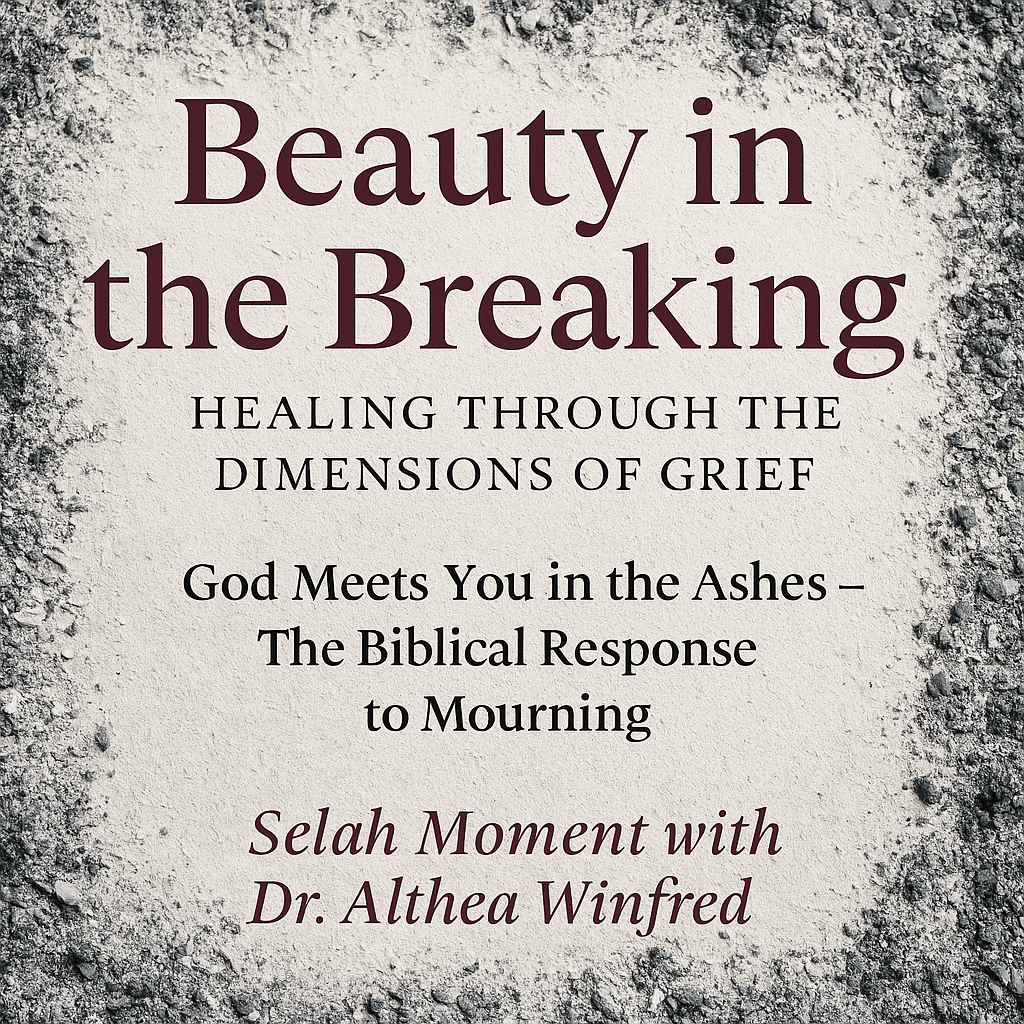
Grief has a way of reducing us to ashes—stripped of routine, shattered by loss, and left in silence with nothing but the fragments of what was. It is a place that feels both holy and harrowing. And yet, throughout Scripture, the ashes of mourning are not the end. They are the place where God meets us most intimately.
This week, we step into a sacred truth: God does not avoid our ashes—He sits in them with us. He doesn’t look away from our mourning. He ministers to it. In the ancient world, ashes were a public symbol of grief, repentance, and devastation. They marked the outward reality of inward anguish. In God’s world, however, ashes are not just remnants—they are ingredients. Ingredients for beauty, purpose, and divine exchange.
Ashes in the Bible: Symbols of Surrender and Encounter
The Bible is layered with moments where ashes appear—not as punishment, but as preparation.
Job, after losing everything, “sat down among the ashes” (Job 2:8 KJV). In his despair, he found God not through immediate answers, but through divine presence.
Mordecai, in the book of Esther, put on sackcloth and ashes as a cry for deliverance—not just for himself but for his people.
Tamar, after being violated, put ashes on her head to signify her deep distress.
And in Daniel 9:3, Daniel turns to the Lord “with fasting, and sackcloth, and ashes.”
Ashes have always been a way of saying: “Lord, I have nothing left. But here I am.” And God has always responded: *“Now I can begin.”
The Mourner’s Exchange: From Ashes to Beauty
In Isaiah 61:3, the Lord promises something revolutionary:
“To appoint unto them that mourn in Zion, to give unto them beauty for ashes…”
This is not symbolic fluff. This is divine exchange.
Ashes are not useless. They are a sign that something has burned—yes—but also that something new can rise. God doesn’t discard the ashes. He trades them. For joy. For purpose. For beauty.
Grief is often where that divine transaction begins. Not when you’re strong, composed, or triumphant—but when you’re tired, empty, and honest.
Why God Meets Us in the Ashes
Because ashes don’t lie.
They represent the truth of our pain. The residue of what once was.
And God always shows up in truth. He doesn’t ask us to sweep away the sorrow, to put on false smiles, or to move on quickly. He meets us in the ashes because that is where the oil begins to flow.
The same Isaiah 61 passage continues with the promise that He will give:
“…the oil of joy for mourning, the garment of praise for the spirit of heaviness…” (Isaiah 61:3 KJV)
But before the oil and before the praise—there are ashes.
Let us not despise them. Let us not rush past them. Let us bring them to the altar of a compassionate God.
Ashes and the Altar
In the Old Testament, the ashes of burnt offerings were often gathered and handled with reverence. The ashes weren’t discarded carelessly—they were holy. They represented what had been given over to God, fully consumed, totally surrendered.
Your grief, when laid before the Lord, becomes sacred.
Your mourning, when lifted as worship, becomes incense.
Your brokenness, when placed in His hands, becomes a testimony.
You don’t need to wait until you’re whole to come to the altar.
Bring the ashes. He is not afraid of them.
Selah Moment: Bring Your Ashes Before the Lord
Take time this week to reflect on what has been reduced to ashes in your life.
Name the losses. Feel the weight of them. But then—bring them to the altar.
What part of your life feels burned out?
What sorrow still leaves traces in your heart?
What memory still stings when you revisit it?
Sit with God in that place. Let Him speak. Let Him trade. Let Him begin the divine exchange.
Scripture Meditation This Week:
“To appoint unto them that mourn in Zion, to give unto them beauty for ashes, the oil of joy for mourning, the garment of praise for the spirit of heaviness…” (Isaiah 61:3 KJV)
“The LORD is nigh unto them that are of a broken heart; and saveth such as be of a contrite spirit.” (Psalm 34:18 KJV)
“He hath made every thing beautiful in his time…” (Ecclesiastes 3:11 KJV)
Prayer from the Ashes:
Father, I thank You because I know You hear me. Let Your will be done.
Today, I bring You the ashes of my sorrow, the remnants of my pain, and the weight of my mourning.
I lay before You every loss, every wound, every moment I thought I could not survive.
You are the God who sees me in the ashes and calls me beautiful.
You are not afraid of my grief. You enter it. You anoint it. You transform it.
Make the exchange, Lord. Trade these ashes for beauty. Trade this heaviness for praise.
And let the oil of joy begin to flow again. In Jesus’ Name. Amen.
Closing Reflection:
There is no shame in sitting among the ashes—only an invitation.
An invitation to encounter God in the raw, the broken, and the undone.
He is not waiting on the other side of your healing.
He is here, now—in the fire’s aftermath—with oil in one hand and beauty in the other.
Grief has no schedule. It does not ask for permission. It does not wait for the right time. It interrupts. It invades. It descends like a wave—sudden, intense, and overwhelming.
The first wave of grief can feel like drowning. Your footing is gone. Your breath is short. Everything you thought was steady now feels uncertain. The pain comes not just from what you lost, but from the life you must now re-learn without it. Whether it is the loss of a loved one, a relationship, a dream, a job, or even a version of yourself—grief crashes in, and everything changes.
But in the middle of the wave, there is a lifeline. There is a hand reaching through the waters of sorrow—the hand of God.
The Shock of the First Wave
When grief first strikes, it can feel surreal. The world keeps moving, but you are frozen. People greet you, but you can barely respond. You look the same, but inside you are in pieces.
This is the disorientation phase of grief. It’s when you forget where you put your keys, or lose track of time. You’re not lazy. You’re not weak. You’re grieving. You are carrying something heavy, and invisible burdens are still burdens.
Jesus understood this shock. When He heard of John the Baptist’s death, the Bible says: “He departed thence by ship into a desert place apart…” (Matthew 14:13 KJV). Even Jesus took space to process sorrow.
Let that comfort you: you are allowed to pause.
Grief Interrupts the Mind, the Body, and the Spirit
Grief is not just emotional—it is holistic.
Mentally, you may feel foggy, forgetful, or numb.
Physically, your body may ache, sleep may escape you, and your appetite may shift.
Spiritually, you may question everything you once believed.
This is not rebellion. This is wrestling. And wrestling with God is not the same as rejecting Him.
Job wrestled. David wept. Elijah collapsed under the weight of despair. Yet all were still deeply loved by God.
God is not intimidated by your interruption. He is present in your in-between. He is near in your not-yet. He is working, even when you feel broken.
The Power of Pausing with Purpose
In our fast-paced world, we are conditioned to keep going. But grief teaches us to pause—intentionally.
The Hebrew word Selah means to pause, to reflect, to lift up. In this second week, I invite you to take a Selah moment not as a delay, but as divine permission.
Don’t rush to explain your grief. Don’t try to fix it with shallow sayings or spiritual clichés. Just pause. Reflect. Let God speak in the stillness. Let Him carry what you cannot.
Interrupted—but Not Forsaken
One of the greatest fears in grief is being left behind—by time, by people, or by God. But Scripture reassures us:
“When thou passest through the waters, I will be with thee; and through the rivers, they shall not overflow thee…” (Isaiah 43:2 KJV)
You may be interrupted, but you are not forsaken. The waters may rise, but they will not consume you. Grief may interrupt, but it will not define your ending. You are passing through.
This is a season—not your sentence.
Three Anchors in the First Wave
1. God’s Presence is Constant
Even when you can’t feel Him, He is near. “The Lord is nigh unto them that are of a broken heart…” (Psalm 34:18 KJV)
2. His Word is a Compass
You may feel directionless, but His Word is your map. Let Scriptures be your light in the fog.
3. Your Tears Have Value
You are not falling apart. You are falling into the arms of a God who understands. He is catching every tear, “putting them into His bottle” (Psalm 56:8 KJV).
Selah Moment: Reflect, Rest, Reassure
This week, take time to recognize the interruption. Don’t deny it. Don’t dismiss it. Let your heart be honest.
Ask yourself:
What has grief interrupted in my life?
Where do I feel most lost?
Where do I need to feel God’s nearness right now?
Allow space for silence. Let tears be prayers. Let the presence of God wrap you like a weighted blanket for the soul. He is not rushing you forward. He is sitting with you now.
Scripture Meditation This Week:
“Be still, and know that I am God…” (Psalm 46:10 KJV)
“Weeping may endure for a night, but joy cometh in the morning.” (Psalm 30:5 KJV)
“He giveth power to the faint; and to them that have no might he increaseth strength.” (Isaiah 40:29 KJV)
Prayer for the Interrupted Heart:
Father, I thank You because I know You hear me. Let Your will be done.
Today I acknowledge the interruption. My life, my thoughts, my emotions—everything feels paused. I invite You into the stillness. Into the confusion. Into the disorientation.
You are the God who walks on waves, and I trust that You are walking with me now.
When I can’t speak, interpret my tears. When I can’t move, sit with me. When I don’t understand, remind me that You are still in control.
I surrender this wave of grief into Your hands, and I ask You to anchor me in Your peace. In Jesus’ Name. Amen.
Closing Reflection:
This week, don’t focus on doing—focus on being.
Be still. Be honest. Be present. And most of all, be open to healing that doesn’t happen all at once.
Healing is not a race. Grief is not weakness.
Let God interrupt the interruption with grace, with love, and with gentle strength.
Grief is often associated only with funerals, caskets, and cemeteries. But in truth, grief is far more expansive, complex, and subtle. It’s not just about death—it’s about loss. Loss of a loved one, yes, but also loss of identity, dreams, direction, relationships, seasons, or even hope. Grief is the echo of what once was—and the ache of adjusting to what now is. It’s the silent cry of a soul navigating the unknown path between “what was” and “what will never be again.”
Grief, in its truest form, is love’s residue. It is the evidence that we have invested, attached, hoped, dreamed, and lived. It is proof of the heart’s capacity to love deeply and therefore to hurt deeply. That pain, though uninvited, is sacred. It is the soil in which God does some of His most profound work.
The Definition Beneath the Definition
While psychology may define grief as a response to loss, as a Christian educator, I must go deeper. Grief is not just an emotional state—it is a spiritual intersection. It’s where our faith is tested, our emotions are exposed, and our theology is either embraced or examined. It is where we feel what Job felt when he said, “The LORD gave, and the LORD hath taken away; blessed be the name of the LORD” (Job 1:21 KJV).
There’s a reason the Bible says in Ecclesiastes 3:4, “A time to weep, and a time to laugh; a time to mourn, and a time to dance.” Grief is not a disruption of life; it is a part of life. A time appointed. A season permitted. A valley we are meant to walk through—not skip, not suppress, not deny.
Grief Is Not a Sign of Weakness
The world tells us to “stay strong,” “move on,” and “get over it.” But that’s not what God tells us. In fact, the shortest verse in the Bible says, “Jesus wept” (John 11:35 KJV). The Son of God Himself allowed space for sorrow. He did not rush past the pain of Mary and Martha. He did not perform a miracle without first feeling the weight of grief. He stood at the tomb of His friend Lazarus and wept, even though He knew resurrection was moments away.
Grief, then, is not a lack of faith—it’s an expression of love. Jesus’ tears validate ours. His example sanctifies the grieving process. And His resurrection gives our grief purpose.
Grief Beyond the Grave
Let’s be honest: sometimes we are grieving things no one else sees. A marriage that didn’t survive. A child that walked away from the faith. A career that crumbled. A friendship that dissolved without explanation. A version of yourself that got lost in the demands of others. A door that never opened. These too are losses. And because they often go unnamed, the grief around them becomes disenfranchised—silent, unseen, and misunderstood.
But not by God.
God sees the silent sorrows. He hears the prayers you can’t put into words. He reads the tears that no one else understands. “Thou tellest my wanderings: put thou my tears into thy bottle: are they not in thy book?” (Psalm 56:8 KJV).
There is no such thing as a small grief to a big God. He collects each tear, not as waste, but as worship. Grief, when surrendered to God, becomes a river of intercession, a well of empathy, and a birthing ground for greater compassion.
The First Step Is Recognition
Week 1 of this journey begins here: with acknowledgment.
You must recognize that you are grieving. Whether it’s a death, a disappointment, or a delay—you are experiencing loss. Don’t spiritualize it away. Don’t suppress it in the name of strength. Don’t numb it with busyness, denial, or false optimism. Feel it. Name it. Bring it into the presence of the One who knows grief intimately.
Isaiah 53:3 declares of Jesus: “He is despised and rejected of men; a man of sorrows, and acquainted with grief.”
Jesus is not unfamiliar with your pain. He is not distant from your sorrow. He walked the road of rejection, betrayal, isolation, and physical agony—not just to save you, but to understand you.
The Purpose in the Pain
Let me be clear: God does not delight in your sorrow. He is not the author of death, confusion, or devastation. But He is the Redeemer of it. That is what makes His grace so manifold, so layered, so redemptive. He does not waste grief. If it’s in your life, He will use it.
Grief will teach you what joy never could. It slows you down. It sharpens your priorities. It deepens your hunger for God. It exposes what you really believe. It forces you to seek answers that no surface faith can satisfy.
But most of all, grief reveals God.
It is in the pain that we find His presence more personal. In the ache, we hear His whispers more clearly. In the loss, we discover that what we truly need is not always restoration of what was, but revelation of who He is.
Selah Moment: Breathe, Acknowledge, Surrender
Take a moment to pause — a true Selah.
Breathe in the truth that you are seen.
Acknowledge the grief that has lingered in the corners of your soul.
Surrender the sorrow to the God who doesn’t waste pain.
He is not asking you to move on. He’s asking you to move through — with Him.
The first step toward healing is not denial; it’s honesty. This week, be honest. With God. With yourself. With a trusted voice. Let the tears flow if they must. Let the silence speak if it must. God is in both.
Scripture Meditation This Week:
“Blessed are they that mourn: for they shall be comforted.” (Matthew 5:4 KJV)
“He healeth the broken in heart, and bindeth up their wounds.” (Psalm 147:3 KJV)
“To appoint unto them that mourn in Zion, to give unto them beauty for ashes…” (Isaiah 61:3 KJV)
Prayer of Release:
Father, I thank You because I know You hear me. Let Your will be done.
Today, I bring before You my hidden sorrows and silent griefs.
I acknowledge the places in me that ache with loss, and I surrender them into Your healing hands.
Teach me not to rush through this valley, but to walk it with You.
Show me Your nearness in the nights when I feel alone, and remind me that You are the Man of Sorrows, acquainted with every pain I feel.
Turn my mourning into movement, my ashes into beauty, and my sorrow into testimony.
This week, I say yes to the process of healing. In Jesus’ Name. Amen.
Closing Reflection:
This week, let your heart be open. Journal your thoughts. Sit in silence. Cry if you need to. And most of all, listen — for grief often speaks in whispers. God is in the stillness, and He is nearer than you know.
You are not alone. You are not broken beyond repair.
This is not the end — this is the beginning of healing.
Starting Monday, May 12, 2025 Dr. Althea Winifred will be starting my weekly blog called “Beauty in the Breaking – Healing Through the Dimensions of Grief”
Grief is not a destination—it is a journey through broken places, silent valleys, and unseen scars. It is the heart’s response to loss in all its forms: death, disappointment, divorce, delays, and dreams unfulfilled. Yet in the breaking, there is beauty. There is revelation. There is divine restoration. And there is God—ever present, ever near, and ever faithful.
”Beauty in the Breaking – Healing Through the Dimensions of Grief“ is a sacred space where faith meets sorrow, and Scripture meets the soul. Each weekly post offers more than words—it offers a Selah moment, a time to pause, reflect, and invite God into the depths of your pain. This journey is not just about surviving grief—it is about healing wholly through truth, presence, and process.
Through the lens of biblical wisdom, psychological insight, and lived experience, I will walk with you through the layered dimensions of grief—emotional, spiritual, mental, physical, relational, and beyond. Every post will include a reflection, scriptural meditation from the King James Version, a powerful prayer, and a personal word of encouragement. Whether you’re grieving a person, a purpose, or a part of yourself, this space is for you.
You are not alone.
You are not broken beyond repair.
There is beauty in the breaking—and healing in every holy pause.
Scripture Foundation – “Rejoice evermore. Pray without ceasing. In every thing give thanks: for this is the will of God in Christ Jesus concerning you.” 1 Thessalonians 5:16-18 (KJV)
Life has a way of testing what we truly believe. It’s one thing to say, “God is good,” when everything is going our way—when bills are paid, relationships are smooth, and our health is intact. But what about when doors are shut? When tears are our food day and night? When silence from Heaven seems louder than the chaos around us? What do we do then?
Paul’s words to the Thessalonian church are not suggestions. They are commands spoken from a place of spiritual maturity and divine revelation. “Rejoice evermore.” “Pray without ceasing.” “In every thing give thanks.” These are not situational responses—they are spiritual postures. They reflect the will of God for every believer in Christ Jesus, not only when life makes sense, but especially when it does not.
Let’s reflect on that phrase: “In everything.”
It doesn’t say for everything. There’s a difference. We’re not asked to give thanks for sickness, betrayal, or tragedy. But we are commanded to give thanks in it. That means that even in loss, there is something to thank God for—His presence, His sustaining grace, His faithfulness in our brokenness, and His promise that all things will work together for good.
Giving thanks in everything doesn’t ignore the pain—it acknowledges the sovereignty of God above it. It doesn’t require understanding—it requires trust. It doesn’t always come with a feeling of joy—it often begins as an act of obedience that leads to supernatural peace.
Thanksgiving in everything is how we defy the enemy’s plans to make us bitter. It is how we guard our hearts from discouragement. It is how we remind our soul that God is still on the throne, even when our world is shaking.
Maybe right now, you’re walking through a season of questions, sorrow, or uncertainty. Maybe you’re wondering, “What is God’s will for my life?” Start here. Rejoice evermore. Pray without ceasing. In everything, give thanks. This is not the end—it’s the will of God concerning you. And if it’s His will, it means He’s in it with you.
Gratitude shifts atmospheres. It changes our view from the temporary to the eternal. It lifts our eyes from what we lack to the One who lacks nothing. It turns brokenness into offering and ashes into worship.
So today, pause and breathe in these words: “In everything give thanks.” Not because it’s easy, but because it’s holy. Not because it’s convenient, but because it’s commanded. And because on the other side of thanksgiving is a door that leads to peace, purpose, and promise.
Selah Moment:
What are you facing right now that makes it hard to be thankful? Speak it out. Then offer it to God with a heart that says, “I trust You—in everything.”
There are moments in life when the deepest battles are not external but internal—moments when guilt echoes louder than truth, and past decisions seem to chain your future. The weight of silent shame, buried memories, and Satan’s accusations can immobilize you. Your voice—once bold in passion and calling—now trembles in the silence of fear, uncertainty, and regret. This silence is not mere quietness; it is a freezing of identity, a numbing of your God-given fire.
The enemy of your soul is strategic. He weaponizes your past, magnifies your missteps, and manipulates your mind to believe that your voice has lost its value. He whispers, “You’re disqualified. You’ve failed. Who are you to speak?” And if you accept that lie, silence becomes your agreement, and stagnation your stronghold. But even in that state, the Spirit of the Lord is present—hovering over the chaos, waiting to breathe upon you afresh.
Dr. Althea Winifred declares with holy conviction, “Hope is not linear—it bends, it breaks, yet it endures.” This is the nature of divine hope: it is not weakened by detours, nor is it destroyed by darkness. It bends under pressure, it breaks through the pain, and still, it holds the weight of your calling. Hope endures—even when you don’t feel worthy of it.
To break forward, you must reject the narrative of the accuser and embrace the truth of your Redeemer. You are not frozen; you are being awakened. The voice of guilt is not your guide—the voice of God is. He says, “Fear thou not; for I am with thee: be not dismayed; for I am thy God…” (Isaiah 41:10, KJV). He does not call the perfect. He calls the willing. And He qualifies them with grace.
Speak, even if your voice shakes. Move, even if your steps are slow. Cry out, even if your heart is trembling. Because each motion forward is an act of war against the freeze of fear. Every word you release in Jesus’ name breaks the silence that once held you captive.
Prayer Declaration
Father, I thank You because I know You hear me. Let Your will be done. Lord, help me to go forth in Jesus’ name—in my passion, in my calling, in my divine assignment. Silence every accusing voice, break every invisible chain, and rekindle my confidence in You. Where guilt sought to muzzle me, let Your mercy empower me. I choose faith over fear, purpose over pause, and truth over torment. I am not what I did—I am who You say I am. And I will go forth—boldly, freely, and joyfully—in Jesus’ name. Amen.
“And I will restore to you the years that the locust hath eaten, the cankerworm, and the caterpillar, and the palmerworm, my great army which I sent among you.” – Joel 2:25 (KJV)
This divine promise from the book of Joel is more than a comforting verse—it is a prophetic declaration of God’s restorative power and mercy. The word restore in this passage does not merely imply replacement; it speaks of divine recompense, a supernatural reparation for time lost, pain endured, and seasons that seemed unfruitful. When God says, “I will restore,” He is asserting His sovereignty over time, circumstances, and consequences.
The years eaten by the locusts represent seasons of devastation, cycles of sorrow, and years of disappointment. The cankerworm, caterpillar, and palmerworm symbolize successive stages of destruction—prolonged losses that left the people empty, hopeless, and barren. Yet God steps into the aftermath of desolation with a promise not just to give back things, but to redeem the very years consumed by loss.
Restoration in this context is comprehensive. It includes spiritual renewal, emotional healing, relational repair, financial recovery, and the rebuilding of reputation and purpose. It is not partial or fragmented, but full—rooted in the righteousness and justice of God. The Lord is not only able to bring you back to where you were, but to move you forward into what you never imagined possible.
The restoration promised here also reveals God’s redemptive grace. Even when the devastation came as a result of divine judgment, God’s heart was always leaning toward mercy. The verse reflects His compassion toward a repentant people who return to Him with fasting, weeping, and mourning (Joel 2:12–13). It reminds us that no matter how long the season of loss has lasted, when we align with God’s will and word, restoration becomes inevitable.
This is a promise to the faithful, the broken, and the repentant. The God who governs the harvest is the same God who governs the seasons of restoration. Trust Him to restore not just what was lost—but to renew, revive, and resurrect every dry place in your life with overflow.
Life’s journey is a relentless series of tests and trials, where we often find ourselves grappling with weariness and difficulty. In these moments of exhaustion, it is natural to question why we are confronted with such challenges.
However, it is essential to remember that the divine force, God, is aware of our fatigue and places us in situations only when we are capable of handling, conquering, and emerging victorious.
This blog seeks to remind us of the empowering truth that lies in God’s divine plan for our lives – a plan that not only acknowledges our struggles but assures us of our ability to overcome them with strength, courage, and unwavering faith.
I. Recognizing Divine Understanding:
God’s wisdom extends far beyond our comprehension. He knows the depths of our hearts and minds, understanding our strengths and weaknesses better than we do ourselves.
When we feel overwhelmed by life’s burdens, we must find solace in the knowledge that God, in His omniscience, would never burden us with challenges we cannot bear. He sees the potential for growth and resilience within us, and thus, orchestrates situations that will nurture these qualities.
II. Reframing Challenges as Opportunities:
Every challenge, though daunting, carries the seeds of opportunity for personal development and spiritual growth. These trying circumstances become the catalysts that push us to explore untapped reservoirs of strength and courage.
It is during these times of weariness that we learn to summon hidden wellsprings of determination and tap into the boundless energy of faith.
III. Building Endurance and Character:
Just as a blacksmith tempers a blade with fire and pressure, the challenges placed before us by God serve to refine and strengthen our character.
Embracing these trials with a positive attitude allows us to develop resilience, patience, and perseverance. Through the crucible of hardship, we become better equipped to navigate life’s obstacles and support others who may face similar challenges.
IV. Embracing Divine Support:
Though we may feel weary at times, we are never alone in our journey. God’s presence is an unwavering source of comfort and guidance.
Turning to Him in prayer, we discover the wellspring of divine grace that empowers us to transcend exhaustion and self-doubt. When we seek solace in God’s love, we find the inner strength to rise above our circumstances and shine as beacons of hope and inspiration.
V. Celebrating Victories:
With God as our guide, victories become more than mere achievements; they become testimonies of His love and faithfulness. Each triumph over adversity is a testament to the power of our faith and the divine support we receive.
When we emerge victorious from challenging situations, we exemplify the inherent strength God has bestowed upon us, inspiring others to endure their struggles with renewed hope and confidence.
Conclusion:
God’s recognition of our weariness is a profound acknowledgment of our humanity. Placing us in situations where we can handle, win, and be victorious reveals His unwavering belief in our capabilities.
Embracing this empowering truth grants us the courage to confront life’s challenges head-on, knowing that within us lies an indomitable spirit strengthened by the divine.
As we journey through the ebb and flow of life, let us embrace each trial as an opportunity for growth, trusting in God’s wisdom, support, and love to lead us to triumph.
Remember, you are capable, resilient, and destined for greatness – with God’s guidance, you can conquer all that lies ahead.
There are so many traffic lights in our lives stopping us, giving us caution and telling us to proceed.
No matter what traffic is happening – God has set up some amber lights when it says “consider your ways”. Haggai 1:5-7 KJV “Now therefore thus saith the Lord of hosts; Consider your ways. Ye have sown much, and bring in little; ye eat, but ye have not enough; ye drink, but ye are not filled with drink; ye clothe you, but there is none warm; and he that earneth wages earneth wages to put it into a bag with holes. Thus saith the Lord of hosts; Consider your ways.”
The word “stop” appears 28 times in the King James Version of the Bible. Your faith is cannot be stopped according to Hebrews 11:32-34 KJV like others “And what shall I more say? for the time would fail me to tell of Gedeon, and of Barak, and of Samson, and of Jephthae; of David also, and Samuel, and of the prophets: Who through faith subdued kingdoms, wrought righteousness, obtained promises, stopped the mouths of lions. Quenched the violence of fire, escaped the edge of the sword, out of weakness were made strong, waxed valiant in fight, turned to flight the armies of the aliens.”
Go head and ask, seek and knock because it will be open to you. “Ask, and it shall be given you; seek, and ye shall find; knock, and it shall be opened unto you: For every one that asketh receiveth; and he that seeketh findeth; and to him that knocketh it shall be opened.” Matthew 7:7-8 KJV
Know where you are at before proceeding – Know your Traffic Lights – Red, Amber and Green where are you?
Father, we come before You with reverence and awe, our hearts humbled by the weight of the Cross and the glory of redemption. Thank You for the voice of our Savior who, even in agony, spoke life, mercy, and victory. Thank You for every Word that fell from the lips of Your Son—each one rich in love, soaked in blood, and sealed in eternity.
Lord Jesus, we behold Your Cross with fresh understanding. From Your plea for forgiveness to Your cry of surrender, we are reminded that You bore our pain, carried our sin, and opened the door to eternal life. You were forsaken that we might be adopted. You thirsted that we might drink freely. You finished the work that we could never begin. You commended Your Spirit to the Father so that we, too, might learn how to live and die in trust.
Let these seven Words become a foundation for our faith, a compass for our journey, and a song in our spirit. May we forgive like You forgave, serve like You served, suffer with grace, and finish our race with boldness and obedience. Teach us to love the way You loved, to speak with heavenly wisdom even when wounded, and to trust the Father’s hands with everything we are.
Holy Spirit, seal this word in our hearts. Let it transform how we walk, how we worship, how we witness, and how we wait for Your return. Strengthen us to carry our own crosses with endurance, to echo the victory of “It is finished” in every trial, and to commend every part of our lives into the Father’s hands.
We give You glory, honor, and praise. Thank You for the Cross. Thank You for the Blood. Thank You for the Lamb. In Jesus’ holy and powerful name we pray,
The final utterance of Jesus from the Cross is the culminating declaration of a life fully surrendered to the will of the Father. As darkness blanketed the earth and the veil in the temple tore in two, the Son of God lifted up His voice one final time, not in defeat, but in divine release: “Father, into thy hands I commend my spirit.” With these words, Jesus concluded His earthly assignment. He handed over His life not to man, not to death, and not to fate—but to the Father who had sent Him.
This seventh Word is more than a closing benediction; it is the fulfillment of perfect trust, complete obedience, and divine sonship. In this phrase, we see the final movement in the redemptive symphony. What began in agony now ends in assurance. What was marked by suffering now concludes in surrender. Jesus, the Lamb of God, lays down His life willingly, resting His spirit in the hands of His Father.
Let us begin by revisiting the words themselves. “Father” —this is the return to intimacy. In the fourth Word, Jesus had cried, “My God, my God, why hast thou forsaken me?” There, in the weight of divine abandonment, He experienced the fullness of separation brought on by sin. But now, having borne the curse, having fulfilled the prophecies, having declared “It is finished,” He once again calls God “Father.” The relationship, never truly broken, is now fully reconciled. The language of distance has been replaced with the language of closeness.
Jesus began His ministry with the words “Suffer it to be so now: for thus it becometh us to fulfil all righteousness” (Matthew 3:15, KJV). And now, at the conclusion, He once again fulfills righteousness by entrusting His spirit to the only One who could receive it. This seventh Word is not a cry of pain—it is a statement of completion, control, and confidence.
“Into thy hands…” The hands of God represent protection, power, and providence. Throughout the Scriptures, the hand of the Lord symbolizes strength and security. In Psalm 31:5, David prayed, “Into thine hand I commit my spirit: thou hast redeemed me, O Lord God of truth” (KJV). Jesus, quoting this very verse, places His eternal being into the hands that fashioned the heavens, guided the patriarchs, delivered Israel, and sustained Him throughout His earthly journey.
Hands that shaped the universe now receive the surrendered spirit of the Savior. The hands that upheld Moses, fought for Joshua, and covered David, now cradle the spirit of the Redeemer. This was not resignation to death—it was a handing over to divine authority. Jesus did not die because His body failed; He gave up His spirit. He had already declared in John 10:18, “No man taketh it from me, but I lay it down of myself.” The Cross was not an execution—it was a willing offering.
“I commend my spirit…” To commend means to entrust, to deposit, to place in safekeeping. Jesus entrusts His spirit to the Father as a final act of obedience. He had trusted the Father’s plan in Gethsemane. He had obeyed the Father’s will throughout His ministry. Now He concludes that journey by placing His very life into the Father’s hands. This is the ultimate model of surrender. Not only did He walk in obedience—He died in trust.
This Word confirms the full humanity and full divinity of Christ. As a man, He breathes His last. As God, He does so willingly, authoritatively, and prophetically. His death is not the collapse of a life but the coronation of a King. He who began by saying “Lo, I come to do thy will, O God” (Hebrews 10:7, KJV), now ends by saying “Into thy hands I commend my spirit.” This is the journey of the obedient Son—the perfect pattern of submission to the Father’s will from beginning to end.
This seventh Word also affirms the hope we have in death. Because Jesus entrusted His spirit to the Father, we too can face death without fear. For those who are in Christ, death is not a curse—it is a transition. Paul would later declare, “To be absent from the body is to be present with the Lord” (2 Corinthians 5:8, KJV). The believer, like Jesus, can commend their spirit into the hands of a faithful God. The final breath is not the end—it is the release into eternal fellowship with the Father.
“Father, into thy hands I commend my spirit” is also a call to live with eternity in view. Jesus did not wait until the last moment to live a life of surrender—He lived every moment that way. His entire journey was marked by faithfulness, focus, and faith. This final Word is the exclamation mark on a life yielded fully to divine purpose. We are reminded that how we live determines how we die. If we walk with God in life, we can rest in God in death.
There is also a prophetic and priestly dimension to this Word. Jesus is not just speaking as a man—He is speaking as our High Priest, finishing the work of atonement. Just as the Old Testament priest would complete the sacrificial ceremony, Jesus now closes His own offering with a declaration of completion and commitment. The Lamb is slain. The blood is shed. The offering is acceptable. The priest declares the transaction complete and places it into the hands of the Father.
This seventh Word also challenges the Church to live with the same posture of surrender. We must ask ourselves: Have we truly commended our lives into the Father’s hands? Not just in words, but in will, in decision-making, in destiny? Jesus shows us that total trust in God leads to total peace—even in death. To commend one’s spirit is to surrender one’s will. It is to say, “Lord, not my way, not my understanding, not my timing—but Your hands, Your way, Your will.”
This Word becomes a model prayer for every believer, not only in death but in daily life. “Father, into thy hands I commend my marriage. Into thy hands I commend my children. Into thy hands I commend my future. Into thy hands I commend my ministry.” This is the posture of faith. This is the place of peace. When we release control and place everything into God’s hands, we position ourselves for supernatural rest.
The moment after Jesus uttered this final Word, the Scripture declares, “he gave up the ghost” (Luke 23:46, KJV). He yielded. He released. He breathed His last with full authority. No other death in history was like this. Most men are taken by death. Jesus gave Himself to it. He laid down His life so that we might take ours up again in Him. And through this Word, He teaches us not only how to die—but how to live.
The seventh Word is both a benediction and a beginning. It marks the end of the suffering, the end of the sacrifice, but also the beginning of the unfolding miracle of resurrection. It is not a period, but a comma. Jesus may have commended His spirit, but His story was not over. The third day was coming. The stone would roll away. The empty tomb would declare what the Cross had confirmed: the Son of God lives.
And so we receive this final Word, not as a farewell, but as a faith statement. In the hands of the Father, our spirit is safe. In the will of the Father, our destiny is sure. In the presence of the Father, we find our eternal rest. May we echo this Word in our own journey. May we live in such a way that, at the end of our days, we too can say: “Father, into thy hands I commend my spirit.”
As the final breath of Jesus Christ drew near, the heavens leaned in to hear His triumphant cry: “It is finished.” With this declaration, the Lamb of God, suspended between earth and heaven, nailed to a Roman cross, announced not defeat, not exhaustion, not surrender—but completion. “It is finished” is not the gasp of a victim; it is the proclamation of a Victor. This sixth word, though brief in syllables, is boundless in meaning. It is the crescendo of Calvary, the declaration that the redemptive work had been fully accomplished.
In the original Greek, this phrase is rendered as “Tetelestai.” This single word was commonly used in several contexts. A servant would say it to a master upon the completion of a task; an artist might say it when a work of art was completed; a merchant would stamp it on a bill to indicate that a debt had been fully paid. And a priest might declare it when a spotless lamb had been examined and found worthy for sacrifice. Jesus, the Servant, the Artist, the Merchant, and the High Priest, declared “It is finished” not with resignation, but with revelation.
Let us begin with the setting. Jesus has spoken five words already. He has forgiven His enemies, welcomed a repentant thief into paradise, cared for His mother, cried out in divine abandonment, and declared His thirst. And now, after enduring the fullness of pain, both physical and spiritual, He lifts up His voice and declares, “It is finished.” This was not a whisper—it was a loud voice (Matthew 27:50, KJV). Even in death, Jesus did not lose His authority. He did not die as a broken man, but as a Sovereign King finishing His assignment.
“It is finished.” What was finished? Not merely His life, but His mission. The eternal purpose for which He had come—the redemption of mankind—had been fully achieved. Jesus had completed the task given to Him by the Father. From the virgin womb to the virgin tomb, from the cradle to the Cross, from Bethlehem to Golgotha, every prophecy had been fulfilled. Every type and shadow of the Old Testament had now found its substance in Him. The Passover Lamb had been slain. The blood had been applied. The curse had been broken.
First, “It is finished” means that the plan of redemption was complete. From the foundation of the world, the Lamb had been slain in the mind of God (Revelation 13:8, KJV). The fall of man in Genesis necessitated a plan to reconcile humanity back to God. The sacrificial system of the Old Testament was temporary and symbolic, pointing toward a perfect sacrifice. Jesus was that sacrifice. He did not die as a martyr—He died as a substitute. The veil of the temple would soon be torn, signifying that the way into the holiest place was now open. No more sacrifices. No more priestly rituals. Jesus fulfilled the law and satisfied divine justice.
Second, “It is finished” declares that the price of sin had been paid in full. The wages of sin is death (Romans 6:23, KJV). But Jesus, who knew no sin, became sin for us, that we might become the righteousness of God in Him (2 Corinthians 5:21, KJV). His blood was not a partial payment—it was the full ransom. Tetelestai! Paid in full. Nothing more needs to be added to the Cross. No religious works. No striving. No rituals. Salvation is by grace through faith in Jesus Christ alone. His death settled the debt permanently.
Third, “It is finished” signifies that Satan’s authority had been broken. From the Garden of Eden, the serpent had wielded the weapon of sin and death over humanity. But Jesus came to destroy the works of the devil (1 John 3:8, KJV). At the Cross, Jesus disarmed principalities and powers, triumphing over them (Colossians 2:15, KJV). What appeared to be defeat was actually divine strategy. Through death, He destroyed him who had the power of death—that is, the devil (Hebrews 2:14, KJV). Hell was not celebrating—the gates were shaking. The enemy had bruised His heel, but Jesus was crushing his head.
Fourth, “It is finished” declares that the prophetic Scriptures had been fulfilled. From Genesis to Malachi, the Old Testament pointed to the Messiah. More than 300 prophecies spoke of His birth, life, suffering, death, and resurrection. From the seed of the woman (Genesis 3:15) to the suffering servant of Isaiah 53, to the pierced hands and feet of Psalm 22—every word was now fulfilled. Jesus lived in obedience to Scripture and died in fulfillment of it. Not one jot or tittle passed away unfulfilled. He was the Word made flesh—and that Word was now completed.
Fifth, “It is finished” means that access to God had been restored. The veil in the temple—four inches thick and 60 feet high—was torn from top to bottom the moment Jesus gave up the ghost (Matthew 27:51, KJV). This was not an act of man—it was the hand of God. The veil represented separation, a barrier between sinful man and holy God. Only the high priest could enter the Holy of Holies once a year. But now, through Jesus, we have boldness to enter into the holiest by His blood (Hebrews 10:19, KJV). The veil of separation is gone. Relationship is restored. We are no longer outsiders—we are sons and daughters.
“It is finished” also means that our shame, guilt, and condemnation were cancelled. Every sin, every stain, every failure was nailed to the Cross. “Blotting out the handwriting of ordinances that was against us… and took it out of the way, nailing it to his cross” (Colossians 2:14, KJV). The accuser has lost his case. The courtroom of heaven is silent. The gavel has struck: “It is finished.” We do not fight for victory—we fight from victory. Jesus has settled the verdict. The blood speaks better things than that of Abel (Hebrews 12:24, KJV). Where Abel’s blood cried for vengeance, Jesus’ blood cries for mercy.
And finally, “It is finished” becomes our life message. We are called to live in the finished work of Christ. We do not need to earn salvation—we receive it. We do not live under law—we live under grace. We do not wrestle for approval—we stand in acceptance. Because Jesus finished His work, we can now begin ours—from a place of rest, not striving. We are seated with Him in heavenly places (Ephesians 2:6, KJV). The work of redemption is done, but the work of evangelism continues. We preach the Cross because it is the power of God unto salvation (Romans 1:16, KJV).
This Word also reminds us that every assignment has an end. Jesus didn’t say, “I am finished.” He said, “It is finished.” His life was not taken—it was given. He did not quit—He completed. This is the calling for every believer: finish well. Complete your assignment. Run your race. Fight the good fight. Hear Him say, “Well done.” Jesus is our model of finishing strong. He began with the Word in His mouth and ended with victory in His voice.
As believers, we must declare “It is finished” over every area of our lives. Over sin: It is finished. Over fear: It is finished. Over generational curses, torment, and oppression: It is finished. The Cross is not a symbol of shame—it is the banner of victory. We carry this Word in our hearts, proclaiming that the work is done, the battle is won, and the King reigns forever.
As the journey of redemption drew closer to its crescendo, Jesus—hanging upon the Cross, battered and bruised—uttered a brief but deeply profound phrase: “I thirst.” Of all the seven last words, this is the shortest in expression yet one of the most revealing in its theological, prophetic, and human dimensions. With these two words, the Savior gives voice to His physical suffering, fulfills Messianic prophecy, identifies with the brokenness of humanity, and invites us into a revelation of divine desire.
Let us first understand the context. Jesus had already endured relentless suffering. From the Garden of Gethsemane to the judgment hall of Pilate, from the brutal scourging to the mocking, the carrying of the Cross, and the excruciating crucifixion itself—His body had been pushed to the brink. Hours passed as He hung suspended between heaven and earth. Blood loss, exposure, dehydration, and the burning heat of the day all took their toll on His physical frame. And then, He spoke: “I thirst.”
This cry was not only the groan of a suffering man but the proclamation of a suffering Savior. Jesus, who turned water into wine, who walked on water, who called Himself the Living Water, now expresses thirst. He who told the woman at the well, “Whosoever drinketh of the water that I shall give him shall never thirst” (John 4:14, KJV), now experiences thirst Himself. Why? Because He was pouring Himself out. Because He was laying aside the refreshment of heaven to endure the full heat of divine wrath. Because in that moment, He was identifying completely with fallen humanity.
It is essential to grasp that this Word reveals Jesus’ full humanity. While He is fully God, He is also fully man. And in that moment, His suffering was not illusion—it was real. This wasn’t symbolic pain or metaphorical death. He was truly parched. Truly dehydrated. Truly suffering. The Word made flesh did not exempt Himself from the realities of flesh. He hungered. He thirsted. He bled. He wept. The writer of Hebrews reminds us: “For we have not an high priest which cannot be touched with the feeling of our infirmities…” (Hebrews 4:15, KJV).
“I thirst” declares that Jesus did not redeem us from a distance but through participation. He entered our suffering. He experienced pain. He bore the full curse. In Genesis, man sinned by eating. On the Cross, Jesus redeems by thirsting. Every part of the curse is being reversed through His obedience and endurance. In Eden, desire led to death. At Calvary, desire expressed through thirst leads to life.
But there is more. This Word fulfills Scripture. John explicitly states: “After this, Jesus knowing that all things were now accomplished, that the scripture might be fulfilled, saith, I thirst” (John 19:28, KJV). Which Scripture? Psalm 69:21 says, “They gave me also gall for my meat; and in my thirst they gave me vinegar to drink.” (KJV). The Roman soldiers, hearing His cry, lifted a sponge soaked in sour wine to His lips. In doing so, they unknowingly fulfilled a centuries-old prophecy. Every detail of Christ’s crucifixion had been foreordained, and this moment was no exception.
The sour wine was not offered to relieve His pain but to mock His need. Yet in receiving it, Jesus demonstrated that even in suffering, He was in control. He was not a victim of circumstance but a victor fulfilling covenant. Every Word He spoke was intentional, and every action bore eternal weight. His thirst was not merely physical—it was prophetic. It signaled the nearness of completion. As the next Word will declare, “It is finished.”
Yet, there is another layer. “I thirst” is a reflection of divine longing. In Psalm 42:2, David cries, “My soul thirsteth for God, for the living God…” (KJV). On the Cross, Jesus reveals not only physical thirst but spiritual thirst. He was longing for the fulfillment of His Father’s will. He was yearning for reconciliation with His creation. He was desiring the joy that was set before Him—that through His suffering, many would be made righteous (Hebrews 12:2; Romans 5:19, KJV).
This cry also points us back to the depths of Psalm 22, which Jesus invoked in the Fourth Word. Verse 15 says, “My strength is dried up like a potsherd; and my tongue cleaveth to my jaws; and thou hast brought me into the dust of death” (KJV). This vivid imagery of parched suffering finds its fulfillment in the thirst of Christ. His mouth is dry. His lips are cracked. His body is drained. He is dying not just from crucifixion but from the burden of bearing sin. He is the Lamb who thirsts because He has given all.
And yet, the cry “I thirst” does not come from defeat. It comes from a place of determination. He speaks it “knowing that all things were now accomplished.” Jesus is not succumbing—He is declaring. He is signaling that every prophetic requirement is met. He is about to seal the work. “I thirst” is not a whisper of weakness but a trumpet of triumph in disguise. He endured until every Word, every promise, every requirement was fulfilled.
This Word invites deep reflection on our own spiritual condition. Do we thirst? Jesus said, “Blessed are they which do hunger and thirst after righteousness: for they shall be filled” (Matthew 5:6, KJV). In the age of spiritual apathy, “I thirst” confronts us with divine passion. Do we thirst for souls to be saved? Do we thirst for intimacy with the Father? Do we thirst for holiness and revival? Jesus’ thirst on the Cross is a call to examine what we truly desire.
Furthermore, this Word challenges us in our moments of suffering. When we are emptied, when life leaves us dry, can we still cry out? Jesus did not withhold His voice even when parched. His thirst did not silence Him—it propelled Him. We too must learn to thirst out loud, to bring our needs before God, to acknowledge our weakness, and still trust in His will. “As the hart panteth after the water brooks, so panteth my soul after thee, O God” (Psalm 42:1, KJV).
“I thirst” also carries sacramental meaning. The One who thirsted is the One who instituted the Last Supper. He had taken the cup with His disciples and said, “This is my blood of the new testament, which is shed for many…” (Mark 14:24, KJV). Now, on the Cross, He thirsts as that blood is poured out. The wine He drank before the Cross becomes the sour wine on the Cross, signifying the bitterness He bore for our redemption.
After His resurrection, Jesus would offer Living Water once again. Revelation 21:6 declares, “I will give unto him that is athirst of the fountain of the water of life freely” (KJV). And again in Revelation 22:17, “Let him that is athirst come.” The One who thirsted now quenches. The One who was dried up now overflows. The Cross becomes the fountain from which grace flows eternally.
Lastly, this Word reveals the beauty of a Savior who did not stop short. He did not pass out before completing the work. He remained conscious. He remained focused. He remained fully surrendered. “I thirst” reminds us that He drank the cup of wrath to the dregs, so that we might drink the cup of salvation. He did not avoid the suffering—He embraced it. And through it, He quenched the thirst of every seeking soul.
At the heart of Calvary, when the sky darkened at noon and silence fell upon creation, Jesus cried out the most haunting and heart-wrenching of all His sayings: “My God, my God, why hast thou forsaken me?” This fourth Word, spoken at the height of His suffering, reveals not just physical agony but the spiritual weight of separation, the mystery of divine abandonment, and the fulfillment of prophetic scripture.
This Word resounds with holy tension. It is both deeply personal and prophetically profound. It is the only time in all the recorded sayings of Jesus that He does not address God as “Father.” Instead, He uses the phrase “My God,” not once, but twice—an expression of deep anguish and earnest appeal. In this cry, we hear the echo of Psalm 22:1, written by David centuries before, now prophetically fulfilled on the Cross. Jesus, the Word made flesh, is quoting the Word to express the very depth of His suffering.
Let us examine the setting. At this point, Jesus has been on the Cross for approximately six hours. The first three hours were filled with the cruel mockery of the crowd, the pain of the nails, and the weight of physical torture. But now, at the sixth hour (noon), something changes. The Gospel writers tell us that “there was darkness over all the land unto the ninth hour” (Matthew 27:45, KJV). This darkness was not due to an eclipse. It was a supernatural manifestation—a divine sign that something far deeper than death was taking place. Heaven had turned its face. Earth had grown still. Creation groaned. The Light of the world was being enveloped in darkness, not just physically but spiritually.
It is in this thick darkness that Jesus cries out—not silently, but with a loud voice. This was not a whisper of despair but a proclamation of prophetic depth. “My God, my God, why hast thou forsaken me?” This is not a loss of faith—it is faith in crisis. Jesus still acknowledges God as His own. He says, “My God.” He does not doubt God’s existence or power. But He expresses the full force of abandonment. In this moment, Jesus, the sinless Son, bears the sin of the world and feels the full effect of what sin does—it separates.
Isaiah 59:2 declares, “But your iniquities have separated between you and your God, and your sins have hid his face from you…” (KJV). Jesus, though pure and holy, has become the substitute for sinful man. As 2 Corinthians 5:21 affirms, “For he hath made him to be sin for us, who knew no sin…” (KJV). On the Cross, Jesus is not just bearing sin—He becomes sin. And as sin personified, He experiences what humanity should have—the abandonment of God. Not because God stopped loving Him, but because the justice of God demanded the full weight of wrath to be poured out.
This is the cup Jesus wrestled with in Gethsemane. When He prayed, “O my Father, if it be possible, let this cup pass from me…” (Matthew 26:39, KJV), it was not the fear of physical pain. It was the anticipation of divine separation. For all eternity, the Son had lived in perfect fellowship with the Father. There had never been a breach, never a distance. But now, on the Cross, He experiences what we deserved—separation, silence, and sorrow.
And yet, this cry is not hopeless. It is holy. It reveals the mystery of substitution. He was forsaken so we might be forgiven. He was abandoned so we might be adopted. He experienced divine silence so we might receive eternal assurance. Jesus did not cry this out because He had lost faith, but because He was fulfilling the cry of all humanity. In that moment, He became the voice of every broken heart, every outcast, every weary soul who has ever asked, “Where is God?”
This Fourth Word reminds us that Jesus does not just sympathize with our pain—He enters into it. Hebrews 4:15 says, “For we have not an high priest which cannot be touched with the feeling of our infirmities…” (KJV). Jesus took on the full experience of human suffering—physically, emotionally, and spiritually. This Word from the Cross gives permission to those who have ever felt alone in their faith. It validates the experience of divine silence, yet it reminds us that even in silence, God is still sovereign.
The cry “why hast thou forsaken me?” is not an accusation, but a lament. It mirrors the psalms of David, the weeping of Job, the questioning of the prophets. It is the cry of the righteous sufferer. And in this, Jesus becomes our example in suffering. He teaches us how to bring our pain to God. He shows us that honest lament is not unbelief—it is faith that refuses to let go. Like Jacob wrestling the angel, Jesus cries out in pain, yet still clings to God with the words “My God.”
This Word also reveals the gravity of sin. We often speak of grace, mercy, and forgiveness—and rightly so. But this Word reminds us that grace is not cheap. Sin is not light. The cost of our redemption was not just blood—it was abandonment. The Lamb of God was slain, and in that moment, He bore the full consequence of sin’s curse. This was not just about nails and thorns—it was about separation from the Father. Jesus did not just die for us; He was forsaken for us.
This Word calls the Church to never take sin lightly again. If the spotless Son of God had to be forsaken for sin to be dealt with, then sin must be deadly. But it also means salvation must be glorious. Because He was forsaken, we are never alone. Because He was rejected, we are accepted. Because He was abandoned, we are embraced.
This Fourth Word marks the climax of the crucifixion. It is the depth before the height. It is the valley before the victory. It is the hour of darkness before the dawn of resurrection. But it had to happen. Without the forsaking, there would be no forgiveness. Without the separation, there would be no salvation.
Psalm 22, which begins with this cry, ends in triumph. What begins as “My God, my God, why hast thou forsaken me?” ends with declarations of deliverance, victory, and praise: “They shall come, and shall declare his righteousness unto a people that shall be born, that he hath done this” (Psalm 22:31, KJV). Jesus was not only quoting the first line—He was fulfilling the entire psalm. The Cross was not the end—it was the pathway to glory.
Even in His forsaken moment, Jesus was preaching. He was proclaiming the faithfulness of God in the midst of suffering. He was pointing to the prophetic Word that would not fail. The people around Him may not have understood. They mocked Him, thinking He was calling for Elijah. But heaven understood. The veil would soon be rent. The tomb would soon be opened. The silence would soon be broken. But first, there had to be a cry.
“My God, my God, why hast thou forsaken me?” This is the cry that secures our confidence. This is the wound that wins our healing. This is the silence that breaks our shame. Because of this Word, we can say with assurance: “I will never leave thee, nor forsake thee” (Hebrews 13:5, KJV). He was forsaken so we would never be.
In the midst of excruciating agony, with the weight of humanity’s sin upon His shoulders and the shadow of death drawing near, Jesus once again opened His mouth—not for relief, but for relationship. This third utterance from the Cross stands as a testament to the tenderness of the Savior, the honor of family, and the establishment of spiritual responsibility. As He turned His eyes upon His grieving mother and His beloved disciple, He spoke: “Woman, behold thy son! Then saith he to the disciple, Behold thy mother!”
These are not random words. They are a sacred exchange, carrying the weight of love, care, fulfillment of divine order, and a prophetic picture of the Church’s relational structure. At the Cross, Jesus not only dealt with eternal judgment—He addressed earthly needs. This Word reveals that while salvation was being accomplished on a cosmic level, Jesus still saw individuals, particularly His mother. He ministered to both the masses and the one. This was not only an act of provision; it was an act of prophetic placement.
Let us first consider the setting. Jesus is in the final hours of His earthly ministry. He has been falsely tried, unjustly sentenced, and cruelly crucified. Every breath is an act of suffering. Yet even in pain, He is not self-absorbed. He lifts His gaze and sees Mary, His mother—the one who bore Him in her womb, raised Him through infancy, followed Him through His ministry, and now stands heartbroken at His feet. He also sees John, the disciple whom He loved, standing beside her. Most of the disciples have fled in fear, but John remained, a portrait of faithfulness in crisis.
To Mary, He says, “Woman, behold thy son.” To John, He says, “Behold thy mother.” This was not simply about biological connection—it was about covenantal transition. Jesus was entrusting Mary into the care of John, and John into the presence of Mary. In doing so, He ensured that His mother would not be left without covering or care. As the eldest son, He fulfilled His familial duty even unto death, demonstrating that true ministry never neglects responsibility.
Let us reflect on His choice of words. “Woman.” To the modern ear, this might seem impersonal, even disrespectful, but in the Hebrew and Greek cultural context, it was a term of honor. Jesus had addressed His mother the same way at the wedding in Cana when He performed His first miracle (John 2:4, KJV). It denotes respect and a gentle formality. Yet in this moment, it also signifies a shift. Jesus was no longer operating as Mary’s earthly son, but as the divine Savior. He was repositioning their relationship from natural to spiritual. He would no longer be her son in the flesh—He would become her Redeemer.
“Behold thy son.” These words do more than delegate responsibility. They declare a new relational order. Jesus was building a bridge between sorrow and support. He was placing John in the role of son—not as a replacement of Himself, but as a continuation of covenant. In a world where widows were vulnerable and unprotected, Jesus ensured that Mary would be cared for, not by a stranger, but by someone beloved. His attention to detail reminds us that no pain is beneath His notice. Even as He redeemed the world, He remembered the woman who raised Him.
To John, He said, “Behold thy mother.” In this, He calls John to a new dimension of maturity. The one who once leaned on Jesus’ bosom (John 13:23, KJV) must now rise to a place of responsibility. Jesus was not merely transferring care; He was transferring trust. He chose John not because of seniority, but because of spiritual proximity. John had remained faithful to the foot of the Cross, and now he would carry that faithfulness into the care of the woman who first believed in Christ’s birth.
This Word is deeply relational, and it unveils the value Jesus places on human connection. Even as He died for the salvation of souls, He was establishing the framework for how those souls are to live together. Family is not only formed by blood but by belief. At the Cross, a new family was born—not of flesh, but of faith. This is the beginning of the spiritual household of God, where believers become brothers and sisters, mothers and sons, under the Lordship of Christ.
This Word speaks volumes to the Church today. As the Body of Christ, we are called to behold one another. “Behold thy mother” is a call to honor the generation before us. “Behold thy son” is a call to disciple the generation after us. The Cross does not allow for isolation—it commands connection. Jesus did not die to save individuals into solitude but into spiritual family. “Now therefore ye are no more strangers and foreigners, but fellowcitizens with the saints, and of the household of God” (Ephesians 2:19, KJV).
Moreover, this Word reveals that ministry is not limited to the pulpit or the crowd. Real ministry looks like caring for people, honoring parents, and making sure no one is left behind. Jesus was not so consumed with heavenly glory that He forgot earthly duty. He was not so divine that He neglected His human obligations. This Word teaches us that faith and family are not separate—they are sacredly intertwined.
We must also see the prophetic dimension of this exchange. Mary, the mother of Jesus, represents the womb of promise and obedience. She said “yes” to God when the angel announced the virgin birth (Luke 1:38, KJV). She carried the Word made flesh. Now, at the Cross, she watches that same Word be poured out in blood. Her journey is a type of the Church’s journey—called to carry Christ, walk through suffering, and remain faithful through seasons of loss.
John, the beloved disciple, represents the remnant—those who stay near to Jesus when others run. He represents intimacy, loyalty, and the ability to receive revelation. It is no coincidence that this same John would later receive the Revelation of Jesus Christ on the Isle of Patmos. Those who stay at the foot of the Cross are entrusted with the mysteries of the Kingdom.
Jesus connects Mary and John, not just for comfort, but to model how the Body of Christ is to function. Older generations are to be honored, protected, and valued. Younger generations are to rise in responsibility, receive spiritual inheritance, and walk in the footsteps of Christ. The Church must not be a place where people are abandoned—it must be a family where no one stands alone. This Word challenges us to ask: Who are we caring for? Who are we entrusting? Who are we beholding?
This Word also speaks to the power of divine attention. While suffering unimaginable pain, Jesus was attentive. He saw people. He addressed need. He operated in love. Many of us, when going through hardship, withdraw. We become self-focused. But Jesus, even on the Cross, was others-minded. He gave us the model of selfless love, showing us how to prioritize people even in our own pain.
This third Word is not only a demonstration of compassion—it is a call to action. The Church must behold one another, care for one another, and embrace divine assignments. Spiritual family must be forged, not just by proximity, but by the prompting of the Spirit. Who is the “Mary” God is asking you to care for? Who is the “John” He is calling you to trust?
And we must never forget—this Word was spoken from the Cross. Not from comfort. Not from ease. But from agony. Jesus taught us that love bears all things, believes all things, hopes all things, endures all things (1 Corinthians 13:7, KJV). Even on the Cross, love fulfilled its assignment.
From that hour, John took Mary into his own home (John 19:27, KJV). He didn’t delay. He didn’t delegate. He responded. And because of that, a legacy of care and covenant was established. Let us do likewise.
As Jesus hung suspended between heaven and earth, bloodied and bruised, flanked by two thieves—He revealed once again the redemptive nature of His mission with this second utterance from the Cross. While many surrounded Him in mockery, shame, and scorn, one dying man—an unlikely witness—recognized divinity through agony. And in that sacred exchange, Jesus spoke one of the most tender, personal promises of the Gospel: “Verily I say unto thee, To day shalt thou be with me in paradise.”
This Word is a declaration of assurance. It is a holy confirmation from the suffering Savior to a soul at the edge of eternity. Though crucifixion was reserved for the worst of offenders, and though both thieves had joined initially in mocking Jesus (Matthew 27:44, KJV), one had a change of heart. As he hung there, he witnessed the Lamb suffer in silence, heard Him pray for His persecutors, and saw something that turned his ridicule into repentance. With a broken and contrite spirit, he turned to Jesus and cried out—not with entitlement, but humility: “Lord, remember me when thou comest into thy kingdom” (Luke 23:42, KJV).
This request was not a plea for escape from death but a reach for eternal life. It was not about avoiding punishment but about accessing mercy. The thief didn’t ask to be spared the cross—he asked to be included in the kingdom. And Jesus, responding not with delay, hesitation, or uncertainty, gave a divine decree: “Verily”—truly, assuredly, with all authority—“I say unto thee, To day shalt thou be with me in paradise.” This Word contains the very core of the Gospel: repentance, faith, salvation, and the immediacy of grace.
Let us first consider the context. Jesus was suffering the greatest injustice known to man. The physical torture of crucifixion was only part of His agony. He was bearing the sins of the world, enduring spiritual separation, and fulfilling the prophecy of Isaiah 53. He was surrounded by mockers, scoffers, and executioners. Yet in the midst of this scene, a holy interruption occurred—a moment of salvation birthed from a dying man’s faith. No altar call. No choir. No robe. No offering. Just naked repentance and raw belief. And it was enough.
“Verily I say unto thee…” Jesus prefaces His promise with divine emphasis. This “Verily” is not a suggestion—it is a signature. It affirms His role as the Amen of God—the Faithful and True Witness (Revelation 3:14, KJV). Jesus, even while dying, had full authority to grant access to eternity. He spoke not from weakness but from sovereign strength. His words carried the weight of heaven. He didn’t need to check with angels or consult with heaven’s gates. He is the Door (John 10:9, KJV), and when He speaks, eternity listens.
“To day…” This declaration defies human logic and religious tradition. Many systems insist on lengthy processes for redemption. Some claim a series of rituals must be performed, that forgiveness must be earned, or that only certain persons are worthy. But Jesus, with this one word—“to day”—shatters all such barriers. Redemption is immediate. Forgiveness is instant. Eternity can begin in a moment of true repentance. There is no probationary period in the kingdom. There is no delay in divine acceptance when one’s heart turns in truth.
This also comforts us with the reality that no matter how late the hour, it is never too late for grace. The thief had no time left to serve in ministry, pay tithes, or perform deeds of righteousness. Yet he received the promise of paradise. This is not a license to delay salvation, but a testimony that grace reaches even in the final moments. God is not bound by our timeline—He is bound by His love. “To day” is the immediacy of mercy. It is the now of God’s grace.
“Thou shalt be with me…” This is the greatest treasure of salvation—not just deliverance from judgment, but union with Jesus. The heart of the Gospel is not just about heaven as a destination—it is about Jesus as our portion. “With me” is the promise of relationship restored. The fall in Eden had separated man from the presence of God, but the Cross would restore that fellowship. Jesus did not merely promise the thief a place—He promised His presence.
The phrase “with me” speaks of intimacy, access, and acceptance. This was a thief, a criminal, a condemned man—and Jesus did not keep him at a distance. He welcomed him into eternal communion. This shows us that salvation is not only about getting to heaven—it is about getting back to God. Relationship is the reward. Fellowship is the fruit. “In thy presence is fulness of joy; at thy right hand there are pleasures for evermore” (Psalm 16:11, KJV).
“In paradise…” The word “paradise” here comes from the Greek paradeisos, which refers to a garden or park—a place of delight and rest. It is the same word used in the Septuagint to describe the Garden of Eden. Jesus was promising a return to the fellowship Adam once knew. Paradise is not merely geography—it is glory. It is the abode of the righteous. It is rest from pain, freedom from sin, and the presence of God without separation.
This second Word echoes the complete reversal of what happened in Genesis. In Eden, a thief was cast out for sin. On Calvary, a thief was welcomed in by grace. In Eden, man hid from God in shame. On Calvary, man turned to God in faith. In Eden, paradise was lost. On Calvary, paradise was promised.
Let us also consider the faith of the thief. He believed in Jesus while everyone else doubted. The religious leaders mocked Him. The crowd jeered. The soldiers gambled for His garments. The disciples had fled. But this dying man saw royalty beneath the thorns. He called Jesus “Lord” when His own people rejected Him. He believed in a kingdom when all he could see was a crucified King. That kind of faith moves heaven.
The thief had no title, no righteousness, no legacy—but he had faith. And faith is the currency of the kingdom. “For by grace are ye saved through faith; and that not of yourselves: it is the gift of God” (Ephesians 2:8, KJV). He believed that Jesus had a kingdom beyond the cross. He believed in life beyond the grave. He believed in mercy beyond merit. And that belief opened the door to paradise.
This Word also teaches us about evangelism, intercession, and how we speak to those who are perishing. Even at death’s door, Jesus was still saving souls. He was still making disciples. He was still opening hearts. How much more should we be reaching out to those on the margins? The thief was society’s outcast—Jesus made him heaven’s guest. We must never assume someone is beyond hope. The final moments of their life could become their first moments of eternity.
And what of the other thief? He represents those who see the Cross, hear the Word, experience the same moment of mercy—but reject it. His heart remained hardened. He wanted deliverance without repentance. He asked for rescue but not relationship. And in his silence, we see the sobering truth that not everyone will receive the invitation. The grace of God must be received by faith. One thief is a picture of salvation; the other, of separation. The Cross remains in the middle.
The Second Word of Jesus is personal. It tells us that salvation is not generic—it is specific. Jesus didn’t speak this Word to the crowd, but to one man. This shows us that though He died for the world, He saves individually. “To day shalt thou be with me.” He sees you. He knows you. He calls you by name. Salvation is not a vague hope—it is a divine promise offered to the heart that believes.
This Word is also a model for us to declare over the lost. We can proclaim: “To day” is the day of salvation (2 Corinthians 6:2, KJV). We must not delay in offering the Gospel. Time is short. Souls hang in the balance. Eternity is just a breath away. But for those who believe, even a thief at death’s edge can become a son of paradise.
In this Word, Jesus offered pardon, presence, and paradise. He offered Himself. And that is the message we carry to a broken world—Jesus saves. Not tomorrow. Not someday. But today. Right now. Wherever you are. However broken you may feel. Whatever your past may hold. Jesus still speaks from the Cross. He still says, “To day shalt thou be with me in paradise.”
At the crucifixion—the darkest hour of human history—heaven spoke through the voice of the suffering Savior. Blood dripping, flesh torn, and breath short, Jesus opened His mouth not in complaint or accusation but in intercession. The first utterance from the Cross was not a cry of agony, a plea for justice, or a demand for vengeance. Instead, it was a prayer: “Father, forgive them; for they know not what they do.” These words hold divine depth and eternal significance. They reveal the heart of Christ and His mission, the fulfillment of prophecy, the power of mercy, and the model for Kingdom love.
Jesus had been betrayed, abandoned, falsely accused, mocked, spit on, scourged, and nailed to a cross. Every act against Him was brutal and unjust. Yet, instead of calling for heaven’s wrath to fall upon His executioners, He called upon heaven’s mercy to cover their ignorance. “Forgive them” was not simply a request for Roman soldiers. It was a plea for all of us. The “them” was inclusive—spanning the crowds that cried “Crucify Him,” the leaders who falsely accused Him, the disciples who fled Him, the soldiers who pierced Him, and the generations yet to be born who would sin against His holiness. That includes me. That includes you.
This is the very reason He came—to stand in the gap, to be the mediator between God and man, and to offer the sacrifice that would once and for all take away the sins of the world. “Behold the Lamb of God,” John the Baptist declared, “which taketh away the sin of the world” (John 1:29, KJV). The Cross is not a place of defeat, but a divine courtroom where the greatest intercession in history was made—not by the accused, but by the innocent Judge Himself.
When Jesus said “Father,” it was an intimate word—one that reminded us that the relationship between the Son and the Father was not broken, even though He was bearing the sin of the world. He prayed to the Father not as a distant deity, but as the ever-present Source of love and justice. This Father was not blind to sin, but He was bound by covenant love to redeem sinners. Jesus knew that forgiveness could only come from the Father, and so He placed His trust in the One who alone had the authority to pardon.
“Forgive them.” What a powerful phrase. The word “forgive” in the Greek is aphiemi, which means to let go, to send away, to cancel a debt. Jesus was asking the Father to release humanity from the judgment they deserved. He was praying for divine leniency in the face of their violent ignorance. This forgiveness was not cheap. It was not overlooking sin—it was absorbing it. He who knew no sin became sin for us (2 Corinthians 5:21, KJV), and as He bore our transgressions, He released the power of redemption. Jesus was interceding as both Priest and Sacrifice.
“For they know not what they do.” Ignorance does not equal innocence, but it opens the door to mercy. The people did not fully grasp the weight of their actions. The soldiers were following orders. The crowd was incited by leaders. The Pharisees thought they were protecting their traditions. Yet ignorance does not nullify sin—it highlights the desperate need for grace. Jesus, in His compassion, saw through their actions to their need. He understood that the blindness of sin required more than rebuke; it required redemption. The mercy of God is often extended even when we do not know how much we need it.
In this First Word from the Cross, we also see the fulfillment of Isaiah’s prophecy: “He made intercession for the transgressors” (Isaiah 53:12, KJV). At the moment when He should have been pleading for Himself, Jesus was pleading for others. His wounds spoke forgiveness. His blood became a river of grace. His prayer is echoed in the lives of His followers—Stephen, while being stoned, cried out, “Lord, lay not this sin to their charge” (Acts 7:60, KJV). The early church learned to live and love like Jesus because of this foundational Word.
This first word also sets the tone for Christian living. If the Savior, while suffering unjustly, could forgive those who crucified Him, how can we withhold forgiveness from those who offend us? To be conformed to the image of Christ is to carry this spirit of intercession and forgiveness in our daily lives. We are not called to carry offense; we are called to release it. We are not empowered to retaliate; we are graced to restore. “And be ye kind one to another, tenderhearted, forgiving one another, even as God for Christ’s sake hath forgiven you” (Ephesians 4:32, KJV).
This Word on forgiveness is not merely emotional—it is theological. It is the foundation upon which the Gospel stands. Without forgiveness, there is no salvation. Without the shedding of blood, there is no remission of sins (Hebrews 9:22, KJV). And yet Jesus not only shed His blood—He spoke words that opened the way for that blood to be applied. He did not just die for us—He prayed for us.
As the blood dripped from the Cross, heaven’s mercy flowed like a river. His prayer pierced through time and touched the heart of the Father. The veil would soon be torn. The barrier between God and man would be broken. The gates of mercy would swing wide. Jesus was not only showing us what love looks like—He was purchasing our access to eternal life.
This Word from the Cross also shows us the divine pattern of intercession. Intercession is not just prayer—it is prayer birthed from identification. Jesus was not distant from humanity. He had walked in our dust, been tempted in all points like we are, yet without sin (Hebrews 4:15, KJV). He identified with our weakness. On the Cross, He stood in our place and spoke to the Father on our behalf. As believers, we are called to stand in the gap for others—those who persecute, reject, and even harm us.
The first Word from the Cross is the first portal to redemption. It is the opening statement of the greatest sermon ever preached—through pain, in blood, with compassion. This Word reminds us that the Cross was not the end of hope, but the birthplace of it. Forgiveness is not the absence of justice—it is the application of mercy that triumphs over judgment (James 2:13, KJV).
What would our lives look like if we lived from this Word? If we led with intercession, responded with mercy, and trusted the Father to handle our wounds? If Jesus could forgive while being crucified, surely we can forgive while living.
And so, the first Word is not merely historical—it is transformational. It invites us to the heart of the Gospel and the heart of God. It tells us that no matter what we’ve done, forgiveness is possible. It reveals that even in our ignorance, His mercy reaches. And it models a love so powerful that it rewrites our story and repositions our future.
“Father, forgive them…” is not just what He said. It’s what He still says. It echoes through eternity, from Calvary to every broken heart that cries out for grace. May we live from this Word, forgive like this Word, and proclaim this Word—until the whole world knows the power of the Cross.
The final moments of Jesus Christ on the Cross are among the most sacred and soul-piercing in all of Scripture. Suspended between heaven and earth, crowned with thorns, nailed by Roman cruelty, and mocked by the very ones He came to redeem, Jesus did not die in silence. Rather, He spoke. He spoke not just as a man in pain, but as the eternal Son fulfilling the prophetic plan of redemption. His last words were not random expressions of agony—they were deliberate declarations, each one infused with power, prophecy, and purpose.
The seven last sayings of Jesus on the Cross, also known as the Seven Last Words, form a complete theological and spiritual portrait of the redemptive work of Christ. These utterances are both final and foundational. They mark the end of His earthly suffering and the beginning of our eternal hope. In them, we hear the voice of a Savior who forgives, promises, provides, laments, thirsts, triumphs, and surrenders. These are not the utterances of defeat, but the proclamations of destiny. They are the nails and thorns of love spoken through the breath of divine obedience.
Each Word reveals a dimension of Christ’s character, His mission, and His relationship to both the Father and humanity. The First Word—“Father, forgive them”—speaks of divine mercy extended to undeserving mankind. The Second—“To day shalt thou be with me in paradise”—is a promise of immediate grace to the repentant. The Third—“Behold thy son… behold thy mother”—illustrates the establishment of spiritual family and divine responsibility. The Fourth—“My God, my God, why hast thou forsaken me?”—unveils the mystery of separation and the cost of sin. The Fifth—“I thirst”—declares the fullness of His human suffering and the fulfillment of prophecy. The Sixth—“It is finished”—proclaims the completion of the redemptive work. And the Seventh—“Father, into thy hands I commend my spirit”—reveals perfect surrender, ultimate trust, and triumphant rest.
These Words were spoken in suffering, but they were saturated with glory. They were uttered in weakness, yet they carried the power to shift eternity. They are not just history to be studied—they are holy truths to be lived. Every Word invites the believer into deeper communion, greater understanding, and more profound gratitude. They echo from the Cross into every heart that longs to understand the depth of Christ’s love and the breadth of His sacrifice.
This teaching series seeks to explore each of these final Words in fullness—unpacking their biblical context, prophetic significance, theological depth, and practical application. Each Word is a wellspring of revelation. They are not merely seven separate statements, but a cohesive message of redemption. Together, they form a divine declaration that the work has been completed, the veil has been torn, and the path to the Father has been opened through the suffering of the Son.
As you journey through this sacred series, may your heart be pierced by the love of Christ, your spirit awakened by the power of the Cross, and your life transformed by the voice of the Savior. These Words were spoken to echo through eternity—and now, they speak to you.
Faith is the foundation of a believer’s journey with God. It is the essence of our relationship with Him, the evidence of our trust in His promises, and the assurance of things not seen. Hebrews 11 serves as the ultimate testament to the power of faith, highlighting the lives of those who walked with God in unwavering belief.
The entire chapter echoes the necessity of faith and how it shapes our lives, decisions, and destinies. Within this passage, five attributes emerge that define the essence of faith in our walk with God: Now You, Through You, By You, Without You, and In You. Each of these represents a different dimension of faith, revealing how it operates in the believer’s life.
Now You represents the immediacy and present reality of faith. Hebrews 11:1 declares, “Now faith is the substance of things hoped for, the evidence of things not seen.” Faith is not something to be postponed or relegated to the future; it is active in the now. It demands that we trust God at this moment, regardless of our circumstances. It is through Now You that Abraham obeyed God immediately when called to leave his homeland. It is through Now You that Noah began building the ark before he ever saw a drop of rain.
Faith operates in the present, shaping our decisions and aligning us with divine purpose. A believer cannot afford to delay faith, for faith is not based on sight but on trust in God’s spoken word. When faith is immediate, it demonstrates confidence in God’s sovereignty and the assurance that He is working even when nothing seems to be changing. The now of faith sets the stage for miracles and divine intervention.
Without You highlights the impossibility of pleasing God without faith. Hebrews 11:6 states, “But without faith it is impossible to please him: for he that cometh to God must believe that he is, and that he is a rewarder of them that diligently seek him.” This verse establishes faith as a non-negotiable in the believer’s life. It is not optional, nor is it something that can be substituted with works, intellect, or religious rituals.
Without faith, our relationship with God remains stagnant and ineffective. It was faith that distinguished Abel’s offering from Cain’s, faith that secured Enoch’s translation, and faith that gave Sarah strength to conceive in old age. The absence of faith renders spiritual endeavors futile. When faith is absent, fear and doubt take its place, blocking access to divine rewards. A life without faith is a life disconnected from divine possibilities.
By You signifies the actions taken in faith. Hebrews 11:9 states, “By faith he sojourned in the land of promise, as in a strange country, dwelling in tabernacles with Isaac and Jacob, the heirs with him of the same promise.” The phrase By You underscores the believer’s journey—how faith propels movement and obedience. Abraham did not merely believe God; he acted upon what was spoken. The heroes of faith in Hebrews 11 did not stand idle; they moved, built, conquered, and endured. Faith requires action because it is the evidence of trust.
By faith, Moses forsook Egypt. By faith, the walls of Jericho fell. By faith, Rahab hid the spies. Faith that is not acted upon remains dormant and ineffective. It is not enough to believe in God’s promises; one must step out and walk in them. The believer’s journey is marked by faith-driven steps, trusting God even when the destination is unclear.
Through You reveals the means by which faith brings transformation. Hebrews 11:11 states, “Through faith also Sara herself received strength to conceive seed, and was delivered of a child when she was past age, because she judged him faithful who had promised.” This characteristic of faith emphasizes endurance and divine enablement. It is through faith that impossibilities become realities. Sarah, despite her barrenness, conceived because she trusted God’s faithfulness.
Joseph, through faith, endured imprisonment, betrayal, and trials, yet rose to a position of power and purpose. It is through faith that believers withstand hardship, persecution, and adversity, emerging victorious. Faith is the channel through which God manifests His power in the lives of those who trust Him. It sustains, empowers, and strengthens. Through faith, mountains move, chains break, and the supernatural invades the natural.
In You speaks to the internalization of faith as a way of life. Hebrews 11:13 states, “These all died in faith, not having received the promises, but having seen them afar off, and were persuaded of them, and embraced them, and confessed that they were strangers and pilgrims on the earth.”
This attribute of faith highlights the deep-seated conviction that remains unshaken despite unfulfilled promises. The patriarchs did not merely have faith; they lived in faith. It was ingrained in their identity. They walked, spoke, and breathed faith, knowing that their ultimate hope was not in earthly possessions but in the eternal promises of God.
A faith that is in you transcends circumstances, disappointments, and delays. It sees beyond the present and embraces the unseen. The believer who possesses this faith remains steadfast, knowing that what God has spoken will come to pass, even if it is not in their lifetime.
The five attributes of faith—Now You, Without You, By You, Through You, and In You—form the foundation of a believer’s faith journey. Faith is not passive; it is active, immediate, and transformative. It is impossible to please God without it, for faith is the currency of heaven.
Those who walk in faith do not merely hope for God’s promises; they act upon them. Faith is the bridge between the natural and the supernatural, the seen and the unseen, the present and the eternal. As Hebrews 11 illustrates, faith is not about the absence of trials but about the endurance through them. The heroes of faith faced obstacles, persecution, and delays, yet they held on, believing in the faithfulness of God.
Faith is a quest, a journey that requires trust in God’s word despite what the eyes see or the mind comprehends. It is through faith that believers step into the unknown, embrace the impossible, and walk in divine purpose.
Faith does not demand understanding; it demands obedience. It is the unwavering confidence that God’s promises will be fulfilled in His perfect timing. Just as those in Hebrews 11 walked their faith journey, so too must every believer embark on their own faith quest, fully persuaded that God is able to do what He has spoken.
Faith is the essence of the believer’s walk with God, the unwavering trust in His sovereignty and promises. Hebrews 11 presents a divine chronicle of those who lived by faith, illustrating its power and necessity. Faith is more than belief; it is an active force that shapes our decisions, sustains us through trials, and aligns us with God’s will. The five attributes of faith—Now You, Without You, By You, Through You, and In You—serve as markers in the believer’s journey, revealing the multifaceted nature of faith and its operation in our lives.
Now You signifies the present reality of faith. Faith is not reserved for a distant future; it is active in the now. Hebrews 11:1 declares, “Now faith is the substance of things hoped for, the evidence of things not seen.” Faith demands immediate action, trusting in what is unseen as if it were already manifested. This is the faith that propelled Noah to build the ark when there was no sign of rain,
Abraham to leave his homeland without knowing his destination, and Moses to forsake Egypt before seeing God’s deliverance. Faith that is delayed is faith that doubts. God calls His people to act in the present, trusting that what He has spoken will come to pass. It is through Now You that miracles are birthed, doors are opened, and the impossible becomes reality. Faith in the now activates divine movement. It is not passive; it is a force that initiates transformation.
Without You establishes the absolute necessity of faith. Hebrews 11:6 states, “But without faith it is impossible to please him: for he that cometh to God must believe that he is, and that he is a rewarder of them that diligently seek him.” This is the unshakable truth—without faith, the believer cannot please God. Faith is the foundation of our relationship with Him. It is not about merely acknowledging God’s existence but believing in His ability to do what He has promised.
The lack of faith severs the connection between the believer and divine manifestation. It was faith that distinguished Abel’s offering, Enoch’s translation, and Noah’s deliverance. Without faith, prayers are empty words, worship is void of power, and obedience becomes mere ritual. Faith is the key that unlocks divine reward, the conduit through which God’s promises flow into the lives of His people. The absence of faith results in spiritual stagnation, rendering the believer ineffective in the Kingdom of God.
By You emphasizes the necessity of faith-driven action. Hebrews 11:9 states, “By faith he sojourned in the land of promise, as in a strange country, dwelling in tabernacles with Isaac and Jacob, the heirs with him of the same promise.”
Faith is not passive belief; it requires movement. By faith, Abraham journeyed to a land he did not know. By faith, Moses forsook Pharaoh’s house. By faith, the Israelites passed through the Red Sea. Faith demands obedience, even when the path is unclear. It is through By You that the believer steps out in faith, not waiting for all conditions to be favorable. Faith does not wait for certainty; it moves forward in trust. This is the faith that propelled Peter to step out of the boat and walk on water. It is the faith that led the woman with the issue of blood to press through the crowd to touch the hem of Jesus’ garment. Faith is not merely believing God can do something; it is acting upon that belief. Without action, faith remains theoretical, never manifesting its full potential.
Through You highlights the transformative power of faith. Hebrews 11:11 states, “Through faith also Sara herself received strength to conceive seed, and was delivered of a child when she was past age, because she judged him faithful who had promised.” Faith is not just about believing; it is about endurance, about holding onto God’s promises even when everything seems contrary. Sarah, past the age of childbearing, conceived because she believed in the faithfulness of God. Joseph, through faith, endured betrayal, slavery, and imprisonment, yet emerged as a ruler. Through faith, the Israelites saw the walls of Jericho fall.
Faith is the channel through which God brings forth the miraculous. It does not prevent trials but sustains the believer through them. It is through faith that Daniel stood in the lions’ den without fear, that Shadrach, Meshach, and Abednego faced the fiery furnace and emerged unscathed. Faith does not eliminate challenges; it empowers believers to overcome them.
In You represents the internalization of faith as a way of life. Hebrews 11:13 states, “These all died in faith, not having received the promises, but having seen them afar off, and were persuaded of them, and embraced them, and confessed that they were strangers and pilgrims on the earth.” This aspect of faith goes beyond momentary belief; it is an identity, a lifestyle. Those mentioned in Hebrews 11 did not just exercise faith occasionally—they lived in faith.
They did not see the full manifestation of God’s promises in their lifetime, yet they remained steadfast. Faith in you is faith that is unshaken by time, trials, or delays. It is faith that looks beyond the natural and embraces the eternal. This is the faith that allows the believer to endure persecution, to stand firm in the face of opposition, and to continue the journey even when the promise seems distant. It is the faith of martyrs, of those who refuse to compromise, of those who hold onto God’s word regardless of circumstances. This is the faith that speaks beyond generations, the faith that leaves a legacy.
The five attributes of faith—Now You, Without You, By You, Through You, and In You—are interwoven into the fabric of the believer’s walk with God. Faith is not a singular event but a continuous journey. It operates in the present, for faith must be immediate. It is the foundation of pleasing God, for without it, nothing of spiritual significance can be accomplished. Faith demands action, requiring the believer to step out in trust, even when the destination is unknown. It is through faith that transformation occurs, that the impossible becomes possible, and that believers are sustained through trials. Ultimately, faith must reside within the believer as a permanent, unwavering conviction, shaping identity and purpose.
Faith is the essence of spiritual life. It is the currency of heaven, the bridge between the seen and the unseen, the vehicle through which God’s will is manifested on earth. Hebrews 11 is not just a historical record; it is a divine blueprint for every believer. It calls us to live by faith, to walk by faith, and to remain steadfast in faith. As we embark on our faith quest, we must hold onto these five attributes, allowing them to guide our journey. Faith is not about understanding every detail; it is about trusting the One who holds all things in His hands. It is not about waiting for perfect conditions; it is about moving forward in obedience.
The faith that pleases God is the faith that believes, acts, endures, transforms, and remains. Just as those in Hebrews 11 walked by faith, so must we. The journey of faith is not without challenges, but it is filled with divine encounters, supernatural breakthroughs, and the fulfillment of God’s promises. Faith is the key to living a life that is pleasing to God, a life that moves beyond limitations and steps into the realm of the miraculous.
Let faith be the force that drives you. Let it be the anchor that holds you. Let it be the vision that leads you. The quest of faith is one that never ends, for faith continues beyond this life, securing for the believer a place in the eternal kingdom. As you walk in faith, remember that faith is not just about what God does for you—it is about who you become through Him.

Grace and peace be multiplied unto you in the name of our Lord and Savior Jesus Christ.
I want to personally extend my deepest gratitude to each of you who faithfully walked with us through this sacred 40-day journey of “A Season of Reflection, Repentance, Renewal, and Restoration.” Your commitment to seek the face of God, examine your hearts, and press into His presence during this Lenten season has not gone unnoticed.
Together, we journeyed through valleys of honest reflection, ascended the heights of heartfelt repentance, embraced the refreshing winds of spiritual renewal, and stood firmly on the promises of divine restoration. As we arrived at the day of reinstatement, we rejoiced not only in our individual growth, but in the corporate power of unity, transformation, and divine purpose.
I pray that every word spoken, every scripture meditated upon, and every prayer lifted has drawn you closer to the heart of the Father. May this season leave an eternal imprint on your spirit—awakening fresh faith, igniting divine purpose, and positioning you to walk boldly in the authority and destiny God has ordained for your life.
Thank you for your dedication, your prayers, and your pursuit of deeper intimacy with the Lord. I am honored to have journeyed alongside you during this holy season.
Remain steadfast. Remain faithful. And remember: the God who began this good work in you will perform it until the day of Jesus Christ.
“But the God of all grace, who hath called us unto his eternal glory by Christ Jesus, after that ye have suffered a while, make you perfect, stablish, strengthen, settle you.”
Empowering Devotion:
This final day of the Lenten journey brings us to the glorious truth of reinstatement. After a season of reflection, repentance, renewal, and restoration, God positions you—reinstates you—for Kingdom purpose. He doesn’t merely revive you for your own benefit; He establishes you as a vessel of glory, equipped and empowered for divine assignment.
Peter reminds us that after we’ve endured for a while—after we’ve humbled ourselves, repented, been renewed in spirit and mind—God steps in to perfect, strengthen, and settle us. This is not just emotional relief; it’s divine positioning. You are reinstated with power, with identity, and with purpose.
Reinstatement means being reestablished in the place of divine authority and service. Just as Peter was restored after his denial of Christ, you too are reinstated to walk boldly in your calling. Your past has been washed. Your spirit has been renewed. Now, God says, “Stand in your place.”
Today, rejoice in your reinstatement. You are not returning to who you were, but stepping into who you were always destined to be. The season of preparation has passed. Now it is time to arise, walk in boldness, and fulfill your divine purpose.
Inspiring Prayer:
Father, I thank You because I know You hear me. Let Your will be done as I accept my divine reinstatement. Thank You for perfecting me through the fire, for strengthening me in the waiting, and for settling me in Your truth.
I stand today as one who is called, chosen, and appointed for Kingdom purpose. I embrace my assignment with joy, courage, and full dependence on You. Let everything I do reflect Your glory and fulfill Your will.
Thank You, Father, for bringing me through this Lenten journey. I am renewed, restored, and now reinstated to walk in Your power. In Jesus’ name, Amen.
“Draw nigh to God, and he will draw nigh to you. Cleanse your hands, ye sinners; and purify your hearts, ye double minded.”
Empowering Devotion:
The highest purpose of restoration is not merely to return what was lost—but to bring us closer to the heart of the Father. Intimacy with God is our ultimate reward. The veil that once separated us has been torn, and we now have full access to His presence through Christ.
James 4:8 gives a clear invitation and promise: Draw near to God, and He will draw near to you. This is the heart of restoration—closeness with God, deeper communion, and personal relationship marked by love, trust, and surrender.
Sin, distractions, and weariness may have created distance. But through repentance, renewal, and restoration, the way back to closeness has been made. God is not withholding Himself from you—He is inviting you closer. Every act of worship, every whispered prayer, every moment of silence before Him draws you deeper into His heart.
Today, pursue intimacy over performance. Don’t just seek His hand—seek His face. In His presence is fullness of joy, divine direction, and perfect peace. You are restored to dwell with Him, not visit occasionally. Let today be a return to the secret place.
Inspiring Prayer:
Father, I thank You because I know You hear me. Let Your will be done as I draw near to You with all my heart. Restore the intimacy I once had with You—and take me deeper still.
Cleanse my hands and purify my heart. Remove every distraction, every idol, and every barrier that has stood in the way. I long for Your presence more than anything. Teach me to abide, to rest, and to dwell under the shadow of Your wings.
Thank You for restoring fellowship with You. Let my life be marked by intimacy and divine communion. In Jesus’ name, Amen.
“Behold, I give unto you power to tread on serpents and scorpions, and over all the power of the enemy: and nothing shall by any means hurt you.”
Empowering Devotion:
When God restores, He doesn’t only heal or revive—He reinstates authority. The authority that Adam lost in the Garden has been restored through Christ Jesus. As sons and daughters of the Kingdom, we do not walk in defeat—we walk in dominion.
Jesus declared that He has given us power over all the power of the enemy. This means restoration includes the right to walk boldly in spiritual authority. You are not at the mercy of the enemy’s plans. You are not helpless against the attacks of life. In Christ, you have been equipped to stand, speak, bind, and overcome.
If you’ve been feeling powerless—pressured by warfare, confusion, or fear—remember who you are. You are seated in heavenly places with Christ (Ephesians 2:6), clothed in righteousness, and armed with the authority of heaven.
Today, walk in your restored authority. Take your rightful position in the Spirit. Declare God’s Word boldly, pray with power, and stand in victory. You are not a victim. You are more than a conqueror.
Inspiring Prayer:
Father, I thank You because I know You hear me. Let Your will be done as I rise in the authority You have given me through Christ. I take my place as a child of the Kingdom, fully restored, fully empowered.
I cancel every lie of the enemy that says I am weak, defeated, or powerless. I declare that I walk in dominion, in boldness, and in spiritual strength. Thank You for giving me power over all the power of the enemy.
I stand clothed in Your righteousness and covered by Your blood. Today, I walk in victory. In Jesus’ name, Amen.
“Sing, O barren, thou that didst not bear; break forth into singing, and cry aloud, thou that didst not travail with child: for more are the children of the desolate than the children of the married wife, saith the Lord.”
Empowering Devotion:
God is the Restorer of fruitfulness. Seasons of barrenness—where it seemed like nothing was growing, producing, or progressing—are not permanent. In fact, they are often the ground upon which God plants the seeds of miraculous increase.
In Isaiah 54, the barren woman is told to sing and rejoice—not because of what she sees, but because of what God has spoken. The promise is that where there was once emptiness, overflow is coming. Restoration doesn’t just replace what was lost; it multiplies beyond natural expectation.
Have you been in a dry place—creatively, spiritually, financially, or emotionally? God says: “Break forth into singing.” Rejoice in advance, for fruitfulness is on the horizon. Your wilderness season is coming to an end. Your prayers are not in vain. Your faithfulness has not gone unnoticed.
Today, dare to believe that God can cause life to spring forth from what looked desolate. He is restoring the barren ground. You will bear fruit in this season—not by your might, but by His Spirit.
Inspiring Prayer:
Father, I thank You because I know You hear me. Let Your will be done as You restore fruitfulness in every area of my life.
I praise You in faith, even in areas where I’ve seen barrenness. I declare that the dry ground shall yield increase, and the desolate places shall bring forth abundance. Restore my joy, my purpose, and my spiritual productivity.
Let my life overflow with the evidence of Your hand. Thank You for turning barrenness into blessing. In Jesus’ name, Amen.
“Rejoice not against me, O mine enemy: when I fall, I shall arise; when I sit in darkness, the Lord shall be a light unto me.”
Empowering Devotion:
Restoration is not only about regaining what was lost—it’s about rising from where you’ve fallen. Micah’s declaration is bold and full of faith. He acknowledges the fall but proclaims with confidence, “I shall arise.” That is the sound of restoration—when the broken get back up by the power of God.
Falling is a part of the journey. Whether through sin, discouragement, or the weight of life, we all have moments where we stumble. But the God of restoration never leaves us in the dust. He lifts us, strengthens us, and empowers us to stand again—stronger, wiser, and more determined than before.
Have you been knocked down? Are you sitting in a dark place, unsure how to move forward? God says, “Arise.” You are not defeated. The same power that raised Christ from the dead is working in you. Restoration gives you strength to stand, faith to believe again, and courage to move forward with purpose.
Today, reject shame. Silence every lie of defeat. Stand up in the strength of the Lord, for your fall was never meant to be your finish.
Inspiring Prayer:
Father, I thank You because I know You hear me. Let Your will be done as You restore my strength to stand again. Though I may have fallen, I rise today by Your power and grace.
Lift me from every low place. Shine Your light upon every shadowed corner of my heart. Let me walk forward in renewed strength, unwavering faith, and divine confidence.
Thank You for never leaving me in the fall. Thank You for restoring me to stand in victory. In Jesus’ name, Amen.
“And the Lord answered me, and said, Write the vision, and make it plain upon tables, that he may run that readeth it.
For the vision is yet for an appointed time, but at the end it shall speak, and not lie: though it tarry, wait for it; because it will surely come, it will not tarry.”
Empowering Devotion:
When life has been marked by setbacks and disappointments, it’s easy to stop dreaming, to stop planning, or to lose sight of your God-given vision. But restoration includes the renewal of vision—a divine reawakening of what God has placed within you for the future.
Habakkuk was instructed to write the vision because vision gives clarity, direction, and endurance. Even when the manifestation is delayed, the vision keeps you focused and faithful. God restores vision to those who have lost it—to those who once dreamed boldly but now live in survival mode.
What vision has been buried by fear, failure, or fatigue? What God-given dreams have you set aside? Today, the Lord calls you to pick them back up. Write again. Plan again. Believe again. The delay is not denial. The vision is for an appointed time, and in that time, it will speak and not lie.
As God restores your vision, He will also give you the strength, wisdom, and divine alignment to walk it out. It’s time to dream with God again.
Inspiring Prayer:
Father, I thank You because I know You hear me. Let Your will be done as You restore my vision and awaken divine purpose within me again.
Forgive me for allowing fear and discouragement to cloud what You have shown me. Today, I choose to believe in Your plans. I receive renewed vision—fresh direction, inspired goals, and the boldness to pursue what You’ve placed in my spirit.
Let Your appointed time be fulfilled, and let me run with the vision You’ve written upon my heart. In Jesus’ name, Amen.
“Forbearing one another, and forgiving one another, if any man have a quarrel against any: even as Christ forgave you, so also do ye.”
Empowering Devotion:
One of the most tender aspects of restoration is the healing of broken relationships. God not only desires to restore our relationship with Him but also with others. Lent invites us into a deeper practice of grace—extending forgiveness, seeking reconciliation, and walking in love.
Holding onto offense, bitterness, or unresolved conflict hinders spiritual growth and disturbs our peace. Yet, when we choose to forgive—just as Christ forgave us—we open the door for restoration to flow. Forgiveness is not always easy, but it is necessary. It is not a denial of the pain, but a declaration that we will not let the pain define us.
Are there relationships in your life that need to be mended? Are there apologies you need to give or forgiveness you need to release? Restoration begins with humility, prayer, and a heart yielded to God’s grace.
Today, ask the Lord to help you restore what has been broken. Let the love of Christ flow through you to heal, to unite, and to rebuild. Relationships restored by grace glorify the God who first reconciled us to Himself.
Inspiring Prayer:
Father, I thank You because I know You hear me. Let Your will be done in every relationship connected to my life. Heal what is broken, mend what has been torn, and bring restoration through the power of Your love.
Give me the grace to forgive those who have wronged me, and the humility to ask for forgiveness where I have caused pain. Help me to walk in peace, unity, and love.
Thank You for restoring my heart and teaching me how to love like You love. I commit every relationship into Your hands. In Jesus’ name, Amen.
“I am crucified with Christ: nevertheless I live; yet not I, but Christ liveth in me: and the life which I now live in the flesh I live by the faith of the Son of God, who loved me, and gave himself for me.”
Empowering Devotion:
Restoration not only renews our strength and peace—it reestablishes our identity. In Christ, we are not defined by our past, our pain, or our failures. We are defined by His life living in us. Paul declared that his old life was crucified, and now he lives by the faith of the Son of God. This is the restored identity we are called to walk in—fully alive in Christ.
The enemy works relentlessly to distort your view of yourself. He reminds you of who you were, not who you are in Christ. But today, receive this truth: you are chosen, redeemed, and accepted in the Beloved. You are not your mistakes, your trauma, or your shortcomings. You are a new creature (2 Corinthians 5:17).
Lent is a divine season to be realigned with your true identity. Let go of false labels. Silence the voices that contradict God’s Word over your life. Embrace the truth that Christ now lives in you, and your worth is established in Him.
Today, declare that your identity is fully restored. You are a child of God, clothed in righteousness, empowered by grace, and called for purpose. Live from that place of divine identity.
Inspiring Prayer:
Father, I thank You because I know You hear me. Let Your will be done as I embrace my true identity in Christ. Thank You for crucifying my old self and raising me to new life with Jesus.
I reject every false label, every lie of the enemy, and every word that does not align with Your truth. I receive the identity You have given me: redeemed, chosen, beloved, and empowered by grace.
Live through me, Lord. Let my life reflect who I truly am in You. In Jesus’ name, Amen.
“Thou wilt keep him in perfect peace, whose mind is stayed on thee: because he trusteth in thee.”
Empowering Devotion:
One of the most powerful aspects of restoration is the return of peace. Life has a way of unsettling us—trials, disappointments, grief, and uncertainty can leave our souls in disarray. But the promise of God is this: when our minds are fixed on Him, He will keep us in perfect peace.
This peace is not found in external conditions but in internal confidence—a trust anchored in the presence and promises of God. The word “perfect” here implies completeness, wholeness, and unshakable stability. It is the peace that Jesus offered His disciples: “My peace I give unto you” (John 14:27).
If you’ve been walking through a storm—mentally, emotionally, or spiritually—know that God desires to restore your peace. Let go of anxious thoughts, and refocus your heart on Him. As you stay your mind on the Lord through worship, prayer, and His Word, His peace will guard your heart.
Today, receive His peace. Let it rule in your heart and silence every voice of fear and confusion. The chaos may not cease, but you will be still within it—because the Prince of Peace is with you.
Inspiring Prayer:
Father, I thank You because I know You hear me. Let Your will be done as I receive Your peace today. I fix my mind on You, and I trust that You will guard my heart in perfect peace.
Forgive me for allowing worry and fear to take root. Restore calm to every storm in my soul. Let Your peace reign over every anxious thought and bring stillness to every area of chaos in my life.
You are my refuge, my strength, and my peace. I rest in You today. In Jesus’ name, Amen.
“And all things are of God, who hath reconciled us to himself by Jesus Christ, and hath given to us the ministry of reconciliation.”
Empowering Devotion:
The heart of restoration is reconciliation—being brought back into right standing with God. Through Jesus Christ, we are not only forgiven but fully restored to our place as sons and daughters, heirs of the Kingdom. The Cross did not merely cover our sins—it reconnected us to the Father, restoring what was lost in the Garden.
Many walk through life carrying the weight of guilt and unworthiness, believing their failures have permanently separated them from God. But the Word reminds us that Christ’s sacrifice was complete. We are reconciled—made whole, made right, and brought near by the blood of Jesus. Restoration is our portion.
God’s restoration means we no longer live as outcasts, but as beloved children with full access to His presence, His promises, and His power. You are not your past. You are not defined by what was broken. You have been restored, and now you walk in the righteousness of Christ.
Today, embrace your restored position. Walk boldly, knowing you are loved, accepted, and chosen. The ministry of reconciliation is now yours—to walk in restoration and to share that message with others.
Inspiring Prayer:
Father, I thank You because I know You hear me. Let Your will be done as I embrace my restored place in You. Thank You for reconciling me through Jesus Christ and restoring me to right standing before Your throne.
I release guilt, shame, and every lie that says I am unworthy. I stand today in the righteousness of Christ, fully forgiven and fully loved. Teach me to live as a reflection of Your restoration and share this ministry of reconciliation with others.
Thank You for the blood that restores, renews, and redeems. I walk boldly in my restored identity. In Jesus’ name, Amen.
“And I will restore to you the years that the locust hath eaten, the cankerworm, and the caterpiller, and the palmerworm, my great army which I sent among you.”
Empowering Devotion:
Restoration is the divine promise of God to redeem what was lost, stolen, or destroyed. The Lord specializes in restoring time, opportunities, relationships, health, and dreams that seemed beyond recovery. Joel 2:25 is a reminder that no season of loss is beyond the reach of God’s hand.
The enemy seeks to convince us that what was lost can never be regained. But God declares, “I will restore the years.” Only the Sovereign God can reach back into seasons of pain and disappointment and turn them into testimonies of His glory. Restoration is not merely returning things to how they were—it is God making them better than they were before.
Whatever you feel has been wasted—time, resources, or moments—God has the power to restore. He sees every tear and knows every sacrifice. He is a faithful restorer. This Lenten season, release your past seasons of loss into His hands and prepare your heart for divine restoration.
Today, declare that nothing is beyond God’s ability to restore. The years the enemy thought he stole are being returned with increase, favor, and blessing. Trust Him to restore your life in ways greater than you imagined.
Inspiring Prayer:
Father, I thank You because I know You hear me. Let Your will be done as I stand on Your promise of restoration. Thank You, Lord, that You are the Restorer of everything I thought was lost.
I release every season of loss, delay, and disappointment into Your hands. Breathe new life into every dry place, and restore what the enemy tried to destroy. I trust You to recover the years, the dreams, and the moments that seemed wasted.
Thank You for being a faithful God. I receive restoration, renewal, and divine increase. In Jesus’ name, Amen.
“God is not a man, that he should lie; neither the son of man, that he should repent: hath he said, and shall he not do it? or hath he spoken, and shall he not make it good?”
Empowering Devotion:
As we journey through renewal, God reminds us that His promises are sure and steadfast. Unlike man, God cannot lie nor fail to perform what He has spoken. Every word He has declared over your life is backed by His unchanging nature and divine integrity.
Seasons of delay, disappointment, or difficulty can cause us to question what God has promised. But the Word of the Lord stands forever. If He said it, He will do it. If He spoke it, He will make it good. Renewal means shifting our confidence from what we see and feel to what God has spoken.
What promises has God made to you? What prophetic words or dreams have you placed on the shelf because of time or fear? Today, God calls you to renew your confidence in Him. Return to His Word, rehearse His promises, and declare by faith that everything He has said will come to pass.
Let your heart be strengthened in knowing that God’s character guarantees His Word. You can trust Him fully, for He is faithful to perform what He has promised.
Inspiring Prayer:
Father, I thank You because I know You hear me. Let Your will be done as I renew my confidence in every promise You have spoken over my life. I repent for doubting or wavering in my faith. Today, I choose to believe again.
Remind me, Lord, that You are not a man that You should lie. Your Word is true, and Your promises are sure. Strengthen my heart as I wait for the manifestation of every promise.
Thank You for being a covenant-keeping God. I stand on Your Word, trusting that You will finish what You started. In Jesus’ name, Amen.
“Saying, Father, if thou be willing, remove this cup from me: nevertheless not my will, but thine, be done.”
Empowering Devotion:
Renewal brings us back to a place of surrender—a place where we lay down our own plans, desires, and ambitions to embrace the perfect will of God. Even Jesus, facing the weight of the Cross, prayed a prayer of surrender: “Nevertheless, not my will, but thine, be done.”
There are moments in every believer’s journey where we must renew our commitment to follow God fully, even when the path is difficult or unclear. True surrender is not passive; it is an active choice to trust God’s plan over our own understanding.
Today, God is calling you to renew your yes. To declare again that His will is greater, His way is perfect, and His plan is better than anything you could design for yourself. There is peace, power, and purpose in surrendering to His divine will.
What have you been holding onto? What are you afraid to release? As you reflect, remember that every time you surrender, God brings greater glory, blessing, and fulfillment. Renew your commitment today—let your heart echo the words of Christ: “Nevertheless, not my will, but thine, be done.”
Inspiring Prayer:
Father, I thank You because I know You hear me. Let Your will be done in my life as I renew my commitment to You. I surrender every desire, every plan, and every burden into Your hands.
Teach me to trust You completely, even when I do not understand. Help me to walk in obedience and faith, knowing that Your will for my life is perfect. Strengthen me to follow You fully, without fear or hesitation.
Thank You for loving me enough to lead me on the path of purpose. Today, I declare—nevertheless, not my will, but Thine be done. In Jesus’ name, Amen.
“For I know the thoughts that I think toward you, saith the Lord, thoughts of peace, and not of evil, to give you an expected end.”
Empowering Devotion:
One of the greatest gifts of renewal is the restoration of purpose. Life’s challenges, failures, and detours can often cloud our vision and make us question why we are here. Yet, God has never changed His mind about the plans He has for you. His thoughts toward you are good, filled with peace, hope, and a divine future.
Jeremiah 29:11 is a powerful reminder that no matter where you find yourself today, your life still carries divine purpose. Seasons of renewal call us back to that truth. It is not too late, and you are not too far gone. God is able to reignite the vision, restore the dream, and reposition you for the journey ahead.
Take this moment to reflect on what God has placed in your heart. What dreams or assignments have been delayed or forgotten? Today, ask the Lord to renew your sense of purpose. Trust that He who began a good work in you will complete it.
You were created for impact, influence, and divine assignment. Renewal is your portion, and purpose is your destination. Walk forward knowing God’s plan for you is still intact.
Inspiring Prayer:
Father, I thank You because I know You hear me. Let Your will be done as You renew my purpose today. Remind me of the plans You have for me—plans filled with hope, peace, and divine destiny.
Forgive me for the times I doubted or grew weary. Breathe new life into every dream and vision You placed within me. Order my steps according to Your will and reignite the fire to pursue my purpose with boldness.
I trust that what You started in me, You will finish. I walk forward renewed, with fresh vision and confidence in Your plan. In Jesus’ name, Amen.
“Thou wilt shew me the path of life: in thy presence is fulness of joy; at thy right hand there are pleasures for evermore.”
Empowering Devotion:
Joy is not found in circumstances or material things—it is found in the presence of the Lord. During this season of Lent, God calls us back to the place where joy is restored—not temporary happiness, but a deep, abiding joy that strengthens and sustains us.
The world tries to offer fleeting pleasures, but they cannot satisfy the soul. True joy flows from intimacy with God. When we enter His presence through worship, prayer, and meditation on His Word, we are reminded of His goodness, His faithfulness, and His unchanging love. There, our hearts are lifted, our spirits renewed, and our joy restored.
Many have allowed life’s burdens to rob them of their joy. But God desires that His people walk in joy daily—because joy is our strength (Nehemiah 8:10). If your joy has diminished, today is your invitation to return to His presence. Spend time sitting before Him, not asking for anything, but simply resting in who He is.
In His presence, heaviness lifts, peace flows, and joy is renewed. No matter what you face, remember—your joy is found in Him.
Inspiring Prayer:
Father, I thank You because I know You hear me. Let Your will be done as I come into Your presence today. Restore my joy, Lord. Remind me that in You, I have everything I need.
Forgive me for the times I sought joy in temporary things. Draw me closer to You, where my heart finds peace, strength, and unshakable joy. Fill me again with the joy of my salvation.
Let Your presence surround me, lifting every burden and renewing my spirit. I receive Your joy today, and I will walk in it. In Jesus’ name, Amen.
“But without faith it is impossible to please him: for he that cometh to God must believe that he is, and that he is a rewarder of them that diligently seek him.”
Empowering Devotion:
Faith is the foundation of our relationship with God. It is not based on what we see, but on what we believe about who God is. Without faith, it is impossible to please Him because faith declares that He is real, He is present, and He is able.
Seasons of hardship can weaken our faith. Delayed answers, disappointments, and life’s trials often leave us questioning God’s promises. Yet, Lent is a time to renew our faith—to believe again, to trust again, and to walk confidently, knowing that God is both willing and able to perform His Word.
Hebrews 11:6 reminds us that God rewards those who diligently seek Him. He is not deaf to our cries, nor blind to our needs. Our faith is never in vain. As you reflect today, ask God to renew your faith. Dare to believe again—for healing, for provision, for restoration, and for the fulfillment of every promise He has spoken over your life.
Faith pleases God. It moves His hand and opens the door for divine intervention. Renew your faith today, and trust that the same God who spoke the world into existence is working on your behalf.
Inspiring Prayer:
Father, I thank You because I know You hear me. Let Your will be done as You renew my faith today. Strengthen my belief in You, Lord, and help me to trust even when I cannot see the way.
Forgive me for the moments I doubted or feared. Today, I choose to believe again—to stand firm on Your promises, knowing You are faithful to perform what You have spoken. Increase my faith, Lord, and let it rise above every challenge.
I declare that my faith is alive and active, pleasing to You. I trust You, I seek You, and I wait with expectation. In Jesus’ name, Amen.
“Now the God of hope fill you with all joy and peace in believing, that ye may abound in hope, through the power of the Holy Ghost.”
Empowering Devotion:
Hope is the anchor of the soul, keeping us steady through life’s storms. As we walk through seasons of repentance and renewal, God desires to restore our hope—a confident expectation that what He promised will come to pass.
The world offers temporary hope that fades with circumstances, but hope in Christ is eternal. It is rooted not in what we see, but in who He is—faithful, unchanging, and sovereign. The Apostle Paul reminds us that hope comes from God and is strengthened through the power of the Holy Ghost. When our faith wavers and our hearts grow weary, the Spirit of God revives our hope, filling us with joy and peace.
Have you lost hope in any area of your life? Does the weight of delays, disappointments, or unanswered prayers seem heavy? Today, allow the God of hope to renew your spirit. Reignite your belief in His promises, trusting that He is working all things together for your good.
Hope is not wishful thinking; it is divine assurance. Lift your head, fix your eyes on Christ, and allow your hope to abound through the power of His Spirit.
Inspiring Prayer:
Father, I thank You because I know You hear me. Let Your will be done as You fill me with renewed hope today. Restore every area of my life where hope has been lost or weakened.
Holy Spirit, breathe new life into my soul. Replace discouragement with joyful expectation and fill my heart with Your peace. I choose to believe again, to hope again, and to trust in Your promises.
Thank You for being the God of hope. I stand in faith, knowing that Your plans for me are good and filled with purpose. In Jesus’ name, Amen.
“Thy word is a lamp unto my feet, and a light unto my path.”
Empowering Devotion:
The Word of God is the source of true renewal. It brings clarity where there is confusion, strength where there is weakness, and direction where there is uncertainty. As believers, we cannot walk in renewal without a steady diet of God’s Word illuminating our path.
Life’s journey is filled with obstacles, distractions, and dark places that seek to lead us astray. But the Word of God is our constant guide. It reveals the heart of the Father, corrects our missteps, and breathes new life into weary souls. Every time we open the Scriptures, we encounter His voice—His promises reminding us who we are and what He has destined us to become.
The enemy seeks to drain us by filling our minds with negativity, fear, and lies. Yet, the Word of God restores us, refreshing our souls and renewing our minds. It reminds us that we are more than conquerors, that we are loved, chosen, and called for a purpose.
Today, make the Word your source of daily renewal. Feast on its promises, meditate on its truths, and allow it to light your way. There is power, strength, and renewal waiting for you in the Word.
Inspiring Prayer:
Father, I thank You because I know You hear me. Let Your will be done as I sit at Your feet and feast upon Your Word. Let every verse I read bring light, life, and renewal to my spirit.
Help me to hide Your Word in my heart, that I may walk in obedience and victory. When I grow weary, let Your promises strengthen me. When I face uncertainty, let Your Word guide me. Let it be my constant source of wisdom and strength.
Thank You, Lord, that Your Word is alive and powerful, renewing me daily. In Jesus’ name, Amen.
“But they that wait upon the Lord shall renew their strength; they shall mount up with wings as eagles; they shall run, and not be weary; and they shall walk, and not faint.”
Empowering Devotion:
There are seasons in life where the journey feels long, and the weight of waiting seems unbearable. Yet, it is in those very moments of waiting on the Lord that divine strength is renewed. God never intended for us to walk this journey in our own strength—His power is made perfect in our weakness.
Isaiah reminds us that waiting on the Lord is not wasted time. It is a divine exchange—our weakness for His strength, our weariness for His power. Like eagles that soar high above the storms, God lifts us beyond our challenges when we learn to trust and lean into Him.
Renewal comes when we rest in the certainty of who God is. He knows every step of your journey, every trial you face, and every tear you’ve shed. He promises that as you wait on Him, you will not faint or fall. Instead, you will rise—stronger, wiser, and fully equipped for what lies ahead.
Today, release the urge to rush the process. Embrace the waiting season, knowing it is preparing you for greater. Let God renew your strength as you trust Him fully.
Inspiring Prayer:
Father, I thank You because I know You hear me. Let Your will be done as I wait upon You today. Strengthen me, Lord, in every area where I feel weak, tired, or overwhelmed.
Help me to trust the process, knowing that You are working even in the waiting. Teach me to rest in You, to mount up with wings as an eagle, and to walk forward in confidence and faith. Renew my strength daily, Lord, and remind me that You are my source and my sustainer.
I surrender my journey to You. Let me not grow weary, but be strengthened by Your Spirit. In Jesus’ name, Amen.
“And be renewed in the spirit of your mind; And that ye put on the new man, which after God is created in righteousness and true holiness.”
Empowering Devotion:
Renewal begins in the mind. The thoughts we entertain shape our attitudes, decisions, and ultimately our spiritual walk. Paul’s exhortation to the Ephesians is clear—renewing the mind is a daily act of surrender, putting off the old man and embracing the new identity we have in Christ.
Far too often, we try to walk in newness of life while clinging to old thought patterns—fear, doubt, guilt, and self-condemnation. But to live fully renewed, we must allow the Holy Spirit to transform the way we think. God’s Word becomes the standard by which we measure every thought, casting down anything that contradicts His truth.
This Lenten season is a divine opportunity to intentionally renew your mind daily. Are your thoughts aligning with God’s promises? Are you embracing your identity as His chosen, righteous, and holy vessel? Renewal requires a conscious decision to think higher, to see yourself as God sees you, and to embrace His plan over your life.
Today, declare that you will walk in the newness of mind and spirit. Allow God’s Word to shape your thoughts and empower you to live victoriously.
Inspiring Prayer:
Father, I thank You because I know You hear me. Let Your will be done as I submit my mind to You. Renew my thoughts, Lord, and remove every pattern of thinking that hinders my walk with You.
Help me to see myself through Your eyes—righteous, chosen, and beloved. Fill my mind with Your Word, and let Your truth be the foundation of my thoughts. I reject every lie of the enemy and embrace the new man You created me to be.
Thank You for daily renewal, for strength, and for the power to walk in holiness. I receive the mind of Christ today. In Jesus’ name, Amen.
“Not by works of righteousness which we have done, but according to his mercy he saved us, by the washing of regeneration, and renewing of the Holy Ghost.”
Empowering Devotion:
Renewal is the divine work of the Holy Spirit within us. It is not earned through our deeds or efforts, but it is a gracious gift from God. The Spirit washes away the residue of sin, breathes new life into our souls, and positions us for a deeper relationship with the Father.
Many live burdened by the thought that they must be “good enough” to receive God’s favor. Yet, the Word reminds us that it is not by our works but by His mercy that we are saved and renewed. The Holy Spirit regenerates us—making us new creations in Christ. Every day offers us the opportunity to be refreshed by the Spirit, to release old mindsets, and to embrace the new life God offers.
As we enter this season of renewal, open your heart to the work of the Holy Ghost. Ask Him to renew your mind, strengthen your faith, and refresh your spirit. Let go of striving, and rest in the power of His grace. Renewal is God’s promise to those who yield to Him—it is His divine reset, restoring us to walk in power and purpose.
Inspiring Prayer:
Father, I thank You because I know You hear me. Let Your will be done as I submit to the renewing work of Your Spirit. Wash me, Lord, in Your mercy and grace. Breathe new life into my soul and refresh my spirit.
I release all weariness, guilt, and self-reliance. Fill me with Your Holy Ghost and renew my mind, my strength, and my faith. Teach me to rest in the finished work of Christ and to embrace the newness You have prepared for me.
Thank You for Your divine renewal. I walk forward refreshed, empowered, and confident in You. In Jesus’ name, Amen.
“Come, and let us return unto the Lord: for he hath torn, and he will heal us; he hath smitten, and he will bind us up.”
Empowering Devotion:
There is a divine promise in repentance—when we return to God, He heals and restores us. No matter how far we have drifted, God’s love draws us back. He is not a God who condemns us when we fall; instead, He desires to repair what is broken and make us whole again.
The prophet Hosea captures this beautifully: though life’s choices or consequences may have wounded us, God’s mercy is greater. He will not leave us in a place of brokenness. When we humble ourselves and return to Him, He binds up our wounds and restores our souls. This is the heart of the Father—always ready to forgive, always ready to heal.
Repentance is the doorway to restoration. What areas in your life need God’s healing touch today? Are there broken places that need to be bound up? Do not remain distant. Run to Him. He is waiting to restore you, renew you, and breathe life back into every weary place.
Today, receive the restoration that repentance brings. God is faithful to finish the work He started in you.
Inspiring Prayer:
Father, I thank You because I know You hear me. Let Your will be done as I return to You with my whole heart. Heal every broken area of my life. Bind up my wounds, restore my soul, and breathe new life into me.
Thank You for not turning away from me, but for drawing me back with Your everlasting love. I surrender every hurt, every failure, and every weakness to You. Restore my joy, renew my strength, and revive my spirit.
I trust You to complete the work You have begun in me. I declare that restoration is my portion, and healing flows from Your throne. In Jesus’ name, Amen.
“Wilt thou not revive us again: that thy people may rejoice in thee?”
Empowering Devotion:
Revival begins with repentance. Throughout history, every great move of God has been preceded by a season of repentance and turning back to Him. When we humble ourselves, confess our sins, and seek His face, He responds by pouring out His Spirit in a fresh and powerful way.
Many desire revival in their lives, families, churches, and communities, but true revival cannot come without sincere repentance. God does not bless a hardened heart; He moves where there is brokenness, humility, and a deep hunger for His presence. When we cry out to Him with a repentant heart, He not only forgives but revives us—refreshing our spirits, renewing our passion, and restoring our joy.
Do you long for revival in your walk with God? Do you desire to see His power move in your life? Begin by asking Him to search your heart, remove any spiritual hindrances, and fill you afresh. The Lord is ready to revive you, to breathe new life into your soul, and to reignite the fire of His presence within you.
Inspiring Prayer:
Father, I thank You because I know You hear me. Let Your will be done as I seek You with a repentant heart. Revive me, Lord! Let my spirit be refreshed and my passion for You be reignited.
I humble myself before You, surrendering everything that has kept me from experiencing the fullness of Your presence. Cleanse me, purify me, and restore the joy of my salvation. Fill me anew with Your Holy Spirit, that I may walk in power and purpose.
Let revival begin in me, Lord. Stir my heart, awaken my soul, and let my life be a testimony of Your transforming grace. In Jesus’ name, Amen.
“If we confess our sins, he is faithful and just to forgive us our sins, and to cleanse us from all unrighteousness.”
Empowering Devotion:
God’s forgiveness is not partial—He completely cleanses us when we confess our sins. He does not merely overlook our past; He washes it away, making us new in Him. Many struggle with guilt even after repentance, believing they must still carry the weight of their past mistakes. However, the Word of God declares that when we confess, He forgives and purifies us entirely.
Cleansing is not just about being freed from sin’s penalty—it is about being transformed. When God cleanses us, He restores our hearts, renews our minds, and redirects our steps. We no longer have to walk in shame or condemnation. Instead, we can move forward in the confidence that we have been made whole by His grace.
If you have repented, do not allow the enemy to remind you of past failures. You have been washed, purified, and set free. Walk boldly in the newness of life that Christ has given you. He has removed your sins as far as the east is from the west, and His love has made you completely new.
Inspiring Prayer:
Father, I thank You because I know You hear me. Let Your will be done as I receive the fullness of Your cleansing power. Thank You for forgiving me, for washing me, and for making me new.
Help me to walk in the confidence of Your grace, knowing that I am no longer bound by my past. Let my life reflect the transformation that only You can bring. Strengthen me to resist sin, and guide me in the path of righteousness.
Thank You for Your faithfulness, Lord. I stand in the joy of knowing I am completely forgiven and restored. In Jesus’ name, Amen.
“It is of the Lord’s mercies that we are not consumed, because his compassions fail not. They are new every morning: great is thy faithfulness.”
Empowering Devotion:
God’s mercy is not limited—it is renewed every morning. No matter how many times we have fallen, His compassion remains steadfast. His faithfulness does not waver, and His grace extends beyond our failures.
Many struggle with feelings of unworthiness, believing they have exhausted God’s forgiveness. But His Word reassures us that His mercy never runs dry. Every day is a fresh opportunity to walk in righteousness, free from guilt and shame. True repentance brings restoration, and God’s mercy ensures that we are never beyond His redemption.
As you continue this Lenten journey, embrace the power of God’s mercy. Do not allow past mistakes to define you. Instead, receive His compassion and let His faithfulness renew your spirit. Each morning is a divine invitation to start anew, to grow deeper in faith, and to walk confidently in His grace.
Let today be a day of gratitude for God’s unfailing mercy. Rejoice that His love for you is constant, and His compassion never ceases. No matter what yesterday held, today is filled with new mercies and fresh grace.
Inspiring Prayer:
Father, I thank You because I know You hear me. Let Your will be done as I rest in the assurance of Your mercy. Thank You for Your compassion that never fails and for the fresh grace You give each day.
Help me to walk in the confidence of Your love, knowing that I am not defined by my past but by Your faithfulness. Cleanse me, renew me, and strengthen me to live according to Your will. I release every burden of guilt and receive the joy of Your salvation.
Thank You, Lord, for Your mercy that is new every morning. I embrace this new day with faith, knowing that You are with me. In Jesus’ name, Amen.
“Blessed is he whose transgression is forgiven, whose sin is covered. Blessed is the man unto whom the Lord imputeth not iniquity, and in whose spirit there is no guile.”
Empowering Devotion:
Repentance is not meant to leave us feeling condemned—it is meant to bring joy and freedom. David, after experiencing the weight of sin, rejoiced in the blessing of being forgiven. He understood that true happiness comes when our sins are washed away, and our hearts are made clean before God.
Many people associate repentance with guilt and sorrow, but godly repentance leads to restoration and joy. When we sincerely turn to God, He does not hold our sins against us. Instead, He removes our transgressions as far as the east is from the west (Psalm 103:12).
If you have repented, do not allow the enemy to burden you with past failures. God has forgiven you, and He desires for you to walk in the joy of your salvation. The burden of sin has been lifted, and you are free!
Today, embrace the joy that comes from being restored. Lift up a song of praise, rejoice in God’s mercy, and walk confidently in His grace. Repentance is not about looking back—it’s about moving forward in the fullness of His love and forgiveness.
Inspiring Prayer:
Father, I thank You because I know You hear me. Let Your will be done as I walk in the joy of repentance. Thank You for the precious gift of forgiveness. I rejoice that my sins are covered by Your mercy, and I am made new in You.
Help me not to dwell on past mistakes, but to embrace the freedom You have given me. Let my heart be filled with gratitude and my lips with praise. I declare that I am forgiven, restored, and set free.
Thank You for Your unfailing love. I rejoice in the joy of my salvation, knowing that You have given me a fresh start. In Jesus’ name, Amen.
“He that covereth his sins shall not prosper: but whoso confesseth and forsaketh them shall have mercy.”
Empowering Devotion:
Repentance is a twofold process—confessing our sins and forsaking them. Many people acknowledge their wrongdoings before God but struggle to let go of sinful behaviors. However, Scripture is clear: covering up sin hinders spiritual growth, but true confession and repentance lead to God’s mercy and restoration.
When we confess our sins, we align ourselves with God’s truth and acknowledge our need for His grace. But confession alone is not enough—we must also forsake sin, turning completely away from it. This means breaking cycles of compromise, rejecting temptation, and allowing the Holy Spirit to guide us into righteousness.
Sin thrives in secrecy, but freedom comes through confession. Do not allow guilt or shame to keep you in bondage. Bring your struggles before the Lord, and He will extend His mercy. His desire is not to condemn you but to cleanse and restore you.
Today, make the decision not only to confess your sins but to forsake them. Ask God for the strength to walk in obedience. When you do, you will experience the fullness of His mercy and the freedom that comes from living a life surrendered to Him.
Inspiring Prayer:
Father, I thank You because I know You hear me. Let Your will be done as I come before You with a repentant heart. I confess my sins, Lord, and I ask for Your mercy. Cleanse me from all unrighteousness and help me to forsake anything that is not of You.
Give me the strength to turn away from temptation and to walk in the path of righteousness. Let Your Holy Spirit guide me, convict me, and empower me to live a life that honors You. I refuse to hide my sins—I lay them at Your feet and receive Your forgiveness.
Thank You for Your unfailing love and grace. I choose to walk in the freedom that comes from true repentance. In Jesus’ name, Amen.
“If my people, which are called by my name, shall humble themselves, and pray, and seek my face, and turn from their wicked ways; then will I hear from heaven, and will forgive their sin, and will heal their land.”
Empowering Devotion:
Repentance is not just about confessing sin—it is about turning away from it. Many times, we ask God for forgiveness but continue walking in the same patterns. True repentance requires change, a deliberate decision to forsake anything that separates us from God.
In 2 Chronicles 7:14, God lays out a clear process for restoration: humility, prayer, seeking His face, and turning from sin. This is not a mere suggestion; it is a divine call to action. When we humble ourselves and turn from sinful ways, God responds with forgiveness and healing.
What areas of your life require a complete turning away? Are there habits, relationships, or mindsets that God is calling you to leave behind? Do not delay in making the change. Repentance is not just about feeling sorry—it is about making a commitment to walk in righteousness.
As you reflect today, ask the Holy Spirit to give you the strength and conviction to truly turn away from anything that is not aligned with God’s will. When you do, His grace will empower you to walk in holiness, and His healing will be released over your life.
Inspiring Prayer:
Father, I thank You because I know You hear me. Let Your will be done as I turn away from anything that displeases You. Give me the strength to forsake sin and the courage to walk in righteousness.
Forgive me for any areas where I have compromised. Cleanse me, Lord, and create in me a pure heart. Help me to seek You with sincerity and to choose obedience over convenience. I desire to live a life that honors You in every way.
Thank You for Your mercy, grace, and the promise of healing when I turn to You. I surrender completely, trusting that You are leading me on the path of righteousness. In Jesus’ name, Amen.
Psalm 51:17 (KJV) “The sacrifices of God are a broken spirit: a broken and a contrite heart, O God, thou wilt not despise.”
Empowering Devotion:
True repentance begins with a heart that is broken before God—not in despair, but in humility and surrender. King David, after his grievous sin, recognized that what God truly desired was not empty rituals or outward sacrifices, but a heart that was genuinely repentant. A contrite heart acknowledges sin, turns from it, and seeks God’s mercy with sincerity.
Often, pride and self-justification keep us from fully repenting. We may acknowledge our faults but still hold onto excuses or resist the complete surrender that repentance requires. However, God does not reject a heart that is truly broken before Him. Instead, He draws near, offering restoration and renewal.
Today, take a moment to examine your heart. Is there anything you need to surrender? Have you been trying to justify mistakes instead of truly repenting? Bring everything before the Lord in honesty and humility. He is faithful to forgive, cleanse, and restore. A broken and contrite heart is an offering that pleases Him and positions us for a deeper relationship with Him.

Inspiring Prayer:
Father, I thank You because I know You hear me. Let Your will be done as I bring my heart before You in humility. Forgive me for the times I have held onto sin, pride, or excuses. Soften my heart, Lord, and make me sensitive to Your conviction.
Create in me a clean heart and renew a right spirit within me. Let my repentance be sincere, not just in words but in action. I surrender everything to You and ask that You shape me into the vessel You desire me to be.
Thank You for Your mercy and unfailing love. I trust in Your forgiveness and grace. In Jesus’ name, Amen.
Acts 3:19 (KJV) “Repent ye therefore, and be converted, that your sins may be blotted out, when the times of refreshing shall come from the presence of the Lord.”
Empowering Devotion:
Repentance is not a burden but a gift from God—an opportunity to turn away from sin and experience His refreshing presence. It is more than just saying, “I’m sorry.” True repentance requires a sincere change of heart, a shift in direction, and a deep desire to live according to God’s will.
Many view repentance as a one-time act, but it is a continual posture of the heart. Daily, we must examine our lives, confess our shortcomings, and realign ourselves with God’s purpose. When we humble ourselves before Him, He graciously forgives and restores us. The enemy seeks to condemn us, but God’s desire is to cleanse us and draw us closer to Him.

As we enter this season of repentance, let us embrace the freedom it brings. Have you been carrying guilt, shame, or unresolved sin? Lay it before the Lord. His arms are open, ready to renew and restore you. When we repent, we position ourselves for a deeper outpouring of His presence and power.
Inspiring Prayer:
Father, I thank You because I know You hear me. Let Your will be done as I come before You in repentance. Search my heart and reveal anything that is not pleasing to You. Forgive me for my sins, both known and unknown, and cleanse me from all unrighteousness.
I turn away from anything that separates me from You. Help me to walk in holiness and truth. Let this be a time of spiritual renewal, where I experience the refreshing that comes from Your presence. Thank You for Your mercy and grace that never fail.
I surrender my heart to You completely. Transform me, Lord, and lead me in the way everlasting. In Jesus’ name, Amen.
Ecclesiastes 3:1 (KJV) “To every thing there is a season, and a time to every purpose under the heaven.”
Empowering Devotion:
Waiting on God’s timing can be challenging, especially when we desire answers, breakthroughs, or change. Yet, Scripture reminds us that everything in life happens according to God’s divine schedule. He is never late, nor does He rush—He moves with perfect wisdom and purpose.
Impatience often leads us to doubt or take matters into our own hands, but trusting God requires surrendering our own timelines and expectations. The process of waiting refines us, strengthens our faith, and prepares us for the blessings to come. Even when we do not understand why certain prayers seem delayed, we must remember that God sees the full picture. His plans for us are good, and His timing is always perfect.
As we reflect today, let us release our anxiety about the future and rest in God’s sovereignty. Have you been frustrated with delays? Have you questioned God’s timing in your life? Surrender those concerns to Him. Trust that He is working behind the scenes, aligning everything for His perfect will. In His time, all things will come together for His glory and our good.

Inspiring Prayer:
Father, I thank You because I know You hear me. Let Your will be done as I learn to trust Your perfect timing. Help me to surrender my impatience, my worries, and my need for control. Teach me to wait with faith, knowing that You are always on time.
Forgive me for the moments I have doubted Your plan. Strengthen my trust in You, that I may rest in the assurance that all things are working together for my good. Let this season of reflection deepen my faith, as I learn to walk in patience and peace.
I place my times and seasons in Your hands, Lord. Lead me according to Your divine schedule, and let my heart remain steadfast in You. In Jesus’ name, Amen.
“Humble yourselves in the sight of the Lord, and he shall lift you up.”
Empowering Devotion:
Humility is a virtue that draws us closer to God. It is the recognition that we are fully dependent on Him, acknowledging that all we have and all we are come from His grace. In a world that often glorifies pride and self-sufficiency, God calls us to a different path—the path of surrender, meekness, and humility.
Pride can be a silent hindrance in our spiritual walk. It keeps us from acknowledging our weaknesses, seeking help, or fully surrendering to God’s will. Yet, Scripture reminds us that when we humble ourselves before the Lord, He will lift us up. True humility is not about thinking less of ourselves, but about thinking of God more—placing Him at the center of our lives, decisions, and desires.
Lent is a time to examine whether pride has taken root in our hearts. Are we relying on our own strength instead of trusting God? Are we seeking recognition rather than serving with a heart of humility? As we reflect today, let us ask God to cultivate in us a spirit of humility, that we may walk in His grace and favor.
Inspiring Prayer:
Father, I thank You because I know You hear me. Let Your will be done in my life as I walk in humility before You. Strip away any pride, self-sufficiency, or arrogance that hinders my relationship with You. Teach me to depend on You completely, acknowledging that all I have comes from You.
Help me to serve others with a humble heart, to love without seeking recognition, and to submit fully to Your perfect will. May my life reflect the humility of Christ, who laid down His glory to fulfill Your purpose.
I surrender my heart to You, Lord. Lift me up according to Your will, and let my life bring You glory. In Jesus’ name, Amen.
“In every thing give thanks: for this is the will of God in Christ Jesus concerning you.”
Empowering Devotion:
Gratitude is a powerful spiritual practice that shifts our focus from what we lack to the abundant blessings God has already provided. Often, we get so caught up in seeking answers, solutions, and breakthroughs that we forget to thank God for what He has already done. Yet, Scripture commands us to give thanks in everything—not just in the good times, but in every circumstance.
A grateful heart is a heart of faith. When we thank God, even in difficult situations, we acknowledge His sovereignty and trust in His plan. Gratitude changes our perspective. Instead of complaining about what we don’t have, we rejoice in what God has graciously given us. Instead of dwelling on disappointments, we praise Him for His unfailing love.
During this Lenten season, take time to reflect on the blessings in your life. Have you thanked God for the breath in your lungs, the strength in your body, and the grace that sustains you daily? A heart of gratitude opens the door for deeper intimacy with God. When we give thanks, we cultivate joy, peace, and a renewed awareness of His presence.
Let today be a day of thanksgiving. No matter what you are facing, lift your voice in gratitude. When you develop a heart of thankfulness, you will find yourself walking in greater joy and contentment.
Inspiring Prayer:
Father, I thank You because I know You hear me. Let Your will be done as I cultivate a heart of gratitude. Teach me to give thanks in all things, not just when life is easy, but even in challenges.
Forgive me for the times I have focused on what I lack rather than on the abundance of Your blessings. Open my eyes to see Your goodness, to recognize Your hand in my life, and to appreciate the gifts You have given me.
Let gratitude overflow from my heart, bringing joy, peace, and renewed faith. I choose to give You praise today and always. In Jesus’ name, Amen.
Lamentations 3:40 (KJV) “Let us search and try our ways, and turn again to the Lord.”
Empowering Devotion:
Reflection is the first step in drawing closer to God. It requires us to pause and examine our hearts, our actions, and our spiritual walk. Too often, we become consumed with the busyness of life and fail to take inventory of our souls. Yet, God calls us to search our ways, to assess where we have strayed, and to turn back to Him with sincerity.
True reflection is not about guilt or condemnation, but about realigning ourselves with God’s purpose. It is an opportunity to identify areas where we need His grace and to acknowledge where we have fallen short. This process requires honesty, humility, and a willingness to change.
During this season, take time to meditate on God’s Word and allow His Spirit to speak to you. Are there habits, thoughts, or attitudes that are not in alignment with His will? Have you neglected time in His presence? Have you placed other things before Him? The call to reflection is not about self-criticism, but about opening ourselves to His transforming power.
Let today be a time of deep soul-searching. As we reflect, may we be led closer to the heart of God, recognizing His love and grace that call us back into deeper fellowship with Him.

Inspiring Prayer:
Father, I thank You because I know You hear me. Let Your will be done as I take time to reflect on my walk with You. Search my heart, Lord, and reveal any areas that need Your correction. Show me where I have drifted from Your presence, and help me to realign my heart with Your will.
Give me the courage to be honest with myself, to acknowledge where I have fallen short, and to surrender completely to You. Let this season of reflection draw me deeper into Your presence, that I may grow in faith, wisdom, and obedience.
I open my heart to Your refining work, trusting that You are shaping me for Your glory. In Jesus’ name, Amen.
Psalm 139:23-24 (KJV) – “Search me, O God, and know my heart: try me, and know my thoughts: And see if there be any wicked way in me, and lead me in the way everlasting.”
Empowering Devotion:
As we embark on this 40-day journey of Lent, it is essential to begin with a heart fully surrendered to God. This season is not about empty rituals or traditions but about drawing closer to Him with sincerity. David’s prayer in Psalm 139 is a perfect invitation for God to search, cleanse, and transform us from within.
Preparing one’s heart requires intentionality. It means coming before God with humility, acknowledging our need for His grace, and positioning ourselves to receive His guidance. Reflection, repentance, renewal, and restoration cannot take place unless our hearts are open to His refining work.
During this Lenten season, let us take time to remove distractions, quiet our spirits, and allow the Holy Spirit to reveal any areas where transformation is needed. This is a time to be honest with ourselves and with God, confessing our struggles, surrendering our burdens, and setting our focus on Him.

Before we move into the depths of reflection, repentance, renewal, and restoration, let us first invite the Lord to prepare our hearts. As we fast, pray, and meditate on His Word, may our spirits be ready to receive the fullness of what He desires to do in our lives.

Inspiring Prayer:
Father, I thank You because I know You hear me. Let Your will be done in my life as I enter into this sacred season of Lent. Search my heart, O Lord, and reveal anything that hinders my relationship with You. Remove distractions and open my eyes to see Your truth.
Create in me a clean heart and renew a right spirit within me. Help me to surrender completely, setting aside my own desires to seek Your will above all else. Let this journey not be one of routine but of true transformation. Prepare me, O God, for all that You desire to accomplish in my life over these next 40 days.
I commit this time to You, trusting that through reflection, repentance, renewal, and restoration, I will draw closer to You. In Jesus’ name, Amen.
Topic: A Season of Reflection, Repentance, Renewal, and Restoration
Scripture:
Joel 2:12-13 (KJV) “Therefore also now, saith the Lord, turn ye even to me with all your heart, and with fasting, and with weeping, and with mourning: And rend your heart, and not your garments, and turn unto the Lord your God: for he is gracious and merciful, slow to anger, and of great kindness, and repenteth him of the evil.”
Empowering Devotion:
Lent is a sacred season of reflection, repentance, renewal, and restoration—a divine invitation to realign our hearts with God’s will. It is a time to step away from the distractions of life and seek a deeper intimacy with the Lord. As Jesus fasted and prayed for forty days in the wilderness, preparing for His mission, so too must we embrace this season as a time of spiritual preparation.
Joel’s prophecy reminds us that true repentance is not about outward appearances but about an inward transformation. The Lord does not desire mere religious rituals but a heart fully surrendered to Him. When we turn to Him in fasting, prayer, and sincere repentance, we experience not only forgiveness but also renewal and restoration.
This journey is not just about what we give up; it is about what we gain. Through fasting, we empty ourselves of earthly dependencies to be filled with His presence. Through prayer, we tune our hearts to His voice, allowing the Holy Spirit to convict, guide, and strengthen us. Through acts of generosity and service, we reflect the love of Christ, embodying His grace in a world in desperate need of His touch.
Restoration is the culmination of our Lenten journey. As we humble ourselves before God, He renews our strength, restores our joy, and revives our purpose. He is the God who redeems what was lost, heals what was broken, and breathes new life into dry places. As we prepare to celebrate the victory of the Cross and the power of the Resurrection, let us embrace this season with open hearts, knowing that through reflection, repentance, and renewal, God will bring full restoration to our lives.
Inspiring Prayer:
Father, I thank You because I know You hear me. Let Your will be done in my life during this sacred Lenten season. I come before You in humility, surrendering my heart, my thoughts, and my desires to You. Search me, O Lord, and cleanse me from anything that hinders my walk with You. Create in me a clean heart and renew a right spirit within me.
Help me to embrace this time of fasting and prayer as an opportunity to grow in faith, discipline, and devotion. Let my sacrifice not be empty, but filled with purpose, drawing me closer to Your presence. Teach me to seek You with all my heart, to trust in Your plan, and to walk in obedience to Your will. Lord, restore me in every area of my life—spiritually, emotionally, physically, and mentally. Let this be a season of breakthrough, where chains are broken, strongholds are demolished, and new doors are opened.
I thank You for Your mercy, Your grace, and Your unfailing love. As I prepare to celebrate the power of the Resurrection, I rejoice in the restoration You are bringing to my life. Let my heart be steadfast, my spirit unshaken, and my faith unwavering. In Jesus’ name, Amen.
“Be still, and know that I am God: I will be exalted among the heathen, I will be exalted in the earth.”
Empowering Devotion:
In a world filled with noise, distractions, and endless demands, the practice of stillness is often overlooked. Yet, God calls us to be still, to quiet our hearts, and to acknowledge His sovereignty. Stillness is not merely the absence of movement, but a posture of trust—resting in the knowledge that God is in control.
Many times, we seek answers, solutions, and breakthroughs, yet we fail to simply be still and listen. We rush through prayers, distracted by our own thoughts and anxieties. However, true reflection requires moments of silence where we allow God to speak to our hearts.
During this Lenten season, take intentional moments to pause and rest in His presence. Silence the distractions, turn off the noise, and let your spirit be refreshed. In the stillness, God reveals His peace, His wisdom, and His unfailing love.
If you have been feeling overwhelmed, anxious, or uncertain, take today as a reminder that God is your refuge. He is working behind the scenes, even when you cannot see it. Be still, trust Him, and know that He is God.
Inspiring Prayer:
Father, I thank You because I know You hear me. Let Your will be done as I learn to be still in Your presence. Quiet my anxious thoughts, remove distractions, and help me to trust in You completely.
Teach me the beauty of resting in Your peace. Let my heart be calm, my spirit attentive, and my faith unwavering. In the stillness, speak to me, Lord. Remind me of Your love, Your power, and Your divine purpose for my life.
I surrender every worry and every burden to You. I choose to be still and trust that You are in control. In Jesus’ name, Amen.
“And be not conformed to this world: but be ye transformed by the renewing of your mind, that ye may prove what is that good, and acceptable, and perfect, will of God.”
Empowering Devotion:
Our thoughts shape our actions, attitudes, and spiritual growth. The world constantly bombards us with messages that can lead to fear, doubt, and compromise. However, God calls us to renew our minds by aligning our thoughts with His truth.
Many struggles begin in the mind—negative thinking, anxiety, temptations, and distractions. If we do not guard our thoughts, they can pull us away from God’s will. That is why Paul urges us not to conform to the patterns of this world but to be transformed through the renewal of our minds. When we meditate on God’s Word, we replace fear with faith, doubt with confidence, and confusion with divine clarity.
During this season of reflection, take time to evaluate your thought life. Are your thoughts aligned with God’s promises, or are they shaped by worldly influences? Are you dwelling on past failures, worries, or negative self-talk? Transformation begins when we surrender our minds to God and allow His truth to govern our thinking.
Make it a daily habit to meditate on Scripture, speak life over yourself, and reject thoughts that contradict God’s Word. As your mind is renewed, your heart will be strengthened, and your walk with Christ will deepen.
Inspiring Prayer:
Father, I thank You because I know You hear me. Let Your will be done in my mind and thoughts today. I surrender every thought that does not align with Your truth. Renew my mind, Lord, and help me to meditate on Your Word day and night.
Guard my heart against fear, doubt, and negativity. Let my thoughts be filled with faith, hope, and confidence in Your promises. Teach me to reject worldly influences and embrace the wisdom that comes from You. Transform me from the inside out so that my life reflects Your perfect will.
I trust You to lead and guide me as I renew my mind in Your presence. In Jesus’ name, Amen.
“Wherefore seeing we also are compassed about with so great a cloud of witnesses, let us lay aside every weight, and the sin which doth so easily beset us, and let us run with patience the race that is set before us.”
Empowering Devotion:
Life is filled with distractions, burdens, and unnecessary attachments that can hinder our spiritual growth. Just as an athlete must remove excess weight to run effectively, we too must lay aside every spiritual hindrance that keeps us from pursuing God wholeheartedly.
Spiritual clutter comes in many forms—unforgiveness, doubt, worry, unhealthy habits, or relationships that pull us away from God’s purpose. These things may not always be sinful in themselves, but they weigh us down, draining our spiritual strength and focus. The Lenten season provides an opportunity to assess what we need to release. Are there habits or attitudes keeping you from drawing closer to God? Are there distractions consuming your time and energy?
God calls us to walk in freedom, unhindered by anything that keeps us from Him. Reflection requires intentional decluttering—removing the things that no longer serve our spiritual growth and making room for His presence. As we surrender these burdens, we will find renewed strength and clarity to run the race He has set before us.
Let today be a day of surrender. Ask God to reveal anything in your life that needs to be laid aside. As you release those things, embrace the joy and freedom that come with walking unhindered in His grace.
Inspiring Prayer:
Father, I thank You because I know You hear me. Let Your will be done as I examine my life and remove anything that hinders my walk with You. Reveal to me the burdens, distractions, and habits that weigh me down. Give me the courage to lay them aside, trusting that You are calling me to a deeper level of faith.
Help me to walk in the freedom You have given me through Christ. Strengthen me to run this race with patience, endurance, and unwavering faith. I surrender every weight that has held me back, and I embrace the path You have set before me.
Thank You for Your grace, which empowers me to move forward without hindrance. Let this season of reflection draw me closer to You. In Jesus’ name, Amen.
“And ye shall seek me, and find me, when ye shall search for me with all your heart.”
Empowering Devotion:
God desires an intimate relationship with us, but He calls us to seek Him with our whole hearts. Half-hearted devotion leads to stagnation in our spiritual walk, but when we pursue Him with sincerity and passion, we experience His presence in a deeper way.
Many times, distractions, worries, and personal ambitions keep us from fully seeking God. We may read His Word, pray, or attend church, but our hearts remain divided. True reflection during Lent requires us to ask: Am I fully seeking God, or am I holding back? Have I placed other priorities above Him?
The promise in Jeremiah 29:13 is clear—when we seek God earnestly, we will find Him. He is not distant or unreachable; He is near, waiting for us to turn to Him with undivided attention. Seeking God is more than a mere action—it is a posture of the heart, a deep yearning for His presence, and a willingness to surrender all.
Let this be a time of rekindling your hunger for God. Set aside distractions, press into prayer, and allow your heart to chase after Him with renewed passion. When you seek Him with your whole heart, He will reveal Himself to you in ways you have never imagined.
Inspiring Prayer:
Father, I thank You because I know You hear me. Let Your will be done in my life as I seek You with my whole heart. Remove every distraction and anything that divides my focus from You. Stir within me a deep hunger for Your presence, that I may desire You above all else.
Forgive me for the times I have sought after my own will instead of Yours. Teach me to pursue You with sincerity and passion. Let my heart be fully surrendered, my spirit aligned with Your truth, and my mind fixed on You.
I long to know You more, to walk closely with You, and to experience the fullness of Your love. Reveal Yourself to me as I seek You wholeheartedly. In Jesus’ name, Amen.
Proverbs 4:23 (KJV) “Keep thy heart with all diligence; for out of it are the issues of life.”
Empowering Devotion:
The heart is the center of our spiritual life. It is where our thoughts, desires, and decisions originate. That is why Scripture urges us to guard our hearts diligently. What we allow to take root in our hearts will eventually shape our attitudes, actions, and relationship with God.
Lent is a time to examine the condition of our hearts. Are we harboring bitterness, resentment, or unforgiveness? Have pride, selfishness, or fear taken residence in us? Often, we focus on external behaviors, but true transformation begins with the heart. When we neglect to guard it, we allow distractions and sin to creep in, pulling us away from God’s presence.
Jesus emphasized the importance of the heart when He said, “Blessed are the pure in heart: for they shall see God” (Matthew 5:8). A pure heart seeks after God, delights in His ways, and remains sensitive to His leading. As we reflect today, let us invite the Holy Spirit to reveal anything within us that needs to be cleansed. When we surrender our hearts to God, He renews and strengthens us, aligning our desires with His divine purpose.
Let this be a moment of sincere heart-searching. Open yourself to God’s refining work, trusting that He is shaping you for greater intimacy with Him.
Inspiring Prayer:
Father, I thank You because I know You hear me. Let Your will be done in my heart today. Search me, Lord, and remove anything that is not of You. If there is pride, bitterness, fear, or doubt within me, cleanse me by Your Spirit. Create in me a clean heart, O God, and renew a right spirit within me.
Help me to guard my heart with wisdom and diligence, that I may walk in purity before You. Let my thoughts, desires, and intentions be pleasing in Your sight. Draw me closer to You and transform me from the inside out.
I surrender my heart to You today, trusting that You are doing a new work in me. In Jesus’ name, Amen.
With hearts overflowing with gratitude, we lift up a praise report to the Most High God for His unfailing protection over our family at 190. On what could have been a tragic day, the hand of the Lord was evident, shielding us from harm and turning what the enemy meant for destruction into a testimony of His faithfulness.
It was in the stillness of the evening when our neighbor, by divine orchestration, checked their back door camera and saw the fire. Their timely awareness became the first sign of God’s intervention. In perfect alignment with His will, our son—who was scheduled to be at work—was instead home that day, positioned by the Holy Spirit to act swiftly. He was able to contain the fire until the fire trucks arrived, preventing what could have been a devastating disaster.
Just three feet to the right of the flames sat the gas line attached to our home. Yet, by God’s sovereign protection, the fire did not spread. It did not reach the source of what could have caused an explosion. The authorities reviewed the footage, searching for any human cause—an unattended cigarette, a passerby, or an intentional act—but no one was seen. No natural explanation could account for the fire’s origin, confirming that only God’s unseen hand was at work.
The enemy had a plan, but God had a greater purpose. What could have been loss became a testimony. What could have been sorrow turned into joy. We stand in awe of the One who commands the flames and declares, “No harm shall come near your dwelling” (Psalm 91:10).
To God be all the glory, honor, and praise for His Divine Protection over 190!
D=Defender in Trouble I=Invisible Barriers Raised V=Victory Over the Enemy I=Instant Intervention N=No Weapon Shall Prosper E=Eternal Covering
P=Power Surrounding Us R=Refuge in Every Storm O=Omnipotent Hand Over Us T=Trials Turned into Testimonies E=Ever-present Help C=Change of Circumstances in Our Favor T=Trust in His Protection I=Illuminated Path of Safety O=Outstretched Arms of Love N=Nothing Can Separate Us from His Care
Let this testimony be a continual reminder that we are never alone. God’s divine protection is our shield, our refuge, and our strong tower. Hallelujah
In the biblical context, a vow carries a profound weight—it’s not merely a promise but a sacred commitment made before God. When I reflect on the word “VOWS,” I see it as the Voice of Words—an intentional declaration that echoes from the depths of the heart, transcending mere speech and entering the realm of covenant.
One of the most striking examples of a heartfelt vow is found in 1 Samuel 1, where Hannah, in deep anguish and earnest prayer, made a vow to the Lord:
“And she vowed a vow, and said, O LORD of hosts, if thou wilt indeed look on the affliction of thine handmaid, and remember me, and not forget thine handmaid, but wilt give unto thine handmaid a man child, then I will give him unto the LORD all the days of his life, and there shall no razor come upon his head.” — (1 Samuel 1:11, KJV)
Hannah’s vow wasn’t born out of casual desire but out of deep spiritual conviction. Her Voice of Words carried her heartache, hope, and unwavering faith. It wasn’t a negotiation with God but a surrender—an offering of what she longed for most. Her words became a binding covenant, and when God honored her request, she faithfully fulfilled her vow by dedicating Samuel to the Lord.
The seriousness of vows is underscored in Numbers 30:2 (KJV):
“If a man vow a vow unto the LORD, or swear an oath to bind his soul with a bond; he shall not break his word, he shall do according to all that proceedeth out of his mouth.”
This passage highlights that a vow is not a fleeting statement but a bond of the soul—an alignment of one’s voice, heart, and actions under divine accountability. The Voice of Words carries the power to build, commit, and covenant with God.
In the broader biblical context, vows are meant to be approached with reverence and seriousness. They reflect the integrity of the believer’s relationship with God. In Ecclesiastes 5:4-5 (KJV), Scripture cautions:
“When thou vowest a vow unto God, defer not to pay it; for he hath no pleasure in fools: pay that which thou hast vowed. Better is it that thou shouldest not vow, than that thou shouldest vow and not pay.”
This amplifies the sacredness of our words. Our Voice of Words is not just sound; it carries spiritual weight and consequence.
What VOWS Mean to Me
Vows are more than verbal expressions—they are the manifestation of faith, trust, and commitment. When I vow, I am not just speaking; I am aligning my purpose, promise, and destiny with God’s will. Hannah’s story reminds me that God hears the Voice of Words spoken in faith, especially those born from deep longing and devotion.
Yet, there’s a responsibility attached. Vows are not to be made lightly. They are acts of covenant that invite God’s involvement and require our faithfulness. In making a vow, we open the heavens to divine response, but we also commit ourselves to obedience and fulfillment.
In essence, the Voice of Words becomes a bridge between earth and heaven, between human desire and divine will. Like Hannah, when we vow with sincerity and faith, our words have the power to move the heart of God and birth promises into reality.
Learned helplessness is a psychological concept where individuals, after repeated exposure to adverse situations beyond their control, come to believe that they are powerless to change their circumstances. This mindset leads to passivity, hopelessness, and inaction, even when opportunities for change exist. Spiritually, this mirrors the condition where individuals, overwhelmed by trials, lose sight of God’s power and their authority in Him.
The Bible offers numerous examples and principles that counter the spirit of helplessness. One clear illustration is found in the story of the Israelites during their bondage in Egypt. Despite their oppression, God raised up Moses to lead them out of captivity, showing that deliverance is possible when faith is placed in God’s power.
Exodus 3:7-8 (KJV) declares, “And the LORD said, I have surely seen the affliction of my people which are in Egypt, and have heard their cry by reason of their taskmasters; for I know their sorrows; And I am come down to deliver them out of the hand of the Egyptians, and to bring them up out of that land unto a good land and a large, unto a land flowing with milk and honey.”
However, despite their physical freedom, many Israelites still carried a mindset of bondage. In Numbers 13:33 (KJV), when the spies scouted the Promised Land, they reported, “And there we saw the giants, the sons of Anak, which come of the giants: and we were in our own sight as grasshoppers, and so we were in their sight.” This statement reflects a learned helplessness — seeing themselves as inferior and incapable, despite God’s promises.
This mindset often stems from focusing on circumstances rather than God’s sovereignty. In the New Testament, Jesus frequently addressed this issue. When the man at the pool of Bethesda expressed his helplessness, saying he had “no man, when the water is troubled, to put me into the pool” (John 5:7, KJV), Jesus bypassed the man’s excuses and commanded, “Rise, take up thy bed, and walk” (John 5:8, KJV).
The key to breaking free from learned helplessness lies in recognizing that our help comes from God. Psalm 121:1-2 (KJV) encourages us, “I will lift up mine eyes unto the hills, from whence cometh my help. My help cometh from the LORD, which made heaven and earth.”
Scripture teaches that believers are not victims of their circumstances but “more than conquerors through him that loved us” (Romans 8:37, KJV). Even in moments of weakness, God’s strength is perfected. 2 Corinthians 12:9 (KJV) reminds us, “My grace is sufficient for thee: for my strength is made perfect in weakness.”
Overcoming Learned Helplessness Biblically:
1. Renew the Mind: “And be not conformed to this world: but be ye transformed by the renewing of your mind” (Romans 12:2, KJV).
2. Embrace God’s Promises: Stand on the truth that “with God all things are possible” (Matthew 19:26, KJV).
3. Speak Life: “Death and life are in the power of the tongue” (Proverbs 18:21, KJV).
4. Walk by Faith: “For we walk by faith, not by sight” (2 Corinthians 5:7, KJV).
In Christ, helplessness is replaced with hope, power, and victory. When we shift our focus from our limitations to God’s limitless power, we break free from the chains of learned helplessness and step into the abundant life Christ offers.
One of the clearest biblical examples of how distractions can hinder spiritual focus is found in the account of Peter walking on the water. In Matthew 14:28-31, Peter, in an act of faith, stepped out of the boat at the command of Jesus and began walking on the water. As long as his eyes remained fixed on Jesus, he was sustained by the power of God, doing what was humanly impossible. However, when he allowed himself to be distracted by the wind and the waves, fear entered his heart, and he began to sink. The Scripture says, “But when he saw the wind boisterous, he was afraid; and beginning to sink, he cried, saying, Lord, save me. And immediately Jesus stretched forth his hand, and caught him, and said unto him, O thou of little faith, wherefore didst thou doubt?” (Matthew 14:30-31).
This moment reveals the difference between spiritual maturity and spiritual immaturity. The spiritually mature are able to maintain focus on Jesus, regardless of the storms around them, while those who lack maturity are easily swayed by external circumstances. Peter’s initial step onto the water was an act of faith, but his inability to sustain that faith in the midst of distractions caused him to falter. His eyes shifted from Jesus to the raging sea, and in doing so, he allowed fear to override his faith.
Jesus’ response to Peter was not merely a rebuke but a lesson: “O thou of little faith, wherefore didst thou doubt?” The question itself reveals the heart of the issue—Peter doubted. He allowed the external storm to dictate his internal faith, rather than letting his faith dictate his response to the storm. This is what separates the spiritually mature from the immature. Those who are mature in faith do not allow circumstances to shake their confidence in God. They understand that no matter how fierce the wind or how high the waves, Jesus remains the same, and His power is not diminished by the storm.
Peter’s experience serves as both a warning and an encouragement. It warns that distractions can cause even the strongest believers to falter if they shift their focus from Christ. But it also encourages, because even in the moment of failure, Peter did the right thing—he cried out to Jesus, “Lord, save me!” The spiritually mature do not rely on their own strength but recognize their need for God’s intervention. And just as Jesus immediately reached out and saved Peter, He does the same for all who call upon Him in faith.
This account teaches that spiritual focus is not merely about beginning well but about continuing steadfastly. It is about walking by faith and not by sight, refusing to let distractions dictate our steps. Had Peter kept his eyes on Jesus, he would have continued walking on the water, demonstrating the power of unwavering faith. In the same way, believers today must learn to fix their eyes on Jesus, the author and finisher of their faith, knowing that as long as their focus remains on Him, they will not be overcome by the storms of life.
The spiritually mature understand that focus is not merely a mental discipline but a spiritual posture. It is a deep-rooted commitment to abiding in Christ, regardless of the storms that rage or the voices that call for attention. Jesus said in John 15:5, “I am the vine, ye are the branches: He that abideth in me, and I in him, the same bringeth forth much fruit: for without me ye can do nothing.” Abiding in Him means staying connected, not allowing distractions to sever that intimacy, for it is only through this connection that true strength, wisdom, and endurance come.
One of the greatest challenges to remaining focused is the internal battle of the mind. Thoughts, anxieties, and worries can become distractions just as much as external circumstances. Yet the spiritually mature learn to take every thought captive, as Paul wrote in 2 Corinthians 10:5, “Casting down imaginations, and every high thing that exalteth itself against the knowledge of God, and bringing into captivity every thought to the obedience of Christ.” This means rejecting thoughts that do not align with God’s truth, refusing to entertain fears, doubts, or worldly desires that seek to pull the heart away from devotion to Christ.
Daniel is another example of one who remained focused despite distractions. When a decree was signed forbidding prayer to any god except the king, Daniel did not allow fear or the pressure of society to shift his focus. “Now when Daniel knew that the writing was signed, he went into his house; and his windows being open in his chamber toward Jerusalem, he kneeled upon his knees three times a day, and prayed, and gave thanks before his God, as he did aforetime” (Daniel 6:10). His consistency in prayer, even in the face of opposition, demonstrated his spiritual maturity. He was not moved by external circumstances because his faith was deeply rooted in God.
Likewise, the spiritually mature believer develops a lifestyle of discipline that ensures they remain steadfast no matter what distractions arise. This discipline includes prayer, fasting, meditating on the Word, and maintaining a heart that is continually seeking after God. David wrote in Psalm 27:4, “One thing have I desired of the LORD, that will I seek after; that I may dwell in the house of the LORD all the days of my life, to behold the beauty of the LORD, and to enquire in his temple.” This singular focus—this desire above all else—is what guards the heart against the distractions that would seek to pull it away.
Even in times of suffering, the spiritually mature do not waver. Job, though afflicted with loss, sickness, and accusations, remained focused on God, declaring, “Though he slay me, yet will I trust in him” (Job 13:15). His trust was not in his circumstances but in the character and faithfulness of God. The spiritually mature understand that focus does not mean the absence of trials; rather, it means choosing to trust God in the midst of them.
The reward of spiritual focus is peace and stability. James 1:8 warns, “A double minded man is unstable in all his ways.” When a person is easily distracted, they lack direction and become unsettled, but those who keep their eyes on the Lord walk in confidence and strength. As Psalm 112:7 declares, “He shall not be afraid of evil tidings: his heart is fixed, trusting in the LORD.” The spiritually mature have a fixed heart, one that does not waver in the face of distractions, trials, or temptations.
Ultimately, focus in times of distraction is a mark of faith. It is the evidence of a life that has been fully surrendered to God, a heart that refuses to be divided, and a mind that is stayed on the promises of God. It is to walk as Jesus walked, to remain steadfast as the apostles remained steadfast, and to press toward the high calling without turning to the left or the right. In a world that constantly seeks to pull the believer in many directions, the spiritually mature will stand firm, looking unto Jesus, knowing that He alone is the way, the truth, and the life.
To be focused in times of distractions is to walk in the spirit and not be entangled with the affairs of this life. Spiritual maturity is demonstrated in the ability to discern between what is temporary and what is eternal, what is necessary and what is merely noise. The enemy seeks to divide the heart, to pull the believer away from devotion to Christ, yet the Word of God commands, “Set your affection on things above, not on things on the earth” (Colossians 3:2). This is not a suggestion but a call to a life of unwavering focus, where the heart, mind, and spirit are anchored in the things of God, unmoved by the shifting winds of distraction.
Consider Nehemiah, who was rebuilding the walls of Jerusalem. When the enemy sought to distract him with threats and invitations to leave his work, he responded with resolute focus, saying, “I am doing a great work, so that I cannot come down: why should the work cease, whilst I leave it, and come down to you?” (Nehemiah 6:3). His spiritual maturity was evident in his ability to recognize the distraction for what it was and refuse to be drawn away from the assignment given to him by God. In the same way, the spiritually mature believer understands that every distraction is an attempt to pull them away from their divine purpose, and they choose to remain steadfast.
The example of Martha and Mary further illustrates this principle. When Jesus came to their home, Martha was consumed with many tasks, troubled and distracted by her responsibilities, while Mary sat at the feet of Jesus, listening to His words. When Martha complained, Jesus answered, “Martha, Martha, thou art careful and troubled about many things: But one thing is needful: and Mary hath chosen that good part, which shall not be taken away from her” (Luke 10:41-42). Here, the contrast is clear—one was caught up in the distractions of service, while the other was focused on the presence and teaching of Christ. Spiritual maturity is found in the ability to recognize that only one thing is needful: an undivided heart fixed upon the Lord.
Jesus Himself set the greatest example of remaining focused despite distractions. In the wilderness, when tempted by Satan, He did not engage in debate or allow the distractions of worldly gain to sway Him. Instead, He answered with the Word, declaring, “It is written” (Matthew 4:4,7,10). His mind was fixed on the will of the Father, and He would not be moved. Even in His final hours, as He prayed in Gethsemane, knowing the suffering that awaited Him, He did not allow fear or sorrow to distract Him from the cross. He prayed, “Nevertheless not my will, but thine, be done” (Luke 22:42). This is the mark of spiritual maturity—remaining focused on the will of God, even when distractions arise from within and without.
Paul also warned against entanglement with distractions, writing, “No man that warreth entangleth himself with the affairs of this life; that he may please him who hath chosen him to be a soldier” (2 Timothy 2:4). The spiritually mature understand that they are soldiers in the army of the Lord, and a soldier does not concern himself with trivial matters but remains focused on the mission at hand. This focus is cultivated through prayer, fasting, meditating on the Word, and a continual seeking after God.
In a world filled with distractions—social media, endless news cycles, financial pressures, and personal struggles—the spiritually mature refuse to be moved. Their minds are stayed on God, their hearts are fixed, and their eyes are set upon the prize. As Hebrews 12:2 declares, “Looking unto Jesus the author and finisher of our faith; who for the joy that was set before him endured the cross, despising the shame, and is set down at the right hand of the throne of God.” This is the key to focus in times of distraction: to look unto Jesus, to trust in His promises, and to walk in unwavering obedience to His will.
One of the signs of spiritual maturity is the ability to remain focused in times of distractions. The world is filled with countless voices, temptations, and trials that seek to draw the believer away from the path of righteousness, yet the spiritually mature understand the necessity of fixing their eyes upon the Lord. As it is written in Isaiah 26:3, “Thou wilt keep him in perfect peace, whose mind is stayed on thee: because he trusteth in thee.” This steadfastness is not merely an act of human will but a result of deep trust in God, knowing that He alone is the source of wisdom, direction, and peace.
Distractions come in many forms—cares of this life, the deceitfulness of riches, and the subtle allure of the world. Jesus Himself warned of these things in the parable of the sower, saying in Matthew 13:22, “He also that received seed among the thorns is he that heareth the word; and the care of this world, and the deceitfulness of riches, choke the word, and he becometh unfruitful.” A spiritually mature believer, however, does not allow the thorns of distraction to hinder their growth. Instead, they cultivate a heart that remains fertile ground for the Word of God to flourish.
Even in the face of adversity, trials, and noise, the spiritually mature person follows the example of Christ, who set His face like a flint toward His purpose. Luke 9:51 declares, “And it came to pass, when the time was come that he should be received up, he stedfastly set his face to go to Jerusalem.” Jesus did not allow opposition, rejection, or the burdens of the cross to divert Him from fulfilling the will of the Father. In the same way, those who are spiritually mature develop an unwavering commitment to God’s purpose, refusing to be swayed by distractions.
The apostle Paul also demonstrated this level of focus when he declared in Philippians 3:13-14, “Brethren, I count not myself to have apprehended: but this one thing I do, forgetting those things which are behind, and reaching forth unto those things which are before, I press toward the mark for the prize of the high calling of God in Christ Jesus.” Spiritual maturity demands a forward-moving faith, one that does not dwell on past failures or successes but remains focused on the eternal prize.
True focus in times of distraction is not a momentary act but a lifestyle of discipline, prayer, and unwavering trust in God. It is the ability to discern what is necessary from what is trivial, to seek first the kingdom of God above all else, and to walk with spiritual eyes fixed upon Jesus, the author and finisher of our faith.
Spiritual distractions are anything that pulls a believer away from a deep and focused relationship with God, hindering their growth in spiritual maturity. The Bible warns about several distractions that can weaken faith and keep a believer from fully walking in their divine purpose. Here are some key spiritual distractions, along with KJV scriptures:
1. The Cares of This World – Worrying too much about daily life, responsibilities, and material needs can shift focus away from God.
• “And the cares of this world, and the deceitfulness of riches, and the lusts of other things entering in, choke the word, and it becometh unfruitful.” (Mark 4:19)
2. The Deceitfulness of Riches and Materialism – The pursuit of wealth and possessions can lead to divided devotion.
• “For the love of money is the root of all evil: which while some coveted after, they have erred from the faith, and pierced themselves through with many sorrows.” (1 Timothy 6:10)
3. Lust of the Flesh, Lust of the Eyes, and the Pride of Life – These worldly temptations can draw the heart away from God.
• “For all that is in the world, the lust of the flesh, and the lust of the eyes, and the pride of life, is not of the Father, but is of the world.” (1 John 2:16)
4. Double-Mindedness and Lack of Focus – A person who is not fully committed to God will struggle in their faith.
• “A double minded man is unstable in all his ways.” (James 1:8)
5. Fear and Anxiety – Worrying about circumstances instead of trusting in God can hinder faith and spiritual growth.
• “Be careful for nothing; but in every thing by prayer and supplication with thanksgiving let your requests be made known unto God.” (Philippians 4:6)
6. Sin and Carnal Living – Living according to the flesh instead of the Spirit prevents spiritual growth.
• “For to be carnally minded is death; but to be spiritually minded is life and peace.” (Romans 8:6)
7. Busyness and Distractions from Time with God – Even good things like work, ministry, and responsibilities can become distractions when they take priority over time with God.
• “Martha, Martha, thou art careful and troubled about many things: But one thing is needful: and Mary hath chosen that good part, which shall not be taken away from her.” (Luke 10:41-42)
8. Ungodly Relationships and Influence – Being influenced by those who do not follow God can lead to compromise.
• “Be not deceived: evil communications corrupt good manners.” (1 Corinthians 15:33)
9. Spiritual Laziness and Lukewarmness – A lack of zeal and diligence in seeking God can lead to stagnation.
• “So then because thou art lukewarm, and neither cold nor hot, I will spue thee out of my mouth.” (Revelation 3:16)
10. Disobedience and Rebellion Against God’s Will – Ignoring or resisting God’s commands prevents spiritual growth.
• “If ye be willing and obedient, ye shall eat the good of the land: But if ye refuse and rebel, ye shall be devoured with the sword: for the mouth of the LORD hath spoken it.” (Isaiah 1:19-20)
11. Comparison and Envy – Measuring oneself against others rather than focusing on God’s plan can be a major distraction.
• “For they measuring themselves by themselves, and comparing themselves among themselves, are not wise.” (2 Corinthians 10:12)
12. Demonic Attacks and Spiritual Warfare – The enemy actively seeks to distract believers from their walk with God.
• “Be sober, be vigilant; because your adversary the devil, as a roaring lion, walketh about, seeking whom he may devour.” (1 Peter 5:8)
13. Disobedience and Prioritizing Sacrifice Over Obedience – Thinking that offerings, service, or religious acts can replace true obedience to God is a dangerous distraction from spiritual maturity.
• “And Samuel said, Hath the LORD as great delight in burnt offerings and sacrifices, as in obeying the voice of the LORD? Behold, to obey is better than sacrifice, and to hearken than the fat of rams.” (1 Samuel 15:22)
Many people get caught up in religious activities, thinking that their works will please God, while their hearts remain disobedient. However, spiritual maturity means fully submitting to God’s will, rather than offering sacrifices as a substitute for true obedience. A spiritually mature believer understands that God values a surrendered heart more than outward acts of devotion.
Spiritual maturity requires recognizing these distractions and overcoming them through faith, prayer, and unwavering devotion to God. Keeping one’s heart and mind focused on Christ ensures that nothing in this world can hinder growth in Him.
Spiritual maturity is the process of growing in faith, understanding, and obedience to God, where a believer moves from a place of spiritual infancy to a life of steadfastness, wisdom, and unwavering trust in the Lord. It is marked by a deepening relationship with God, a consistent application of His Word, and the ability to remain faithful in trials, undistracted by the cares of this world.
The apostle Paul speaks of spiritual maturity in contrast to spiritual immaturity in 1 Corinthians 13:11, saying, “When I was a child, I spake as a child, I understood as a child, I thought as a child: but when I became a man, I put away childish things.” This reveals that maturity is not just about time spent in the faith but about transformation—putting away old ways of thinking, reacting, and living, and embracing the fullness of Christ.
A spiritually mature person walks in the fruit of the Spirit, as outlined in Galatians 5:22-23: “But the fruit of the Spirit is love, joy, peace, longsuffering, gentleness, goodness, faith, meekness, temperance: against such there is no law.” These qualities reflect a life that has been shaped by God, where the flesh no longer controls the believer, but the Spirit leads and governs every decision.
Spiritual maturity is also evident in how a believer handles adversity. James 1:2-4 says, “My brethren, count it all joy when ye fall into divers temptations; Knowing this, that the trying of your faith worketh patience. But let patience have her perfect work, that ye may be perfect and entire, wanting nothing.” The word perfect in this passage refers to maturity, meaning that trials refine and strengthen a believer’s faith, producing endurance and completeness in Christ.
Furthermore, maturity is demonstrated through discernment. Hebrews 5:14 declares, “But strong meat belongeth to them that are of full age, even those who by reason of use have their senses exercised to discern both good and evil.” The mature believer does not waver between truth and deception, but through consistent application of God’s Word, they develop keen spiritual perception and wisdom.
Ultimately, spiritual maturity is about becoming more like Christ. Ephesians 4:13 speaks of growing “unto a perfect man, unto the measure of the stature of the fulness of Christ.” It is a lifelong journey of transformation, where the believer is conformed to the image of Christ, walking in love, obedience, and unwavering faith, regardless of circumstances. It is not about perfection in the human sense but about a heart that is wholly surrendered to God, seeking Him above all else.
Marrying the right person is often a dream deeply embedded in the hearts of many, but the journey to a fulfilling and God-ordained marriage is not just about finding the one—it’s about becoming the one. Too often, people focus on searching for an ideal spouse while neglecting the process of personal transformation that prepares them for the covenant of marriage.
Becoming the one means embracing the refining work of God in your life. It is a journey of self-discovery, healing, and growth that allows you to cultivate the character, wisdom, and spiritual maturity needed to sustain a meaningful relationship. True preparation for marriage is not just about external readiness but an internal alignment with God’s purpose. This means allowing Him to shape your heart, heal past wounds, and develop the fruits of the Spirit within you.
In becoming the one, you learn to love yourself as God loves you, finding completeness in Him rather than seeking another person to fill a void. Wholeness is not found in a spouse but in Christ, and when you step into a relationship from a place of security in God, you are able to love freely without unhealthy dependencies or unrealistic expectations.
This process also involves self-awareness—understanding your strengths, weaknesses, and the areas where growth is needed. It requires breaking generational cycles, renewing your mind, and unlearning unhealthy patterns that could sabotage a relationship. Becoming the one means developing emotional intelligence, effective communication, and the ability to resolve conflicts with grace and wisdom.
Ultimately, marriage is a reflection of Christ’s love for the Church, and preparing for it means embodying that love in your daily walk. As you focus on becoming the best version of yourself in God, you will not only attract the right person but will also be equipped to build a strong, enduring relationship that glorifies Him. Instead of asking, “Where is the one for me?” the better question is, “Am I becoming the one God has called me to be?” When you prioritize that, everything else will fall into place in His perfect timing.
Becoming the one is not about perfection but about positioning—aligning yourself with God’s will so that when the right person enters your life, you are spiritually, emotionally, and mentally prepared to build something lasting. Too many enter relationships hoping that another person will complete them, when in reality, marriage is not about completion but about two whole individuals coming together to fulfill God’s purpose.
This journey begins with identity. When you know who you are in Christ, you no longer settle for relationships that compromise your worth. Your standards shift from surface-level attraction to kingdom alignment. You no longer seek validation from a partner because you are already secure in the love of God. From this place of security, you attract relationships that reflect His heart rather than relationships driven by loneliness, pressure, or emotional wounds.
Becoming the one also requires healing. Many enter relationships carrying unaddressed trauma, unresolved pain, and emotional baggage from past experiences. Without healing, those wounds will surface in the form of insecurity, fear, mistrust, or unhealthy attachment patterns. True preparation for marriage involves allowing God to heal those broken places, confronting the past, and surrendering it all to Him. A healed heart loves differently—it loves from a place of abundance, not lack.
Maturity is another crucial aspect. Love is not sustained by feelings alone but by commitment, selflessness, and the ability to navigate challenges with wisdom. Emotional and spiritual maturity allow you to handle conflicts with grace, communicate effectively, and extend patience and forgiveness. Marriage is a refining process, and the more you develop character and resilience beforehand, the stronger your foundation will be.
Your waiting season is not a wasted season. It is an opportunity to grow, to develop purpose, and to become the best version of yourself. Instead of passively waiting for marriage, actively pursue God’s calling on your life. Build your relationship with Him, walk in purpose, cultivate meaningful friendships, and embrace personal growth. The one God has for you will not be found in a desperate search but in the place of destiny.
When you focus on becoming the one, you stop worrying about timelines and trust that God will bring the right person in His perfect season. You shift from asking, “When will I meet the right one?” to declaring, “Lord, make me ready.” And when that time comes, you will not just be marrying the one—you will also be the one, prepared and positioned for a love that glorifies God.
The Bible doesn’t provide a simple, one-size-fits-all answer to why some people are healed and others are not, but it does offer several insights to help us understand God’s purpose in both healing and suffering.
1. It is appointed once to die: As Hebrews 9:27 states, “And as it is appointed unto men once to die, but after this the judgment,” death is an inevitable part of the human experience. Physical healing, while a blessing, is not always guaranteed in this life because death is part of God’s sovereign plan for all people. This doesn’t diminish God’s power to heal, but it reminds us that there is a time for all things, including death. In the context of healing, God’s will and purpose extend beyond immediate physical restoration, and death is part of His overall plan.
2. God’s Glory in Sickness: Sometimes, God allows sickness and suffering to reveal His glory. In John 9:1-3, when Jesus encounters a blind man, His disciples ask whether the blindness was caused by the man’s sin or his parents’. Jesus replies, “Neither hath this man sinned, nor his parents: but that the works of God should be made manifest in him.” This shows that certain conditions, including sickness, may be allowed to bring God’s glory in ways we don’t fully understand, even without immediate healing.
3. God’s Will in Healing: Healing, when it happens, is a manifestation of God’s will and power. As James 5:14-15 says, “Is any sick among you? let him call for the elders of the church; and let them pray over him, anointing him with oil in the name of the Lord: And the prayer of faith shall save the sick, and the Lord shall raise him up…” Ultimately, God’s decision to heal or not is guided by His perfect will. We may not always understand the reasons behind it, but we are called to trust in His wisdom.
4. Suffering Brings Growth: In 2 Corinthians 12:7-10, Paul shares about his “thorn in the flesh,” and despite praying for healing, God chose not to remove it. Paul learned that God’s grace was sufficient and that in his weakness, God’s strength was made perfect. This passage reveals that suffering is sometimes allowed to bring about spiritual growth, not as a punishment, but to cultivate deeper dependence on God’s grace.
5. Trust in God’s Plan: Whether or not a person is healed, it’s essential to trust that God has a higher purpose. As Romans 8:28 assures us, “And we know that all things work together for good to them that love God, to them who are the called according to his purpose.” Whether through healing or suffering, God is working all things for His glory and our good.
In conclusion, some people are healed, and some are not, not because God is unwilling, but because His purposes transcend the physical realm. Healing may come, but even in illness, God’s glory can shine through. Through suffering, we can experience His grace and power in deeper ways. God’s will and purpose go beyond immediate physical healing; in some cases, even in sickness, He reveals His glory through a person’s faith, perseverance, and witness.
As it relates to grief, the Bible does not promise an absence of pain or suffering in this world, but it assures us that God is present in our grief and can bring comfort. 2 Corinthians 1:3-4 says, “Blessed be God, even the Father of our Lord Jesus Christ, the Father of mercies, and the God of all comfort; Who comforteth us in all our tribulation, that we may be able to comfort them which are in any trouble, by the comfort wherewith we ourselves are comforted of God.” Even in illness or grief, God’s presence and purposes can bring healing, comfort, and glory. Some may experience physical healing, while others may undergo emotional and spiritual healing, leading them to a deeper understanding of God’s love and faithfulness, even in times of suffering.
The night Jesus was born in Bethlehem was a night like no other, filled with divine wonder and heavenly glory. It was a time of profound humility and unmatched significance, for the Savior of the world came into the earth in the most unassuming of ways.
As Mary wrapped her newborn Son in swaddling clothes and laid Him in a manger, the heavens burst forth in proclamation. In the quiet fields outside Bethlehem, shepherds, who were among the humblest of society, were keeping watch over their flocks under the vast, starlit sky.
Suddenly, the darkness of the night was pierced by a great light, and an angel of the Lord appeared to them. Fear gripped their hearts, but the angel’s words brought comfort and unparalleled joy: “Fear not: for, behold, I bring you good tidings of great joy, which shall be to all people. For unto you is born this day in the city of David a Saviour, which is Christ the Lord” (Luke 2:10-11, KJV).
The announcement carried the weight of centuries of prophecy fulfilled, and before the shepherds could fully grasp the magnitude of the moment, the sky was filled with a multitude of heavenly hosts, praising God and saying, “Glory to God in the highest, and on earth peace, good will toward men” (Luke 2:14, KJV).
Compelled by the angel’s message, the shepherds left their flocks behind. These sheep, their livelihood and their charge, were no longer the priority. They were drawn to seek the Lamb of God, the One who would take away the sins of the world.
With haste, they made their way to Bethlehem, their hearts burning with anticipation and reverence. Guided by the angel’s words, they found Him—the Christ child, lying in a manger, just as they had been told.
As they gazed upon the baby wrapped in swaddling clothes, they realized they were in the presence of the One for whom all creation had waited. This was no ordinary child; this was the promised Messiah, the Shepherd of all humanity.
The simplicity of the scene—the manger, the humble surroundings—only magnified the beauty of God’s plan. In that moment, the shepherds became witnesses to the greatest gift of all, the manifestation of God’s love for mankind.
Overflowing with joy, they shared the miraculous news with all who would hear. Their encounter with the Christ child transformed them, as they glorified and praised God for what they had seen and heard. The shepherds’ journey that night was a reflection of the call to leave behind all earthly concerns and pursue the eternal.
Just as they left their sheep to go after the one true Lamb, their actions symbolized the ultimate call to follow Jesus, the Good Shepherd, who would one day lay down His life for His sheep.
The night Jesus was born was more than the fulfillment of prophecy; it was the dawn of hope, the beginning of redemption, and the revelation of God’s glory in the humblest of forms.
That night, heaven touched earth, and the world would never be the same.
In the Bible, David’s victory over Goliath was not just a moment of triumph; it was a prophetic symbol of transformation. David defeated the Philistine giant with a stone and a slingshot, but the story didn’t end there. After Goliath fell, David took Goliath’s own sword and used it to finalize the victory (1 Samuel 17:50-51 KJV). Interestingly, the Bible never records David using a sling again in battle. From that day forward, he carried the sword of Goliath, symbolizing that what was meant to destroy him became the very weapon that propelled him into his destiny.
This profound truth speaks to the essence of God’s purpose in our struggles. What you once thought was your valley of death—the struggles, rejection, pain, and battles you faced—is now becoming your weapon of choice. The very thing that was meant to break you has shaped you, equipped you, and prepared you for the next level. As Dr. Althea Winifred so powerfully declares, “Rejection did not come to reduce you. It came to reroute you.”
Your struggles were never wasted. They were a divine training ground, forging within you the strength, wisdom, and resilience needed for promotion. That battle you thought would end you has instead become the foundation for your victory. The lessons learned, the scars endured, and the triumph achieved are now your tools for overcoming new challenges. The struggle is over in that area, and now it is your season of honor and promotion.
Just as David moved from the valley to the palace, your weapon of choice signifies your elevation. What you overcame becomes your testimony, your authority, and your preparation for the next assignment. Promotion is not the absence of challenges but the recognition that you are now prepared to wield the very tools that once seemed insurmountable.
Your weapon of choice is your next level of preparation. It’s the knowledge that God has equipped you through the process to stand victorious and step into the fullness of your purpose. Embrace this season, knowing that the battle was not just for survival but for elevation. The struggle has transformed you, and now it is your time to overcome, overtake, and overflow.
Your Weapon of Choice (Expanded)
David’s story is a powerful reminder that every battle prepares us for greater victories. When David entered the valley to face Goliath, his weapon was a slingshot and five smooth stones. It was a humble weapon, seemingly insignificant in the face of such a formidable giant. Yet, with God’s guidance, that stone not only brought Goliath down but also ushered David into his divine promotion. However, the story doesn’t stop there. After the victory, David took Goliath’s sword and claimed it as his own.
This act was deeply symbolic. The weapon that was once wielded against David was now in his hand, repurposed for God’s glory. It wasn’t just about defeating a giant; it was about a transformation. David never returned to the slingshot; instead, he moved forward equipped with the weapon of his victory. Goliath’s sword became a tangible representation of David’s transition from shepherd to warrior, from obscurity to prominence.
In the same way, the struggles you’ve faced—the rejection, pain, and battles—are not wasted. What was once your valley of death is now your proving ground. The tears you cried, the prayers you whispered, and the endurance you cultivated were all part of God’s preparation. You may have thought those struggles were meant to destroy you, but instead, they’ve positioned you to be promoted.
Dr. Althea Winifred’s words echo this truth: “Rejection did not come to reduce you. It came to reroute you.” Rejection, heartbreak, and failure can feel like weapons formed against you, but when surrendered to God, they become tools for your destiny. The places where you struggled most are now the areas where you will be most victorious. Your testimony carries weight because you’ve been through the valley and emerged stronger.
When you understand this, you realize that your weapon of choice is not just a physical tool but a mindset, a testimony, and a level of preparation that cannot be shaken. The areas where you were attacked most fiercely are the very areas where God is preparing to promote you. Struggles with insecurity now become the foundation of your confidence in Christ. Financial hardship equips you with wisdom to steward resources. Rejection builds resilience and clarity about your calling.
Your weapon of choice is the result of your preparation. It’s not just a tool for battle but a symbol of how far you’ve come and where God is taking you. When you hold that weapon—whether it’s your testimony, your skill set, or your faith—you declare that the battle didn’t break you. Instead, it equipped you.
Now is your time of promotion. The struggles that once held you down have lifted you up. The season of hiding is over. Just as David moved from the field to the palace, you are being called into your next season. The sword of Goliath was not just a weapon; it was a declaration that David’s enemies had been defeated and that his future was secure. Your weapon of choice carries the same message.
This is your time to step forward in confidence. Your weapon of choice is more than a tool—it’s evidence of God’s faithfulness and your preparation. The struggle is over, and now it is your time to operate in divine alignment, power, and authority. God is ready to honor you for your endurance, and He’s preparing to use your testimony as a beacon of hope for others.
Embrace your weapon of choice, for it is not only a sign of victory but a prophetic declaration of where God is taking you next. You are ready, prepared, and positioned to overtake, overflow, and overcome.
Your Weapon of Choice: A Testament of Triumph
The journey of life often takes us through valleys of uncertainty, pain, and struggle. These valleys, though difficult, are part of God’s divine design to prepare us for our promotion. David’s story reminds us that what was intended to break us becomes the very tool God uses to build us.
David entered the battlefield as an underdog, armed with a sling and a few stones. He faced Goliath, a towering giant who mocked his faith and defied his God. But David’s weapon wasn’t merely the sling; his true weapon was his unwavering trust in the Lord. That trust allowed him to conquer what seemed insurmountable. After felling Goliath, David took his opponent’s sword and claimed it as his own. That moment marked a shift. The very weapon intended to destroy David became his symbol of victory and a tool for his future battles.
The Bible doesn’t record David ever using a sling again. His life entered a new phase, and his weapon of choice evolved. The sword of Goliath was not only a trophy but a testament—a reminder that God had empowered him to defeat giants. The same is true for you.
What you have faced—your pain, rejection, and battles—was never meant to destroy you. God used those struggles to shape you into a warrior prepared for greater victories. The rejection you endured wasn’t sent to diminish you but, as Dr. Althea Winifred says, “Rejection did not come to reduce you. It came to reroute you.” That rerouting has brought you to a place of victory.
Your Struggles Have Equipped You
The hardships you’ve faced have taught you resilience. That heartbreak, financial loss, betrayal, or failure you thought would be your end is now the foundation of your strength. What seemed like a weapon against you is now your weapon of choice.
The valley of the shadow of death was not your final resting place. It was your place of preparation. In that valley, God refined your character, deepened your faith, and equipped you with the tools necessary to step into your purpose. You are no longer a victim of your circumstances—you are a victor, carrying the spoils of a battle you’ve already won.
Just as David carried Goliath’s sword, you now carry the lessons, authority, and strength gained from your struggles. That weapon of choice is unique to you. It might be the wisdom born out of past mistakes, the faith that grew in the face of impossibility, or the courage developed through rejection. Whatever it is, God has transformed it into a tool for your next level.
Your Season of Promotion
The struggle is over. This is your season of promotion and honor. Just as David moved from the pasture to the palace, you are transitioning into a place of greater influence and impact. Your weapon of choice is not just about defeating enemies; it’s about walking in the authority God has given you.
Promotion comes with preparation. God has been preparing you through every trial, molding you into a vessel ready to carry His glory. Your weapon of choice signifies that you are no longer in survival mode; you are in dominion mode. You are prepared to conquer new territories, overcome greater challenges, and walk in divine favor.
Your Next Level of Preparation
Promotion isn’t the end—it’s the beginning of a new season of preparation. David’s use of Goliath’s sword was a sign that he had graduated from his previous season. The sling represented his past victories, but the sword represented his future. Likewise, God is calling you to a new level of preparation. Your weapon of choice is a sign that you have been equipped for what’s next.
The rejection, pain, or battle you endured has given you the tools to lead, teach, and inspire others. Your testimony will become a lifeline for those still in their valley. Your weapon of choice is not just for your benefit; it’s for the Kingdom. It’s a tool to advance God’s purposes and bring others into their victory.
The Time Is Now
This is your moment to rise, to be honored, and to step into the fullness of your calling. What once hindered you is now your platform. Your weapon of choice is your declaration that God’s purpose prevails in your life.
David’s story didn’t end with Goliath. It marked the beginning of his rise to kingship. Similarly, your story is far from over. Your struggles have not only prepared you but positioned you for greater things. You are now equipped to walk boldly into your destiny, carrying the weapon of victory that God has placed in your hand.
This is your season to overtake, overflow, and overcome. Step forward with your weapon of choice, knowing that God has turned every battle into a blessing and every trial into triumph. The struggle is over, and the promotion has begun.
Your Weapon of Choice: From Struggle to Victory
Every battle we face in life is not only an opportunity to overcome but also a moment of divine preparation. The struggles that once seemed overwhelming often hold the keys to our future victories. In David’s story, we see a profound truth: the very weapon formed against him—Goliath’s sword—became the instrument of his triumph and the symbol of his next season. This is a reminder that what you’ve gone through is not meant to bury you but to build you.
When David entered the valley to confront Goliath, his weapon was a slingshot. It was unconventional, underestimated, and seemingly inadequate. Yet it was exactly what God used to bring down the giant. However, David didn’t stop there. After Goliath fell, David ran toward him, took Goliath’s own sword, and used it to cut off the giant’s head (1 Samuel 17:51 KJV). This act was more than a display of victory—it was a prophetic declaration. David’s weapon of choice shifted. The stone and sling that symbolized his past preparation were now replaced with the sword, a symbol of his future authority.
The Bible doesn’t tell us that David ever fought with a sling again. Why? Because he had moved to another level. His identity as a shepherd defending sheep with a sling had been transformed into a warrior prepared to defend a nation. What you used in one season may have served its purpose, but now God is giving you something new—a weapon born out of your struggle and victory.
From Valley to Victory
The struggles you have faced, whether rejection, pain, betrayal, or fear, were not in vain. These challenges have shaped you, refined you, and prepared you for what’s ahead. The valley you thought would destroy you has become your place of breakthrough. What you once feared has now been conquered, and the lessons you learned in the valley are your new weapon of choice.
God takes what the enemy meant for evil and turns it for your good (Genesis 50:20 KJV). That rejection you experienced didn’t come to destroy you—it came to reroute you. As Dr. Althea Winifred says, “Rejection did not come to reduce you. It came to reroute you.” God used it to lead you into alignment with His purpose. Now, the rejection that once hurt you has become your testimony, equipping you to help others navigate their own struggles.
Your Struggle Has Prepared You
Think about what you’ve been through. The pain, the tears, the sleepless nights—they weren’t wasted. They were part of God’s divine preparation. Those battles were your training ground, equipping you with strength, wisdom, and discernment. What you thought was your end has become your new beginning. The area where you were attacked the most is now the area where you will shine the brightest.
Just as David transitioned from a shepherd boy to a warrior, you are transitioning to a new season. The weapon that was formed against you has now become the tool of your promotion. You have been equipped, empowered, and prepared to step into your next level.
Promotion Through Preparation
The struggle is over. It’s time to embrace your promotion. The battles of the past have qualified you for the season of honor and elevation that lies ahead. God doesn’t just bring us out of the valley; He sets us on a hill where others can see His glory through us. Your weapon of choice—the lessons, wisdom, and authority gained through your struggles—will now open doors to new opportunities and greater influence.
Promotion is not the absence of challenges; it’s the recognition that you are ready for more. David’s promotion didn’t mean he stopped fighting; it meant he fought from a new level. Similarly, your promotion doesn’t exempt you from challenges—it equips you to face them with greater authority. Your past struggles have given you a weapon of preparation, allowing you to step into this new season with boldness and confidence.
Your Weapon of Choice: A Divine Tool
Your weapon of choice isn’t just a tool for battle; it’s a declaration of your transformation. It represents everything you’ve learned, overcome, and endured. It’s the wisdom gained from rejection, the faith refined through hardship, and the strength built in adversity.
Like David’s sword, your weapon of choice is a symbol of God’s faithfulness. It reminds you that He brought you through the valley and equipped you for the mountaintop. This weapon is unique to you. It may be your testimony, your resilience, or your spiritual gifts. Whatever it is, it’s designed for your next season.
The Time for Honor and Impact
This is your time to step into honor. God has seen your tears, heard your prayers, and witnessed your faithfulness. Now He is promoting you, not just for your benefit but for His glory. Your weapon of choice is not just for personal victory; it’s for Kingdom impact. It’s a tool to help others, advance God’s purposes, and bring hope to those still in the valley.
The struggles you overcame will now become the platform for your influence. Just as David went on to lead Israel, you are being positioned to lead, inspire, and equip others. Your weapon of choice is a testament to God’s power working in you and through you.
Your Next Level of Preparation
With promotion comes responsibility. Your weapon of choice is a sign that God is entrusting you with greater assignments. Just as David had to grow into his role as king, you must continue to prepare for what’s ahead. Each victory is a stepping stone, not the final destination.
Your next level of preparation is about staying aligned with God, sharpening your skills, and remaining humble. The weapon of choice God has given you is not just for this season but for the seasons to come. As you continue to walk in obedience, God will reveal new tools, strategies, and opportunities.
Declare Your Victory
This is your moment to declare that the struggle is over and promotion has begun. The valley was only temporary, but the victory is eternal. Your weapon of choice is a reflection of God’s goodness, a reminder that He is with you, and a sign that you are ready for the next level.
Step forward with confidence, carrying the weapon God has placed in your hand. The battle has been won, the struggle has been defeated, and the time for promotion and honor is now. You are prepared, positioned, and empowered to overtake, overflow, and overcome. Let your weapon of choice lead you into the fullness of God’s purpose for your life.
As the year comes to a close, I invite you to join me in an intentional and transformative journey of prayer over the next 29 days. Together, we will align our hearts with God’s divine purpose through “Preparing My Nets for God’s Purpose.”
This is a sacred call to position ourselves spiritually, emotionally, and mentally for the abundant blessings and breakthroughs God has prepared for 2025. Like the disciples who let down their nets in obedience to Jesus’ Word and experienced an overflow they could hardly contain (Luke 5:6, KJV), we too are being called to prepare with faith, obedience, and expectation.
For the next 29 days, we will pray, meditate on God’s Word, and seek His guidance as we prepare to:
Overtake what has been delayed or hindered, stepping into divine acceleration (Amos 9:13, KJV).
Overcome every obstacle, trusting in the strength and victory we have through Christ (Romans 8:37, KJV).
Overflow with blessings, purpose, and impact as God enlarges our capacity for His Kingdom (Malachi 3:10, KJV).
Each day, we will focus on a scripture based prayer point that equips, empowers, and encourages us to let down our nets in faith, ready to receive God’s bountiful provision and purpose.
This is not just a time to pray but a time to prepare, align, and position ourselves for what God is about to do. As we let down our nets, we trust that He will fill them to overflowing with His goodness, favor, and purpose.
Will you join me? Together, let us approach the throne of grace boldly, seeking His will and walking in obedience as we prepare for the extraordinary year ahead.
Let us begin this journey of faith and preparation together, starting today. God is ready—are you prepared to let down your nets?
With great expectation,
Dr. Althea Winifred
Welcome
Welcome to “Preparing My Nets for God’s Purpose,” a focused journey of reflection, preparation, and prayer as we align ourselves with God’s divine plan. This is a sacred time to ready our hearts, minds, and spirits to let down our nets and position ourselves for the bountiful blessings, breakthroughs, and divine acceleration God has prepared for 2025.
The act of preparing our nets symbolizes intentionality, obedience, and faith in the Lord’s promises. Just as the disciples cast their nets at Jesus’ command and experienced an overflow of abundance (Luke 5:6, KJV), so too are we called to prepare with expectation, diligence, and trust.
Throughout this month, we will journey together through daily prayer points, guided by the Word of God. Each day offers an opportunity to:
Navigate with Excellence: “Trust in the LORD with all thine heart; and lean not unto thine own understanding” (Proverbs 3:5, KJV).
Equip for Transformation: “For the perfecting of the saints, for the work of the ministry, for the edifying of the body of Christ” (Ephesians 4:12, KJV).
Trust God’s Process: “He hath made every thing beautiful in his time” (Ecclesiastes 3:11, KJV).
As we embrace this season of preparation, let us focus on positioning ourselves to overtake, overcome, and overflow in every area of our lives. May the Lord enlarge our capacity, strengthen our faith, and empower us to walk boldly into His purpose and plan for 2025.
I encourage you to engage fully with each prayer point, meditate deeply on the scriptures, and invite the Holy Spirit to guide you. Together, let us commit this time to the Lord, trusting that He is preparing us for something far greater than we can imagine.
Welcome to this transformative journey of preparation. May God bless, equip, and empower you as you prepare your nets for His divine purpose!
Introduction:
As we approach the final month of the year, it is essential to align our hearts and minds with God’s divine plan. December is a time of reflection, preparation, and expectation as we position ourselves for the blessings and breakthroughs that await in the coming year.
This month’s prayer focus, “Preparing My Nets for God’s Purpose,” invites us to deepen our relationship with God, strengthen our faith, and trust His timing as we ready ourselves to receive His bountiful blessings. Each day is guided by a specific scripture, topic, and prayer point to empower, equip, and encourage you to walk in alignment with God’s will.
Let us approach this sacred time with humility, gratitude, and anticipation, knowing that as we prepare our nets, God is preparing us for a purpose far greater than we can imagine.
Acronym for N.E.T.:
N – Navigating with Excellence
E – Equipping for Transformation
T – Trusting God’s Process
Daily Prayer Points:
Day 1: Tuesday, December 3, 2024
Topic: Navigating with Faith
Scripture: Proverbs 3:5-6 (KJV)
“Trust in the LORD with all thine heart; and lean not unto thine own understanding. In all thy ways acknowledge him, and he shall direct thy paths.”
Prayer Point Focus:
Pray for the grace to trust God’s guidance and navigate life’s challenges with unwavering faith.
Ask for divine direction and clarity in all decisions this month.
Day 2: Wednesday, December 4, 2024
Topic: Equipping for Purpose
Scripture: Ephesians 4:12 (KJV)
“For the perfecting of the saints, for the work of the ministry, for the edifying of the body of Christ.”
Prayer Point Focus:
Pray to be equipped and empowered for the purpose God has designed for your life.
Ask for divine wisdom, knowledge, and understanding to fulfill your calling.
Day 3: Thursday, December 5, 2024
Topic: Trusting God’s Timing
Scripture: Ecclesiastes 3:11 (KJV)
“He hath made every thing beautiful in his time: also he hath set the world in their heart, so that no man can find out the work that God maketh from the beginning to the end.”
Prayer Point Focus:
Pray for patience and trust in God’s perfect timing.
Surrender all anxiety and rest in His promises.
Day 4: Friday, December 6, 2024
Topic: Strengthening Your Faith
Scripture: Hebrews 11:6 (KJV)
“But without faith it is impossible to please him: for he that cometh to God must believe that he is, and that he is a rewarder of them that diligently seek him.”
Prayer Point Focus:
Pray for an increase in faith and trust in God’s Word.
Ask for the strength to diligently seek Him daily.
Day 5: Saturday, December 7, 2024
Topic: Enlarging Your Nets
Scripture: Isaiah 54:2 (KJV)
“Enlarge the place of thy tent, and let them stretch forth the curtains of thine habitations: spare not, lengthen thy cords, and strengthen thy stakes.”
Prayer Point Focus:
Pray for God to enlarge your capacity to receive His blessings.
Ask for boldness to step into new opportunities with confidence.
Day 6: Sunday, December 8, 2024
Topic: Divine Protection
Scripture: Psalm 91:11 (KJV)
“For he shall give his angels charge over thee, to keep thee in all thy ways.”
Prayer Point Focus:
Pray for divine protection over yourself and your family throughout the month.
Thank God for His covering and faithfulness.
Day 7: Monday, December 9, 2024
Topic: Walking in Obedience
Scripture:
Deuteronomy 28:1 (KJV) – “And it shall come to pass, if thou shalt hearken diligently unto the voice of the LORD thy God, to observe and to do all his commandments which I command thee this day, that the LORD thy God will set thee on high above all nations of the earth.”
Prayer Point Focus:
Pray for a heart of obedience and submission to God’s Word.
Ask God to help you walk in alignment with His will daily.
Day 8: Tuesday, December 10, 2024
Topic: Preparing for Overflow
Scripture:
Malachi 3:10 (KJV) – “Bring ye all the tithes into the storehouse, that there may be meat in mine house, and prove me now herewith, saith the LORD of hosts, if I will not open you the windows of heaven, and pour you out a blessing, that there shall not be room enough to receive it.”
Prayer Point Focus:
Pray for spiritual, financial, and emotional overflow in your life as you prepare your heart and resources for God’s abundance.
Ask God to remove anything that blocks His blessings.
Day 9: Wednesday, December 11, 2024
Topic: Strengthening Your Nets
Scripture:
Luke 5:6 (KJV) – “And when they had this done, they inclosed a great multitude of fishes: and their net brake.”
Prayer Point Focus:
Pray for God to strengthen your capacity to handle the blessings He is sending your way.
Ask for wisdom and discernment to manage your resources well.
Day 10: Thursday, December 12, 2024
Topic: Overcoming Fear
Scripture:
2 Timothy 1:7 (KJV) – “For God hath not given us the spirit of fear; but of power, and of love, and of a sound mind.”
Prayer Point Focus:
Pray for boldness to overcome fear and walk in faith.
Ask God to give you courage to pursue your purpose without hesitation.
Day 11: Friday, December 13, 2024
Topic: Walking in Divine Favor
Scripture:
Psalm 5:12 (KJV) – “For thou, LORD, wilt bless the righteous; with favour wilt thou compass him as with a shield.”
Prayer Point Focus:
Pray for God’s favor to surround you like a shield in every area of your life.
Asking for doors of opportunity to open that no man can shut.
Day 12: Saturday, December 14, 2024
Topic: Trusting God’s Provision
Scripture:
Philippians 4:19 (KJV) – “But my God shall supply all your need according to his riches in glory by Christ Jesus.”
Prayer Point Focus:
Pray to trust in God’s provision for all your needs.
Ask for peace and contentment in knowing He is your provider.
Day 13: Sunday, December 15, 2024
Topic: Living a Lifestyle of Praise
Scripture:
Psalm 34:1 (KJV) – “I will bless the LORD at all times: his praise shall continually be in my mouth.”
Prayer Point Focus:
Pray to develop a heart of constant praise and thanksgiving.
Ask God to help you focus on His goodness, regardless of your circumstances.
Day 14: Monday, December 16, 2024
Topic: Divine Alignment
Scripture:
Amos 3:3 (KJV) – “Can two walk together, except they be agreed?”
Prayer Point Focus:
Pray for alignment with God’s will, purpose, and timing in your life.
Ask for clarity to walk in agreement with His plans.
Day 15: Tuesday, December 17, 2024
Topic: Being a Vessel of Honor
Scripture:
2 Timothy 2:21 (KJV) – “If a man therefore purge himself from these, he shall be a vessel unto honour, sanctified, and meet for the master’s use, and prepared unto every good work.”
Prayer Point Focus:
Pray to be a vessel of honor, sanctified and ready for every good work.
Ask God to purify your heart and make you useful for His Kingdom.
Day 16: Wednesday, December 18, 2024
Topic: Positioned for Breakthrough
Scripture:
Isaiah 43:19 (KJV) – “Behold, I will do a new thing; now it shall spring forth; shall ye not know it? I will even make a way in the wilderness, and rivers in the desert.”
Prayer Point Focus:
Pray to be positioned spiritually, emotionally, and physically to receive breakthroughs.
Ask God to open your eyes to the new things He is doing in your life.
Day 17: Thursday, December 19, 2024
Topic: Renewing Your Strength
Scripture:
Isaiah 40:31 (KJV) – “But they that wait upon the LORD shall renew their strength; they shall mount up with wings as eagles; they shall run, and not be weary; and they shall walk, and not faint.”
Prayer Point Focus:
Pray for renewed strength to finish the year strong and step into 2025 with purpose.
Ask God for the endurance to overcome challenges and soar above obstacles.
Day 18: Friday, December 20, 2024
Topic: Breaking Every Chain
Scripture:
Isaiah 10:27 (KJV) – “And it shall come to pass in that day, that his burden shall be taken away from off thy shoulder, and his yoke from off thy neck, and the yoke shall be destroyed because of the anointing.”
Prayer Point Focus:
Pray for every chain of limitation, oppression, or bondage to be broken in your life.
Declare freedom and victory through the anointing of God.
Day 19: Saturday, December 21, 2024
Topic: The Power of Unity
Scripture:
Psalm 133:1 (KJV) – “Behold, how good and how pleasant it is for brethren to dwell together in unity!”
Prayer Point Focus:
Pray for unity in your family, church, and community.
Ask God to bring harmony and understanding wherever there is division.
Day 20: Sunday, December 22, 2024
Topic: Operating in Wisdom
Scripture:
James 1:5 (KJV) – “If any of you lack wisdom, let him ask of God, that giveth to all men liberally, and upbraideth not; and it shall be given him.”
Prayer Point Focus:
Pray for godly wisdom to make decisions that honor Him.
Ask for discernment and understanding in every situation.
Day 21: Monday, December 23, 2024
Topic: Walking in Joy
Scripture:
Nehemiah 8:10 (KJV) – “For the joy of the LORD is your strength.”
Prayer Point Focus:
Pray to experience the joy of the Lord as your strength in every circumstance.
Ask God to fill your heart with His peace and gladness.
Day 22: Tuesday, December 24, 2024
Topic: Embracing God’s Love
Scripture:
Romans 5:8 (KJV) – “But God commendeth his love toward us, in that, while we were yet sinners, Christ died for us.”
Prayer Point Focus:
Pray to fully embrace the depth of God’s love and grace for you.
Thank Him for sending His Son, Jesus Christ, as the ultimate gift of love.
Day 23: Wednesday, December 25, 2024
Topic: Celebrating Christ the King
Scripture:
Isaiah 9:6 (KJV) – “For unto us a child is born, unto us a son is given: and the government shall be upon his shoulder: and his name shall be called Wonderful, Counsellor, The mighty God, The everlasting Father, The Prince of Peace.”
Prayer Point Focus:
Pray with gratitude for the birth of Jesus, our Savior and King.
Ask God to reign in every area of your life, bringing peace and purpose.
Day 24: Thursday, December 26, 2024
Topic: Overcoming Challenges
Scripture:
Romans 8:37 (KJV) – “Nay, in all these things we are more than conquerors through him that loved us.”
Prayer Point Focus:
Pray for strength to overcome every challenge with the assurance of victory through Christ.
Declare that you are more than a conqueror.
Day 25: Friday, December 27, 2024
Topic: A Grateful Heart
Scripture:
1 Thessalonians 5:18 (KJV) – “In every thing give thanks: for this is the will of God in Christ Jesus concerning you.”
Prayer Point Focus:
Pray to maintain a heart of gratitude for all God has done throughout the year.
Thank Him for His faithfulness, provision, and protection.
Day 26: Saturday, December 28, 2024
Topic: Preparing for Divine Acceleration
Scripture:
Habakkuk 2:3 (KJV) – “For the vision is yet for an appointed time, but at the end it shall speak, and not lie: though it tarry, wait for it; because it will surely come, it will not tarry.”
Prayer Point Focus:
Pray for divine acceleration to walk in God’s promises in 2025.
Ask for faith and patience to trust His appointed time.
Day 27: Sunday, December 29, 2024
Topic: Declaring a New Season
Scripture:
Isaiah 61:1 (KJV) – “The Spirit of the Lord GOD is upon me; because the LORD hath anointed me to preach good tidings unto the meek; he hath sent me to bind up the brokenhearted, to proclaim liberty to the captives, and the opening of the prison to them that are bound.”
Prayer Point Focus:
Pray for God to prepare you for a new season of purpose and fulfillment.
Declare freedom and healing over every area of your life.
Day 28: Monday, December 30, 2024
Topic: Reflecting on God’s Goodness
Scripture:
Lamentations 3:22-23 (KJV) – “It is of the LORD’s mercies that we are not consumed, because his compassions fail not. They are new every morning: great is thy faithfulness.”
Prayer Point Focus:
Pray to reflect on God’s goodness and mercy throughout the year.
Thank Him for His unending faithfulness and love.
Day 29: Tuesday, December 31, 2024
Topic: Entering 2025 with Expectation
Scripture:
Jeremiah 29:11 (KJV) – “For I know the thoughts that I think toward you, saith the LORD, thoughts of peace, and not of evil, to give you an expected end.”
Prayer Point Focus:
Pray with expectation for God’s plans to manifest in your life in 2025.
Dedicate the new year to Him, asking for guidance, strength, and favor.
Closing Prayer
Father, I thank You because I know You hear me. This is the day the Lord has made, and we will rejoice and be glad in it. As we prepare to conclude 2024, I come before You with a heart of surrender, humility, and expectation. Lord, I declare that my nets are ready—strengthened, stretched, and positioned—for Your divine purpose.
Let this month be a time of sharpening and aligning, where every area of my life is fortified by Your power. Father, I trust You to go before me as the Waymaker, the Miracle Worker, and the Promise Keeper. As I prepare my nets, I decree that 2025 will be a year of divine acceleration, where I will overtake what was lost, stolen, or delayed. Let every closed door that is in alignment with Your will swing open, and may I run with endurance to seize the opportunities You have prepared for me.
Lord, I pray for Your strength to overcome every obstacle, every challenge, and every plot of the enemy. By Your Spirit, I am more than a conqueror. No weapon formed against me shall prosper, and every tongue that rises against me in judgment, You shall condemn. Empower me to walk in unwavering faith, declaring victory in every area of my life.
Finally, I declare overflow—overflow in my faith, my purpose, my resources, and my influence for Your Kingdom. As I let down my nets in 2025, let them bring in a harvest too great to contain. Expand my capacity, enlarge my territory, and increase my impact. Lord, use me as a vessel of honor, fully prepared for every good work.
Father, I thank You that as I step into this new season, I am positioned to operate in the high places—overtaking, overcoming, and overflowing in the fullness of Your promises. I dedicate 2025 to You, knowing that You are able to do exceeding abundantly above all that I could ask or think, according to the power that works in me.
Living with diabetes requires consistent effort, courage, and a deep understanding of your health. One of the most impactful ways to manage diabetes and thrive is through knowing your key health numbers: blood glucose, A1C, cholesterol, and blood pressure. These numbers are not just statistics—they are guides that illuminate your health journey and empower you to make informed decisions.
The Numbers That Matter Most
1. Blood Glucose Levels
Blood glucose levels provide a day-to-day snapshot of how your body responds to food, exercise, stress, and medications. By tracking these levels, you can detect fluctuations early and make necessary adjustments. High or unstable glucose can lead to complications such as nerve damage, heart disease, and more. Consistent monitoring puts you in control and helps you manage your diabetes effectively.
2. A1C Levels
Think of your A1C test as a summary of your average blood sugar control over the last two to three months. Lowering your A1C reduces your risk of long-term complications like kidney disease and eye damage. Collaborate with your healthcare provider to set an A1C target that reflects your individual needs.
3. Cholesterol Levels
Cholesterol plays a crucial role in heart health. For individuals with diabetes, managing cholesterol is even more important due to an increased risk of cardiovascular disease. Keeping LDL (bad) cholesterol low and HDL (good) cholesterol high helps protect your heart.
4. Blood Pressure
High blood pressure can lead to serious health issues like stroke and heart attack, especially for people with diabetes. Knowing and managing your blood pressure is a key part of reducing overall health risks.
Turning Knowledge Into Action
“Knowing your numbers” is a call to action. It’s not enough to be aware; you need to put this knowledge to work for your health. Here are practical ways to do just that:
• Routine Monitoring
Schedule regular check-ups with your healthcare provider to track your numbers accurately. Consistency is key to catching issues early and making necessary adjustments.
• Record and Reflect
Keep a journal, use an app, or maintain a chart to track your daily blood sugar, A1C, cholesterol, and blood pressure readings. Reflect on trends and patterns, and share these with your healthcare team to fine-tune your treatment plan.
• Make Healthy Lifestyle Changes
Focus on eating a balanced diet, including whole grains, vegetables, lean proteins, and healthy fats. Limit processed sugars and manage portion sizes. Physical activity, even light exercise, can have a big impact on your blood sugar and overall health.
• Stress Management
Stress can negatively impact your blood sugar levels. Incorporate stress-relief techniques such as deep breathing, meditation, or hobbies you enjoy.
Building a Support Network
Managing diabetes can be overwhelming at times, but you don’t have to face it alone. Connect with support groups, reach out to friends, or participate in educational workshops. Sharing experiences and learning from others can make your journey easier and more motivating.
Why It’s Worth It
Knowing your numbers empowers you to make decisions that lead to a healthier, more fulfilling life. It gives you a sense of control and direction, reducing the risk of complications and increasing your overall quality of life. Each small victory, whether lowering your A1C by a fraction or stabilising your blood pressure, is worth celebrating.
Call to Action
This Diabetes Awareness Month, commit to knowing your numbers and taking control of your health journey. Understanding these numbers allows you to see where you stand, identify areas for improvement, and make adjustments that positively impact your health. You have the power to live well with diabetes—one number at a time.
Empower yourself, take control, and make every number count.
Diabetes management is often described as a balancing act—a delicate mix of monitoring blood sugar levels, maintaining a healthy diet, managing stress, and more. But at its core, one of the simplest and most powerful tools you have is knowing your numbers. These key health metrics are like pieces of a puzzle, each revealing important insights about your well-being. By understanding what your numbers mean, you unlock the power to make proactive, life-enhancing choices.
The Critical Numbers to Know
1. Blood Glucose Levels: Monitoring your blood glucose levels regularly allows you to see how your daily habits, food choices, and medications impact your body. It can be the difference between experiencing complications or staying on track toward healthier living.
2. A1C Levels: The A1C test provides a snapshot of your average blood sugar over a two-to-three-month period. For many, it’s a crucial number to track because it offers a “big-picture” view of your glucose control. Lowering your A1C reduces the risk of long-term complications, such as kidney disease and vision loss.
3. Blood Pressure: Managing blood pressure is particularly vital for those with diabetes, as high blood pressure significantly increases the risk of heart attack and stroke. Knowing your blood pressure numbers enables you to make lifestyle changes or seek treatments that lower your risks.
4. Cholesterol Levels: High levels of LDL (“bad” cholesterol) and low levels of HDL (“good” cholesterol) increase the risk of cardiovascular disease, which is already heightened in people with diabetes. Monitoring your cholesterol and working with healthcare providers to improve your levels can have a big impact on heart health.
Why Tracking These Numbers Makes a Difference
Understanding your key health indicators gives you a sense of control and direction. Each number tells a story about how well your diabetes is managed and guides you in making informed decisions. It also opens a line of communication with your healthcare team. By knowing and sharing these numbers, you can collaborate effectively, adjust your treatment plan, and set realistic health goals.
Practical Steps to Know and Improve Your Numbers
1. Regular Screenings: Schedule routine visits with your healthcare provider. This allows for accurate measurement and early detection of any concerning trends. Consistent monitoring is key to identifying changes before they become major health issues.
2. Track Your Progress: Keep a record of your numbers using a journal, mobile app, or chart. Look for patterns, and don’t hesitate to discuss concerns with your care team. You might notice that certain foods, stress, or medications impact your blood sugar more than you realised.
3. Make Lifestyle Changes: Small steps lead to big changes. Exercise regularly, maintain a healthy diet rich in vegetables and lean protein, and find stress-management techniques that work for you. Small tweaks can lead to lower blood sugar, healthier cholesterol, and a happier heart.
4. Get Support: Managing diabetes is easier with a support system. Talk to friends, join support groups, or work with a registered dietitian. Connecting with others can provide motivation, accountability, and emotional support.
The Emotional Aspect of Tracking Your Numbers
It’s natural to feel overwhelmed by the idea of constantly monitoring your health. But knowing your numbers isn’t about perfection; it’s about progress and self-empowerment. Every small change you make, every point of improvement, is a victory. Celebrate your wins and learn from setbacks.
Call to Action
This Diabetes Awareness Month, commit to “knowing your numbers.” Use them as a guide to healthier living, as motivation to keep moving forward, and as a tool for connecting with your healthcare team. Empower yourself to take control of your diabetes and live life to the fullest—because every number counts, and every effort matters.
Knowledge is power. Know your numbers. Live empowered.
November marks Diabetes Awareness Month, a time to reflect on managing diabetes with empowered action. On 14 November, World Diabetes Day reminds us that every moment matters when it comes to your health.
Managing diabetes starts with understanding your numbers: blood glucose, A1C, cholesterol, and blood pressure. Regular monitoring isn’t just about data—it’s about control, confidence, and reducing risks of complications. Knowing your numbers empowers you to make informed decisions, adjust treatment plans, and celebrate progress.
Take small steps daily. Schedule check-ups, track changes, and discuss your goals with your healthcare team. Join support groups, talk to peers, and prioritise self-care. Remember, every number you track moves you closer to better health and a fuller life.
Together, we can take meaningful strides toward healthier futures—one number at a time. Stay informed, stay empowered, and know your numbers!
Managing diabetes is about more than just medications or dietary adjustments; it’s about knowing key health indicators that shape your overall well-being. November’s Diabetes Awareness Month and World Diabetes Day on 14 November spotlight how empowering “knowing your numbers” can transform lives.
Understanding the Key Numbers
• Blood Glucose: Your daily blood sugar levels indicate how food, activity, and medication are affecting your body. High blood glucose can lead to nerve, kidney, and eye damage, making monitoring crucial for both short- and long-term health. Keeping a close eye on these numbers offers immediate feedback and helps you adjust your lifestyle in real-time.
• A1C Levels: The A1C test reveals your average blood glucose over two to three months, giving you a broader view of your diabetes control. Maintaining a target A1C can prevent or slow down complications. Think of it as a “report card” that helps you assess the effectiveness of your diabetes management strategy.
• Cholesterol Levels: Diabetes significantly increases the risk of heart disease, and knowing your cholesterol levels is vital for cardiovascular health. Lowering LDL (“bad” cholesterol) and raising HDL (“good” cholesterol) is crucial for heart protection.
• Blood Pressure: Many people with diabetes also have high blood pressure. This increases the risk of stroke and heart attack. Regular monitoring can help you maintain healthy levels, thereby reducing the risks associated with diabetes.
Why “Knowing Your Numbers” Matters
Each number you track represents an opportunity to take control of your health. Knowledge leads to action. By understanding what each number means, you’re better equipped to make informed decisions, adjust treatment plans, and communicate with your healthcare team. You can reduce your risk of complications like heart disease, stroke, kidney issues, and nerve damage.
Steps to Take Control
1. Make Routine Monitoring a Habit
• Work with your healthcare provider to determine how often to check your numbers.
• Create a tracking system—be it a digital app, journal, or chart. Recording trends helps identify areas for improvement or adjustment.
2. Create a Personalised Plan
• Collaborate with your doctor, dietitian, and other specialists to develop a plan that fits your lifestyle.
• Tailor your plan to include exercise, a balanced diet, stress management, and medications as needed.
3. Education and Support
• Stay informed by joining diabetes education workshops, support groups, or participating in community events.
• Connect with others managing diabetes. Sharing tips, encouragement, and struggles can be incredibly motivating.
4. Make Lifestyle Changes
• Nutrition: Opt for whole foods, reduce processed sugars, and maintain balanced meals.
• Exercise: Aim for at least 30 minutes of physical activity most days of the week. Physical activity improves insulin sensitivity and lowers blood sugar levels.
Moving Forward: A Commitment to Yourself
Living with diabetes can be challenging, but it’s not insurmountable. The “Know Your Numbers” campaign is about more than awareness—it’s about empowerment. When you commit to understanding and tracking your health metrics, you’re committing to yourself and your future.
Set realistic goals, celebrate small wins, and remember that every effort you make is an investment in your well-being. Tracking your numbers isn’t about perfection; it’s about progress and being an active participant in your health journey.
Call to Action
As we observe Diabetes Awareness Month, take a step toward greater health. Schedule a check-up, ask questions, and learn your key health metrics. Together, we can transform the challenge of diabetes into a journey of empowerment and resilience—one number at a time.
Empower yourself. Know your numbers. Take control.
November is Diabetes Awareness Month—a critical time to shine a spotlight on understanding the numbers that impact diabetes management. For those living with diabetes, tracking key health indicators like blood glucose, A1C, cholesterol, and blood pressure is essential. But why are these numbers so important?
The Power Behind Knowing Your Numbers
Understanding your health metrics empowers you to make informed decisions about your lifestyle and treatment plans. Here’s why each of these numbers matters:
1. Blood Glucose Levels: Monitoring your daily blood glucose levels reveals how your diet, exercise, medication, and stress affect your diabetes control. High or unstable glucose can lead to complications, including nerve damage and cardiovascular disease. Regular testing keeps you aware of patterns and allows for timely adjustments to stay within target ranges.
2. A1C Levels: The A1C test shows your average blood glucose over the past two to three months. For most people with diabetes, a target A1C is less than 7%. Knowing your A1C level is like seeing the “big picture” of your glucose control. It can alert you to trends and provide a starting point for conversations with your healthcare team about treatment changes or lifestyle tweaks.
3. Blood Pressure: High blood pressure is common in people with diabetes and increases the risk of heart disease and stroke. Knowing and controlling your blood pressure through healthy habits and, if necessary, medication can protect you from life-threatening complications.
4. Cholesterol Levels: Managing cholesterol levels is vital for preventing cardiovascular disease—a leading cause of death among people with diabetes. Keeping LDL (bad) cholesterol low and HDL (good) cholesterol high reduces heart disease risk.
Making It Personal: Empower Your Health Journey
The “Know Your Numbers” campaign is a call to action. It’s about transforming awareness into everyday practice and making health a priority, not an afterthought. Here are some actionable steps to help you “know your numbers”:
1. Schedule Routine Screenings: Commit to regular check-ups with your healthcare provider to monitor your key numbers. Ask questions, set goals, and create an action plan tailored to your needs.
2. Track Your Progress: Use diabetes-friendly apps, journals, or digital meters to track your glucose, blood pressure, and cholesterol readings. Keeping a record helps you identify patterns and make informed changes.
3. Lifestyle Matters: Healthy living is within reach. Consider a balanced diet low in processed sugars and high in vegetables, lean protein, and whole grains. Prioritise physical activity—even 30 minutes a day can lower blood sugar levels and improve overall health.
4. Seek Support: You’re not alone. Join diabetes support groups, work with nutritionists, and connect with others on similar journeys. Sharing experiences, challenges, and successes is incredibly motivating.
Turning Knowledge Into Action
Understanding your numbers is not just about hitting targets—it’s about living well. The journey can be challenging, but every small step counts. Celebrate progress, no matter how small, and use setbacks as learning opportunities. Make adjustments, learn from your body, and continue moving forward.
This Diabetes Awareness Month, commit to knowing your numbers. Turn awareness into action, data into decisions, and challenges into opportunities for growth and strength.
Remember: You’re in Control
Living with diabetes can feel overwhelming, but knowledge is power. By knowing your numbers, you take control of your health and reduce the risk of complications. You have the power to lead a vibrant, fulfilling life. Start today. Take that first step. Know your numbers—and let them empower you to live well.
November is Diabetes Awareness Month, a powerful reminder to focus on understanding and controlling your numbers—blood glucose, A1C, blood pressure, and cholesterol. These vital indicators reflect your progress, offer a window into your health, and equip you to take control of diabetes management.
Regular monitoring empowers informed decision-making, helping you fine-tune your lifestyle, diet, and treatment plan. Knowing your numbers isn’t about perfection—it’s about progress, small victories, and building confidence in your health journey.
Take advantage of health screenings, engage with your care team, and track your numbers. Stay empowered and proactive. You’re not alone; every step you take and every number you track contributes to a healthier, more fulfilling life.
Commit to knowing your numbers—and take charge of your health journey.
“Thou wilt shew me the path of life: in thy presence is fulness of joy; at thy right hand there are pleasures for evermore.” — Psalm 16:11 (KJV)
Devotional: As we embark on this 40-day journey leading to “The Sacred Gala: An Evening of Joy,” reflect on the divine invitation God extends to each of us—to experience the fullness of joy found only in His presence.
This sacred gathering is more than an event; it is a call to a deeper connection with the One who is the source of true joy. Joy is not fleeting or circumstantial; it is a gift rooted in the unwavering love and faithfulness of God.
Each day, God invites you to enter His courts with thanksgiving and His presence with praise.
May this journey be marked by expectant hearts, ready to encounter His transformative joy. Take a moment today to quiet your spirit, and remember that true joy is not dependent on what surrounds you but who lives within you. He is your portion, your joy, and your strength.
Purposeful Prayer: Father, I thank You because I know You hear me. This is the day the Lord has made, and we will rejoice and be glad in it.
Help me to embrace Your sacred invitation to joy. Let Your joy fill every corner of my heart, replacing doubt, fear, and heaviness.
May Your presence guide me through this journey, and may I see Your hand in every step.
I receive the joy You have prepared for me, knowing it is rooted in Your love and faithfulness. In Jesus’ name, Amen.
Scripture: Rejoice in the Lord alway: and again I say, Rejoice.” — Philippians 4:4 (KJV)
Devotional: Anticipation can ignite joy within our hearts. As we look forward to “The Sacred Gala: An Evening of Joy,” let us remember that God delights in our hope and expectation.
Paul’s exhortation to “rejoice in the Lord alway” emphasizes that our joy is not dependent on earthly circumstances but flows from a wellspring deep within—a place rooted in our relationship with Christ.
Each moment of anticipation can be a spiritual act of worship, as we choose to focus on God’s goodness and promises.
Take this time to reflect on the moments in your life when you felt God’s joy in anticipation of His plans. Let that anticipation stir a holy excitement for what He will do in this season.
As you wait with joyful expectancy, remember that God is able to do exceedingly above all we can ask or think.
Purposeful Prayer: Father, I thank You because I know You hear me. This is the day the Lord has made, and we will rejoice and be glad in it.
Lord, fill my heart with holy anticipation as I prepare for this sacred journey.
Let my hope and expectation be anchored in You. May I rejoice always, knowing that You are at work in every situation.
Guide me to find joy in every moment of anticipation, trusting that Your plans for me are good and perfect.
Scripture: “My brethren, count it all joy when ye fall into divers temptations; Knowing this, that the trying of your faith worketh patience.” James 1:2-3 (KJV)
Devotional: Life’s challenges can often seem at odds with joy, yet the Word of God calls us to count it all joy.
Why? Because every trial is an opportunity to deepen our faith, strengthen our patience, and witness God’s faithfulness.
As we approach the Sacred Gala, there may be obstacles or moments of weariness, but God’s joy remains steadfast.
Joy is not the absence of hardship; it is the presence of God’s strength through it all. When we surrender our trials to Him, they become a pathway to greater intimacy and trust.
Reflect today on a past challenge that God transformed for your good. Allow His joy to be your strength, even in difficult times.
Purposeful Prayer: Father, I thank You because I know You hear me. This is the day the Lord has made, and we will rejoice and be glad in it.
Help me to count every trial as joy, knowing You are working through each situation to strengthen and mold me.
Grant me the patience and faith to persevere. Let Your joy be my strength and guide, even in moments of difficulty.
I trust You to lead me from challenge to victory. In Jesus’ name, Amen.
Scripture: Make a joyful noise unto the Lord, all ye lands. Serve the Lord with gladness: come before his presence with singing.” Psalm 100:1-2 (KJV)
Devotional: Worship is a powerful pathway to joy. When we lift our voices in praise, we invite God’s presence and align our hearts with His.
Worship shifts our focus from problems to the greatness of our God. It reminds us of His goodness, mercy, and love.
During this sacred journey, take moments each day to worship Him—whether through song, prayer, or simply reflecting on His character.
Let the act of worship transform your spirit and fill you with the joy that comes from knowing you are loved and seen by the Almighty.
Worship is not just for a moment; it is a lifestyle that brings us closer to the heart of God. Today, let your worship be an offering of joy to the Lord.
Purposeful Prayer: Father, I thank You because I know You hear me. This is the day the Lord has made, and we will rejoice and be glad in it.
I come before You with joyful worship, offering my praise and adoration. May my heart be filled with gladness as I serve and honor You.
Let my worship draw me closer to You and overflow with joy that impacts everyone around me.
Teach me to make every moment a melody of praise to You. In Jesus’ name, Amen.
Scripture: “For the joy of the Lord is your strength.” Nehemiah 8:10b (KJV)
Devotional: There is a strength found in the joy of the Lord that surpasses all human understanding. It empowers us to rise above discouragement, defeat, and despair.
Nehemiah’s words remind us that joy is not merely an emotion but a source of divine strength. It is rooted in knowing who God is and trusting in His promises.
When the weight of life feels heavy, remember that God’s joy can lift and sustain you.
As we move closer to the Sacred Gala, let His joy renew your energy, strengthen your resolve, and fill you with hope.
Lean into His joy daily—it is your strength for every challenge, every task, and every step of this journey.
Purposeful Prayer: Father, I thank You because I know You hear me. This is the day the Lord has made, and we will rejoice and be glad in it.
I draw on the strength found in Your joy. Let it lift me above every burden and fill me with hope.
Teach me to walk in the power of Your joy each day. Strengthen my heart and renew my spirit.
May Your joy be the anchor that holds me steady and strong. In Jesus’ name, Amen.
Scripture: “In thy presence is fulness of joy; at thy right hand there are pleasures for evermore.” — Psalm 16:11 (KJV)
Devotional: To experience true joy, we must come into the presence of God. It is there, in the place of intimacy with Him, that our hearts are fully satisfied.
The world offers temporary pleasures and distractions, but only God can fill our deepest needs and desires with joy that never fades.
Today, take time to enter His presence with an open heart. Be still before Him, pour out your thoughts, and listen to His voice. Allow His love to fill every empty space, bringing fullness of joy.
This journey leading to “The Sacred Gala: An Evening of Joy” is about cultivating a heart that remains in God’s presence. Joy is not a destination; it is found in abiding with the One who is joy Himself.
Choose today to linger in His presence, where your joy is made complete.
Purposeful Prayer: Father, I thank You because I know You hear me. This is the day the Lord has made, and we will rejoice and be glad in it.
Draw me deeper into Your presence, where true joy resides. Let my heart be fully satisfied with the pleasures at Your right hand.
Teach me to dwell with You, to listen to Your voice, and to walk in Your joy daily.
May I never be content with anything less than the fullness of joy that You offer. In Jesus’ name, Amen.
”For the joy of the Lord is your strength.” — Nehemiah 8:10b (KJV)
Devotional:
There is a strength found in the joy of the Lord that surpasses all human understanding. It empowers us to rise above discouragement, defeat, and despair. Nehemiah’s words remind us that joy is not merely an emotion but a source of divine strength. It is rooted in knowing who God is and trusting in His promises. When the weight of life feels heavy, remember that God’s joy can lift and sustain you. As we move closer to the Sacred Gala, let His joy renew your energy, strengthen your resolve, and fill you with hope. Lean into His joy daily—it is your strength for every challenge, every task, and every step of this journey.
Purposeful Prayer:
Father, I thank You because I know You hear me. This is the day the Lord has made, and we will rejoice and be glad in it. I draw on the strength found in Your joy. Let it lift me above every burden and fill me with hope. Teach me to walk in the power of Your joy each day. Strengthen my heart and renew my spirit. May Your joy be the anchor that holds me steady and strong. In Jesus’ name, Amen. Prophet Dr. Althea Winifred.
Today, on World Diabetes Day, we shine a light on the importance of understanding and managing your health through key numbers: blood glucose, A1C levels, blood pressure, and cholesterol. These indicators aren’t just numbers—they are the foundation of informed diabetes care and prevention.
Regular monitoring helps reduce complications and guides you in living a healthier life. Take the step today—schedule a check-up, talk with your healthcare provider, and track your numbers. Knowledge is power, and it leads to better control, fewer risks, and more vibrant living.
Empower yourself—know your numbers and take charge of your health.
In our walk with God, it is essential to stop being inconsistent, inconsiderate, disrespectful, and demanding, especially when approaching Him in prayer. God deserves our reverence, humility, and faithfulness. When we come to Him without a heart of gratitude, expecting Him to move on our terms, we not only dishonor Him but also limit the power of our relationship with Him.
Inconsistency in our faith and prayer life leads to spiritual instability. James 1:6-8 says, “But let him ask in faith, nothing wavering. For he that wavereth is like a wave of the sea driven with the wind and tossed. For let not that man think that he shall receive any thing of the Lord. A double minded man is unstable in all his ways.” We must cultivate a consistent posture of faith, praying without ceasing, and approaching God with a heart that trusts His plan, regardless of the circumstances.
Inconsideration, on the other hand, happens when we forget that God is sovereign. He knows what is best for us, and His timing is perfect. Being considerate means recognizing that God’s ways are higher than ours. Isaiah 55:8-9 says, “For my thoughts are not your thoughts, neither are your ways my ways, saith the Lord. For as the heavens are higher than the earth, so are my ways higher than your ways, and my thoughts than your thoughts.” Acknowledging this truth helps us surrender to His will.
Disrespecting God, whether through our attitudes or actions, is a serious matter. Malachi 1:6 says, “A son honoureth his father, and a servant his master: if then I be a father, where is mine honour? and if I be a master, where is my fear? saith the Lord of hosts unto you.” We must approach Him with the respect He deserves as our Creator and Sustainer, honoring Him with our words, actions, and prayers.
Finally, demanding without good posture in prayer shows a lack of humility. Philippians 4:6 says, “Be careful for nothing; but in every thing by prayer and supplication with thanksgiving let your requests be made known unto God.” Our posture in prayer should be one of humility and submission, not entitlement. We must thank the Lord for blessing us, even when the journey is difficult, trusting that He is working all things together for our good. Romans 8:28 says, “And we know that all things work together for good to them that love God, to them who are the called according to his purpose.”
No matter how God chooses to bring us through our trials, we must remain thankful and faithful. Our trust in Him should be unwavering, knowing that He is always faithful to His promises. Let us come before God with the right posture—one of reverence, trust, and gratitude—honoring Him as Lord over every aspect of our lives.
The concept of “Seed vs. Free” is a powerful perspective that shifts how we view the actions, decisions, and investments we make in our lives. When we look at what we do, say, or give as “seeds” rather than something that is “free,” it changes the outcome we expect and the return we will receive.
A seed is something planted with the expectation of growth and a future harvest. It carries within it the potential for multiplication and increase. Whether we are sowing time, money, effort, love, or service, each act is a seed that, when nurtured, will yield a harvest. The Bible teaches, “Be not deceived; God is not mocked: for whatsoever a man soweth, that shall he also reap” (Galatians 6:7, KJV). This emphasizes the principle that every seed sown will bring forth a return.
However, when we approach things as “free,” we see no inherent value in them. What is free is often taken for granted, devalued, and not treated with the same care as something seen as a seed. Free doesn’t grow because there is no investment in it. It doesn’t require the nurturing, faith, and expectation that seeds do. Consequently, we see no return because we gave it no value.
The reason why many are not experiencing a return on their investment—whether it be in finances, relationships, or spiritual growth—is that they have not identified what they are giving as seeds. Instead, they see it as free, something that doesn’t require further action, care, or belief. Seeds, on the other hand, are planted with intention and are accompanied by expectation and faith that they will grow and produce fruit in due season. The Bible states, “And let us not be weary in well doing: for in due season we shall reap, if we faint not” (Galatians 6:9, KJV).
When we begin to see everything as a seed—our words, our actions, our prayers, our financial contributions—we will reap a harvest. Every seed has the potential to produce something far greater than itself, but it requires patience, faith, and the right environment to flourish.
Therefore, in this day, this season, this year, this week, and beyond, let us be mindful of the seeds we are sowing. Let us no longer give with a mentality of “free” but recognize the power of planting seeds. Whether it is a smile, a helping hand, or a monetary investment, these are seeds that will grow and bring forth a harvest. We are sowing into our future and the Kingdom of God, and the return is promised when we understand the value of the seed.
Teshuva, the Hebrew word for “repentance” or “return,” embodies a powerful concept of atonement and spiritual renewal. It signifies more than just an apology; it is an active journey back to God, a heartfelt commitment to change, and a path to healing and restoration. At its core, Teshuva is about turning away from past wrongs and turning towards a higher purpose, realigning one’s life with divine values and principles.
Atonement through Teshuva empowers individuals to acknowledge their missteps, take responsibility, and seek forgiveness—not only from God but also from those they may have wronged. This process of introspection and correction brings freedom from guilt and shame, allowing one to move forward with a clear conscience and a renewed spirit.
Teshuva encourages us to embrace the courage to face our shortcomings and the grace to change. It reminds us that no matter how far we have strayed, the door to return is always open. It inspires hope, as it affirms that transformation and growth are always possible. Through Teshuva, we learn that God’s mercy is boundless, and His love is steadfast, providing us the strength to overcome past failures and strive towards a future filled with purpose and righteousness.
In essence, Teshuva is a call to action—a reminder that we have the power to rewrite our narratives, to make amends, and to strive continuously for a life that reflects the divine light within us. It is an invitation to rise above our mistakes, to reconnect with our true selves, and to align our lives with God’s will, empowering us to live fully, authentically, and purposefully.
The concept of planting in different seasons of life emphasizes the importance of consistent effort and faithfulness, regardless of current circumstances. Just as a farmer must plant in each season to reap a harvest, we too must sow seeds of faith, work, and obedience in every season of our lives. Whether we are in a season of abundance or adversity, our actions, attitudes, and words are seeds that will produce a harvest in due time.
Revisiting places where we have previously planted seeds, whether physically, spiritually, or emotionally, often signifies that we are about to see the results of our labor. The harvest we are about to receive can be abundant and fulfilling, reflecting the efforts and investments we made during those times.
It is crucial to recognize that life involves both planting and harvesting simultaneously. As we reap the fruits of past sowing, we must also continue to plant new seeds for future harvests. This cycle of sowing and reaping ensures that we are continually advancing, growing, and being productive in every aspect of our lives.
Galatians 6:7-9 (KJV) reminds us, “Be not deceived; God is not mocked: for whatsoever a man soweth, that shall he also reap. For he that soweth to his flesh shall of the flesh reap corruption; but he that soweth to the Spirit shall of the Spirit reap life everlasting. And let us not be weary in well doing: for in due season we shall reap, if we faint not.” We must, therefore, remain diligent in our planting, trusting that a bountiful harvest will come in due time, according to God’s perfect plan and timing.
The concept of planting in different seasons of life emphasizes the importance of consistent effort and faithfulness, regardless of current circumstances. Just as a farmer must plant in each season to reap a harvest, we too must sow seeds of faith, work, and obedience in every season of our lives. Whether we are in a season of abundance or adversity, our actions, attitudes, and words are seeds that will produce a harvest in due time.
Revisiting places where we have previously planted seeds, whether physically, spiritually, or emotionally, often signifies that we are about to see the results of our labor. The harvest we are about to receive can be abundant and fulfilling, reflecting the efforts and investments we made during those times.
It is crucial to recognize that life involves both planting and harvesting simultaneously. As we reap the fruits of past sowing, we must also continue to plant new seeds for future harvests. This cycle of sowing and reaping ensures that we are continually advancing, growing, and being productive in every aspect of our lives.
Galatians 6:7-9 (KJV) reminds us, “Be not deceived; God is not mocked: for whatsoever a man soweth, that shall he also reap. For he that soweth to his flesh shall of the flesh reap corruption; but he that soweth to the Spirit shall of the Spirit reap life everlasting. And let us not be weary in well doing: for in due season we shall reap, if we faint not.” We must, therefore, remain diligent in our planting, trusting that a bountiful harvest will come in due time, according to God’s perfect plan and timing.
“The place called Surrender is a profound and sacred territory of the soul. It is uncharted, devoid of any familiar signposts or pathways, requiring a traveler to navigate not by sight but by faith alone.
This realm is unmarked, without any recognizable landmarks or symbols that would guide one to its entrance. It is unmapped, untouched by the human inclination to define, limit, or control. There is no map, no direction, no clear indication of what lies ahead. One must walk in the humility of not knowing, trusting in the guidance of the unseen hand of God.
This place is unexplored, waiting to be encountered by those willing to venture beyond the borders of their own understanding and control. It is undiscovered, hidden from those who cling to the familiar and the secure. To reach this place, one must leave behind the known, the predictable, and the comfortable, and embrace the mystery of God’s will and purpose.
Surrender is untraveled, a road less taken, as it demands the relinquishment of self-will, pride, and personal agenda. Few choose to walk this path, for it is a journey of yielding entirely to the sovereignty of God, trusting Him completely with one’s life and future. It is untouched by the striving and struggling that so often mark human endeavors, for in this place, peace and stillness are found in resting in God’s presence.
This place is unknown and unfamiliar, a vast expanse that cannot be comprehended through the intellect alone. It is the realm where the heart must lead, stepping out into the depths of God’s grace, mercy, and love. In this place, surrender is not a sign of defeat but of divine alignment. It is where the deepest desires of the human spirit are met by the fullness of God’s presence, where striving ceases, and the soul finds rest.
To enter the place called Surrender is to embrace a journey into the unknown, to trust in the Lord with all your heart, and lean not on your own understanding (Proverbs 3:5-6). It is to acknowledge that His ways are higher than our ways, and His thoughts higher than our thoughts (Isaiah 55:8-9). It is the gateway to experiencing the fullness of God’s purpose, as we release our grip on what we think life should be, and open ourselves to the infinite possibilities of what He has planned.
In this sacred place, we encounter the divine paradox: in losing ourselves, we find our true identity in Him; in giving up, we receive His abundant grace; in surrendering all, we gain the surpassing peace that comes from knowing we are held securely in His sovereign hands.”
Navigating a new season in the Lord requires humility, patience, and a willingness to be led by the Spirit. When a season ends due to obedience and being led by the Spirit, the challenge becomes discovering how to operate in this new place of knowledge, understanding, wisdom, and intimacy with the Lord. This journey is critical for discovering oneself and aligning with God’s purpose.
Here are some steps, supported by KJV scriptures, to guide through this transition:
Acknowledge the End of a Season with Gratitude Recognize that the season is over, and thank the Lord for the lessons and growth experienced.
“In everything give thanks: for this is the will of God in Christ Jesus concerning you.” – 1 Thessalonians 5:18
Seek God’s Direction Through Prayer and Fasting In times of transition, it’s essential to seek God’s guidance, as Jesus did in the Garden of Gethsemane.
“And when he was at the place, he said unto them, Pray that ye enter not into temptation.” – Luke 22:40
“Nevertheless, not my will, but thine, be done.” – Luke 22:42
Embrace the Process of Self-Discovery Understand that discovering oneself is vital. Jesus knew His purpose and accepted the isolation that came with it.
“And he went a little farther, and fell on his face, and prayed, saying, O my Father, if it be possible, let this cup pass from me: nevertheless, not as I will, but as thou wilt.” – Matthew 26:39
Jesus understood that He had to fulfill His mission alone, despite the disciples’ inability to fully grasp or accompany Him.
Wait on the Lord for Clarity Waiting is often part of the process when God is preparing you for a new position or role. During this time, continue to meditate on His Word and rest in His presence.
“But they that wait upon the LORD shall renew their strength; they shall mount up with wings as eagles; they shall run, and not be weary; and they shall walk, and not faint.” – Isaiah 40:31
Gain Wisdom and Understanding Through His Word As you navigate through this new place, immerse yourself in the Word to gain deeper wisdom and understanding.
“The entrance of thy words giveth light; it giveth understanding unto the simple.” – Psalm 119:130
“For the LORD giveth wisdom: out of his mouth cometh knowledge and understanding.” – Proverbs 2:6
Be Open to New Assignments and Postings Once the Lord has prepared you in this new place, be open to the new roles or positions He may assign to you.
“And thine ears shall hear a word behind thee, saying, This is the way, walk ye in it, when ye turn to the right hand, and when ye turn to the left.” – Isaiah 30:21
Cultivate Intimacy with the Lord Continue to deepen your relationship with God. True intimacy with Him will reveal His plans and purposes more clearly.
“Draw nigh to God, and he will draw nigh to you.” – James 4:8a
Submit to the Leading of the Holy Spirit Just as you were led into this new season, continue to submit to the Holy Spirit’s guidance for the next steps.
“For as many as are led by the Spirit of God, they are the sons of God.” – Romans 8:14
Embrace the New Place with Boldness and Faith Move forward with confidence, knowing that God has equipped you for this new position and purpose.
“Being confident of this very thing, that he which hath begun a good work in you will perform it until the day of Jesus Christ.” – Philippians 1:6
Walk in the Power of Your New Revelation As you discover new insights and revelations, walk in the power and authority that comes from your deepened relationship with the Lord.
“Ye are the light of the world. A city that is set on a hill cannot be hid.” – Matthew 5:14
Transitioning to a new season, place, or position requires recognizing the conclusion of the old and embracing the new with humility and faith. Just as Jesus moved forward despite the challenges, we too must trust God’s leading, seek His wisdom, and discover the fullness of our purpose in Him.
As of September 1st, you are approaching the last quarter of the year. You are in a time of counting down to the end of this year. This month is a month of gathering information, understanding, and planning; as well as gaining wisdom, discernment and knowledge for the new adventures, ideas, and experiences you have not yet had or carried out before now.
This month—and within this last quarter—you will find yourself reviewing and revisiting old plans and concepts that did not work for you in the past. Those concepts will now be like brand new ideas! Write the vision down, and make it plain.
You will be connected with people that you didn’t choose before, and that didn’t choose you. In other words, you’ll experience divine guidance with divine connection in this month and in the last quarter. This time will be full of divine wisdom, divine favor, divine grace and divine diversity in all that you do.
During this time you will connect spiritually with some people that you have known for years, to fulfill My purpose, plan, and mysteries in this last quarter.
You will find yourself moving forward in a more accelerated speed. I am cutting time and life short in righteousness.
This acceleration will be an important step into My progress and process towards achieving and accomplishing the things that I want to be done in this end-time season.
There is a great work to be done and you are a part of it. This month, all hands are being called to become laborers in My harvest. Harvest time has begun and you are needed! Your contribution is greatly needed and appreciated, which goes without saying.
My child, I need you this month and coming quarter. Our relationship is no longer based on the quantity of our time spent; our time together will be quality time. Due to the accelerated season you are in, you will appreciate our quality relationship.
Our time together will always feel special and exceptional because you will be in My presence and I will be in yours. You will be more sensitive than ever before to My presence, My protection, and My peace in the midst of problems, troubles, situations, and circumstances.
This month, there will be rumors of war in diverse places. Nations will be against nations and people will be against people; hatred will be more evident than ever before.
You will become My witness with the evidence of My Spirit in you and on you. You will be able to make major decisions and cause change in the midst of chaos!
Your capacity to house my anointing will increase this month! My strength will grow within you daily. You are in My army; I have given you the skills and responsibilities (along with resources and confidence) to get more done in a shorter time frame.
This month, your confidence as My child will yield benefits, and these benefits will be loaded within you daily.
Our relationship is no longer a social contract. We have entered into a covenant. My covenant has benefits, privileges, protection and so much more!
With all that is happening around you, what’s most important is what I, the Lord, have done on the inside of you. You cannot have fear and faith! Choose faith, because this is what pleases Me.
The number of wars, conflicts, and lost lives will increase but know that My Spirit is visiting each person before leaving so they can make it into my rest! Some will accept and some will reject My Son Jesus, who is my Word.
Remember—I am pouring out My Spirit upon ALL flesh where the old will dream dreams and the young will prophesy.
In this time of accreditation, you will experience promotion, advancements, successes, and achievements. Before you were overlooked, but this month and this quarter you will be rewarded! It is because of your faithfulness, steadfastness, and loyalty!
You did not quit or give up in spite of the tests of disappointment, distractions, discouragement, fear, pain, hurt, loss, rejection, feelings of losing your mind, and everything else you have endured.
Instead, you renewed your mind according to My word and therefore, you are being rewarded.
There are treasures in the small blessings as well as the big ones. Know one thing—that I blessed you, and have used men to do it.
You are going to find yourself praying for people that I tell you to at a specific time and moment, and I will give you double for your trouble.
This month and quarter you have entered into the Noah Anointing, where you’ll be building based on My instructions. You will increase in my favor and I will be with you. As I stated in my Word, “But as the days of Noah were, so shall also the coming of the Son of man be. For as in the days that were before the flood they were eating and drinking, marrying and giving in marriage, until the day that Noah entered into the ark, And knew not until the flood came, and took them all away; so shall also the coming of the Son of man be.”
Noah’s Anointing comes with a call to prepare, to proclaim, to make provision, to produce, and to persevere. Embrace Noah’s Anointing today. Prepare yourself and your family for My return.
Proclaim the truth of the Gospel to this lost and dying world around you. Every moment is an opportunity to share the gospel. Persevere in faith, trusting in My promises, even when the journey is long and difficult.
The rain is coming, My Child. The flood of judgment is on the horizon. Just as Noah and his family were saved by their faith and obedience, so too will you be saved—if you heed the call of Noah’s Anointing. It is time to build your spiritual ark (Acts of Righteousness and Kindness) by standing firm in your faith, and becoming ready to meet I, the Lord, when I come.
As believers, we are called to walk by faith, not by sight (2 Corinthians 5:7). This walk requires a deep, unwavering trust in God, who has proven Himself faithful time and time again. Reflecting on our lives, we can see how only God has healed us, led us through our darkest valleys, and opened doors of opportunities and favor—often suddenly and immediately. This realization should strengthen our determination to continue walking in faith, trusting Him completely.
Only God Has Healed Me
In moments of sickness, distress, or brokenness, it is the Lord who brings healing and restoration. The Psalmist declares, “O LORD my God, I cried unto thee, and thou hast healed me” (Psalm 30:2). When we place our trust in God’s healing power, we acknowledge that He alone has the ability to restore our health and well-being. This divine healing is not limited to physical ailments but extends to the healing of our minds, hearts, and souls. The Lord promises, “For I will restore health unto thee, and I will heal thee of thy wounds, saith the LORD” (Jeremiah 30:17). Our faith in God’s healing power should remain steadfast, knowing that He is the great Physician who cares for every aspect of our lives.
Only God Has Led Me Through My Valleys
Life is full of valleys—times of sorrow, hardship, and uncertainty. Yet, even in the darkest valleys, God is with us, guiding and protecting us. David writes, “Yea, though I walk through the valley of the shadow of death, I will fear no evil: for thou art with me; thy rod and thy staff they comfort me” (Psalm 23:4). When we trust God in these low moments, we experience His presence and comfort in profound ways. Our determination to walk in faith is fueled by the knowledge that God never abandons His children. He leads us through the valleys, ensuring that we emerge stronger and more faithful on the other side.
Only God Has Opened Doors of Opportunities and Favor
In our journey of faith, we encounter moments where God opens doors that no one else can—doors of opportunity, favor, and divine blessing. Revelation 3:8 reminds us of God’s sovereignty: “I know thy works: behold, I have set before thee an open door, and no man can shut it.” These opportunities often come suddenly and unexpectedly, a testament to God’s perfect timing and favor. As His children, we are the recipients of these blessings because of His grace and mercy, not because of our own efforts. We must remain determined to trust God’s plan, believing that He will continue to open doors that lead us into His will and purpose.
The Power of Immediate and Sudden Blessings
God’s blessings often come swiftly and suddenly, just when we least expect them. Isaiah 48:3 reveals this aspect of God’s nature: “I have declared the former things from the beginning; and they went forth out of my mouth, and I shewed them; I did them suddenly, and they came to pass.” Our faith in God should include an expectation of His immediate intervention in our lives. These sudden moves of God are a manifestation of His love and favor towards us. When we are determined to walk in faith, we position ourselves to receive these instantaneous blessings, trusting that God’s timing is always perfect.
Encouragement for the Journey
Walking in faith and trusting God is a daily commitment. It requires us to be steadfast, even when the road is challenging. Hebrews 10:23 encourages us: “Let us hold fast the profession of our faith without wavering; (for he is faithful that promised;).” Our determination to trust God must be rooted in the understanding that He is faithful and true to His word. As we continue to walk in faith, we can expect God to heal, guide, and bless us in ways that exceed our imagination. The journey may not always be easy, but with God by our side, we can be confident that His favor will continue to flow into our lives suddenly and immediately.
Let us remain determined to walk in faith, trusting God wholeheartedly. For it is only God who has healed us, led us through our valleys, and opened doors of favor. With this assurance, we can face the future with courage and expectation, knowing that God’s best is yet to come.
In this kairos season—a critical, opportune moment divinely orchestrated by God—we are on the brink of experiencing sudden and immediate favor. The apostolic and prophetic declarations are coming into fulfillment, and God is seeking those who are available, yielded, and trained to receive and steward this outpouring. As we prepare for what is about to unfold, it is crucial that we understand these three vital aspects: being available, yielded, and trained.
1. Being Available
To be available to God means to be present and ready for His use at any given moment. The call to availability is echoed in the life of Isaiah, who, when confronted with the holiness of God, responded, “Here am I; send me” (Isaiah 6:8, KJV). Isaiah’s immediate availability to God’s call positioned him to be a messenger of God’s word in a pivotal time for Israel.
Availability requires us to lay aside distractions, be sensitive to the Holy Spirit’s leading, and respond quickly when God calls. The psalmist David exemplifies this heart when he says, “I delight to do thy will, O my God: yea, thy law is within my heart” (Psalm 40:8, KJV). When we delight in God’s will, we make ourselves available for His purposes, ready to move at His command.
2. Being Yielded
Yielding to God is the act of surrendering our own will and desires to His sovereign will. It is in this place of surrender that we allow God to mold and shape us according to His purposes. Jesus Himself demonstrated the ultimate act of yielding when He prayed in the Garden of Gethsemane, “Not my will, but thine, be done” (Luke 22:42, KJV).
This yieldedness is not passive but active; it requires our cooperation with the Holy Spirit as He works within us. Paul urges believers to yield themselves to God in Romans 6:13, saying, “Neither yield ye your members as instruments of unrighteousness unto sin: but yield yourselves unto God, as those that are alive from the dead, and your members as instruments of righteousness unto God.” In this kairos season, God is looking for those who will fully yield to His plans, allowing Him to accelerate His work in and through them.
3. Being Trained
Training in the things of God is essential for those who will carry the mantle of His favor and fulfill His purposes in this season. Paul’s charge to Timothy highlights the importance of being trained and equipped: “Study to shew thyself approved unto God, a workman that needeth not to be ashamed, rightly dividing the word of truth” (2 Timothy 2:15, KJV). This training involves not only the study of God’s Word but also the application of it in our daily lives, refining our character and increasing our spiritual discernment.
The process of training prepares us for the tasks ahead. Hebrews 12:11 (KJV) reminds us, “Now no chastening for the present seemeth to be joyous, but grievous: nevertheless afterward it yieldeth the peaceable fruit of righteousness unto them which are exercised thereby.” As we endure God’s training, we become vessels fit for His use, ready to walk in the fullness of His favor.
The Kairos Season of Sudden Favor
In this prophetic season, God’s favor is about to accelerate, and it will happen suddenly and immediately. Those who are available, yielded, and trained will be the ones who experience this divine speed-up. The story of Joseph in Genesis 41 demonstrates this principle. After years of preparation in Potiphar’s house and the prison, Joseph was suddenly elevated to the second-highest position in Egypt, as Pharaoh declared, “Thou shalt be over my house, and according unto thy word shall all my people be ruled: only in the throne will I be greater than thou” (Genesis 41:40, KJV).
Joseph’s availability to serve, his yieldedness to God’s purposes despite his circumstances, and his training through adversity positioned him for the sudden favor that propelled him into his destiny. Similarly, in this kairos season, God is positioning His people for a sudden release of favor that will advance His kingdom and bring about His divine purposes on the earth.
Conclusion
As we step into this kairos apostolic and prophetic season, let us be mindful of the call to be available, yielded, and trained for the work that lies ahead. God’s speed-up favor is about to manifest suddenly and immediately. By making ourselves available, yielding to His will, and undergoing His training, we position ourselves to be vessels of His glory and agents of His kingdom, ready to move in alignment with His divine timing and purpose.
“Therefore be ye also ready: for in such an hour as ye think not the Son of man cometh” (Matthew 24:44, KJV). Let us be ready, for the time is at hand.
In Numbers 6:8, the scripture says, “All the days of his separation he is holy unto the LORD.” This verse reveals a profound truth about my journey: in my place of separation, I am set apart as holy unto the Lord.
When I find myself in a season of separation—whether it be physical, emotional, or spiritual—I know that it is a time ordained by God for a higher purpose.
My separation is not an abandonment but an invitation to deeper intimacy with the Lord. It is a call to draw nearer to Him, to hear His voice more clearly, and to allow Him to refine me for His glory.
In this place of separation, God is working within me, molding and shaping me into the vessel He desires me to be.
Here, my faith is tested and strengthened, and I learn to rely solely on Him.
This is a time of preparation, equipping me with the wisdom, strength, and grace needed for the assignments He has prepared for me.
I am reminded that my separation unto the Lord is a declaration that I am His—set apart for His holy purposes. In this sacred space, the Lord sanctifies me, making me holy as He is holy.
It is in these moments of consecration that I am empowered to fulfill His divine will, equipped with His Spirit, and enlightened by His Word.
I take courage in knowing that my separation is a season of divine appointment.
It is a time where God draws me closer to His heart, deepening my understanding of His love and His plans for me.
I embrace this time, for in my separation unto the Lord, I am being transformed into His likeness, ready to walk in the fullness of His calling for my life.
As I continue to be in this season of separation, I find that the Lord’s presence becomes more tangible.
My days are marked by a deepening sense of His holiness, as I am continually reminded that I am set apart for His purposes.
This awareness brings a sense of peace and fulfillment, knowing that I am exactly where He wants me to be, even if the path is not always easy to understand.
In this sacred space, I am learning the value of stillness before the Lord. The world may be bustling with activity, but my soul finds rest in the quiet moments with Him. It is here that He speaks to me, revealing His heart and His plans. In the silence, I am not alone; I am with the One who knows me completely and loves me unconditionally.
This separation is also a time of pruning. Just as a gardener prunes a vine to encourage more fruitful growth, the Lord is gently removing the things in my life that do not bear fruit.
This process, though sometimes painful, is necessary for my spiritual growth.
I trust that He is doing this for my good, to make me more fruitful and effective in the work He has called me to do.
I also recognize that this time of separation is not only for my benefit but also for the benefit of others. As I grow closer to the Lord and become more like Him, I am better equipped to serve those around me.
My life, set apart and holy unto the Lord, becomes a testimony of His grace and power. Others will see the work He is doing in me and be drawn to Him as a result.
Ultimately, my separation unto the Lord is a journey of trust. I may not see the full picture, but I trust the One who holds my future.
Each day, as I surrender to His will, I am filled with a sense of purpose and destiny. I am reminded that I am not merely passing through this season; I am being prepared for greater things.
The Lord is shaping me, teaching me, and drawing me closer to Himself, and for that, I am grateful.
So, I embrace this separation with open hands and a willing heart. I lean into the process, knowing that every moment spent in His presence is molding me into the person He created me to be.
I am His, wholly and completely, and in this place of separation, I find my deepest joy and fulfillment in Him.