
Grief is often experienced privately, but it is shared universally.
No matter culture, language, background, or belief system, every human life eventually encounters loss. The details may differ—the person lost, the dream that ended, the relationship that changed—but the emotional thread that runs through these experiences is the same.
Grief quietly connects humanity.
It is one of the few experiences that does not discriminate. It touches the wealthy and the poor, the young and the old, the strong and the fragile. No title, position, achievement, or status exempts anyone from encountering it.
And yet, even though grief is universal, many people experience it as though they are alone.
There is a strange paradox within grief. We feel isolated in something that every human being understands in some form.
One reason for this is that grief often becomes invisible. Society acknowledges loss for a short time. There may be sympathy cards, phone calls, and expressions of support. But as time passes, the world continues moving forward.
Meanwhile, the heart is still processing.
Inside, memories resurface unexpectedly. Certain places feel different. Familiar routines carry a quiet absence. Even moments of happiness may carry a trace of sadness because someone or something is no longer there to share them.
Grief becomes an unseen companion.
This unseen thread moves through families, communities, and generations. When someone loses a parent, they carry not only their own grief but the shared memories that once connected them. When someone loses a child, the ripple spreads through every relationship surrounding that child’s life.
Loss travels.
Even when people do not speak about it openly, grief influences how we listen, how we comfort, how we understand others, and how we show compassion.
Often, those who have walked through deep grief become more attentive to the pain of others. They recognize subtle signs—a quiet withdrawal, a change in tone, a heaviness behind someone’s smile.
Pain develops perception.
This is part of grief’s paradoxical beauty. What breaks the heart can also expand it. The experience of loss can deepen empathy, soften judgment, and increase patience.
When you understand suffering, you begin to treat people differently.
You listen longer.
You speak more gently.
You recognize that everyone carries something unseen.
This understanding forms the invisible thread that binds us together as human beings.
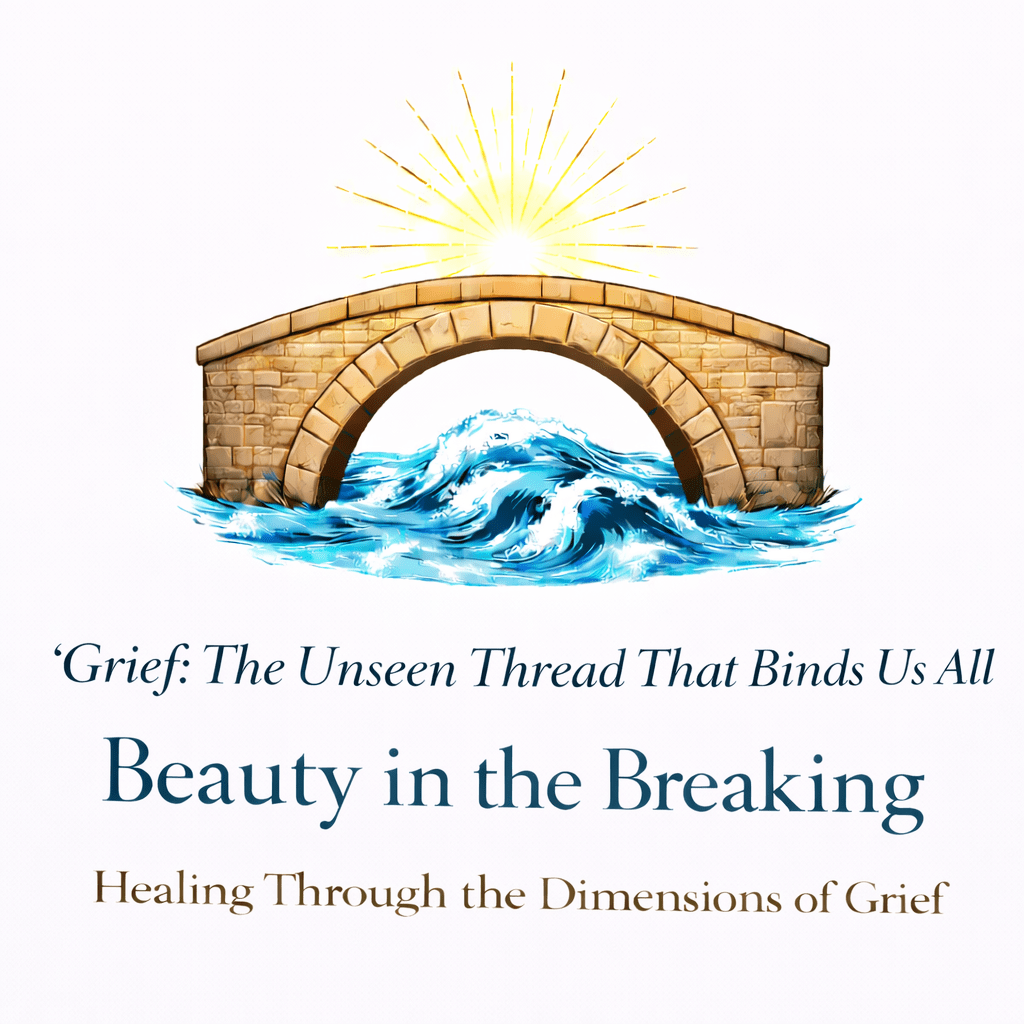
The bridge in the Beauty in the Breaking imagery represents this connection. A bridge links two sides that might otherwise remain separate. It provides a path where there once was distance.
Grief often becomes that bridge.
It connects people through shared understanding. Two individuals who have experienced loss may not share the same story, but they recognize the emotional landscape. There is a silent language of compassion between them.
Sometimes this connection appears in the simplest moments—a nod of understanding, a supportive message, a quiet presence during someone’s difficult day.
Grief teaches us that human hearts are far more alike than we often realize.
Behind public appearances, achievements, and roles, people carry hidden stories of love, loss, disappointment, and resilience. The unseen thread of grief weaves through all of these stories, linking lives in ways we rarely acknowledge.
Recognizing this thread changes how we move through the world.
It invites humility.
It invites patience.
It invites compassion.
Instead of assuming someone is distant, we may wonder if they are hurting. Instead of responding with frustration, we may respond with gentleness.
Grief reminds us that every person we encounter is navigating their own unseen landscape.
This realization can transform how we live together.
What once felt isolating can become connecting. What once felt like a private burden can become a source of shared humanity.
Grief may break parts of our lives, but it can also bind hearts together in understanding.
Through loss, we learn what truly matters.
Through sorrow, we rediscover compassion.
And through the breaking, we find that we are more connected than we ever realized.
Selah Moment with Dr. Althea Winifred.
 Next Level