
There is a part of grief no one prepares you for.
It is not the funeral.
It is not the immediate shock.
It is not even the first wave of tears.
It is the loneliness that can surface when everyone else has moved on—but you are still healing.
In the early days of loss, support often surrounds you. Calls come in. Messages fill your phone. People check on you. There is understanding. There is grace.
But as time passes, the world resumes its rhythm.
Conversations shift.
Expectations return.
Patience shortens.
And quietly, you may begin to feel alone in your healing.
Week 42 speaks to that sacred, uncomfortable space—the season where your grief becomes private.
Lonely healing does not mean abandoned healing.
It means the process has become deeply personal.
There comes a time when fewer people ask how you are doing. Not because they do not care—but because they assume you are better. You have learned to function. You show strength. You carry yourself well.
Strength can sometimes hide struggle.
There are nights when memories surface unexpectedly. There are mornings when the weight feels heavier than it did months ago. There are triggers you cannot explain. There are anniversaries that catch your breath.
And you may wonder, “Why am I still feeling this?”
Because healing is not linear.
It spirals.
It deepens.
It revisits.
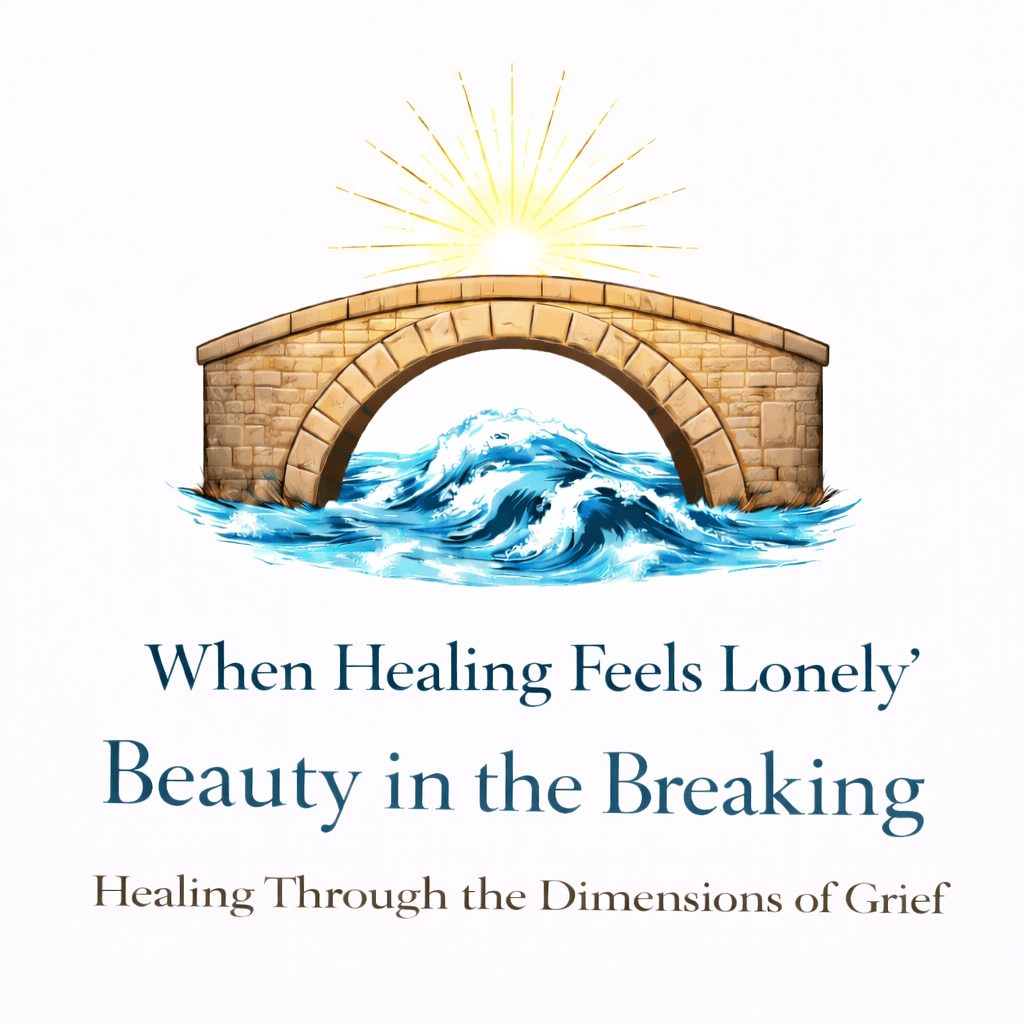
The bridge in our logo stands alone over moving waters. It is steady. It is anchored. It does not require applause to remain standing. It simply remains.
There is a powerful truth here: some parts of healing are meant to be walked quietly.
In the lonely spaces, something profound happens.
You begin to sit with yourself.
You begin to hear your own thoughts.
You begin to feel emotions you once avoided.
Without the noise of constant support, you meet your own resilience.
Lonely healing teaches self-compassion.
It teaches you to check in with your own heart instead of waiting for others to do it. It teaches you to recognize your triggers. It teaches you to soothe yourself. It teaches you to speak kindly to yourself.
It is in this season that you begin to rebuild identity.
Who are you now?
Not who you were before the loss.
Not who others expect you to be.
But who you are becoming.
Lonely healing can feel isolating—but it is often transformative.
There is a maturity that grows in silence. There is strength that develops when no one is watching. There is clarity that forms when distractions fade.
You begin to understand your grief differently. It becomes less about surviving and more about integrating. Less about escaping the pain and more about honoring what it changed.
You may notice that you have deeper empathy now. Greater patience. A sharper awareness of what truly matters. You may notice that your capacity to hold space for others has expanded.
Lonely healing refines you.
It is not punishment.
It is preparation.
Preparation to live again—not as the same person, but as a wiser one.
If you are in a season where fewer people ask, where support feels quieter, where your healing feels solitary, know this:
You are not forgotten.
You are not behind.
You are not failing.
You are growing roots.
Roots grow underground, unseen, in silence. Yet they are the very reason a tree can withstand storms later.
Your healing may feel lonely, but it is strengthening you in ways that applause never could.
The bridge remains steady. The waves continue to move. The sun still rises.
And even in the quiet—so do you.
Selah Moment with Dr. Althea Winifred.
 Next Level