
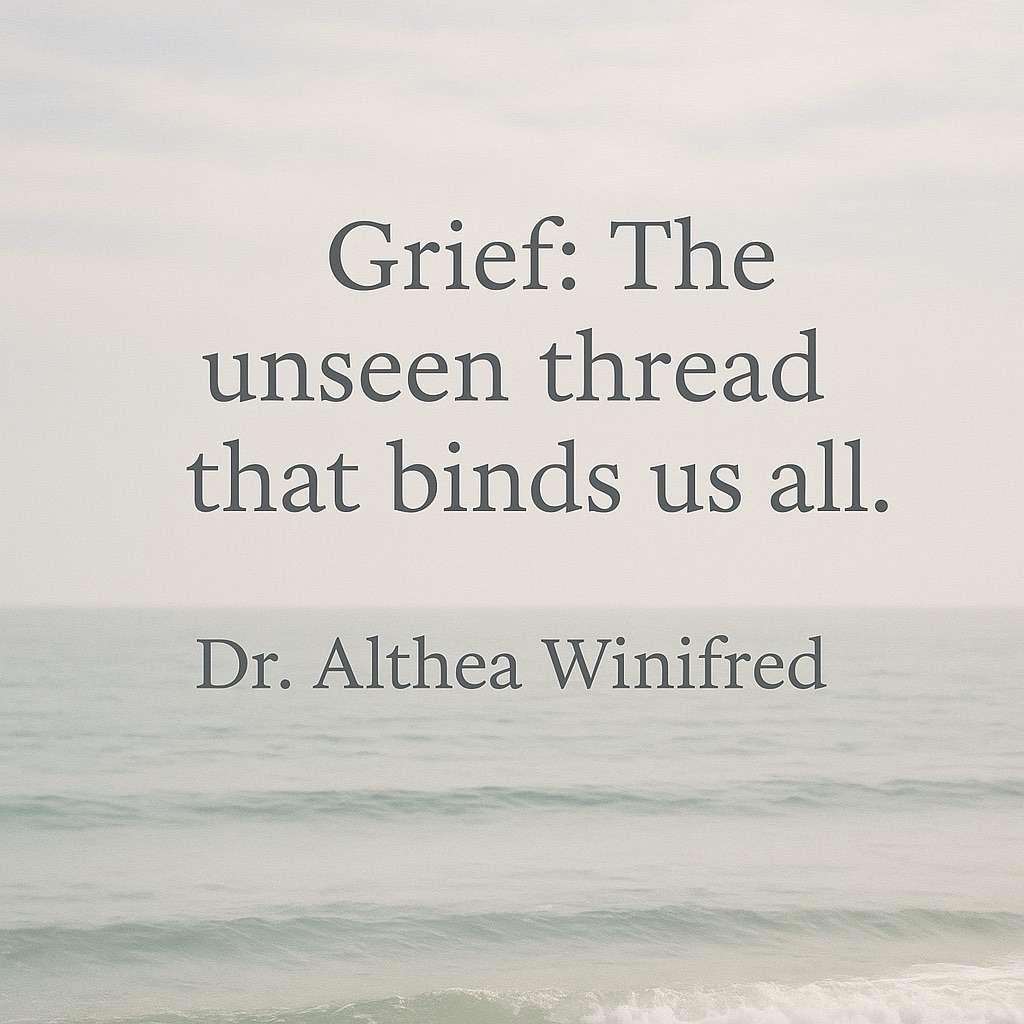
Grief does not discriminate.
It does not ask for identification.
It does not wait for invitation.
It simply arrives—unapologetically, unexpectedly, and often unannounced.
Grief has no color, no race, no political or religious allegiance. It pays no attention to age, denomination, status, or belief system. Whether one is a believer or a non-believer, a saint or a sinner, seated in the pew or standing in the pulpit—grief finds its way into all of our lives. It does not need permission to disrupt routines, flood emotions, or awaken questions we never thought we’d ask.
What unites humanity at its core is not just the capacity to love, but the shared experience of loss. Grief is a common denominator—a silent companion on the path of being human. It shows up in many forms: the loss of a loved one, the end of a relationship, the death of a dream, or the collapse of what once was stable. And yet, while grief is a universal experience, it is also deeply personal.
How I grieve may not look like how you grieve.
The woman across the street may mourn through tears; the man down the road may grieve in silence.
Some find solace in prayer, others in protest, still others in isolation or in the embrace of community.
Grief may erupt in sobs or remain buried beneath a composed exterior. It may find expression in anger, numbness, guilt, denial, or even laughter.
We often expect grief to follow a script, to behave predictably, or to expire after a suitable time. But the truth is, grief has its own pace and process. It teaches us—if we let it—that every heart mourns in its own language. And that is not a weakness, but a reflection of the uniqueness of the soul.
Grief is not a problem to be solved, but a journey to be walked.
Some days, that walk feels like crawling. Other days, it feels like standing still.
And sometimes—gracefully, gradually—it feels like moving forward.
As individuals, we must honor the grief of others without judgment, without comparison, without rushing the process.
As communities, we must cultivate spaces where mourning is not hidden, but held—where sorrow is not silenced, but supported.
Because at the end of the day, the one thing that makes us all human is not just the inevitability of grief, but the invitation it gives us—to lean on one another, to find strength in shared sorrow, and to recognize that while we each grieve differently, we do not grieve alone.
Selah Moment with Dr. Althea Winifred
 Next Level